You save a hairstyle because the pattern appears sharp, the braids are clean, the fade fits nicely.
But then you question if the same style would fit your hair length and thickness.
Maybe you’re not sure if you should get four, six or eight braids or if a taper would make the style seem better.
You also have to consider the care and whether your hair is long enough for the design you want.
In this article, you’ll uncover male stitch braid ideas that don’t just offer photographs.
Let’s explore!
Which Haircut Looks Best With Stitch Braids?
To make your stitch braids look sharp, you have to choose the haircut around the braid design, not regard the sides as an afterthought.
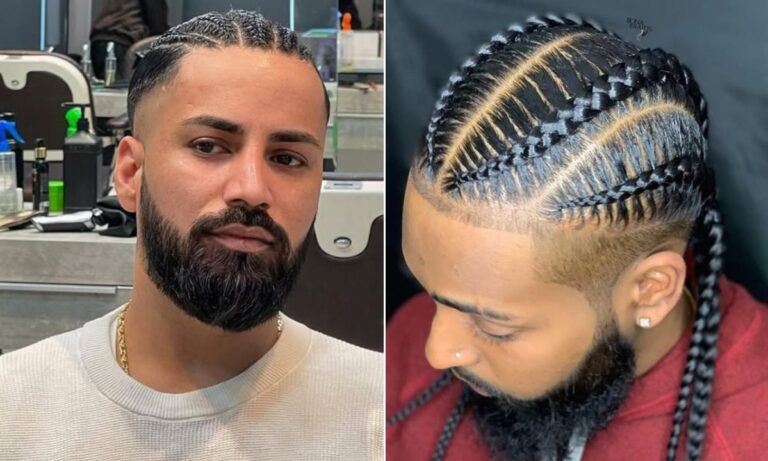
Low taper or low fade is one of the simplest options as it cleans the sides and makes the braided top the main focus.
A mid or high fade provides greater contrast, resulting in precise braids for a more daring look.
If you want something a little softer and more versatile, go with a taper instead of taking the sides all the way down to the skin.
You can also keep more length around the sides if your braid design extends outward.
Braided hair is still often seen nowadays in men’s hairstyle recommendations with low, mid and high fades or tapers.
Ultimately, the ideal choice relies on how many braids you have, the length of your hair and the amount of contrast you desire.
Curved Stitch Rows
Curved rows of stitches add a more artistic direction to straight-back braids and are perfect when you want movement across the crown.
Space the portions equally, following the natural curve of the head. Let the longer ends hang loosely behind the neck.
This pattern is great for medium to long hair, and a clean temple taper can sharpen the sides without taking away from the design.
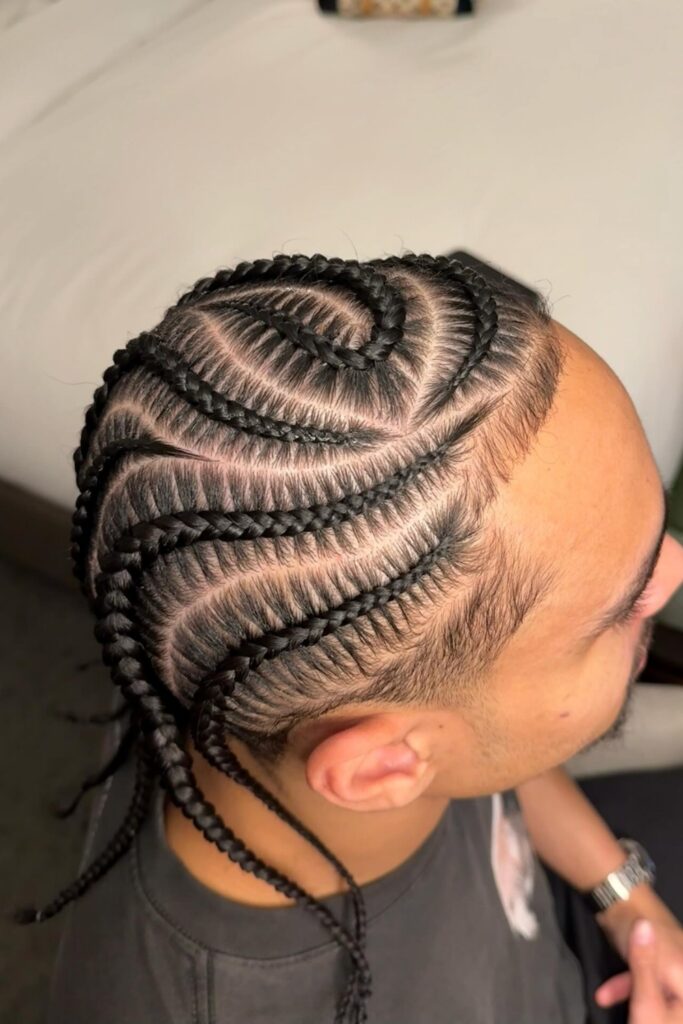
Sharp Side Sweep
If you’re bored with straight backs, sweep the stitch rows diagonally toward the back for a more directional finish.
Ask your braider to create tightly spaced pieces that curve gently together and combine the top with a neat low fade.
The shorter sides contrast nicely around the patterned crown, a good choice for guys who desire a sophisticated everyday style.
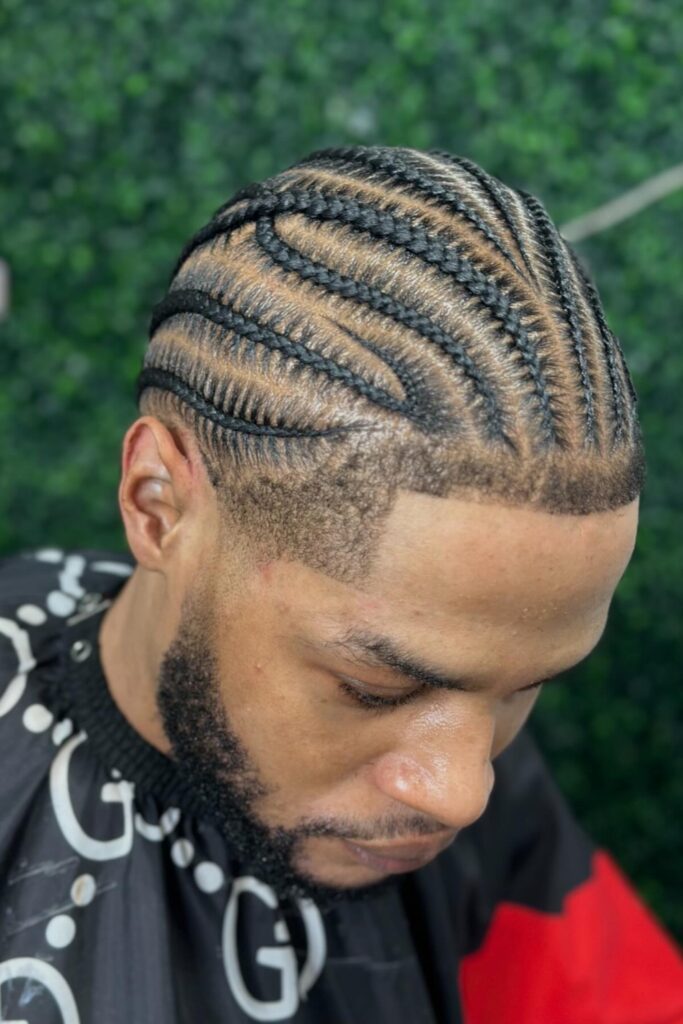
Layered Stitch Design
Create a circular design around the crown with layered rows, giving you lots of detail without using complicated geometric shapes.
Work with medium-width portions, keeping each curving braid consistent, enabling the pattern to follow the head instead of forcing harsh angles.
This style is especially good for fuller hair and keeping the edges clean means that the layered pattern can be the star of the show from every angle.
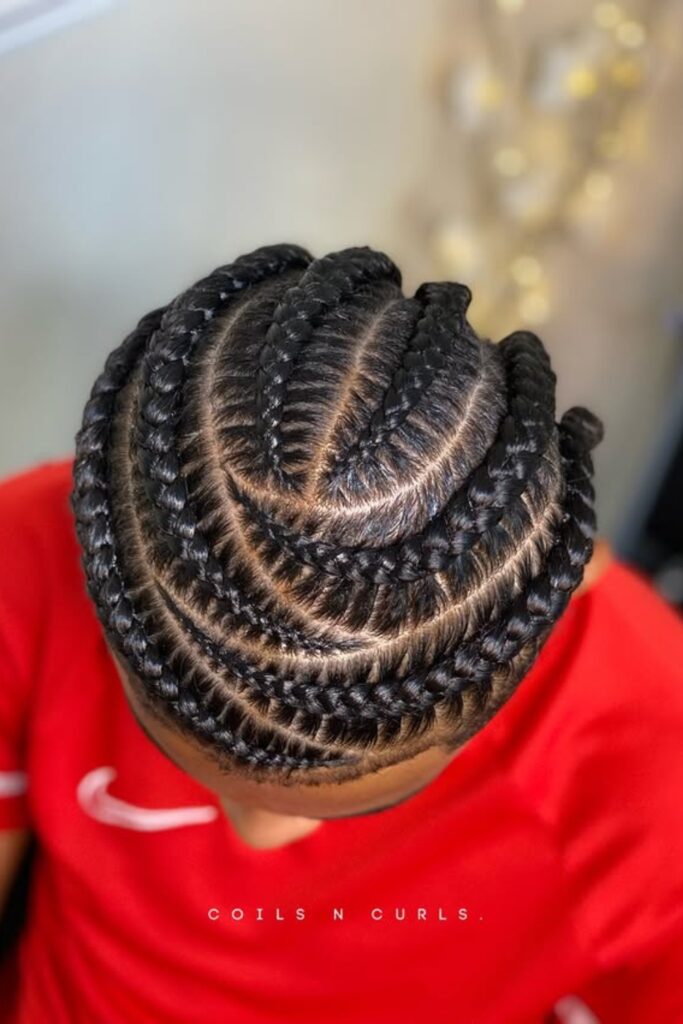
Wave Around Crown
A flowing wave design can help to make braids look less stiff, especially if several rows follow the natural curvature of the crown.
Begin with a central defined portion and allow each braid to follow the curvature of the preceding one for a connected, balanced look.
If you want the waves to pop without having your hair feel too heavy all over, keep the sides neatly tapered or precisely cropped.
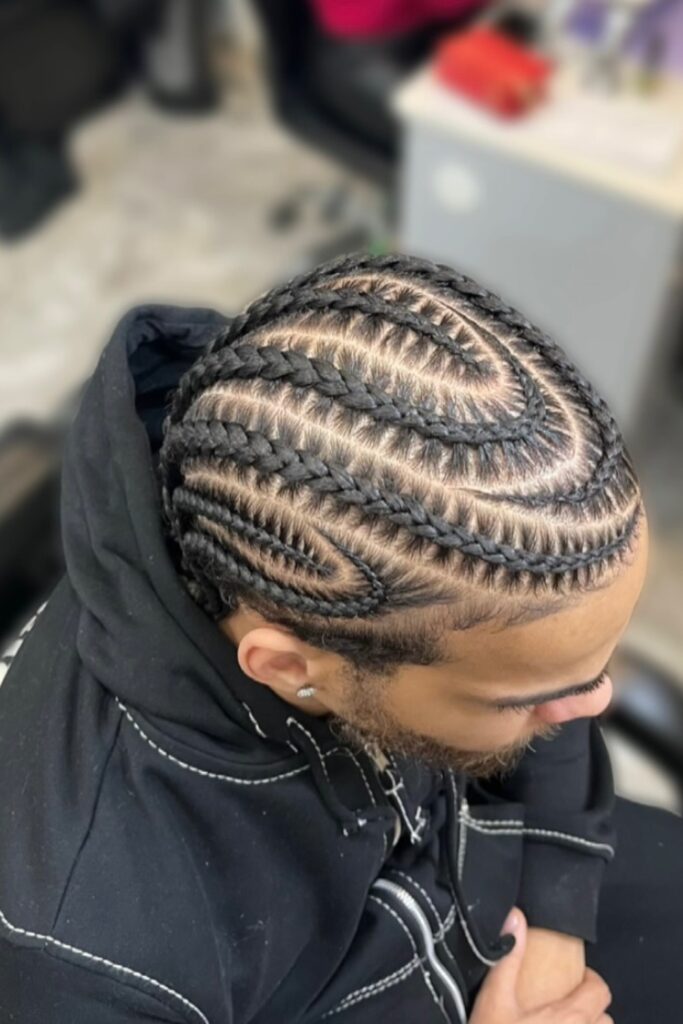
Curved Tapered Rows
The sides are tapered low and the stitch braids sweeping across the top give a clean, athletic finish.
Ask for four or five medium rows that are nicely curved and that preserve the same braid thickness from the front to the crown.
This combo is particularly nice for medium-length hair, if you want some visible patterning but still want an everyday polished haircut.
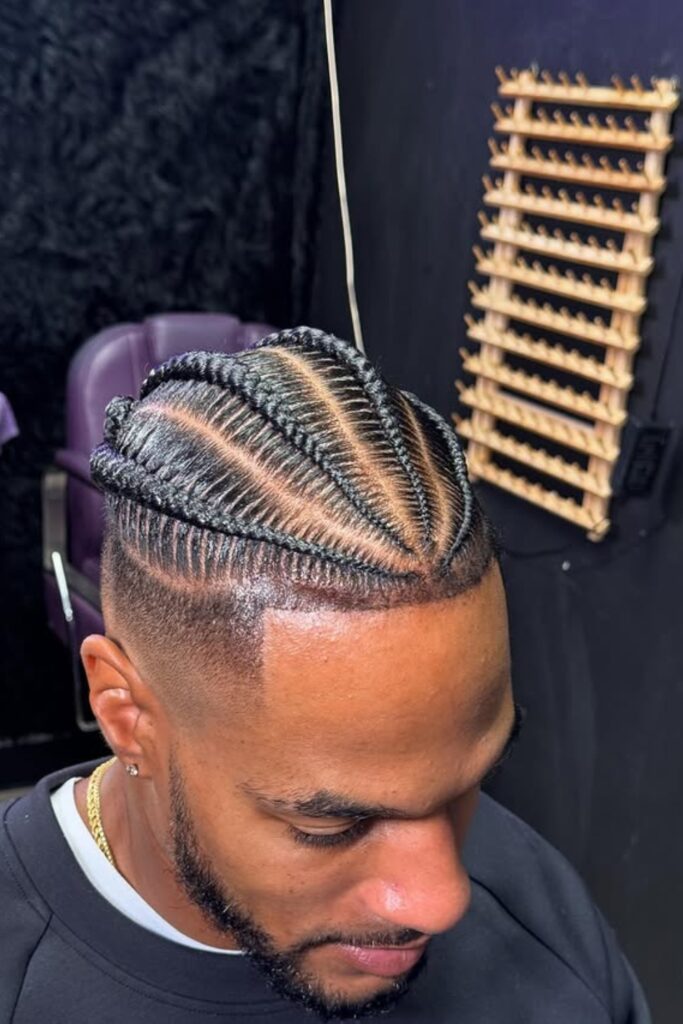
Geometric Stitch Pattern
If you want something a little more eye-catching, don’t make every braid straight, but utilize slanted parts that connect in the crown.
The crisp splitting gives a geometric aspect, and the medium thickness braids maintain the design distinct without crowding the top too much.
Keep the sides short to allow the design pop and let the complicated sectioning do its thing on your hair.
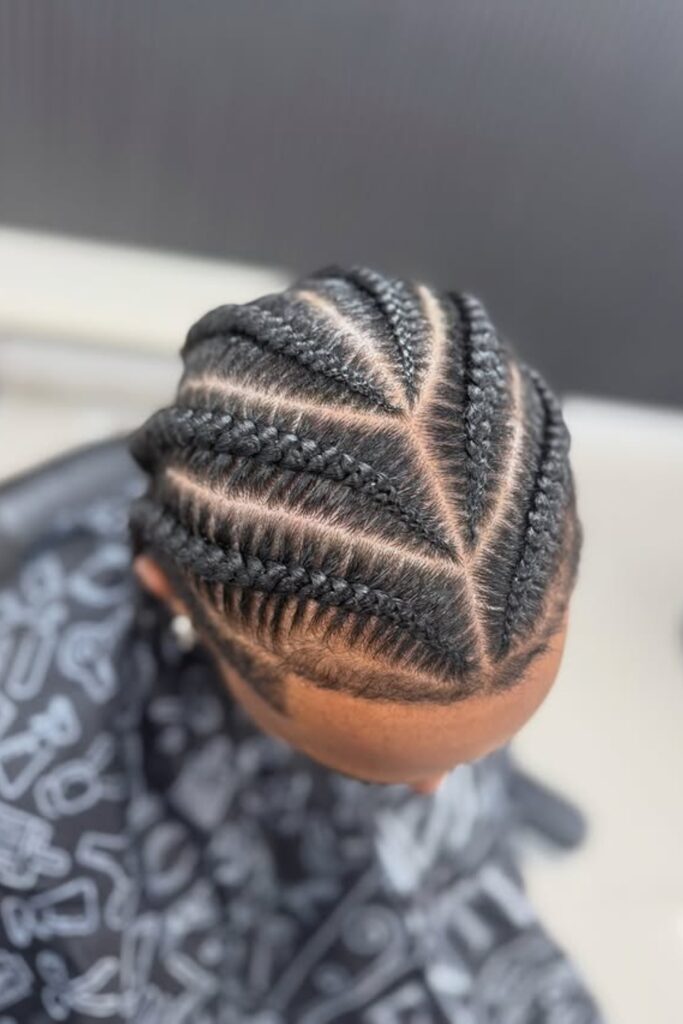
Fine Stitch Rows
More rows might give you a thorough finish if you have adequate density in your hair to sustain smaller and closer portions.
If you have thick hair that can hold smaller, tighter portions, the more rows you can have for a meticulous finish.
This option is perfect for men who love detailed style and have enough hair length to keep the braids tight enough without putting too much pressure on them.
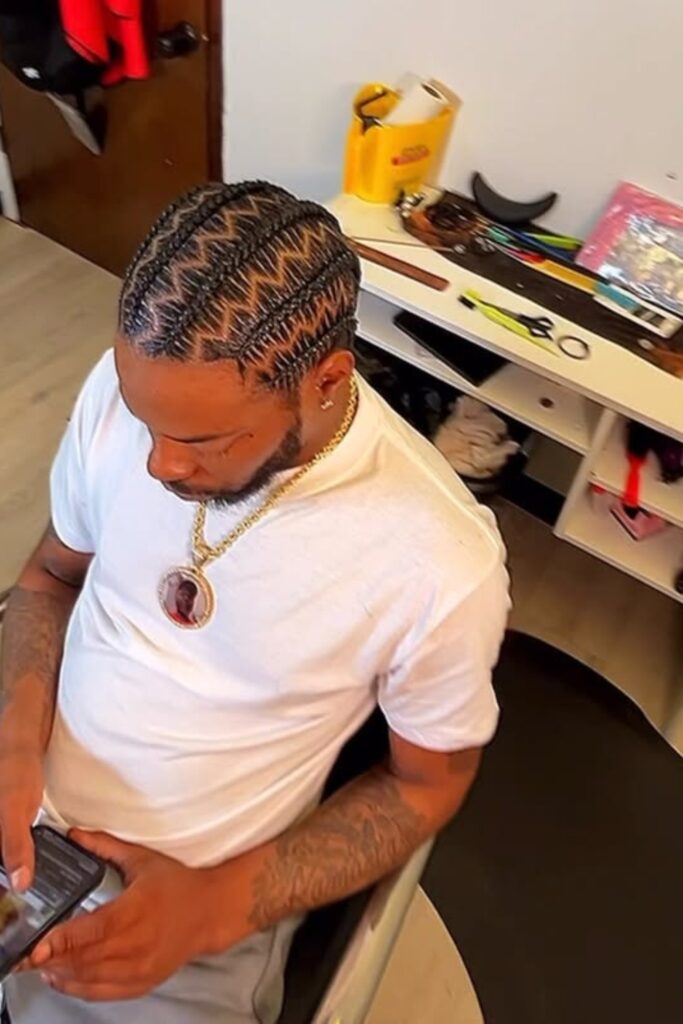
Swept Side Pattern
The curved side pattern gives the conventional stitch braids more personality and style, with a few rows going to one side before flowing backward.
Medium braid sections are a good size and you can ask for a clean temple fade to provide a larger contrast around the beautiful crown.
This combo works great for men who desire a unique design but still want to maintain the overall haircut sharp, controlled and simple to wear.
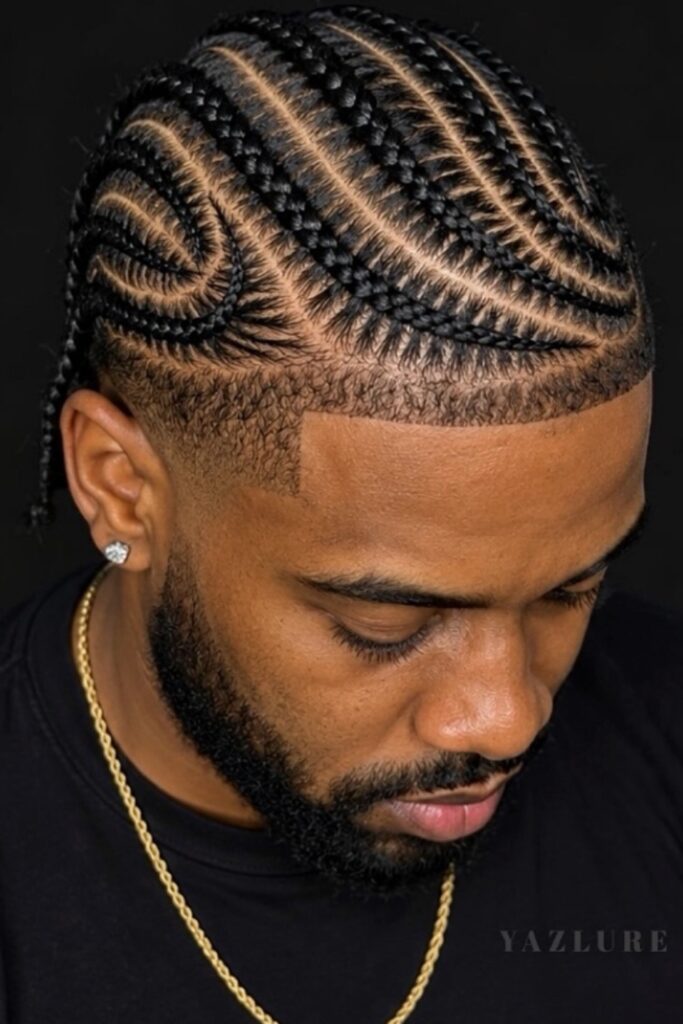
Clean Cornrow Flow
To create a smoother everyday look, keep stitch rows small and uniformly spaced, then angle them toward the rear for easy structure.
A subtle taper on the sides puts the focus on the braids while yet providing a clean finish that works nicely with medium-length hair.
This style is perfect for men who desire precise stitch detailing without a design that is too intricate and requires continual styling or frequent touch-ups.
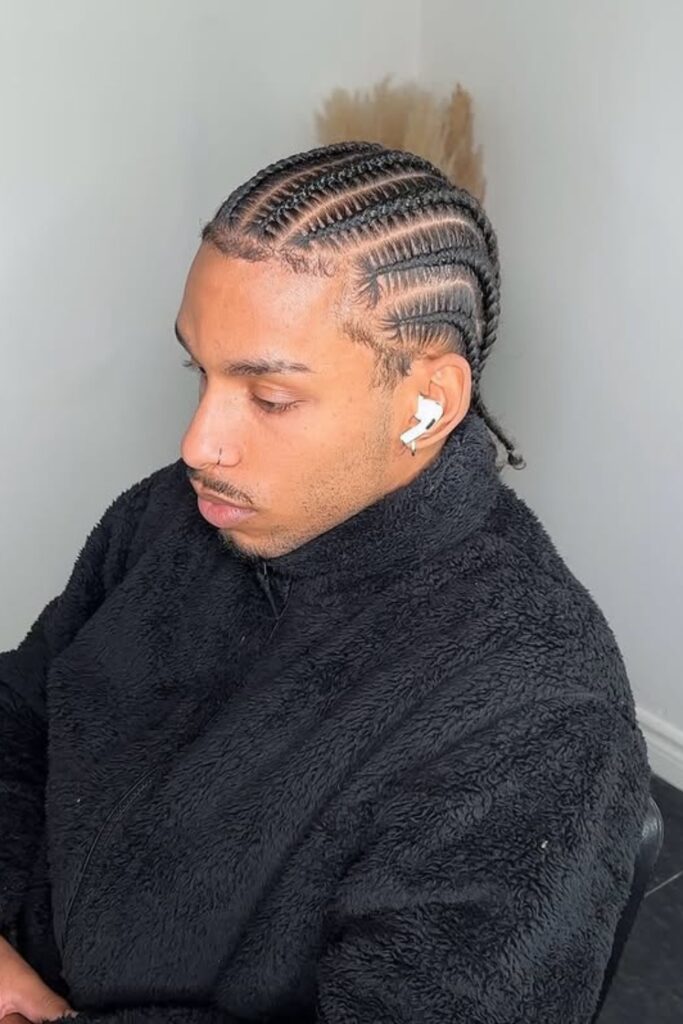
Long Stitch Lines
The repeated rows help to keep the overall design orderly, while the length of longer hair gives these straight stitch braids enough length to create movement.
Have your braider use medium-width portions that follow the head closely, leaving the ends long enough to hang behind naturally.
If you want your extended braids to be the main focus of your hairstyle, keep the sides clean rather than letting them fade out a lot.
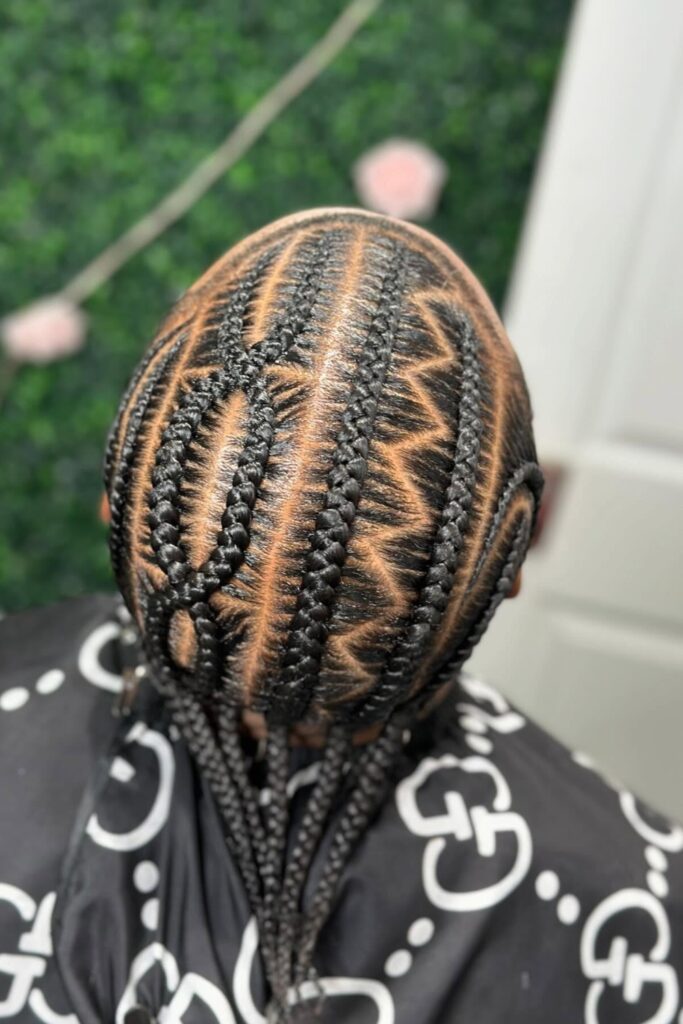
Geometric Crown
If you find the basic rows too predictable, add angled portions to create subtle geometric shapes throughout the crown, but don’t make each braid too difficult.
The design relies on accurate parting therefore find an experienced braider, and use the same braid sizes throughout the whole pattern.
The geometric pattern is framed by a precisely trimmed perimeter, making this a good choice when you want your hairstyle to stand out.
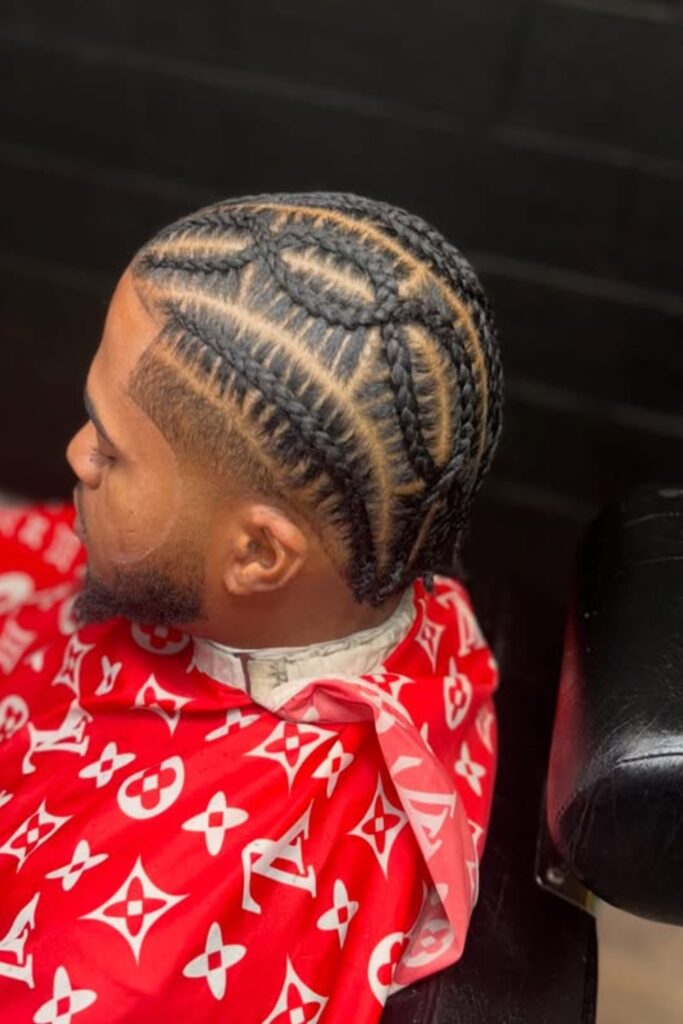
Straight Back Classic
Straight-back stitch braids are still an easy option for something sharp, masculine and straightforward enough to carry off in numerous circumstances.
Ask your barber to tidy up the hairline and sides, but not to take off too much length. Use medium length rows equally spaced.
Also, it is easier to manage this style because the braid design is simple which is great especially if hair is your first time getting stitch braids.
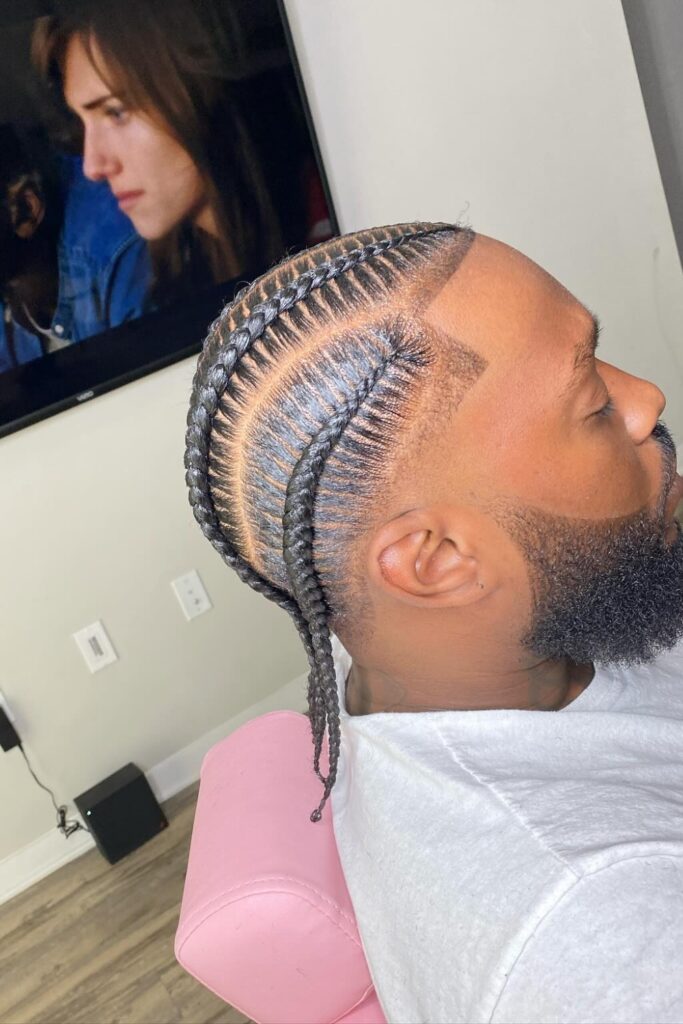
Braided Side Detail
If you want something a little more intricate than plain straight-back braids, a few rows of curved stitches can make for a stunning frame around the head.
Keep sections tidy and reasonably spaced, and let longer braids hang behind the head for mobility.
This works well for medium to long hair, while a slightly tapered hairline prevents the intricate sides from weighing down the haircut.
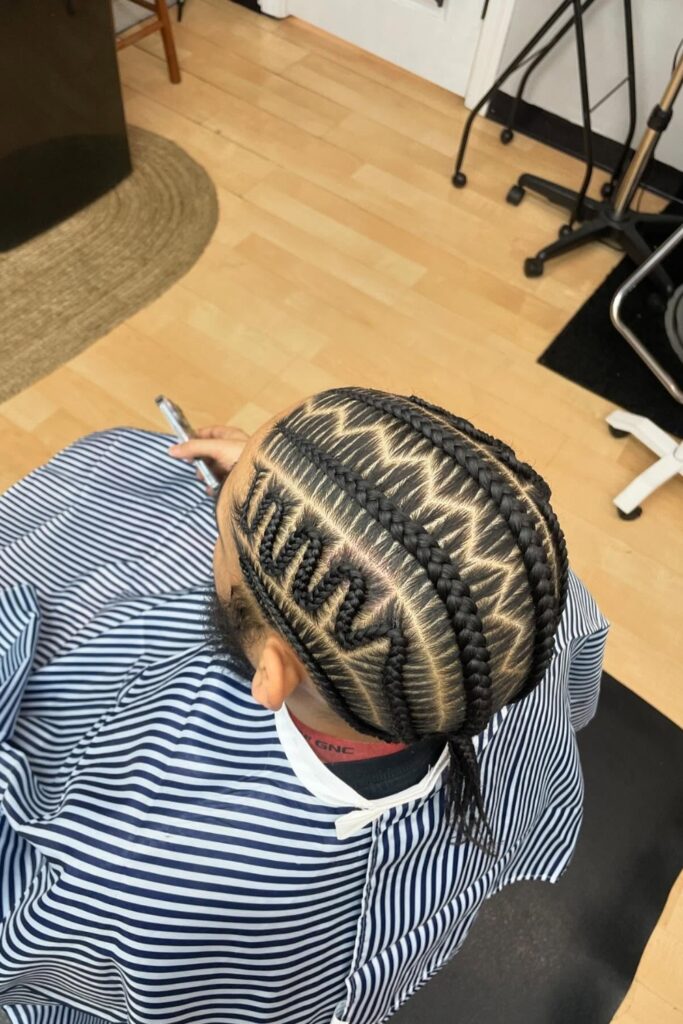
Bold Curved Rows
If you want your stitch braids to be a statement go for a wider row with a dramatic curve from front to back.
The wider parts make the pattern easier to discern, while longer braid ends create shape and movement behind the head.
Ask for consistent spacing and a clean perimeter so that the dramatic curves remain defined and don’t blur together as the style grows out.
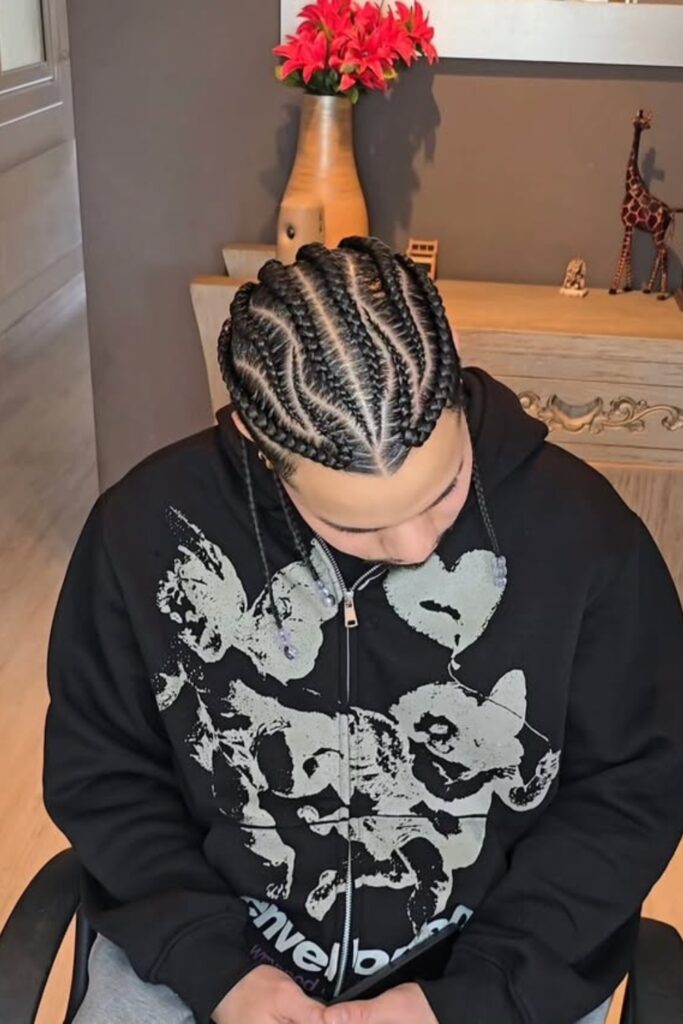
Crown Focused Stitch
The center-focused pattern creates a strong center point for the hairdo, with several smaller rows radiating out toward the sides.
Start with a defined middle area, then tell your braider to angle the surrounding sections evenly to produce that fan-like shape.
This shape looks best with a low taper, because the cleaner sides let the elaborate crown pattern to really show out.
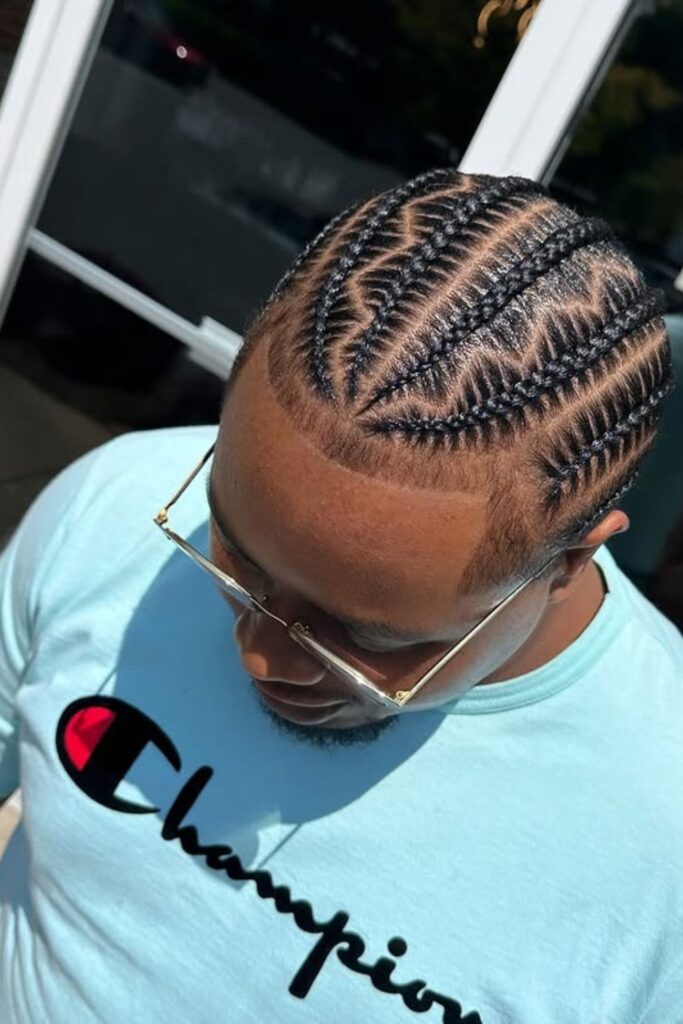
Fan Shaped Braids
Fan stitch braids naturally radiate from the front center and produce a symmetrical pattern that looks particularly striking when viewed from above.
Have your braider maintain the center portions narrow and extend the spacing gradually as the rows travel nearer the sides.
The style is finished off with a clean fade around the edges making this a great alternative when you want elaborate braiding with a sharp modern haircut.
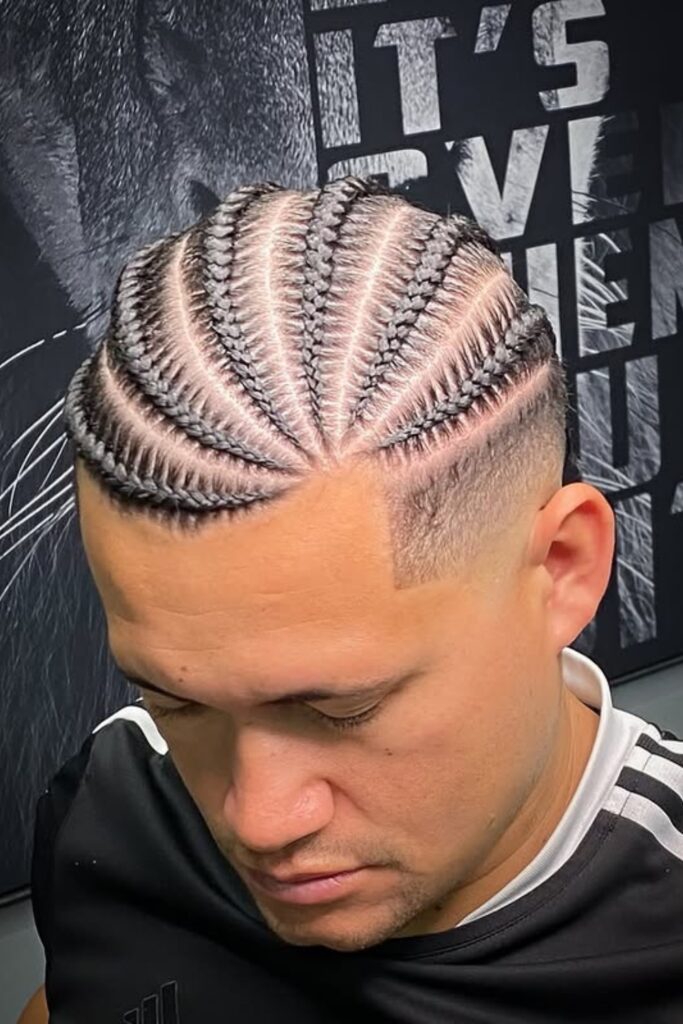
Curved Stitch Waves
Curved stitch braids are a flowy pattern that flows along the head and gives a plain braided style more movement and individuality.
Make the rows medium-sized and equally spaced, letting them slope toward the back rather than pushing totally straight parts.
This style is great for medium length hair especially when you are looking for a unique pattern without a fade or intricate geometric shapes.
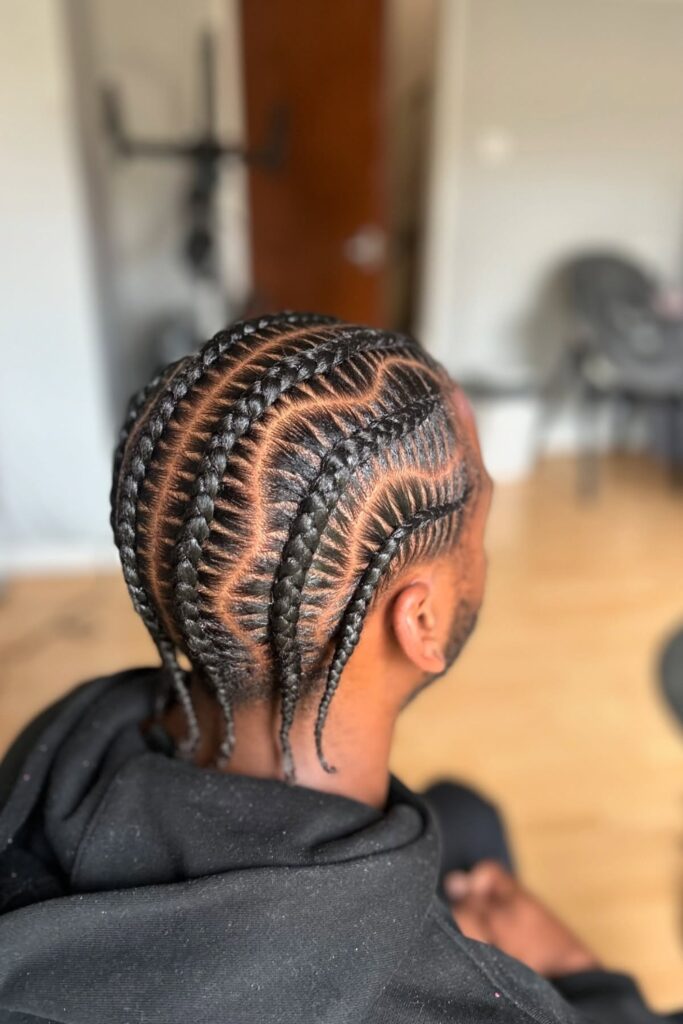
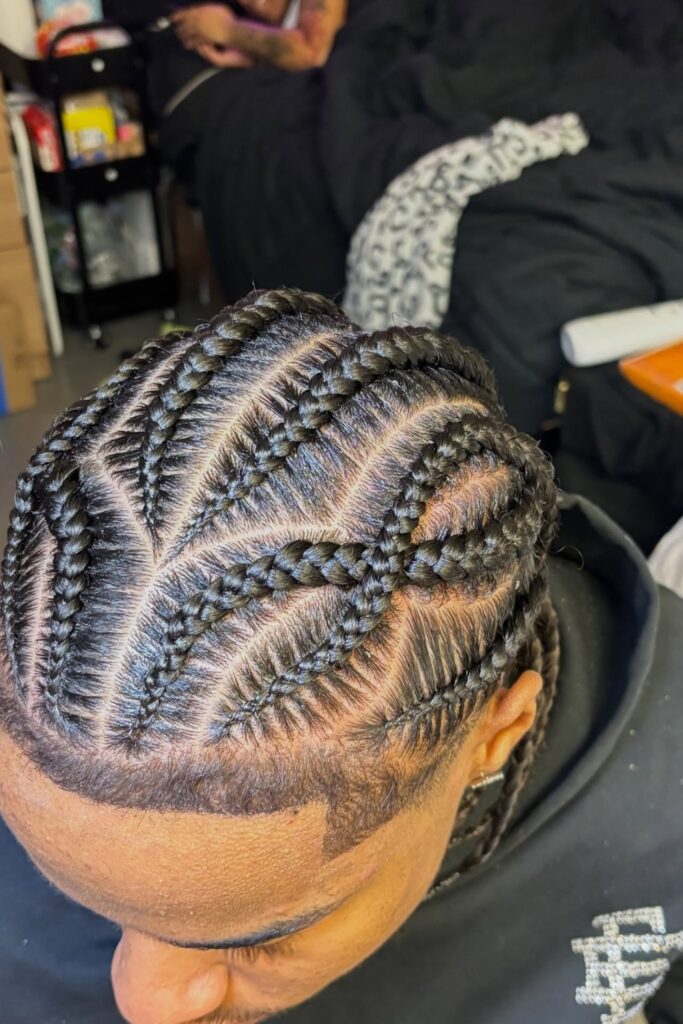
Crossed Stitch Design
This style is great for medium length hair especially when you are looking for a unique pattern without a fade or intricate geometric shapes.
This design relies on a very exact parting. You want to select an experienced braider, and make sure that each braid is the same thickness all the way through.
Leave enough length at the rear to allow the braids to hang freely, creating a more relaxed ending to the elaborate top.
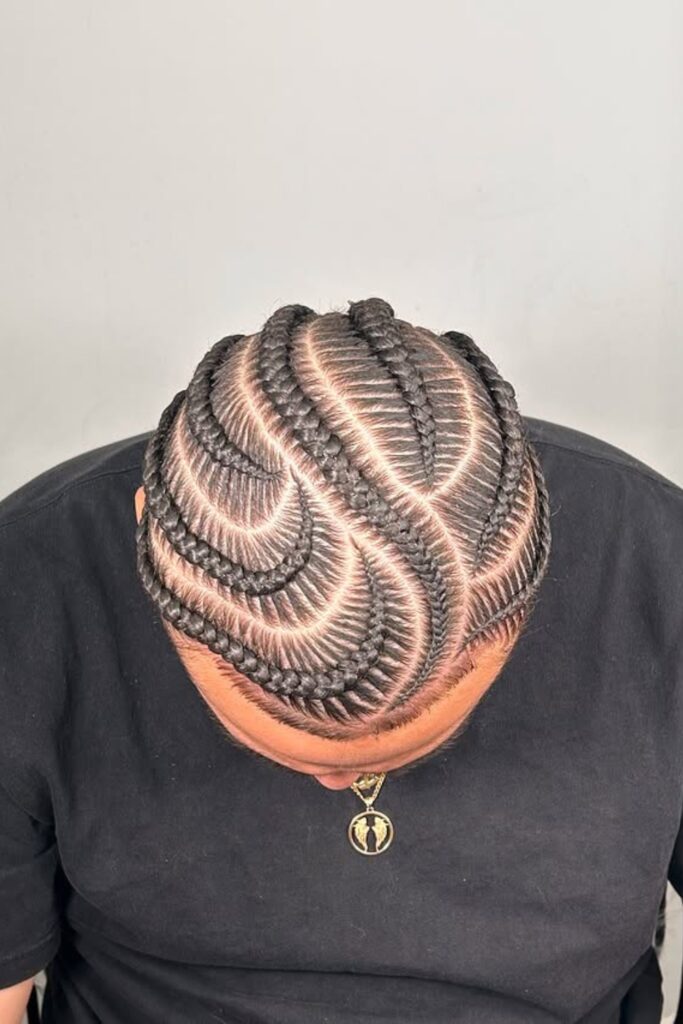
Freestyle Wave Pattern
Freestyle stitch braids allow you to break away from the expected rows, with sweeping curves and smaller parts to create a customized pattern across the crown.
Ask your braider to make sure the bends from both sides balance out so it doesn’t look random.
This is a good choice for men that want something different but still want the braids practical enough to wear every day.
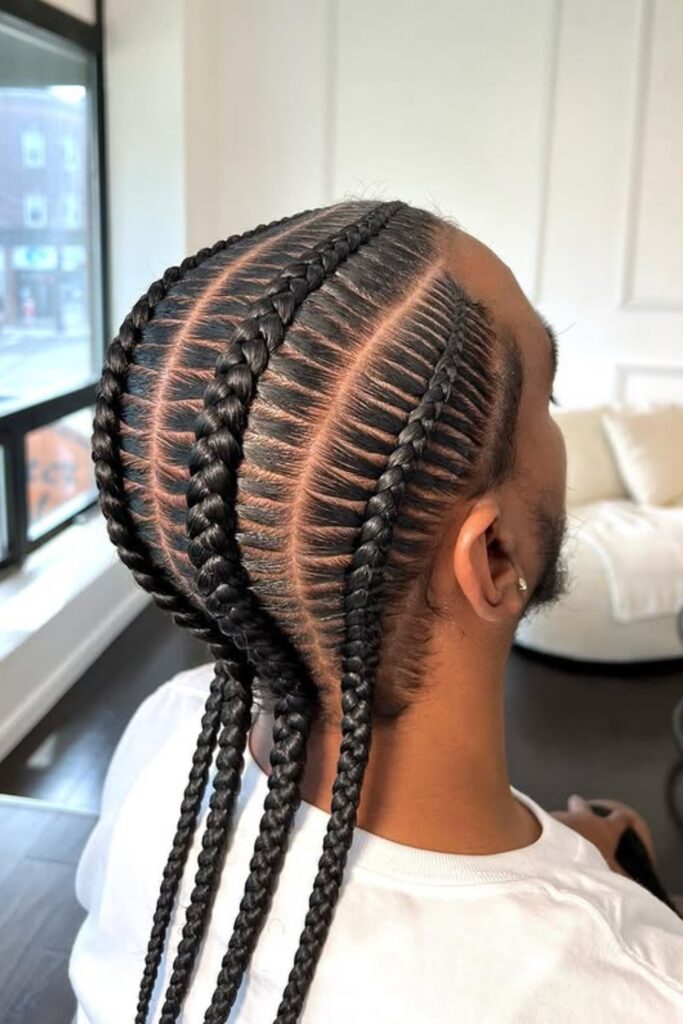
Four Large Rows
Four bigger stitch braids are a great way to get a bold, neat look without having to go through a complicated design or a lot of little pieces.
Request wide, equally spaced rows extending toward the back, then maintain the sides neatly clipped to give the top a crisper effect.
This method is especially good for guys with enough hair length and density to sustain more voluminous braids without the risk of having them too tight.
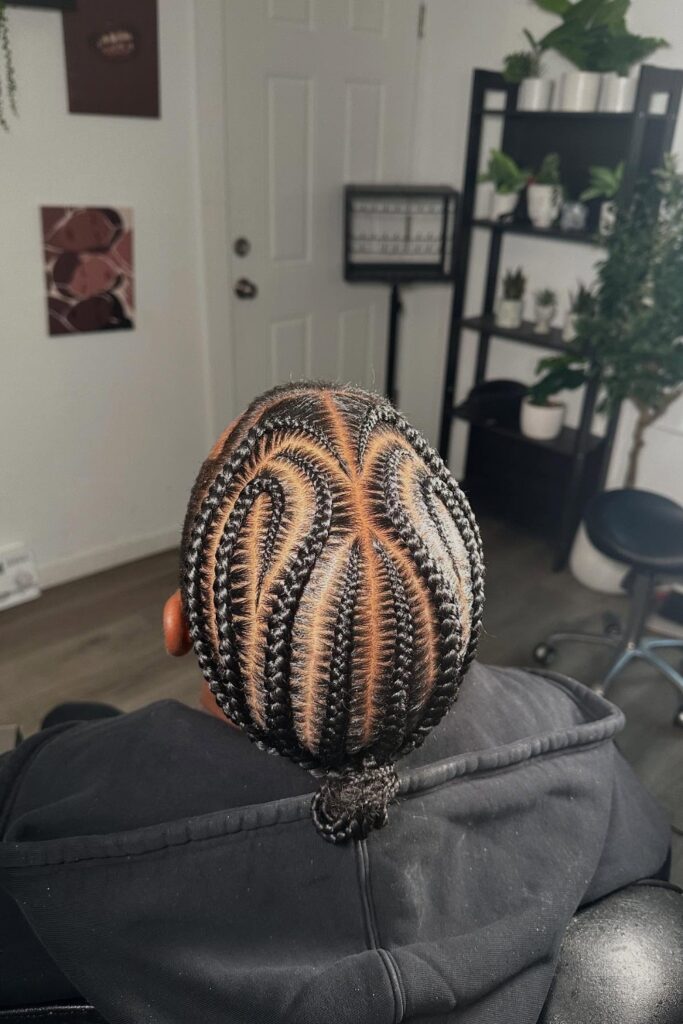
Braided Crown Pattern
The crowns of these stitch braids are centered for a symmetrical look, with curved rows branching outward before neatly gathering at the back.
Make sure that the sections are symmetrical and the braids are medium-sized. Pin the longer ends into a little bun for a controlled finish.
If you want the precise design without a fade, this is optimal. This allows the pattern to cover the crown while keeping the overall form small.
Two Bold Rows
You don’t need tons of braids to make a statement. Two thick curved rows of braids may produce a clean and bold style.
Ask your braider to maintain the portions wide and smooth (in the direction of the head) and then to bring them together at the back.
The precise taper at the sides maintains this minimalist cut crisp and makes it a practical option for shorter hair and easier maintenance.
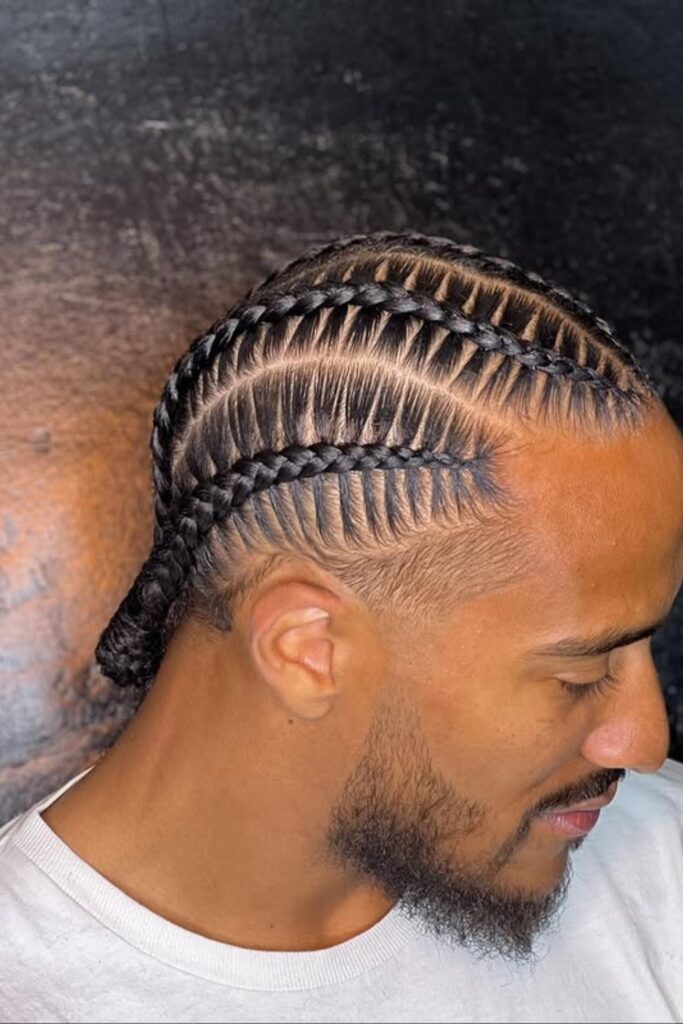
Minimalist Stitch Braids
For a more refined appearance, opt for a few medium-sized stitch braids with wider portions that reveal plenty of scalp between each row.
Leave the braids going from the front to the back and finish the ends naturally, without any additional designs or decorations.
This low-key design is great for guys who want pronounced dreadlocks, but a haircut basic enough for everyday and professional settings.
FAQs
Are stitch braids good for men with short hair?
Fewer, broader stitch braids and simpler patterns are often best for lighter hair, while medium length hair lends itself to more creative options with curved rows and intricate designs.
If your hair isn’t long enough to retain the pattern, your braider may propose waiting until you have more growth or utilizing extensions.
How long do male stitch braids usually last?
Most stitch braids will appear fresh for about 2 to 6 weeks depending on your hair, braid tension, lifestyle and upkeep.
Keep your scalp clean and do not leave your firmly put braids for a long time only to elongate their life. Protect them while sleeping.