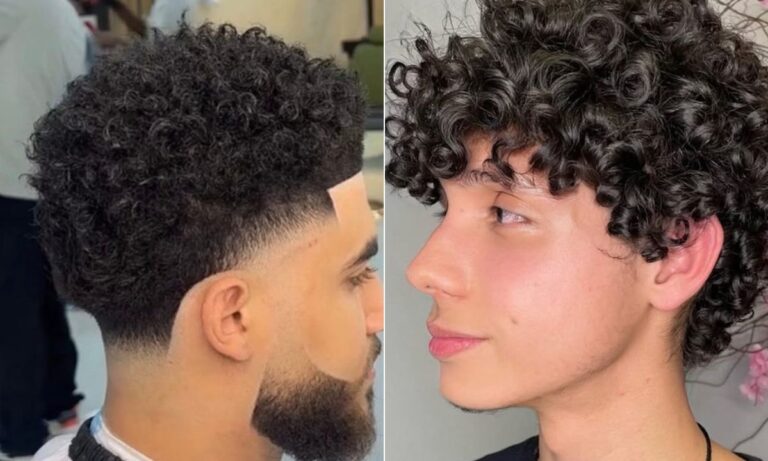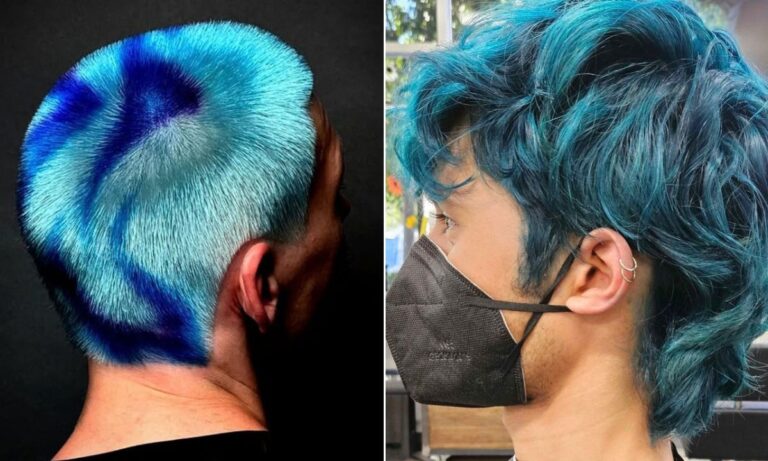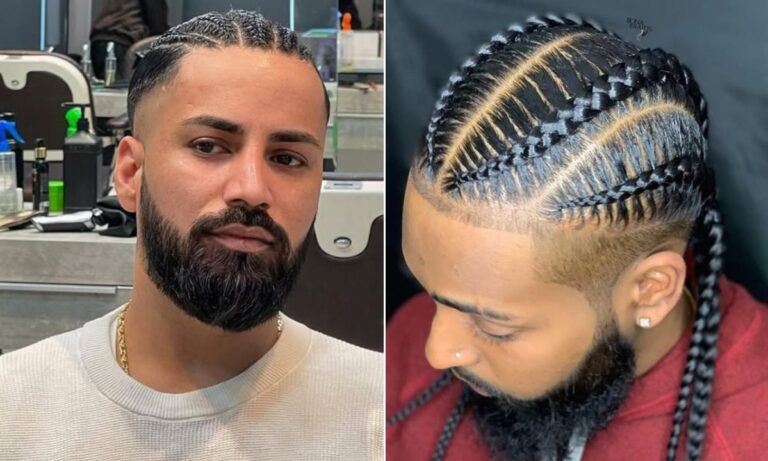
The photographs make that unruly fringe look so effortless, but in real life achieving that texture is a pain.
The fringe may lay flat, form the shape of a hefty bowl, split due to a cowlick, or be trimmed too short to style appropriately.
You having the right haircut but putting the wrong product on it will make your hair oily or altogether different than the reference you gave the barber.
Here you will find messy fringe haircut ideas to help you choose the one that suits your hair, as well as what to ask your barber.
Which Hair Types Work Best With a Messy Fringe?
Almost any hair type can pull off a messy fringe, but your natural texture will dictate the finished result.
The fringe separation and form are easier to create on wavy hair as the movement is already built in.
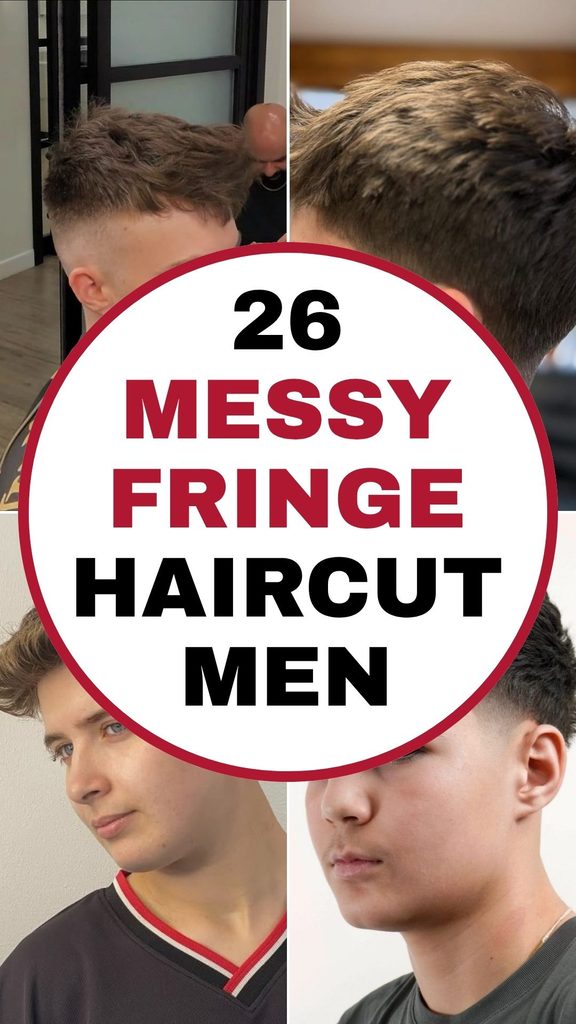
Straight hair can work well too, but frequently needs more point cutting, light layering and a little root lift so it doesn’t fall into one flat block.
A messy fringe is a good option for curly hair too, especially if the barber takes off enough weight to let the curls sit forward without adding bulk.
Wavy Lift Fringe
This fringe movement already has the natural waves, so don’t trim everything straight and short, leave some length through the front.
A subtle fade on the sides maintains the form neat while allowing the textured top to stay full, rather than too disjointed.
Work a bit of matte paste into dry hair, then pinch a few front pieces forward for loose definition.
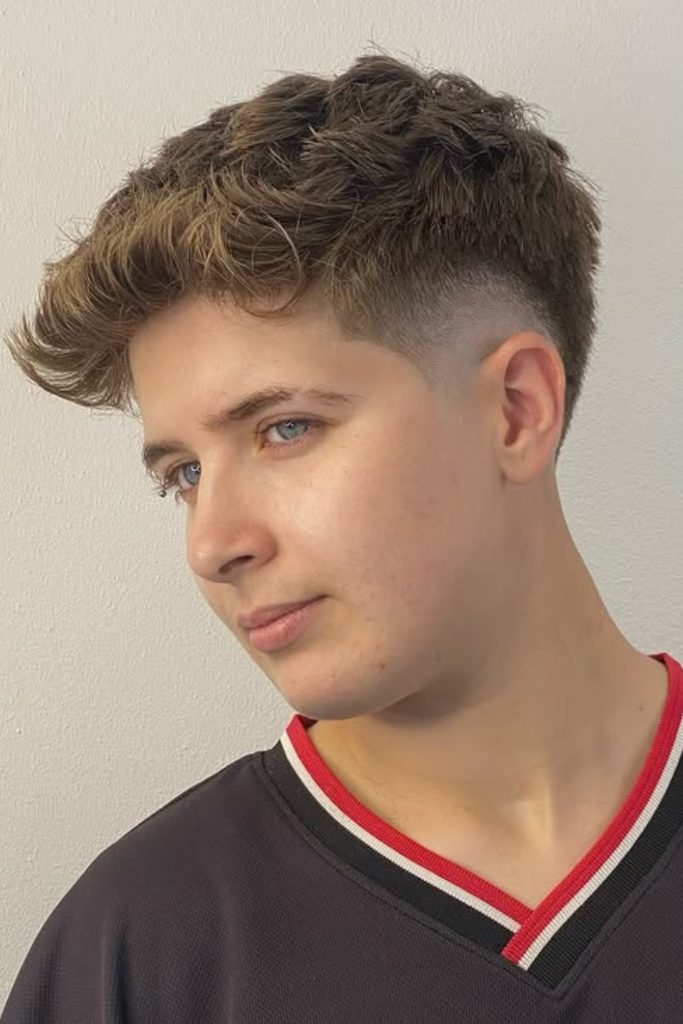
Long Choppy Fringe
More length on top creates space for separation. This might be a plus if thick hair has a tendency to sit heavy and firm.
Rather of severely thinning the entire top, add texture via the mid-lengths and ends, so the fringe has natural body.
For a day-to-day styling, blow-dry forward with your fingers first, then apply clay where you like for a firmer piece-by-piece control through the front.
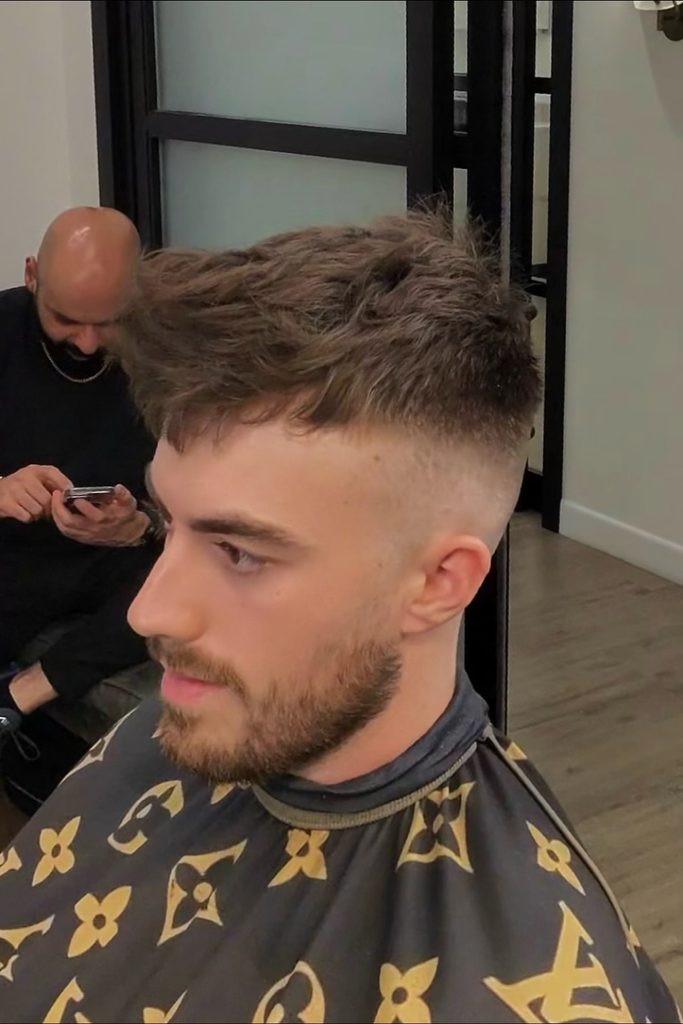
Spiky Messy Fringe
Shorter textured pieces are a great alternative when you want messy movement without having enough fringe to drape excessively over your forehead.
The design is ideal for thick, straight hair, as point-cut ends create a break in density before shaping is even started.
Take a little of the matte product on your hands and push it through the top, leaving the front uneven rather than making one neat line.
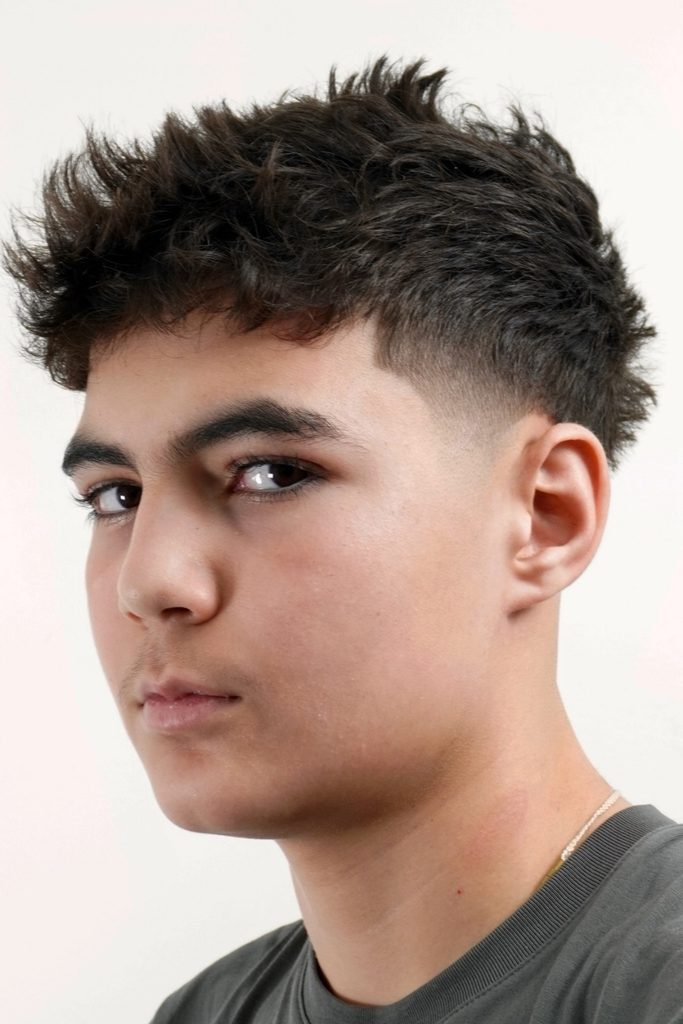
Soft Taper Fringe
Hair that’s straight and dense usually needs structure more than product, so minimal layering through the top can help stop the fringe feeling blocky.
Leaving extra weight around the temples creates a gentler transition, especially if you want something cleaner than lengthy sides with great contrast.
For a more divided finish, blow-dry the fringe slightly forward and outward, then break up any solid parts with fingertips.
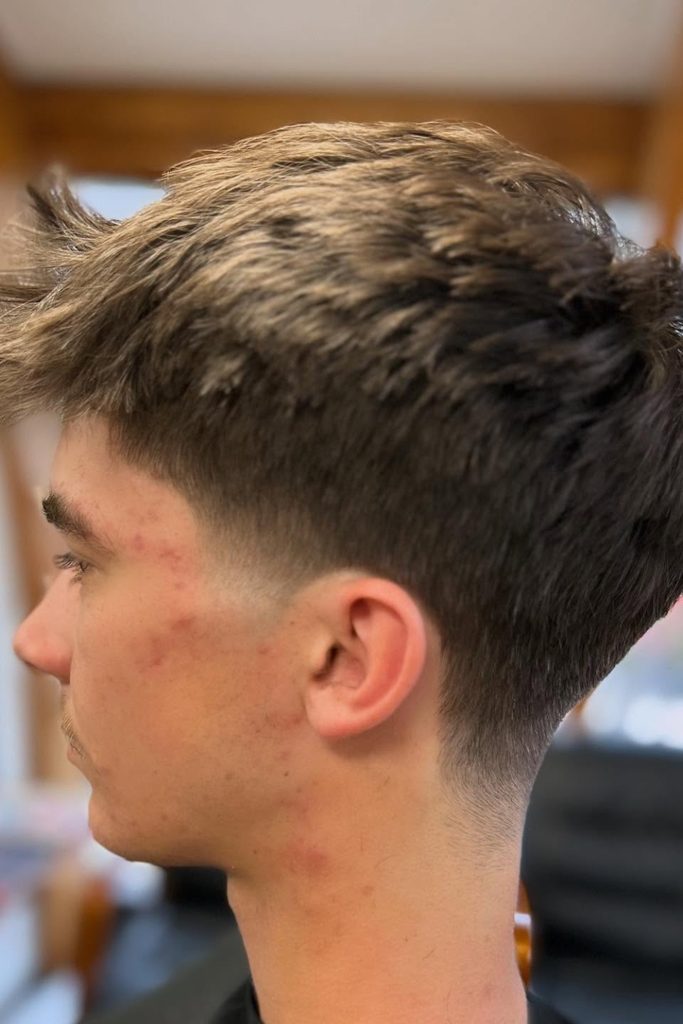
Voluminous Wave Fringe
More volume in the front works best if the sides stay tighter, because the contrast prevents thick hair from looking too heavy.
Let the top have some natural flexibility, then take weight off underneath so the fringe can move without collapsing into one heavy part.
Here, a light matte paste will suffice. Work it into dry hair with your fingertips, not forcing anything flat and forward.
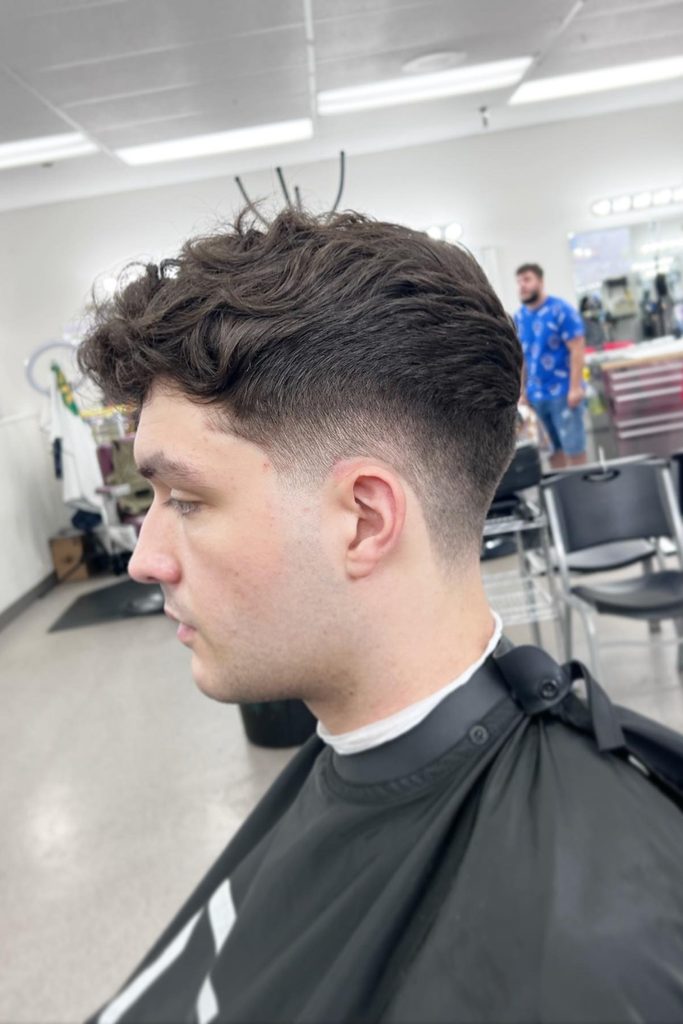
Full Textured Fringe
Very dense straight hair can have a larger fringe but it needs internal texture so it doesn’t look like a solid helmet.
Low fade still leaves enough weight on the sides to balance off the longer top, which creates a softer, more natural silhouette to the whole look.
Use a light product and rough up the ends with your fingertips, because too much hold will make this heavier fringe look stiff.
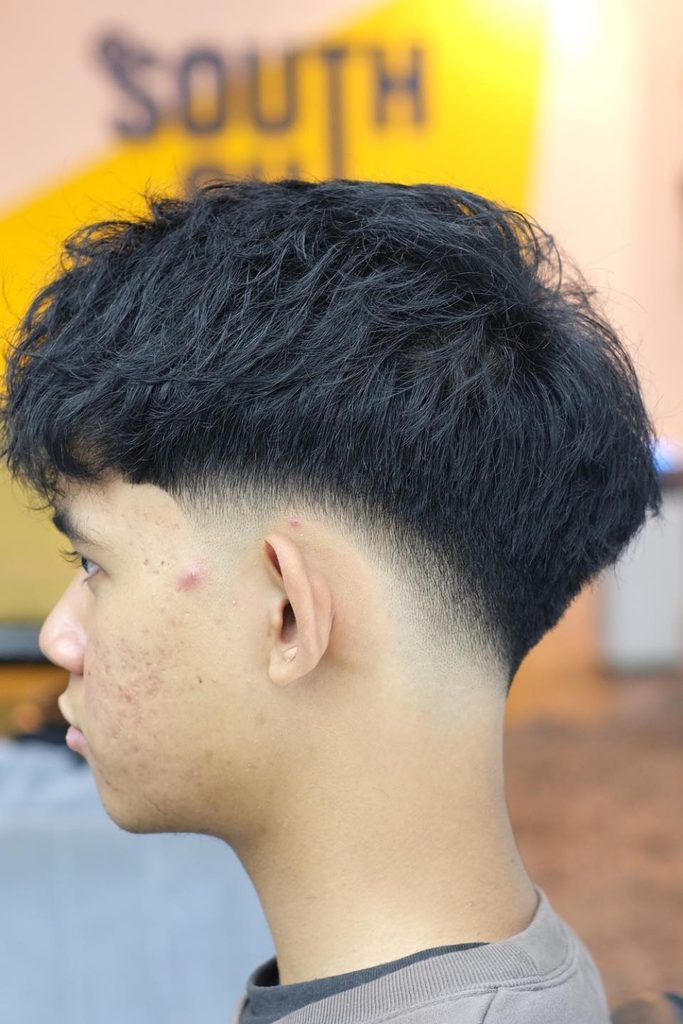
Lifted Messy Fringe
The more voluminous front part creates extra lift to this messy fringe which is a good thing when your hair typically prefers to fall straight front.
Don’t trim the fringe too short, allow enough length to sweep and split the front while the fade keeps the sides regulated.
Blow dry the roots up, then pull the ends forward, so you have movement without the whole top becoming a quiff.
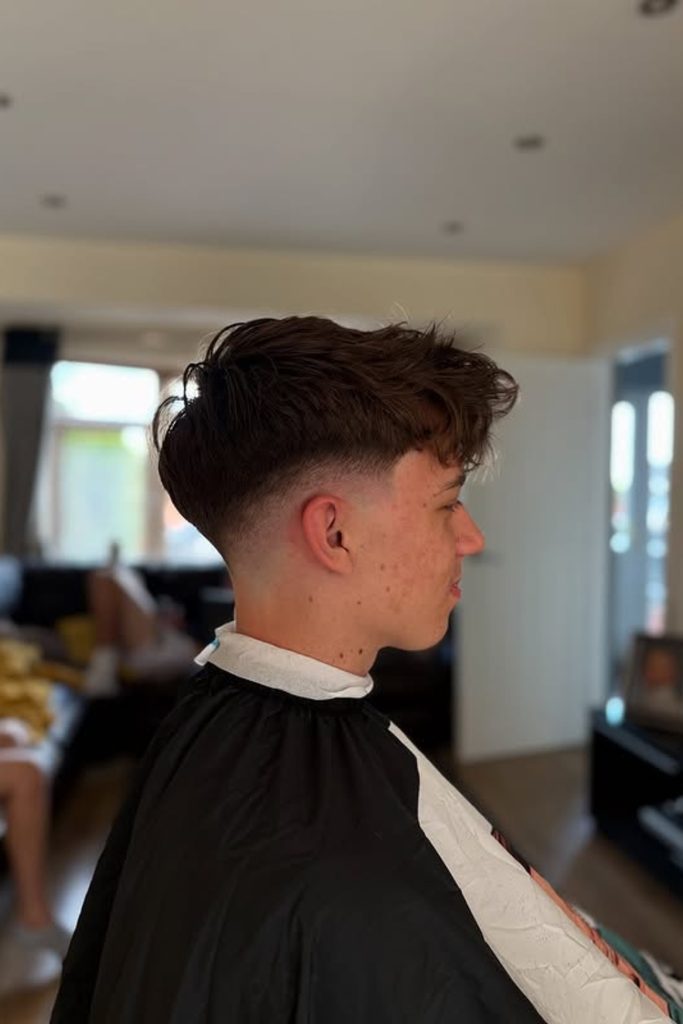
Long Piecey Fringe
This is ideal for anyone who wants a softer fringe rather than a blunt crop as longer fronts will move more and produce more face-framing movement.
Request texture through the ends, but leave some weight close to the front, because over-thinning can make the fringe look flimsy and weak.
For a more casual style, twist a few portions softly while drying, so the fringe breaks up into natural looking pieces.
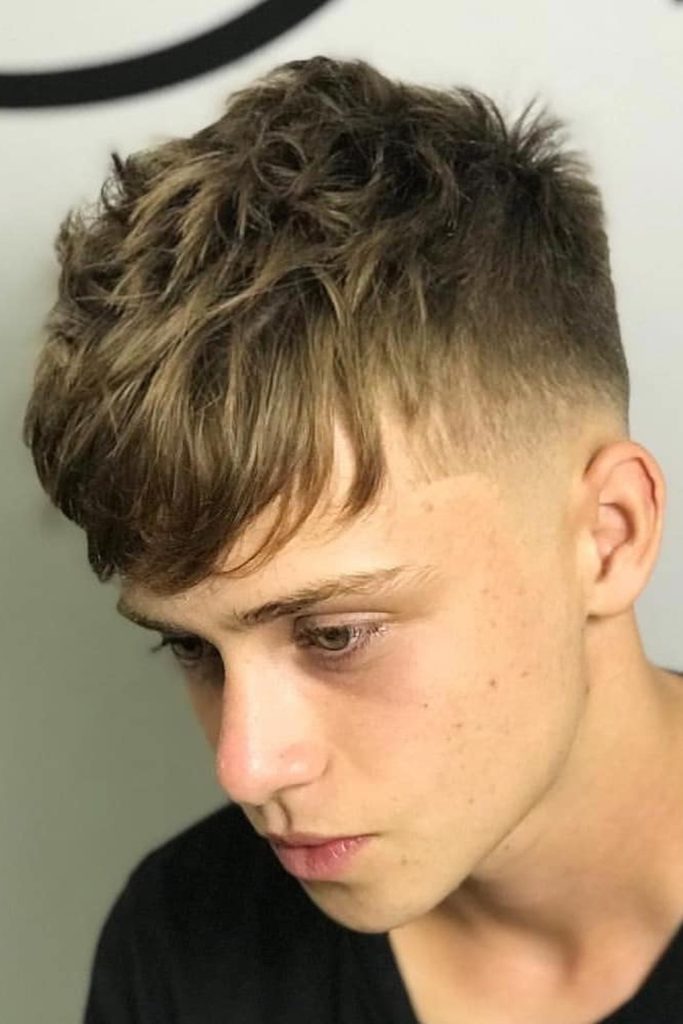
Natural Wave Fringe
Here, you can allow nature to perform most of the styling, so don’t cut the top too short or thin out any useful movement.
This low taper maintains the edges clean without taking away from the volume of the curls, allowing the fringe to sit front with more balance.
Work a light style cream through damp hair and let it fall naturally – don’t fuss over every piece.
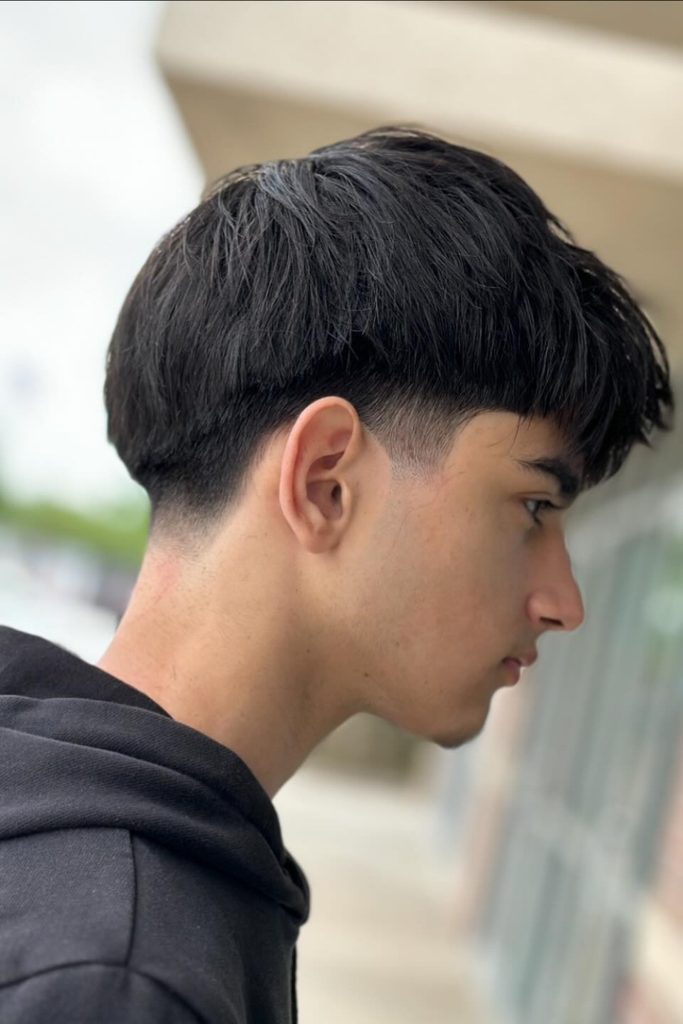
Soft Forward Fringe
This softer fringe is a fantastic choice if you want coverage on your forehead, but you don’t want the front to look thick, blunt or over the top.
Make the front unequal enough to establish separation. Keep the sides faded so they don’t compete with the top.
After drying, rub a little matte paste, focusing on the ends to prevent the fringe from clumping and to keep it loose instead.
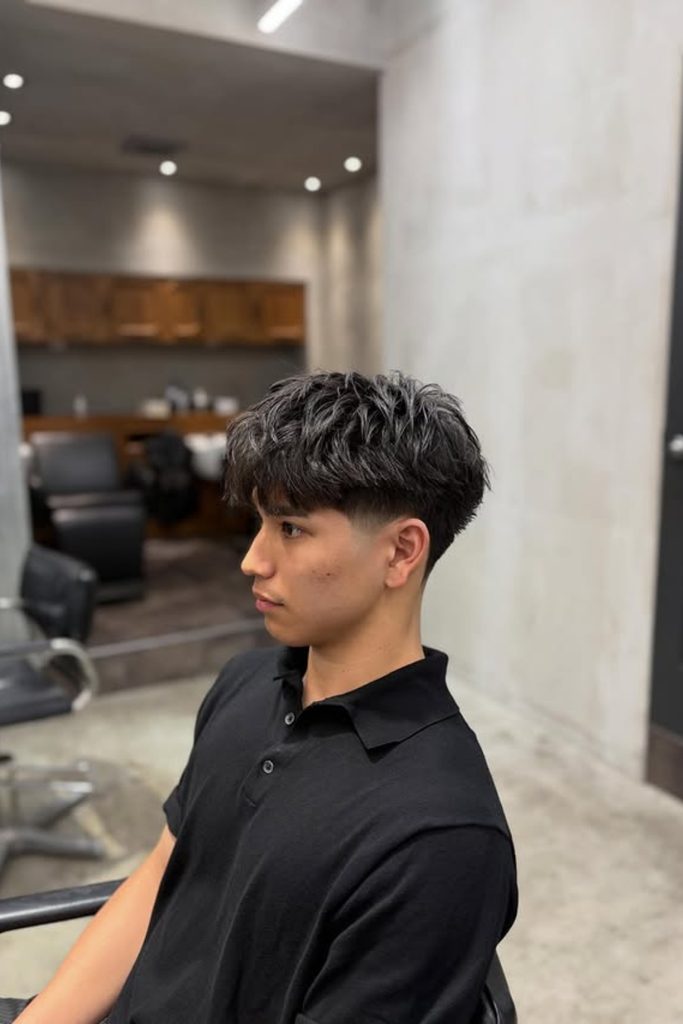
Flowing Wave Fringe
Longer waves around the front soften the frame, so this technique is good for adding movement when you do not want a severely cut fringe.
Don’t remove too much weight from the top and temples, since this can cause naturally wavy hair to take on an odd puffy form.
Dry in the natural bend using your fingers, then lightly separate the front portions, rather than brushing them all in the same way.
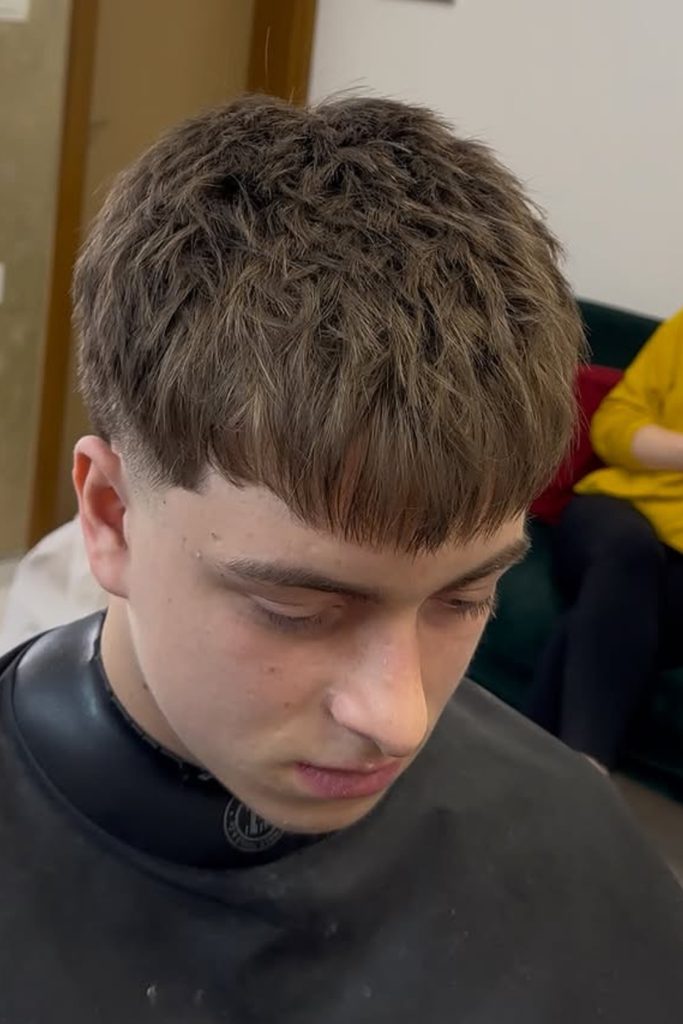
Heavy Drop Fringe
Longer bangs offer straight, dense hair a softer fall, but the front needs enough separation so it doesn’t become one continuous curtain.
Maintain a tight side for the temples, but leave some length above it so the hefty top feels deliberate, not too big.
Here, a light cream or paste is better than a thick clay, allowing you to separate the fringe without making black hair look greasy.
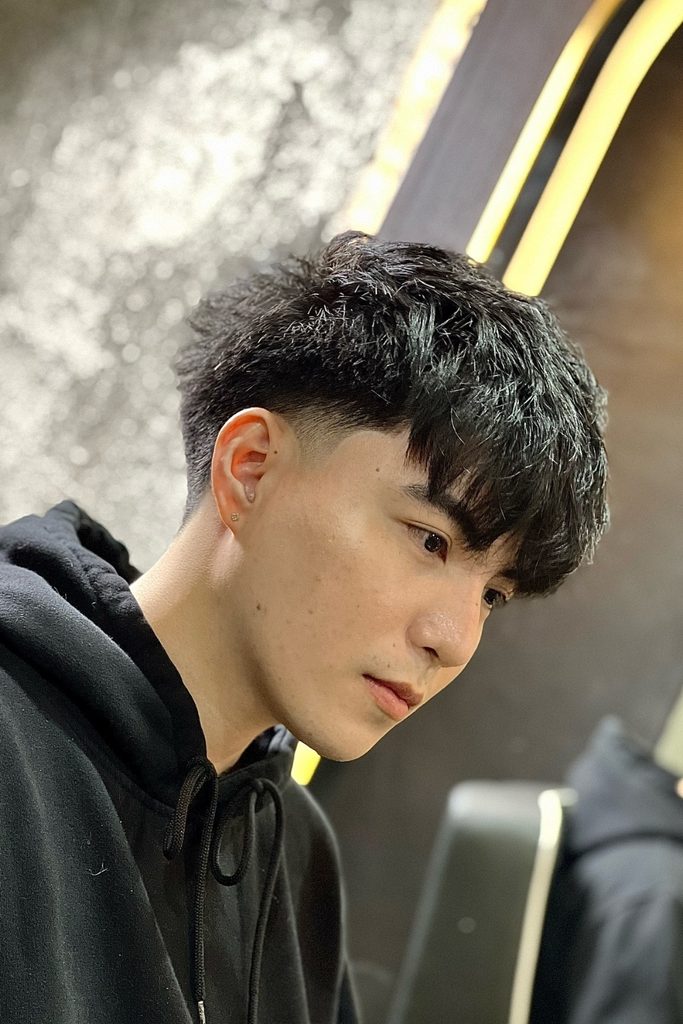
Rounded Textured Fringe
A rounded fringe can look great in thick waves, as long as the barber removes some of the mass inside the top rather than chopping away the surface.
The tighter fade helps the front look stronger, while the fringe being a little broken keeps the haircut from feeling too boxy.
Allow natural waves to create the texture then use just a touch of matte product to stop individual portions from ballooning outwards.
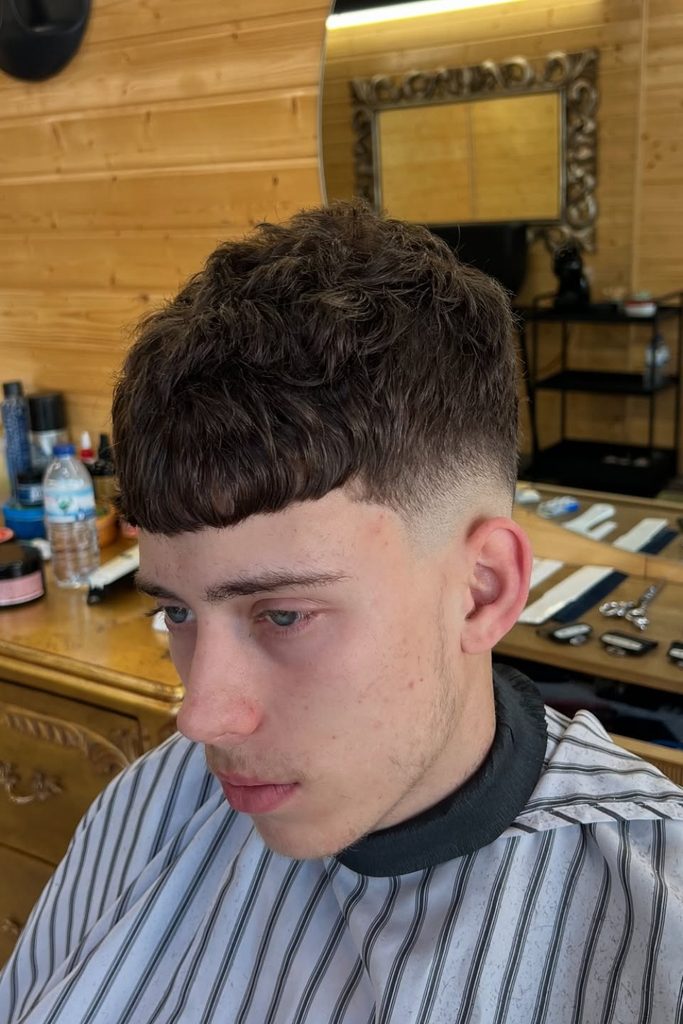
Loose Wave Fringe
Medium-length waves look better when they are allowed to bend freely, so avoid combing the fringe into a perfectly straight edge.
The low taper underneath gives the sides structure without removing the flow, which is ideal when you want a softer silhouette.
Work styling cream through damp hair and let the pieces settle naturally; forcing extra volume can make this relaxed shape look overdone.
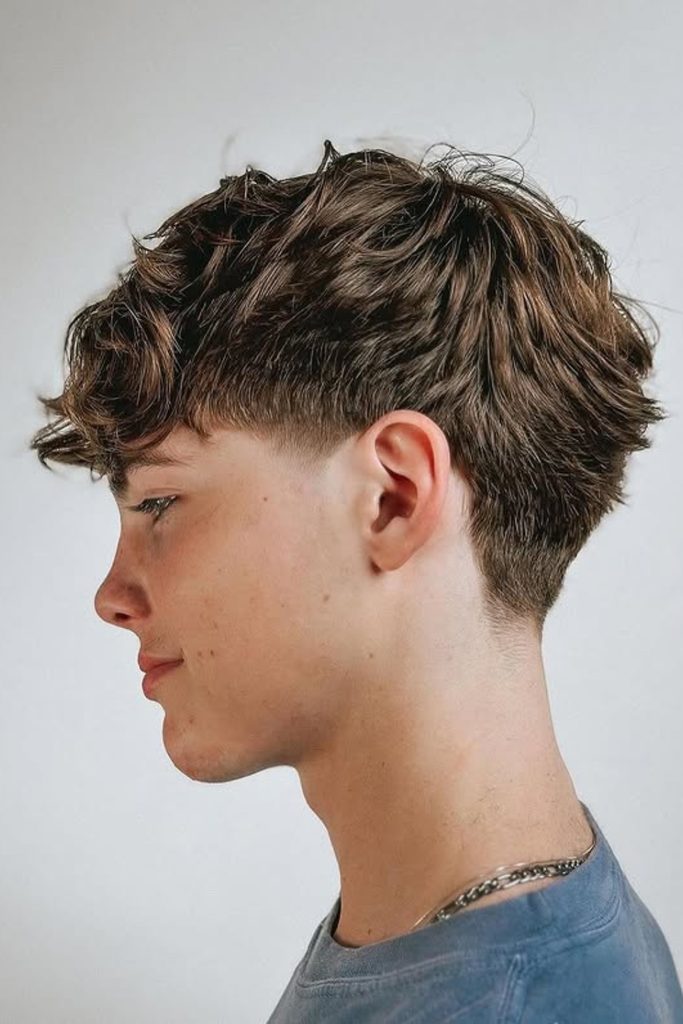
Broken Crop Fringe
If your hair grows straight forward, a shorter, messier fringe is easier to manage, especially if longer bits keep falling in your eyes.
Leave tiny variances through the front instead of one dull line so the haircut preserves texture before any product goes in.
Finish with a dry paste and only take out a few parts, as overworking short fringe turns it spiky rather than sloppy.
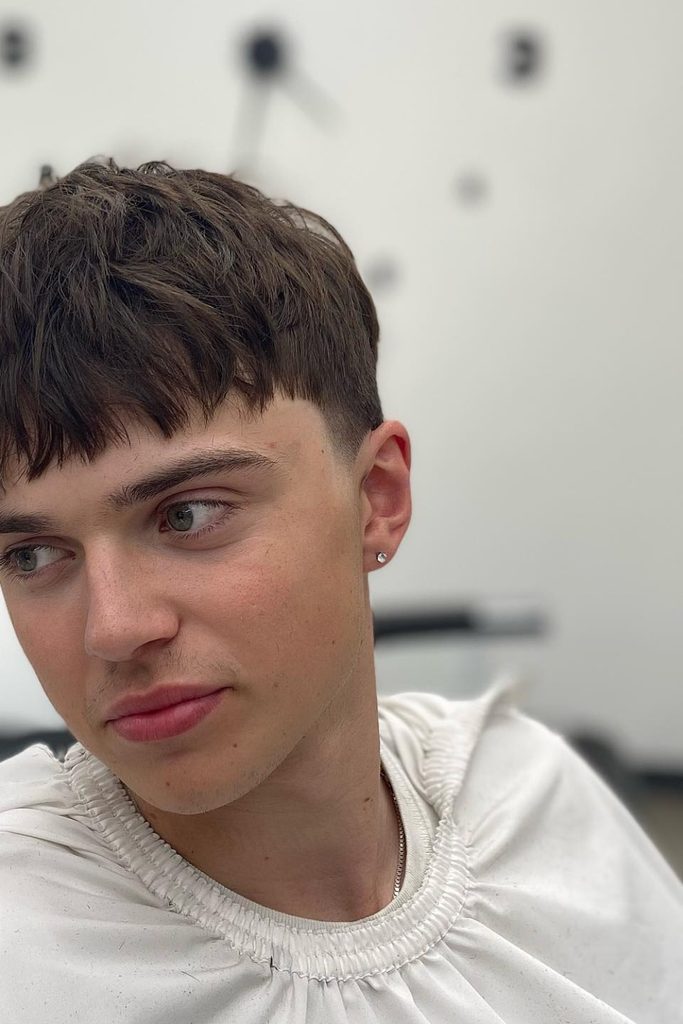
Tousled Thick Fringe
Cutting the top into irregular areas will give thick hair more movement so that the fringe will fall forward, not block heavy.
A low fade is a good choice for the sides, as it leaves enough weight above the temples for the textured front to still feel balanced and connected.
As it dries, lift and spread the fringe with your fingertips, finish lightly so the natural wave is still apparent.
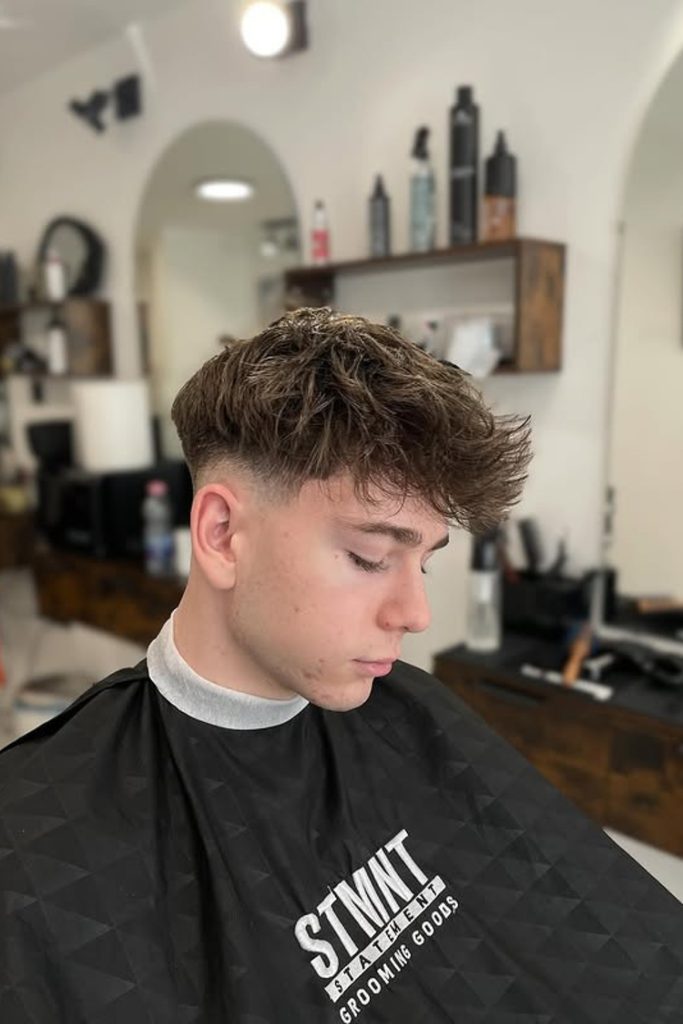
Soft Straight Fringe
The straighter fringe is most effective when the front remains soft and slightly uneven, providing covering to the forehead without creating a blunt, bowl edge.
Having additional length near the crown helps the haircut hold shape from the side, especially if the lower section is tapered close.
Avoid the excessive wax here, just a little matte paste will keep the front apart, but preserve the overall smoother appearance.
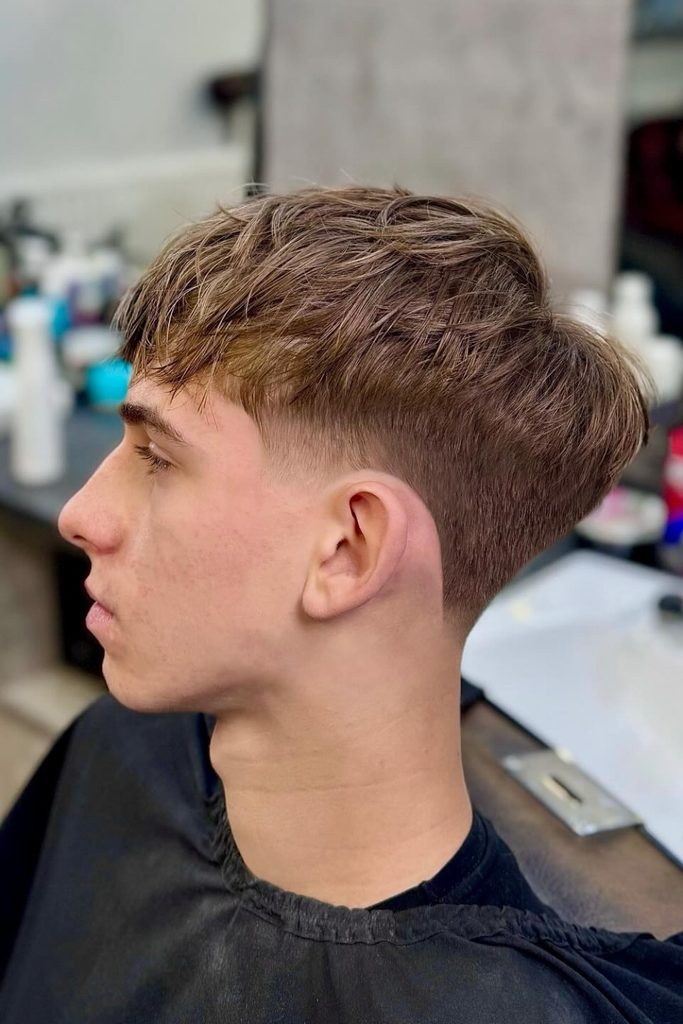
High Fade Texture
A stronger fade can help to accentuate a chaotic top, but the transition should be smooth so that the cut never feels disjointed.
The style has mobility from all angles because of the extra texture you leave through the crown, which is important when the sides are trimmed this tight.
When styling, rough dry the top first and then apply product this way you produce lift without squashing down the natural separation that is already there.
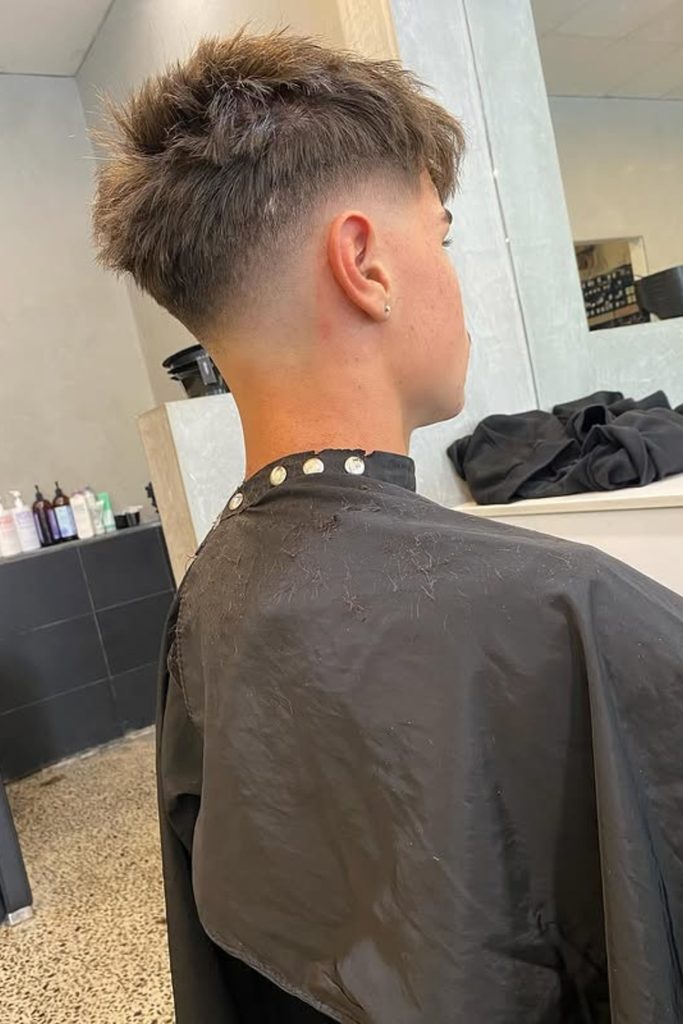
Loose Wavy Fringe
Loose waves already give this cut the texture it requires, thus the objective is to maintain shape, not add more movement.
A gentler taper along the sides maintains the cut loose, and allows the longer top enough room to flex gently around the head.
Work a light cream into damp hair, scrunch gently and allow the fringe fall where the wave naturally wants to fall.
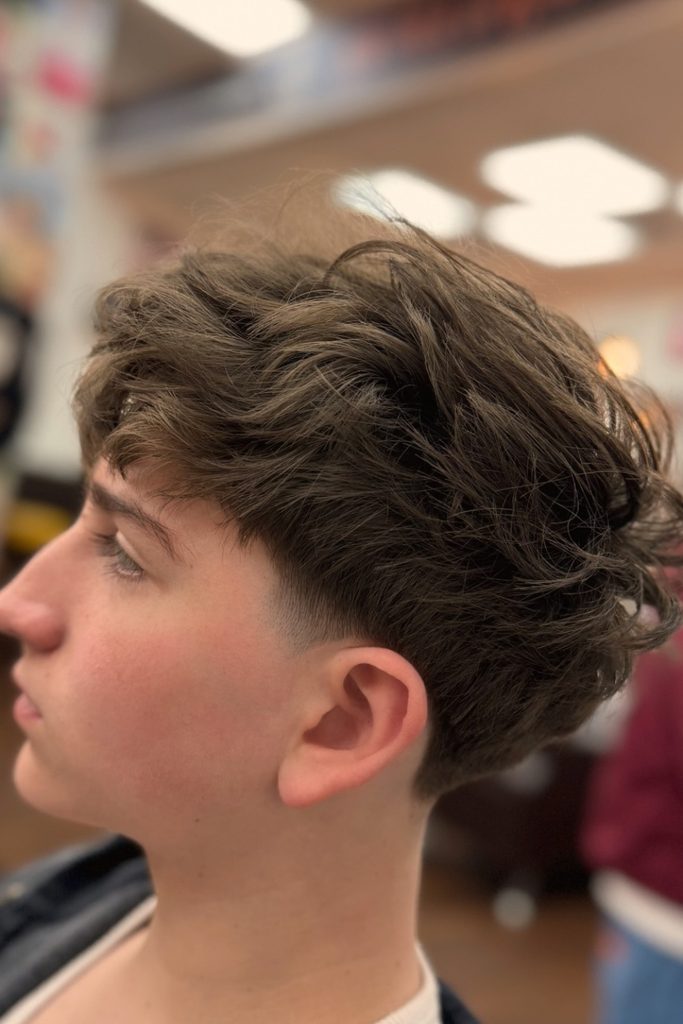
Side-Swept Texture
A longer fringe can seem more characterful when a few strands are swept to the side for a relaxed finish on straight or slightly wavy hair.
The added length up front, along with a nice fade, stops the style from feeling heavy on the ears and lower sides.
After drying, run work matte paste through the ends, then relax the front with your fingertips instead of combing it into place.
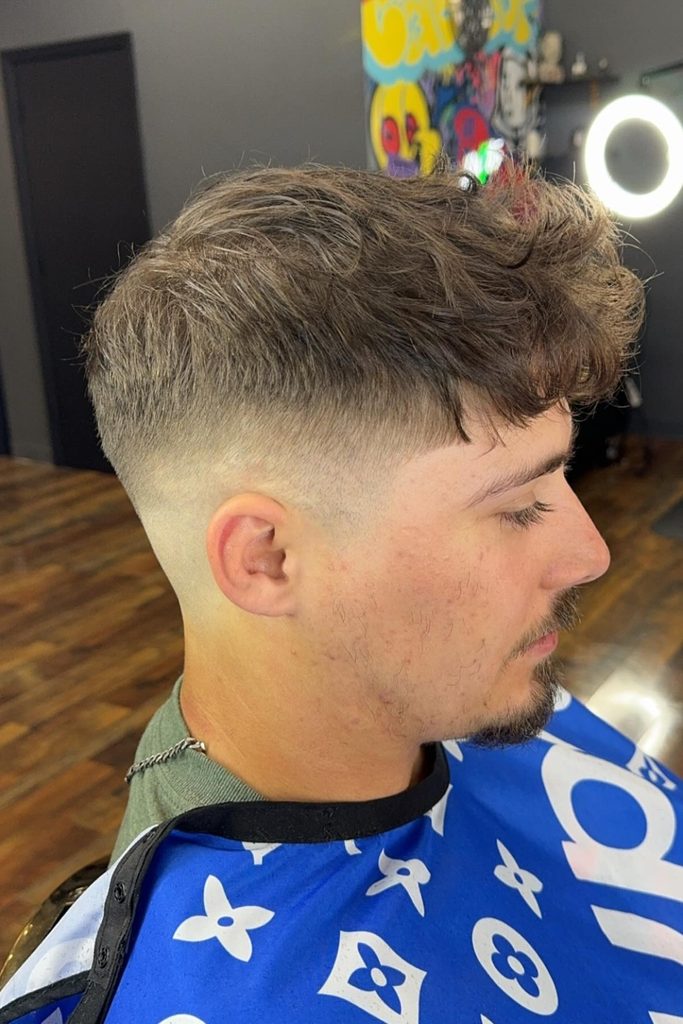
Dense Wavy Top
Thick hair may hold a lot of volume, but internal texture is important so the fringe falls organically and doesn’t sit like a helmet.
The higher fade makes the top look more fuller, thus preserving some softness at the temples helps the haircut stay balanced.
Instead of weighing down thick hair with clay, go for a lighter paste and let the natural wave do most of the separating.
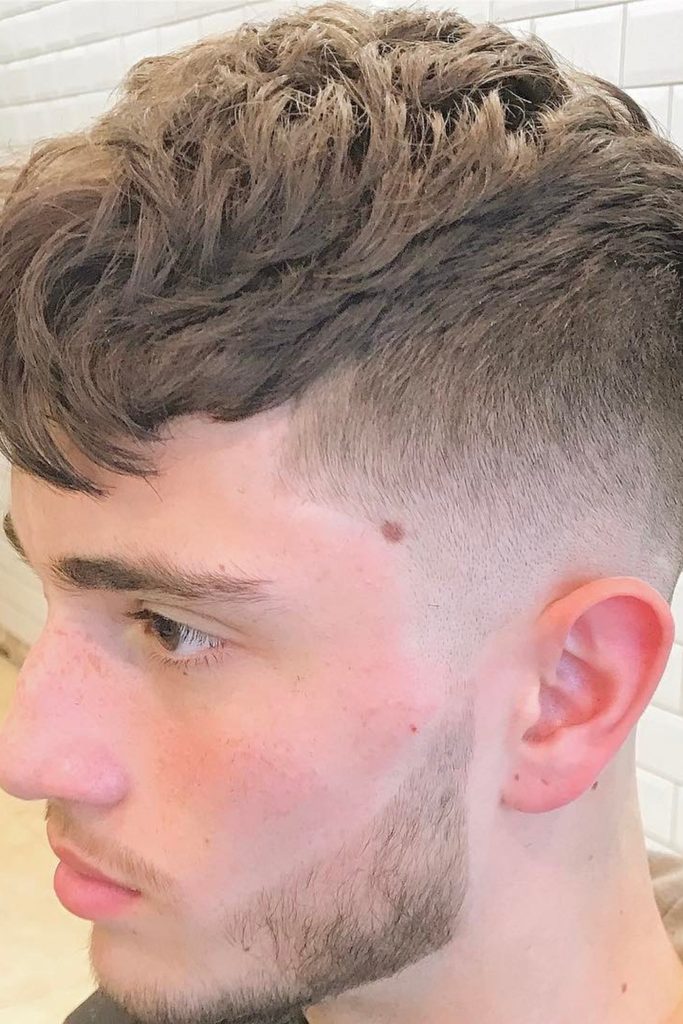
Heavy Straight Fringe
Instead of one continuous edge, small portions broken off the front make straight hair look less flat.
This heavier fringe can be worn with a gentle taper around the sides especially if you want coverage for the forehead and don’t need the severe contrast.
Use a little amount of styling cream and add texture just in places where extra control or separation is needed in the fringe.
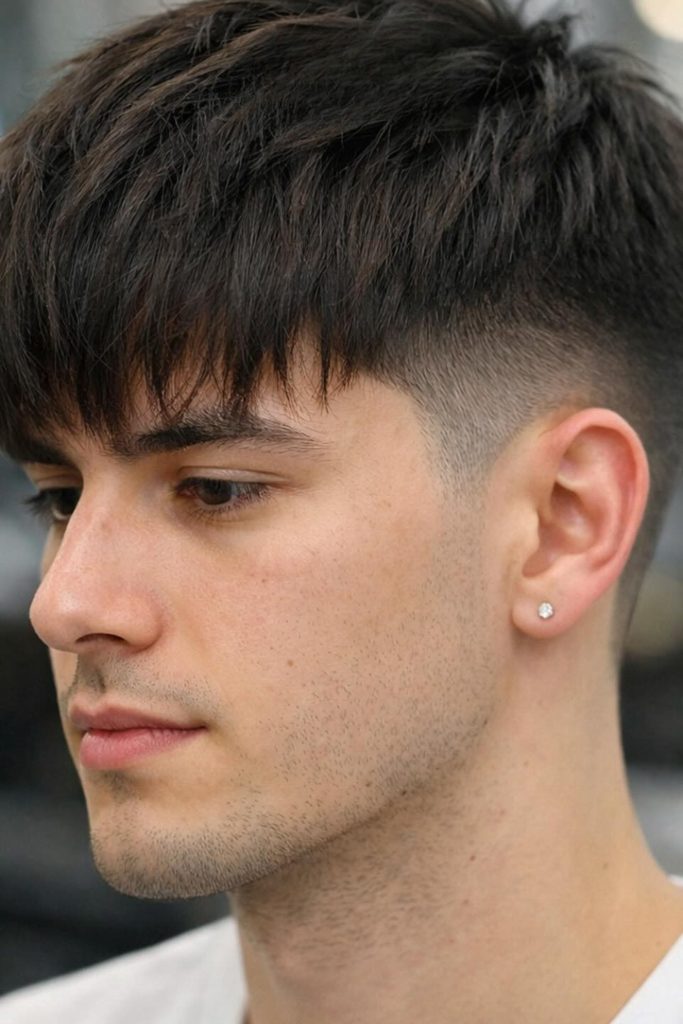
Swept Volume Fringe
A thicker fringe is a good option for hair with natural substance, as longer layers may be swept forward without falling flat the second you leave the house.
Fade tight underneath to leave space for the volume but the top should still merge seamless across the upper sides.
Blow-dry roots forward to create a fringe. Pinch the ends apart to create movement rather than stiff height.
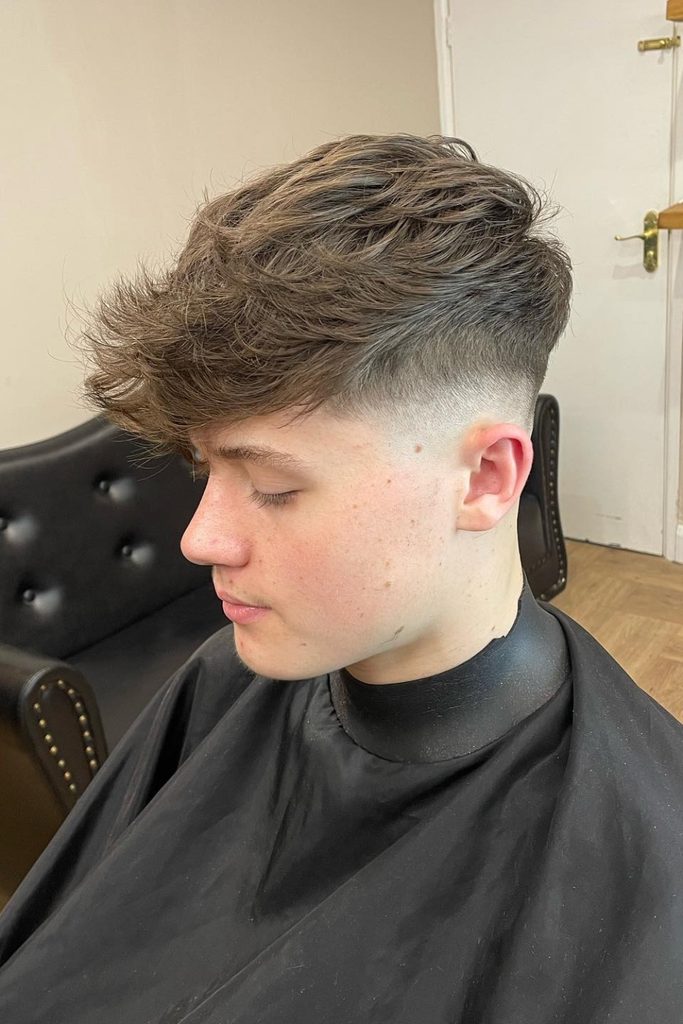
Compact Textured Fringe
If you keep enough texture on the top , a shorter fringe can still seem purposely untidy — and it makes for a good lower-maintenance style.
The faded sides set the form, so a somewhat uneven front keeps this compact design from looking too stiff.
Work a small amount of matte paste into dry hair and tease the fringe up, rather than trying to force extra height.
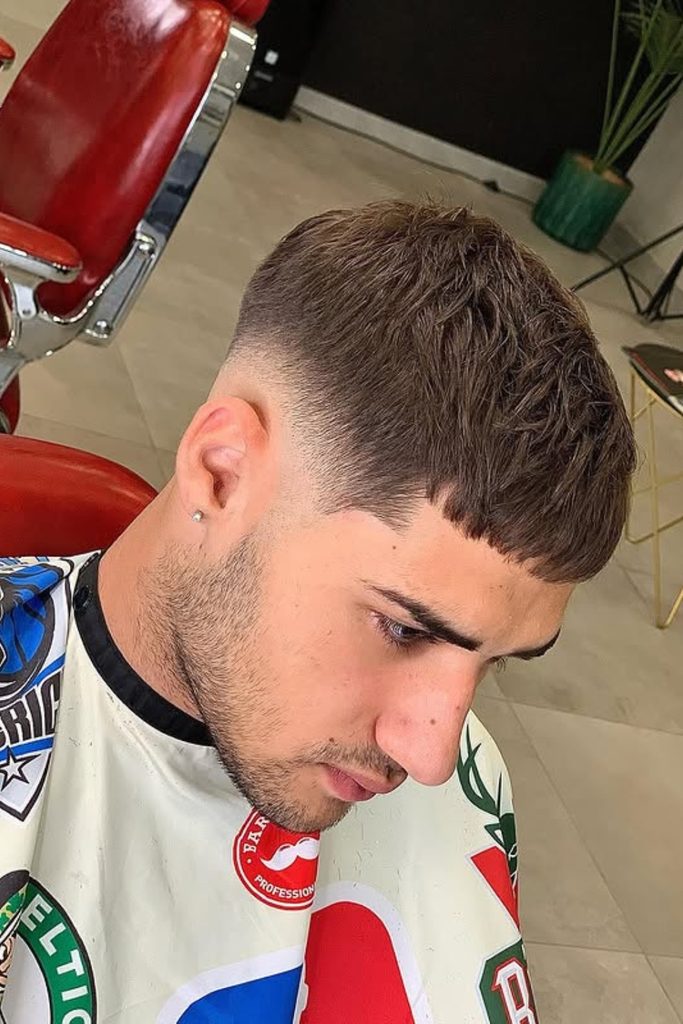
Relaxed Wavy Fringe
Soft waves can give this fringe a more natural look, especially if you desire movement but without a strongly groomed or excessively crisp look.
Leaving some weight on the upper sides helps the longer top flow better and the taper keeps the neckline and temples tidy.
Let your hair air dry or use a diffuser on a low setting and then use a light cream to define the curls without creating a crunchy edge.
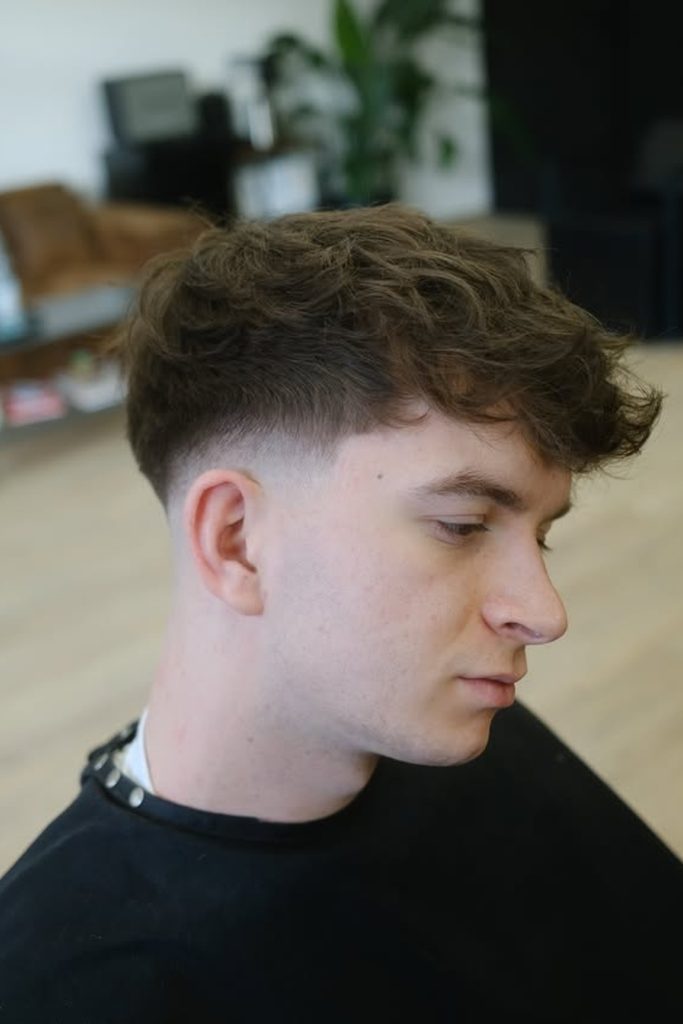
Defined Curl Fringe
Instead of cutting the curls too close, retain enough length on top to give this fringe a lot of movement.
The sides are kept neat with a delicate taper while the textured front remains full and naturally separated.
Use a light curl cream or matte paste and scrunch softly so that the pieces have definition without being too styled.
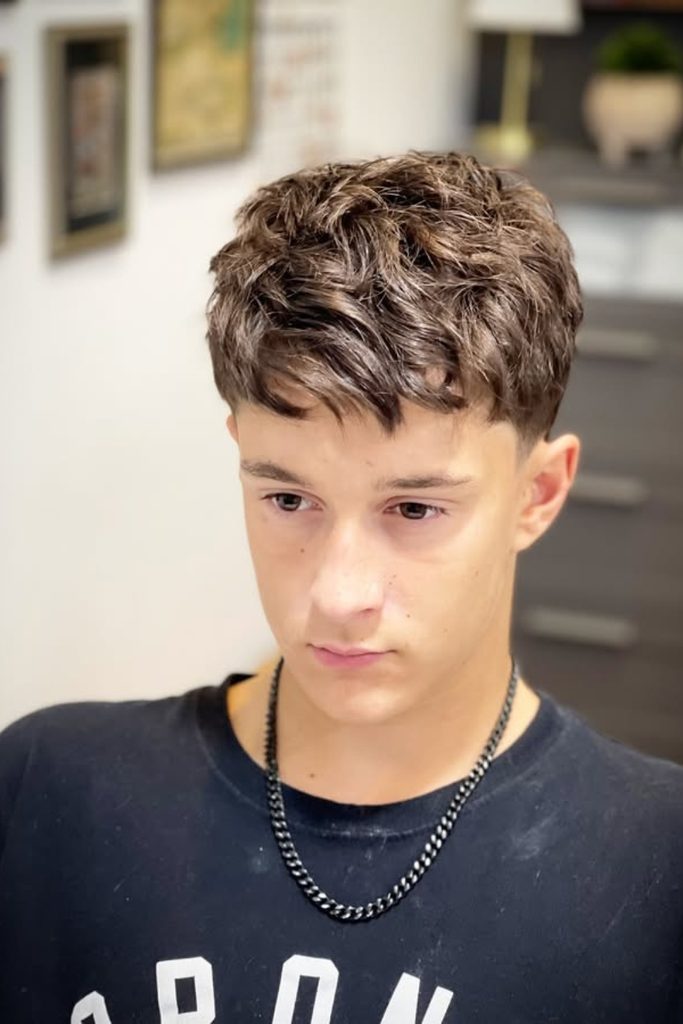
FAQs
Can Straight Hair Get a Messy Fringe?
Yes, straight hair can work with a messy fringe but usually needs extra texture trimmed into the top to stop it from dropping flat.
Point cutting, light layering and a little root lift provide distinction without making the fringe look rigid or over-styled.
How Often Should You Trim a Messy Fringe?
A messy fringe often needs to be maintained every three to six weeks, depending on how precise you keep the taper or fade.
Short fades lose their neat shape quickly, but gentler tapers and longer scissor-cut sides can grow out more organically between visits.