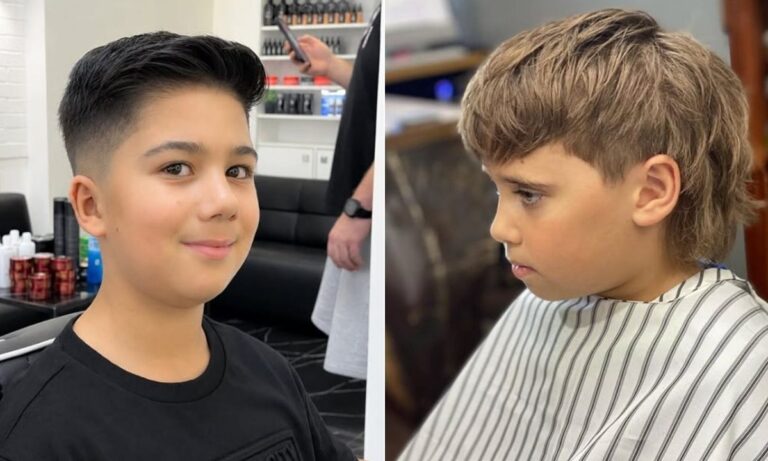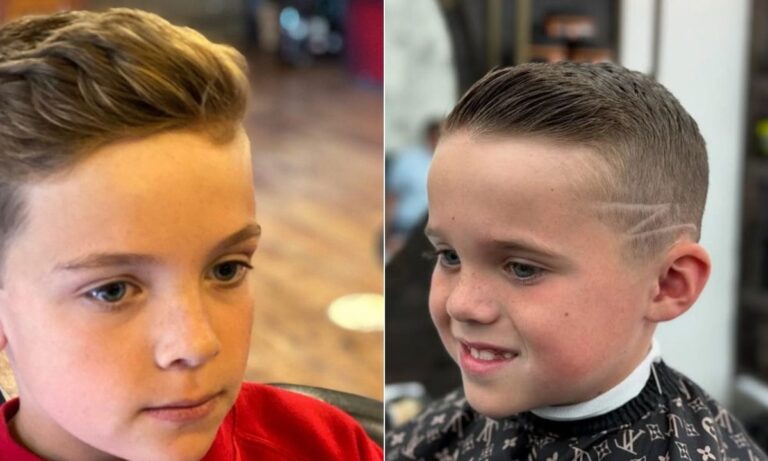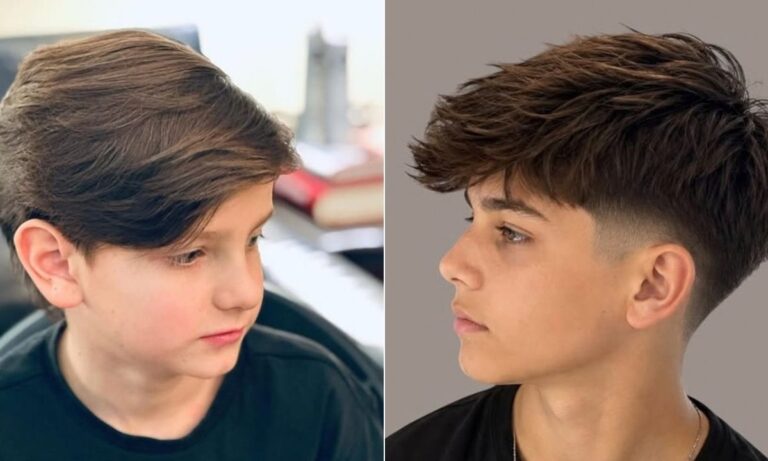
It’s simple to find a fading that appears good in a photo. The tricky part is figuring out if it will actually work with your kid’s hair.
You may be wondering how short the sides should go, what fading works best with his natural texture.
Even figuring out what to say to the barber might feel complicated when low, mid, taper and skin fades all appear different.
In this article you will find out what you should consider before choosing a kids fade haircut, and what you should talk to the barber.
How Do You Choose the Right Fade for Your Kid’s Hair Type?
Before you pick a fade from a photo, observe the natural growth and form of your kid’s hair.
Straight or fine hair can give a good view of the fade, but leaving a little texture on top helps to avoid the cut looking too flat.
Often thick hair works well with faded sides as reducing extra thickness makes the top more manageable.
If you have curly or coily hair, don’t choose the top length when the hair is stretched, as curls can look a lot shorter when dry.
Sharp Side Part
If your kid’s hair is straight and thick, you can leave more length on top for control of the combed hair.
Request a neat high fade and defined hard part from the barber, but leave the front a little longer.
A little bit of light styling products will keep those comb lines in place without making the everyday styling feel excessively difficult.
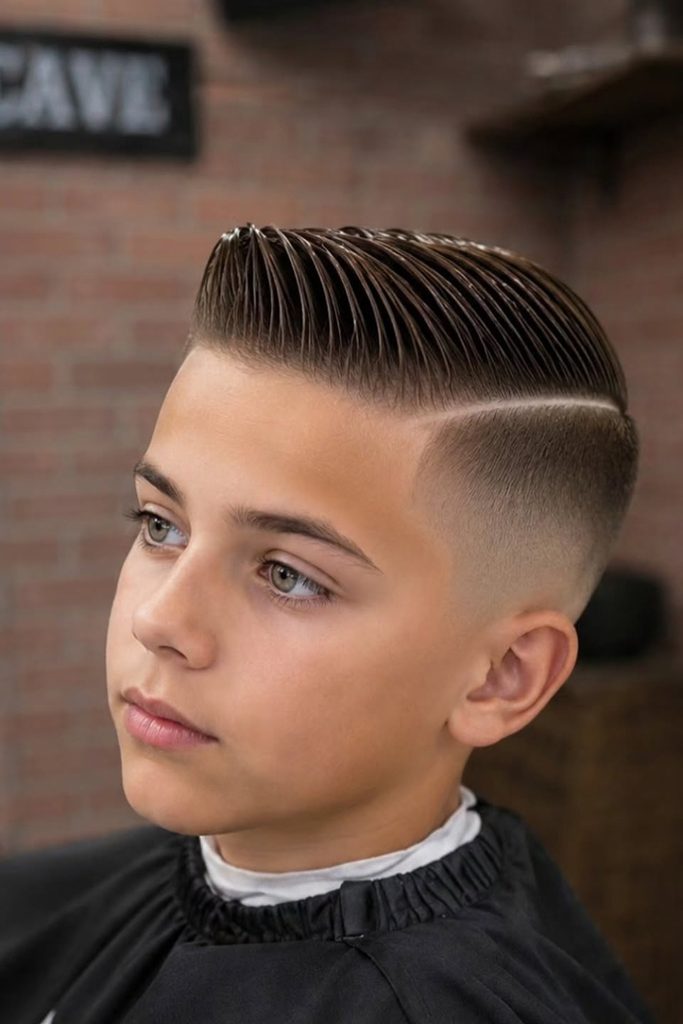
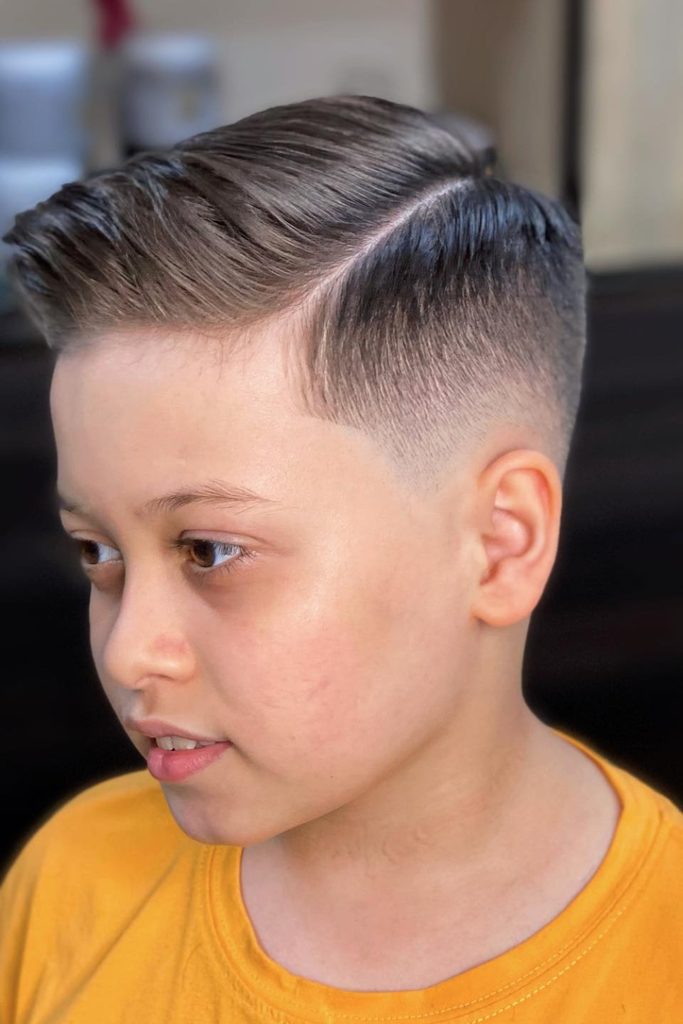
Soft Side Sweep
For a more everyday look, keep the fade lower and let the lengthier top go in its natural course.
This cut works well on straight hair, especially if the barber doesn’t take out too much weight around the part.
A bit of dampness to the top, dabbed sideways, provides school mornings with a polished finish without asking too much styling time.
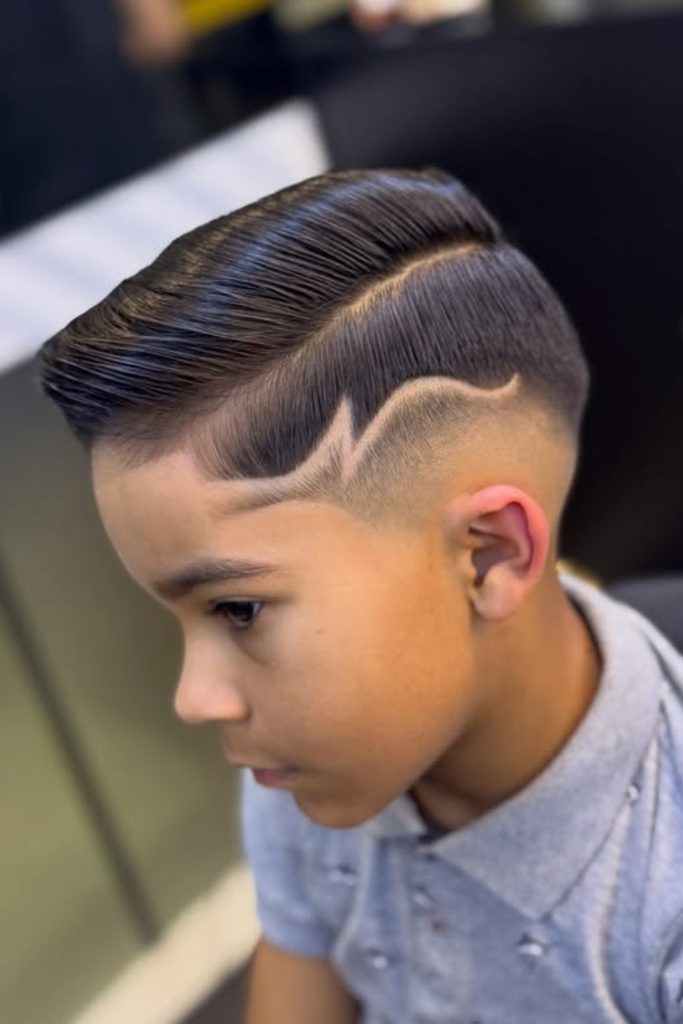
Designed Fade
If a little more assertive is what your kid is after, a shaved design might convert a recognizable fade into something personal.
Allow enough darker hair above the fading area so that the curved lines are contrasted enough to be easily noticed.
Keep this one for youngsters who are okay with more frequent barber touch-ups, as designs lose definition as the hair grows out.
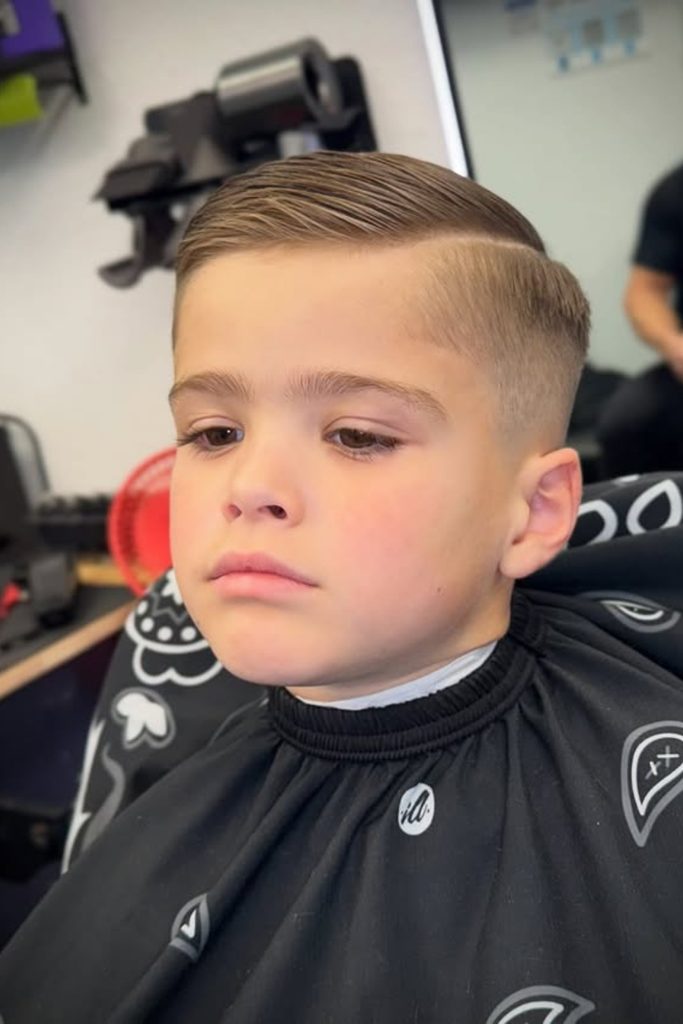
Classic Comb Over
Simple comb-over works good when you want the fade to be obvious but not make the whole haircut feel too sharp.
Keep it longer on top, which provides straight hair enough weight to stay neatly swept over to one side.
If exposed skin feels too dramatic, ask your barber for a subtle faded transition around the ears.
Textured Brush Up
If your hair is straight and thick, you can get natural volume by leaving the hair a bit longer on top and not using heavy styling products.
Ask for a slow fade around the sides, but leave the front textured rather than chopping everything short.
This is practical for busy school mornings, a fast brush of lightweight product to contour the front upward.
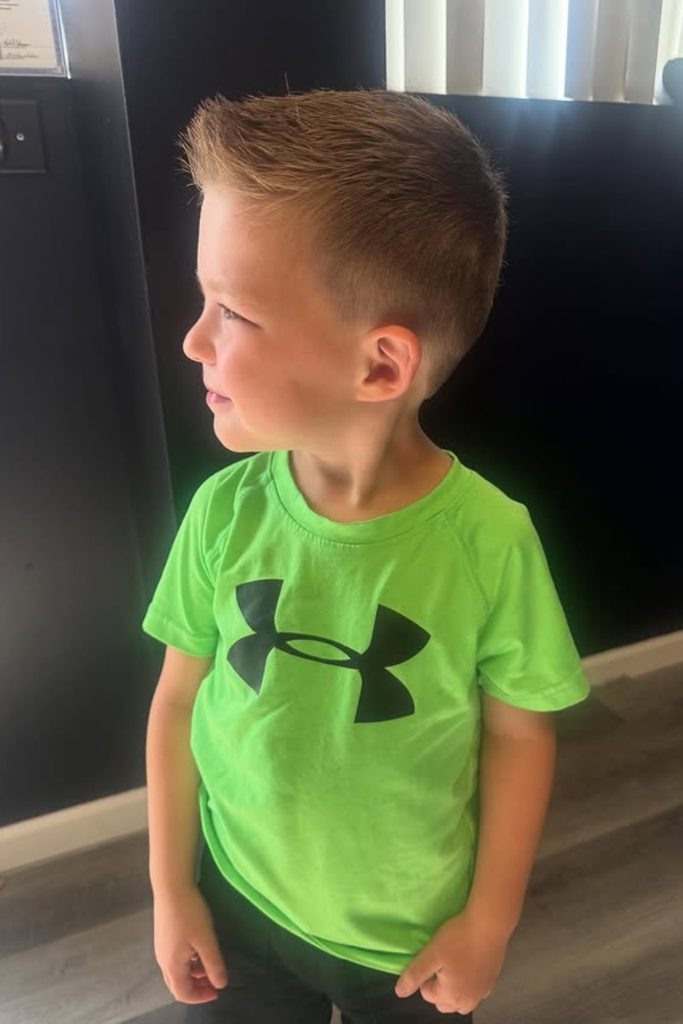
Curly Design Fade
Coily hair is already full of structure, so a clean fade can give the sides a crisp look without flattening the top.
By keeping the natural density above the fade, the haircut is well-balanced, and the shaved lines give the style uniqueness without affecting the curls.
Choose your design carefully, since clean shaved details grow out quickly and frequently require touch-ups to remain well defined.
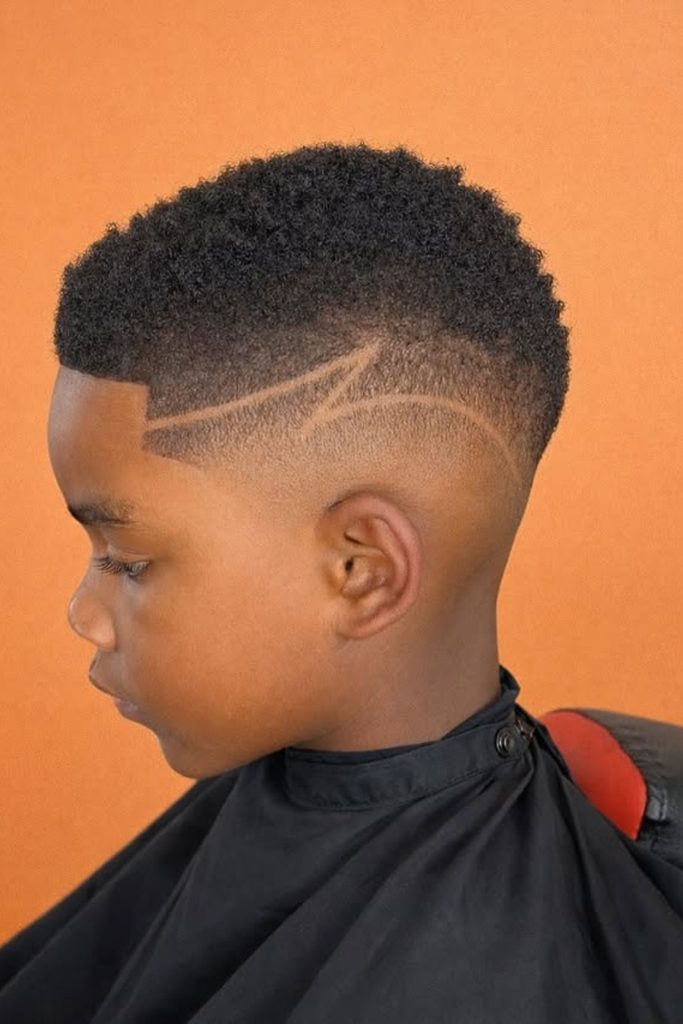
Soft Burst Fade
Longer textured hair can still be fun when you fade tight around the ear instead of taking the entire back short.
Request movement through the crown and neckline to add contrast without sacrificing the relaxed, tousled shape.
This is especially good if your kid enjoys longer hair but requires cleaner sides around the ears.
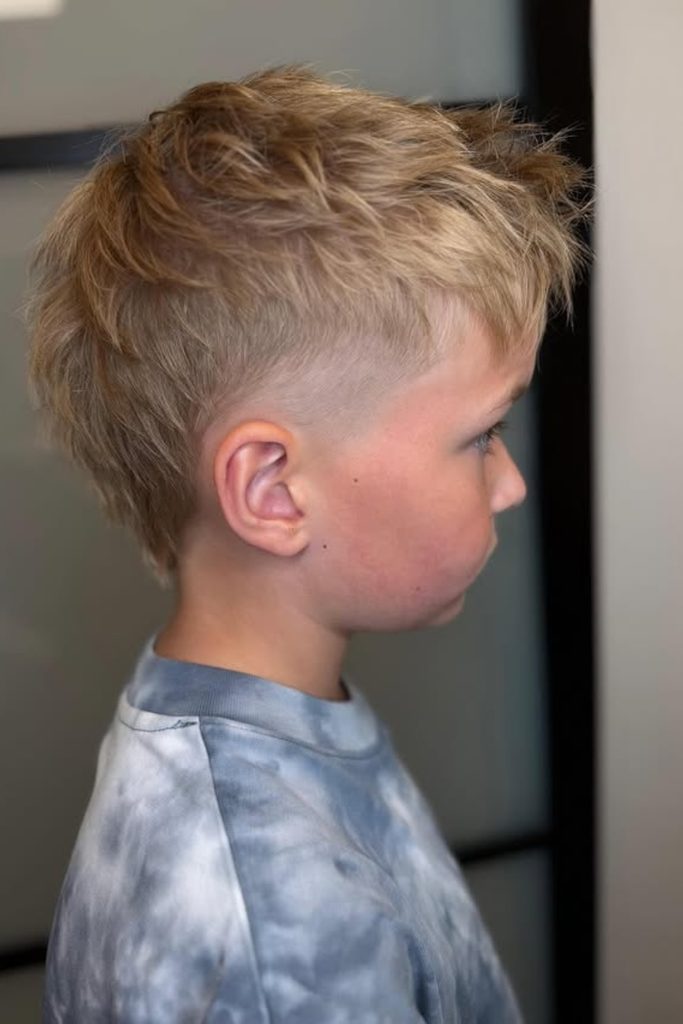
Rounded Crop Fade
Thick straight hair can get bulky at the sides, but a smooth fade helps the heavy top sit better.
Keep a lot of length across the fringe and crown to get that rounded look and don’t show too much forehead.
The top falls forward naturally so the cut can keep neat without the need for thorough combing before school each morning.
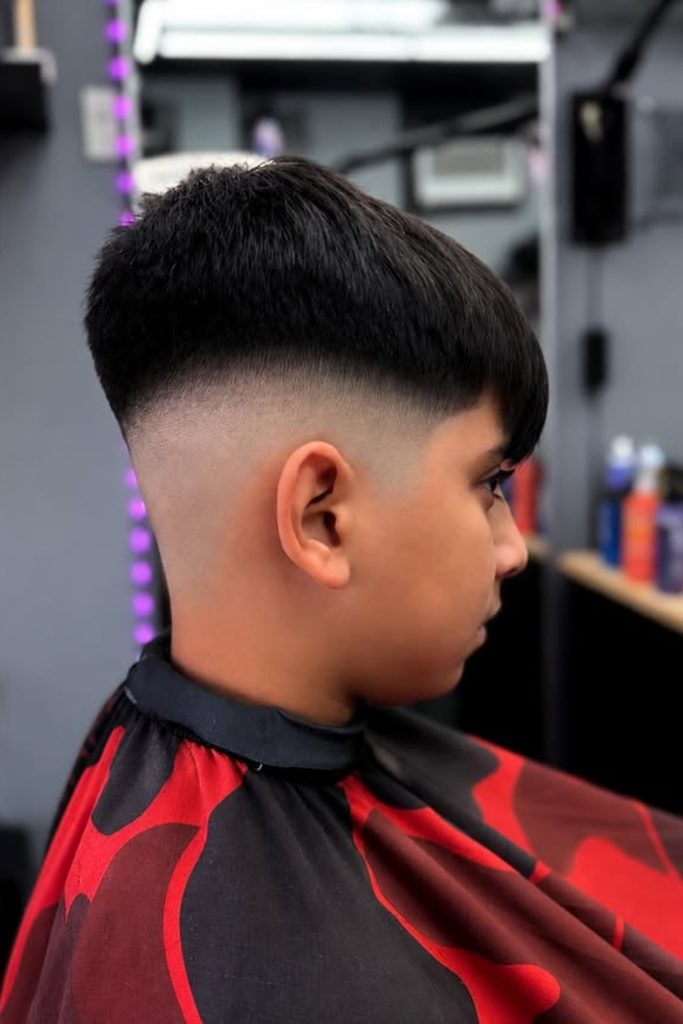
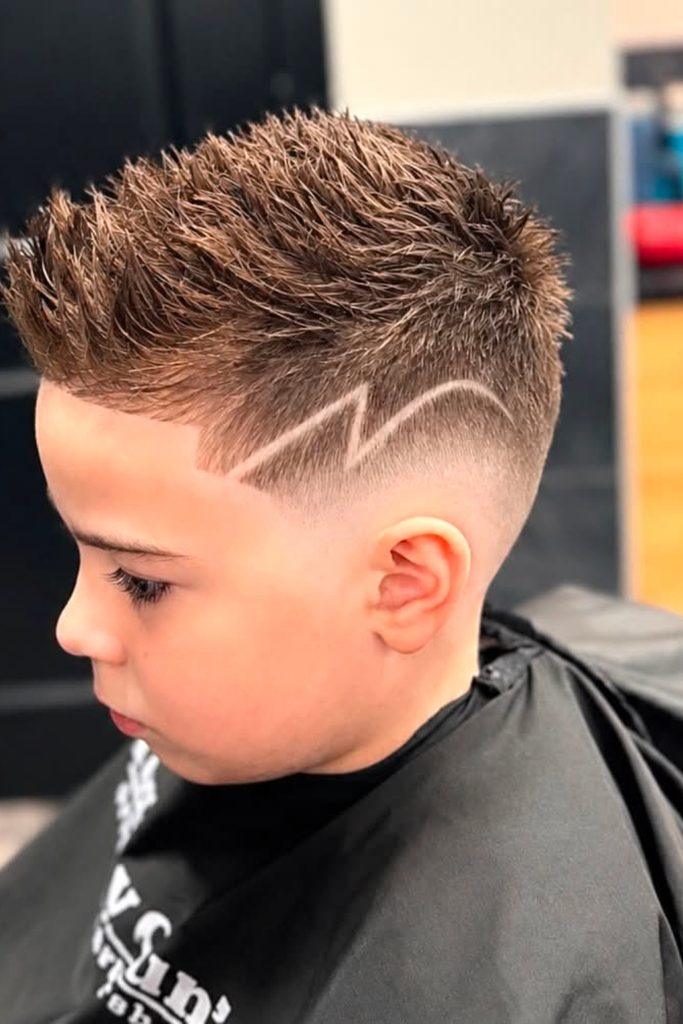
Spiky Design Fade
A short top with spiky texture is a whimsical touch, especially when the sides are clean and closely integrated.
If your kid wants a little extra personality, use one basic shaved design instead of filling the entire fade with lines.
Work a little quantity of product into damp hair and lift sections with fingertips to separate easily.
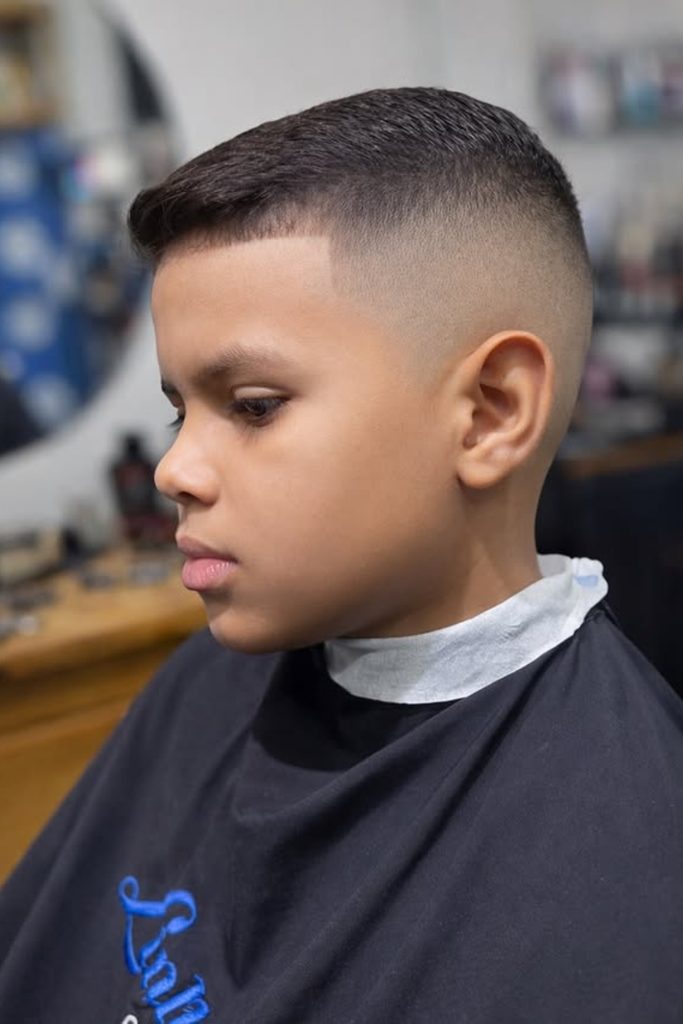
Short Crop Fade
A shorter top can make mornings easier but a little length keeps straight hair from looking totally flat.
Tell the barber to provide a smooth high fade that fades out to the ears but doesn’t take the blend much higher.
It’s a good option when everyday style feels too much, so the short top can go its natural way.
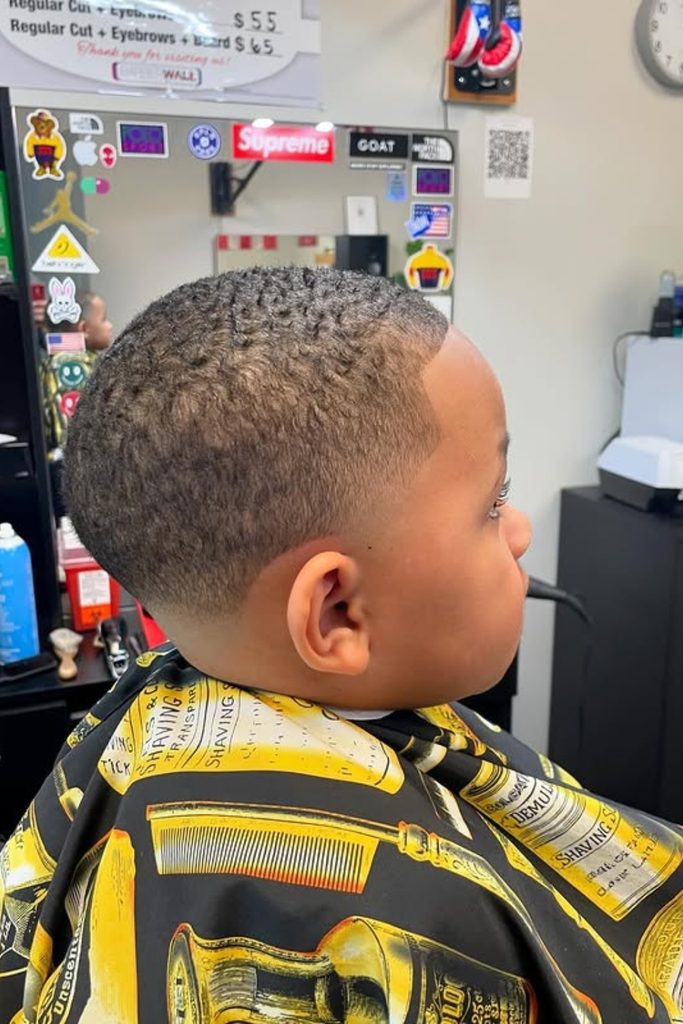
Wavy Taper Fade
Natural waves are meant to live outside, so don’t trim the top too tight merely to match shorter faded sides.
A quick taper around the ears and neckline will clean up the shape without sacrificing most of your kid’s natural texture.
Keep the waves hydrated and gently formed, not weighed down with product that can limit mobility.
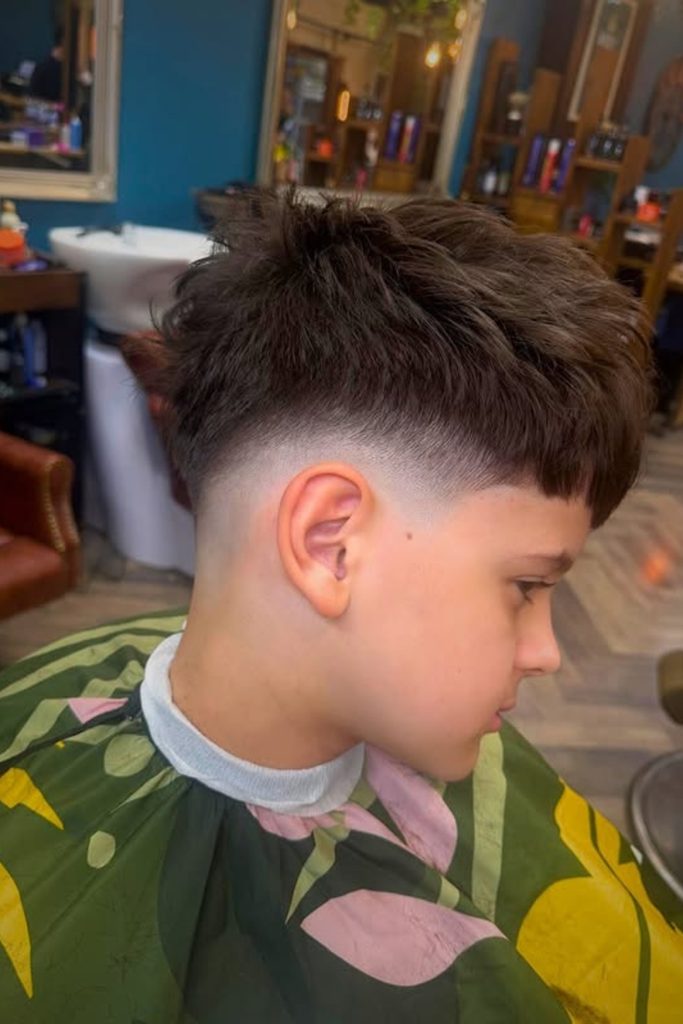
Textured Fringe Fade
The extra length at the front is great if your kid prefers a relaxed style without a super neat finish.
Mix that thicker fringe with a tight fade around the ears to take away bulk, but still have mobility on top.
Most mornings finger style is all that’s needed, the little uneven texture makes this cut look more natural.
Subtle Line Fade
One short shaved line is subtle if your kid is looking for a little bit of intricacy, but not over the top.
Let the top have texture and be a little short so it merges into the fade smoothly and does not create sharp contrast.
This one is perfect for active youngsters as the everyday shape is still achievable without much fuss in the morning.
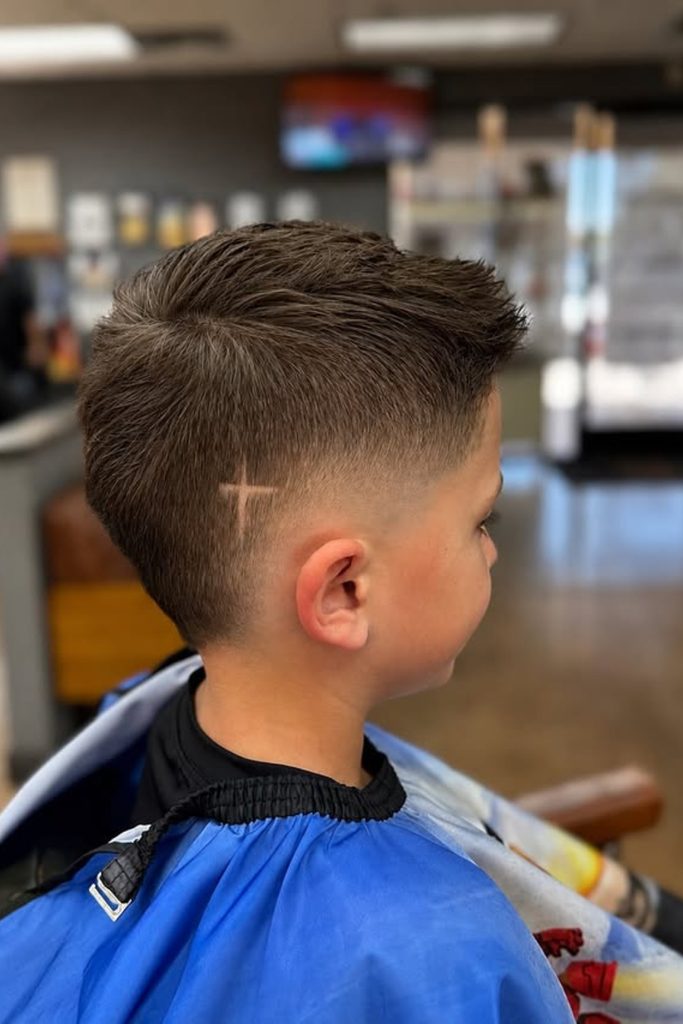
Messy Crop Fade
Allowing the thicker hair to fall forward naturally can create a laid-back feeling to a fade without being too polished or too precisely managed.
Request textured layers on the top and a clean fade underneath, yet with enough weight to give it a natural flow.
Two short shaved lines give it some added character, but if school rules require something simpler, feel free to skip it.
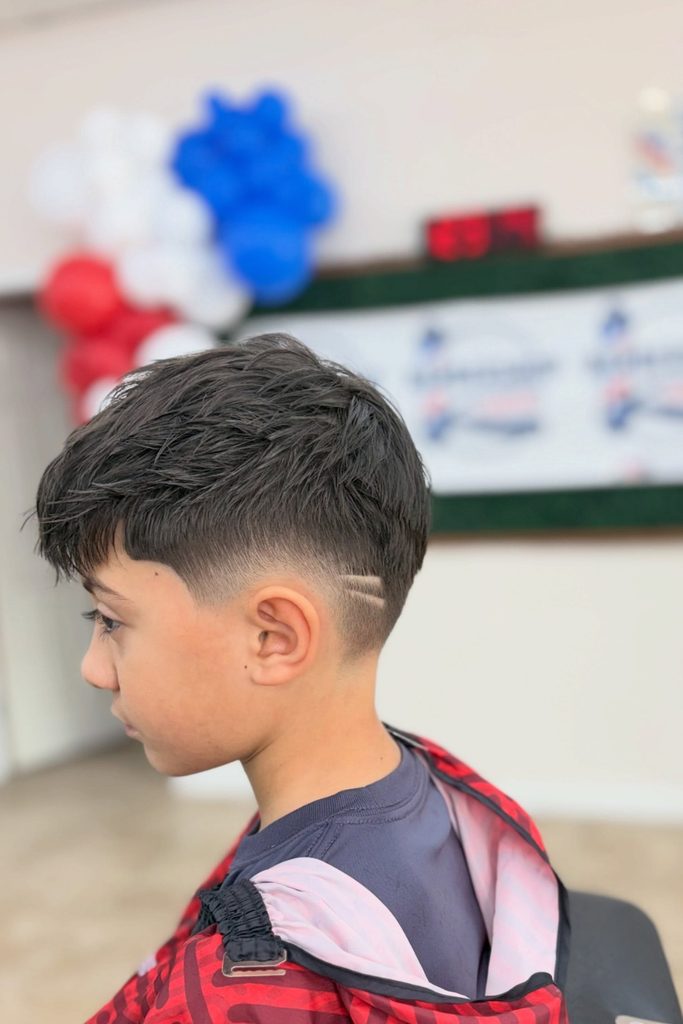
Short Blended Fade
If your kids hate style completely, keeping the top uniformly short eliminates most of the pre-school job.
The sides are somewhat faded, giving enough contrast to make the haircut stand out without the need for longer styled pieces.
Keep the front naturally lined rather than aggressively styled and the overall cut stays easy to handle between appointments.
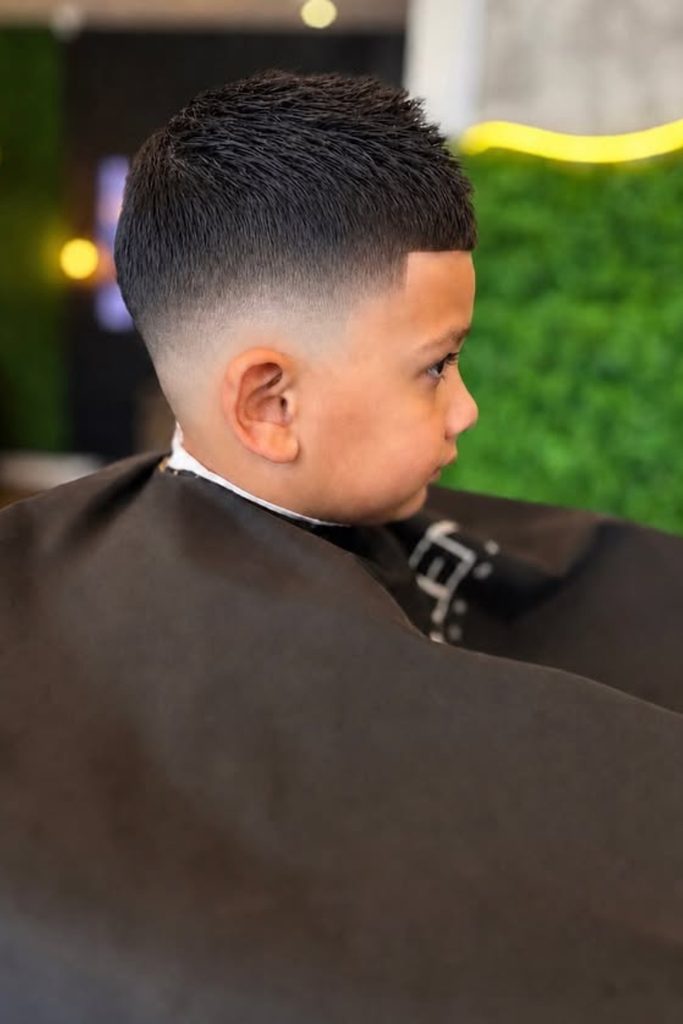
Buzz Cut Fade
Sometimes the easiest solution is also the cleanest, especially if your youngster desires close to zero daily hair routine.
Rather of seeming uniformly clipped everyplace, keep the haircut structured by pairing an evenly buzzed top with faded sides.
Have the barber blend the cut well and maintain the front edge sharp. Both are essential to this easy cut.
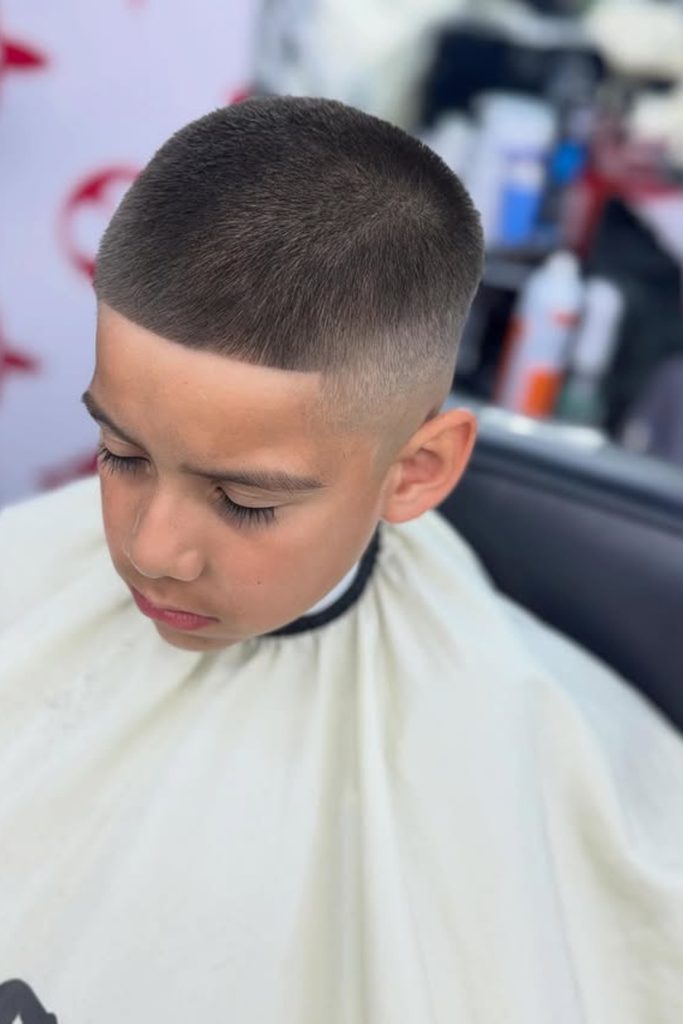
Polished Hard Part
For a well-combed finish, a defined hard part gives longer straight hair a definite direction, if your kid likes that.
Leave plenty of length at the top for smooth styling, but fade the sides close to reduce bulk.
Use a small amount of a lightweight product for hold, since too much can make fine kids’ hair look too rigid.
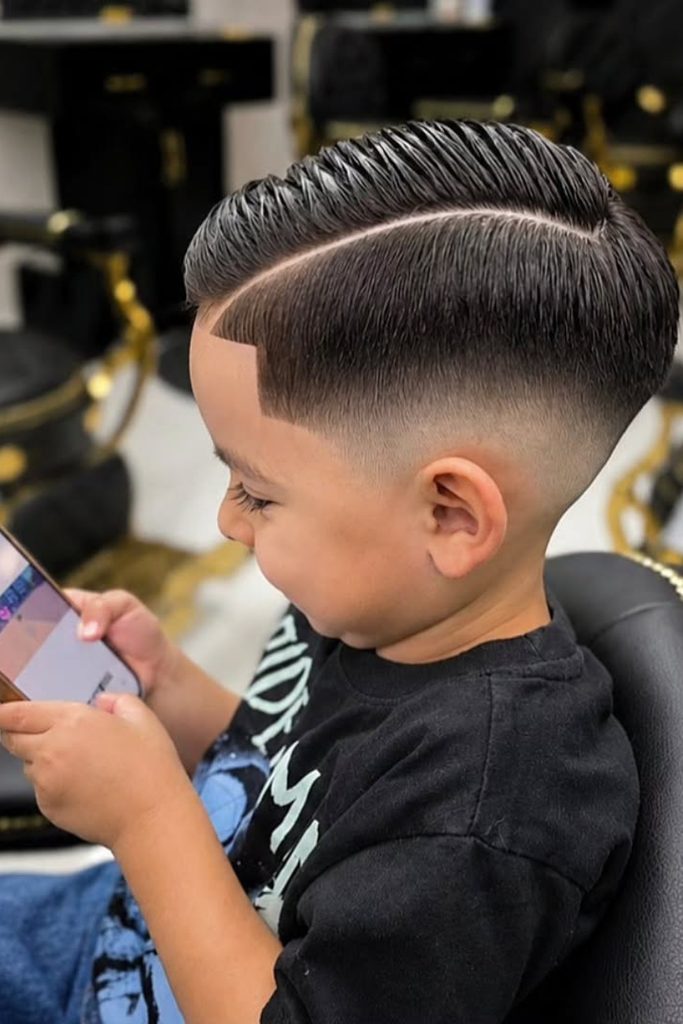
Slicked Side Fade
Side swept is a classy way to add gloss to naturally flat hair without the need for height or texture.
Ask the barber to leave some working length on top and merge the sides progressively near the temples.
“Comb damp hair in the direction it grows and apply a minimum amount of product so the completed style is soft and manageable.
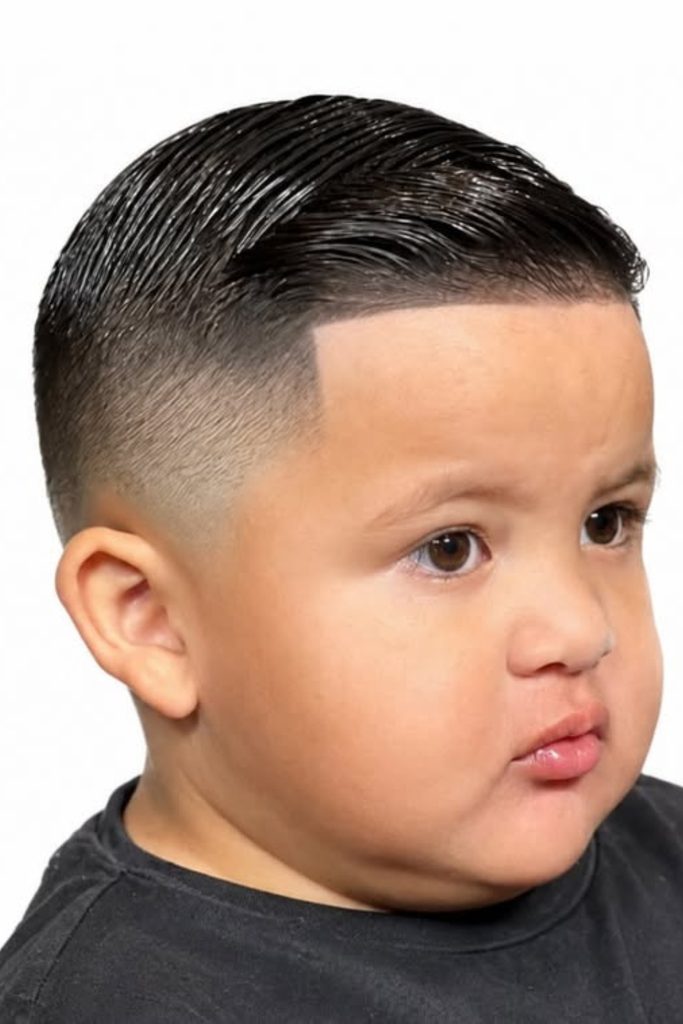
Curly Mohawk Fade
The curls are centered in the middle and the natural texture is the star instead of cutting everything to the same length.
Keep the length of the curls from front to back, but fade close around the temples for definition without flattening natural volume.
Shaved lines lend a whimsical touch to this cut, but leaving them out makes the grow-out easier between trips to the barber.
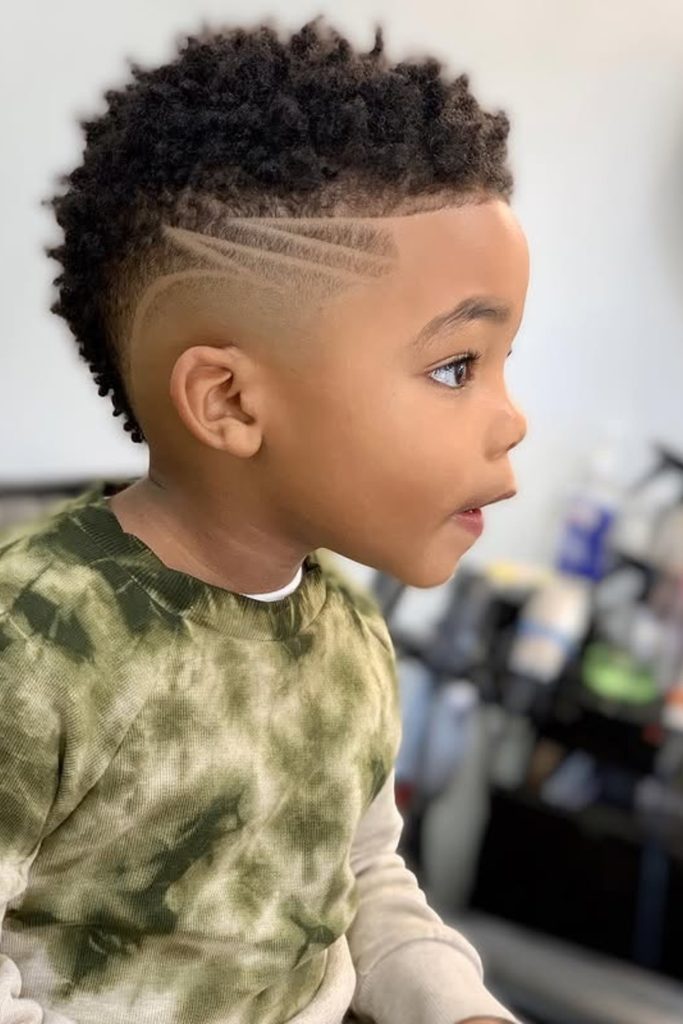
Choppy Fringe Fade
If your thick straight hair has a tendency to lay heavy, choppy layers can help. Separation keeps the top seeming lighter.
Create a textured, uneven fringe and blend near to the sides so the bigger top never feels too thick.
This cut looks better, a bit tousled letting your kid forgo meticulous combing during hurried weekday mornings.
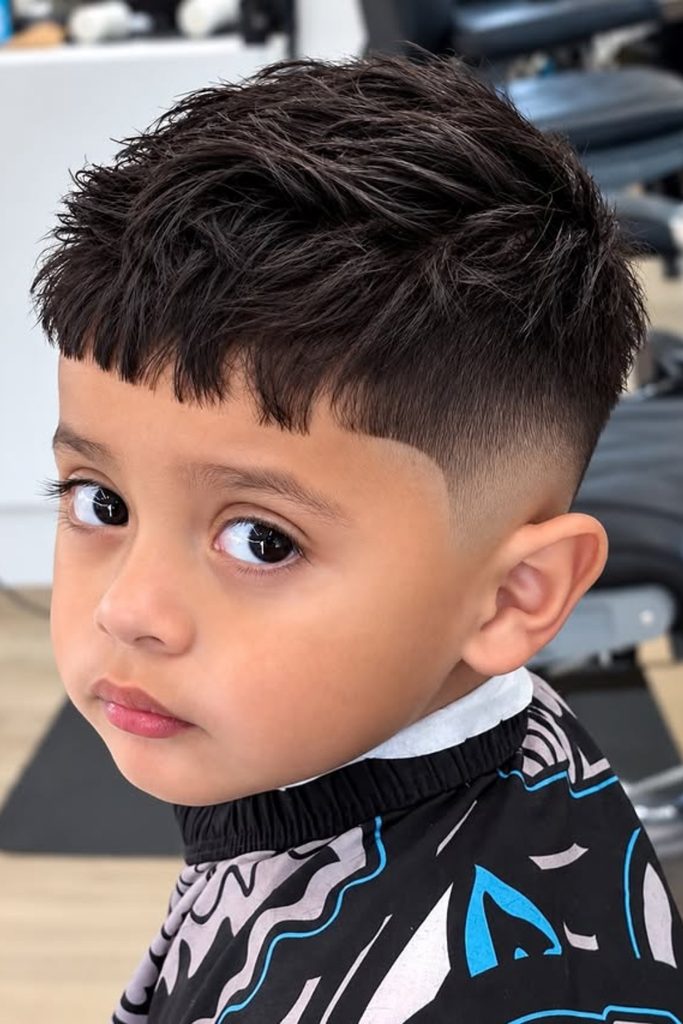
FAQs
How Often Does a Kids Fade Need a Trim?
Most youngsters can go between three to five weeks between fade treatments, but sharper skin fades may show growth sooner.
For a softer grow-out, suggest the barber do a low fade or taper with a little extra length on the sides.
Can a Kids Fade Work Without Styling Products?
Yes, especially if the top is cut to go with your kid’s natural hair structure and growth pattern.
Short crops, buzz cuts, and natural textured tops can take very little style, while longer comb-overs, spikes.