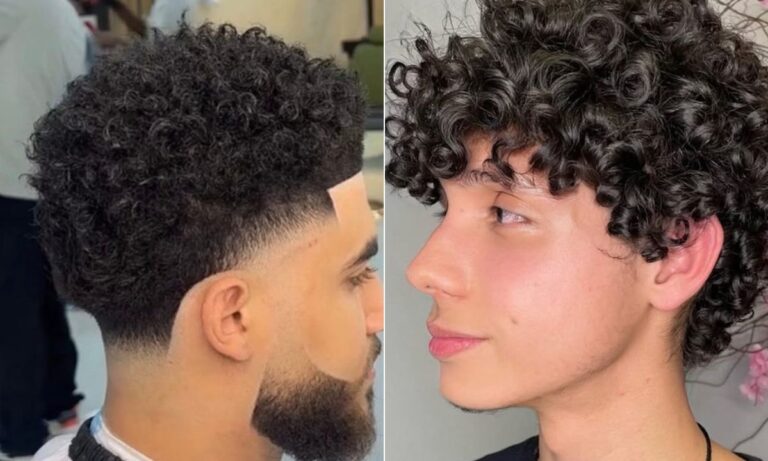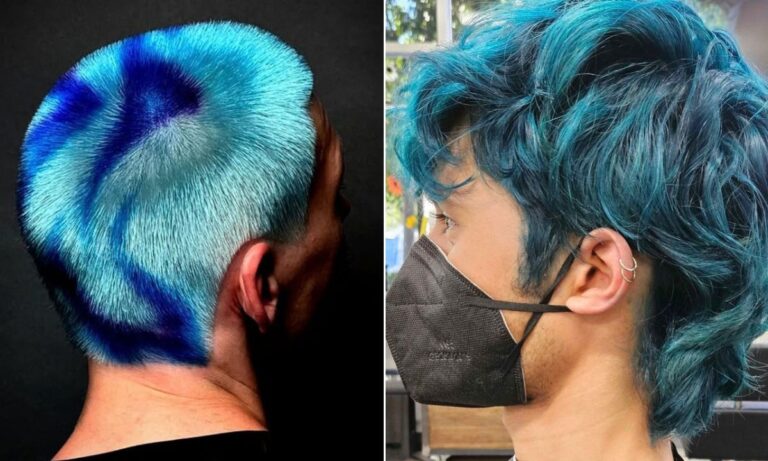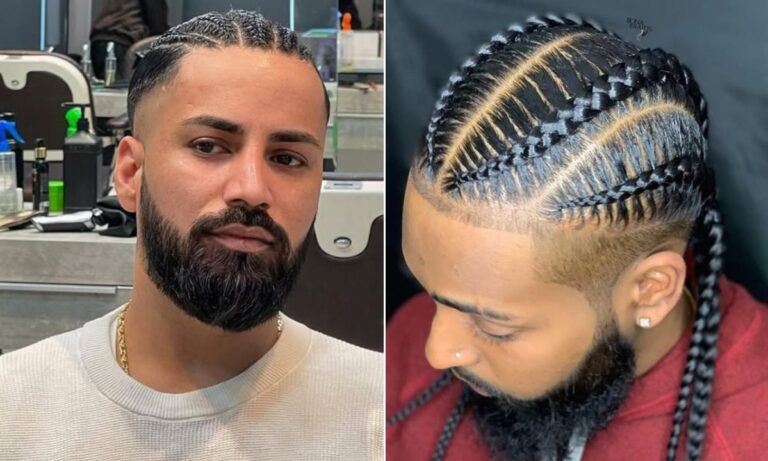
You might like lengthy braids on one person, a nice taper on another, only to start thinking if either will work with your hair now.
The braid thickness, the parting, the length and the haircut around the sides can dramatically modify the final look.
If the fit is too close or the setup is inappropriate comfort and maintenance can be a concern.
We’ll discuss hair length, braid size, fades and tapers, upkeep and other practical concerns. Then we will discuss 27 box braids for guys.
How Many Box Braids Should You Get for a Balanced Look?
For your box braids to seem balanced, concentrate on part size and hair density before aiming for a precise braid count.
Bigger portions = less and chunkier braids Smaller sections = fuller and more elaborate braiding
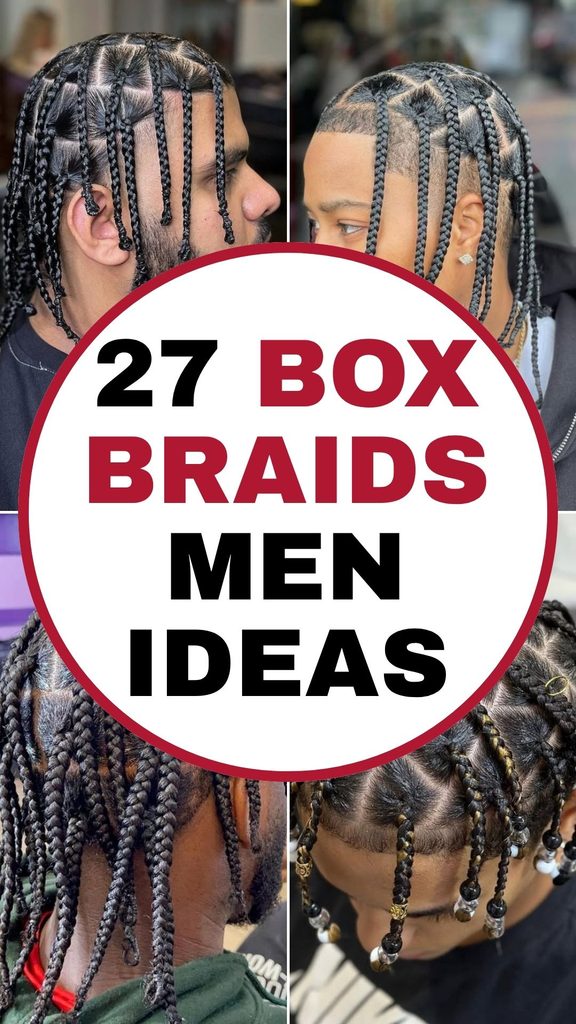
Less than 10 bigger braids can make a dramatic, uncomplicated appearance for males.
Medium sections offer greater movement and more definition that is evident.
As a general full head reference, larger box braids are frequently between 40 and 60 braids, while little braids can go up to around 80 to 120.
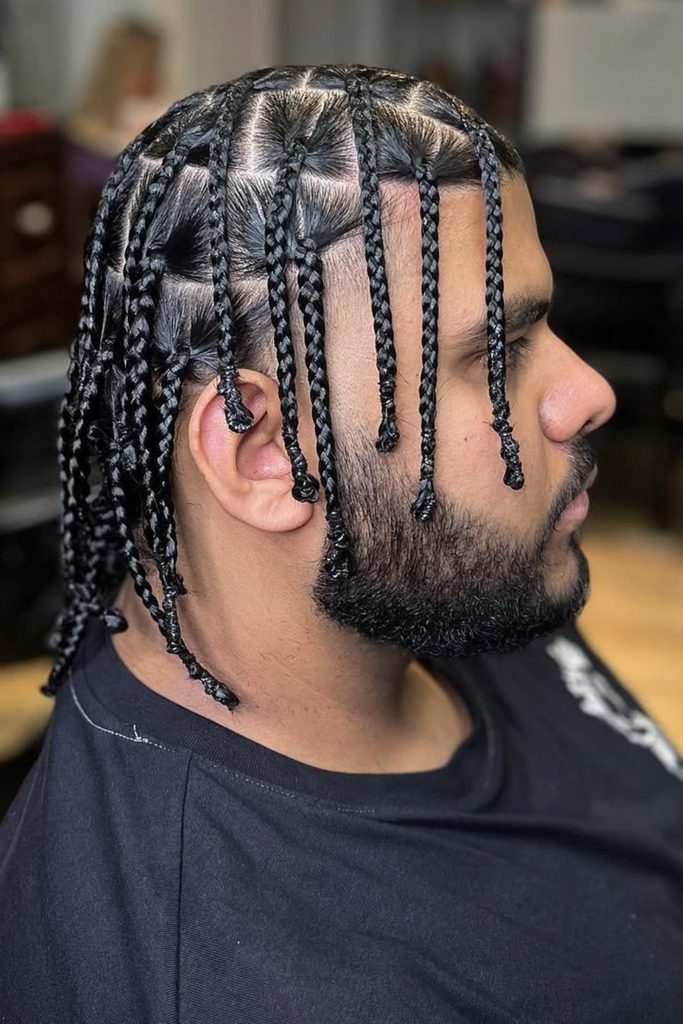
Medium Square Braids
If you want clean separation without the scalp dominating, medium square sections give a strong balanced foundation.
Let the braids hang around cheek level to frame your face while still moving naturally throughout the day.
Get your braider to keep the sections constant in size and not too tight, especially at the hairline where the pulling gets uncomfortable the quickest.
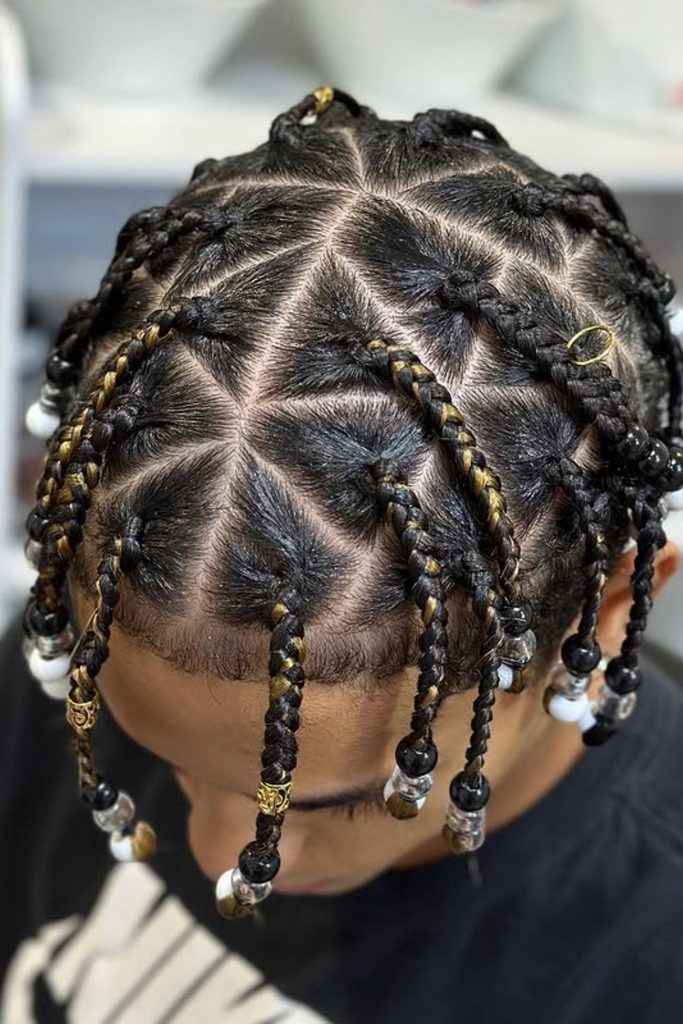
Beaded Box Braids
Looking for extra character but don’t want to change the entire braid pattern? Beads and little bits of gold can do the job quite well.
Because accessories add weight, only select a few braid ends rather than piling every region around your head.
Mix transparent, black, white and metallic items sparingly so the square parting still shows through and doesn’t feel too crowded.
Long Tapered Braids
Longer braids have enough mobility as is, so a neat taper around the temples helps manage the overall shape.
If you want more face framing, leave enough length through the braided section to come below the jawline.
“Regular edge cleanups refresh the haircut in between braid appointments without disturbing the sections further back on top.
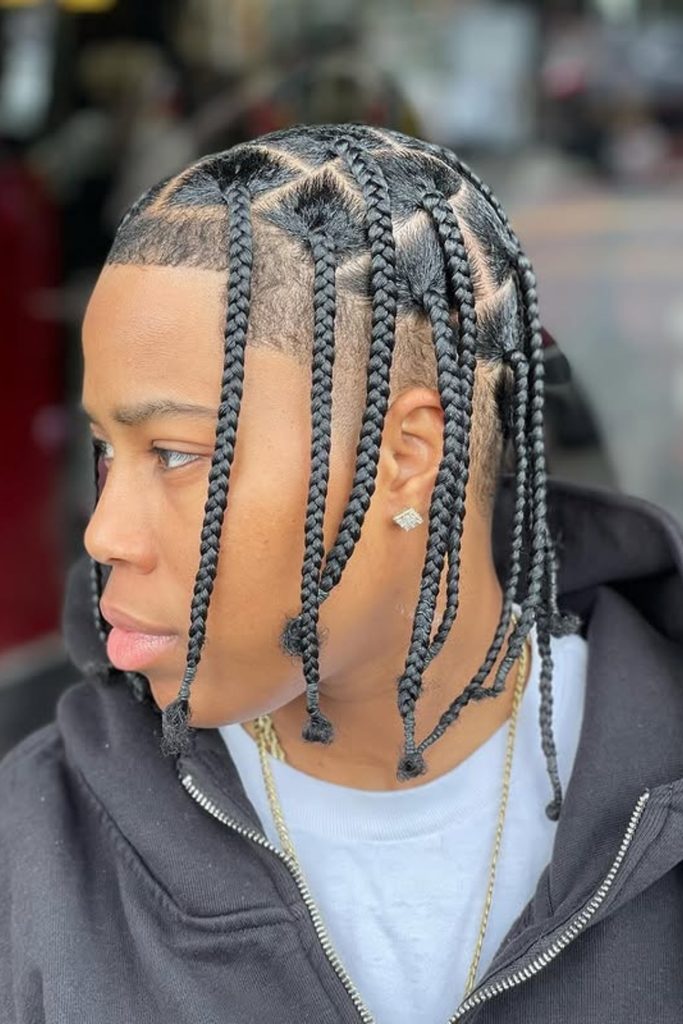
Small Box Braids
Smaller portions are great if you want more braids, finer mobility and less visible weight around your face.
Request for neat, same size boxes, as unequal separating becomes much easier to spot once several tiny strands start hanging.
Keep the ends light, not heavy, so that shorter braids will swing organically and the look won’t be heavy.
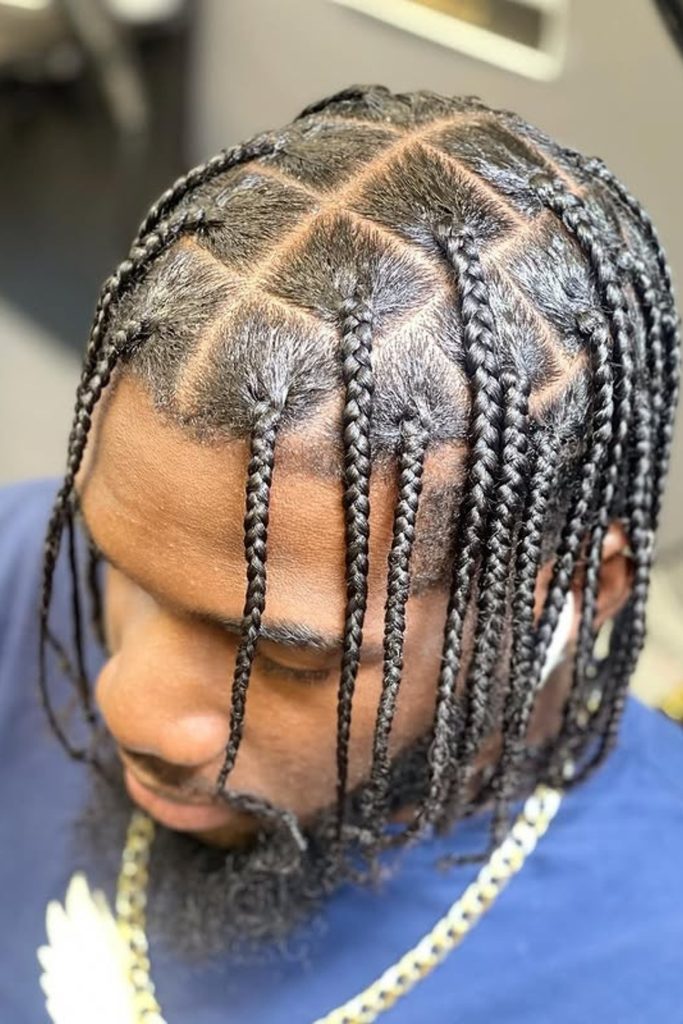
Chunky Box Braids
Thicker braids give each portion a more purposeful sense, especially if you’re after the texture but not lots of smaller pieces.
Take medium to large square portions so the braid is a proportional thickness and don’t try to cram too much hair into thin parts.
This length also allows for more movement around the face and shoulder length is a good choice without making the whole style look too cluttered.
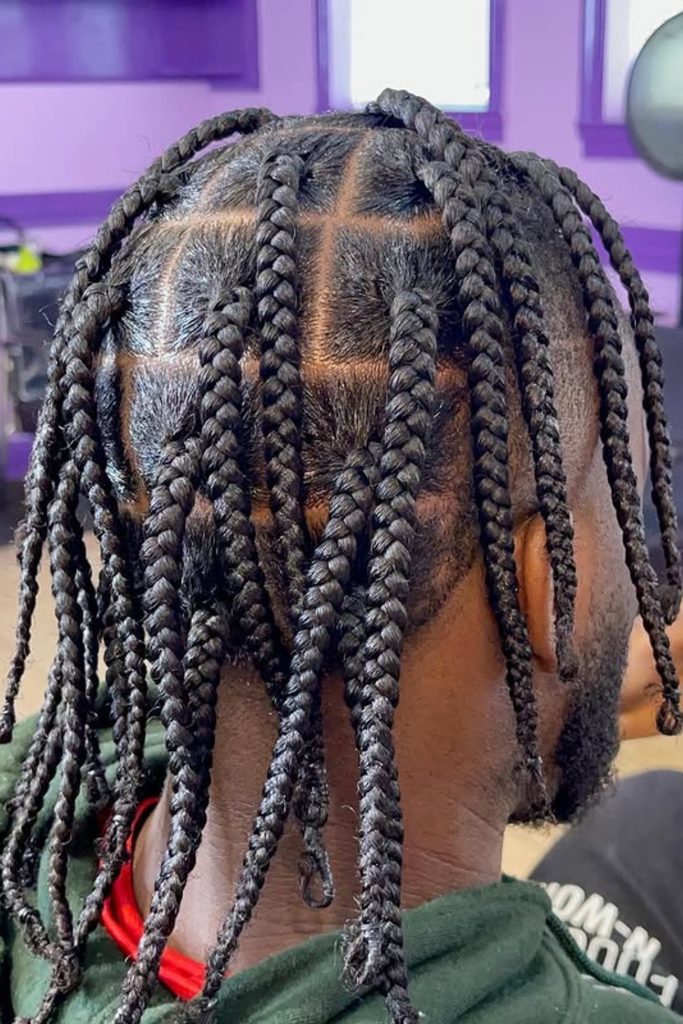
Short Center Braids
With a tidy center part bringing the braids into two balanced sides, shorter hair can still have a lot of intricacy.
Use medium portions if you want visible scalp lines without making too many braids that the pattern starts looking cluttered.
Leaving the braids about ear length makes it easy to move around everyday and but still gives enough length to make the different portions pop.
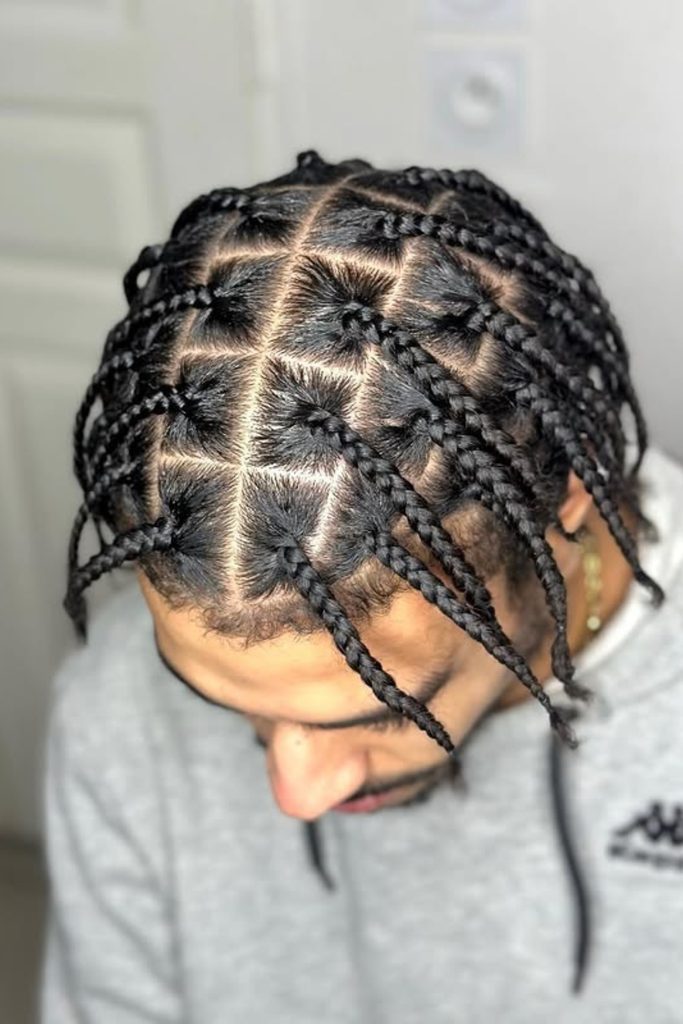
Center Part Braids
Straight down the middle can help lengthier box braids feel more organized right away, especially when you want even framing on both sides.
Ask for matching portions along the middle for consistent braiding and to prevent them from wandering unevenly across your forehead.
Longer front pieces are great for sitting around the jawline and producing apparent movement but the clean parting helps the haircut feel less heavy.
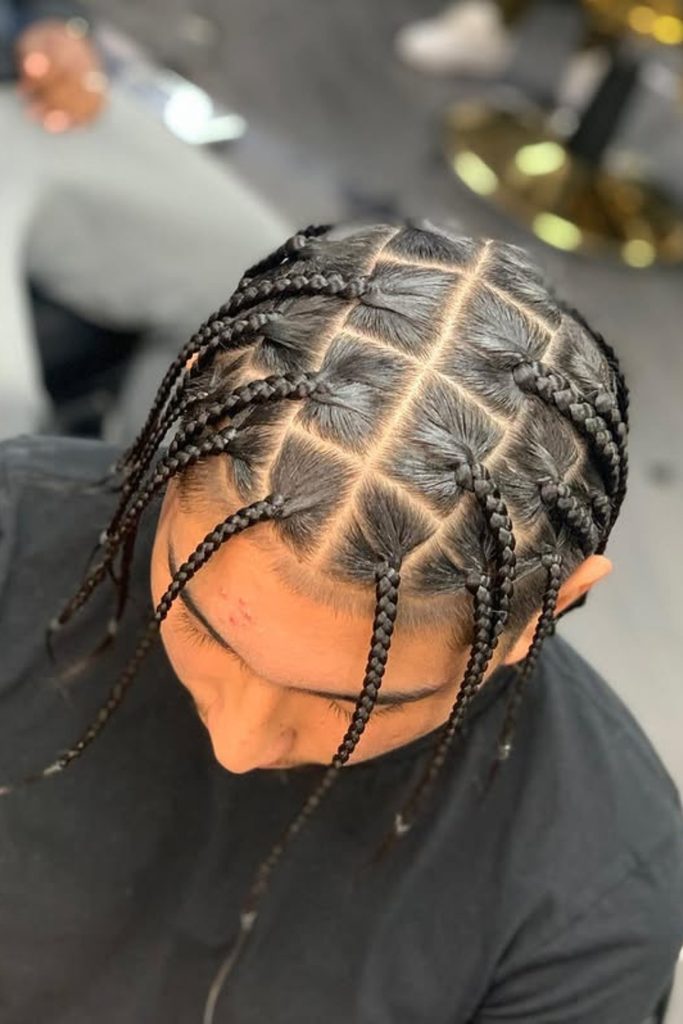
Diamond Box Braids
You don’t have to part your hair in square pieces, and they can become one of the strongest aspects of your style.
Rotate the parts into diamond shapes and keep identical sizing throughout, so the geometric pattern is still recognizable.
This works particularly effectively on shorter braids, since the shorter length of the braid reveals more of the delicate scalp pattern.
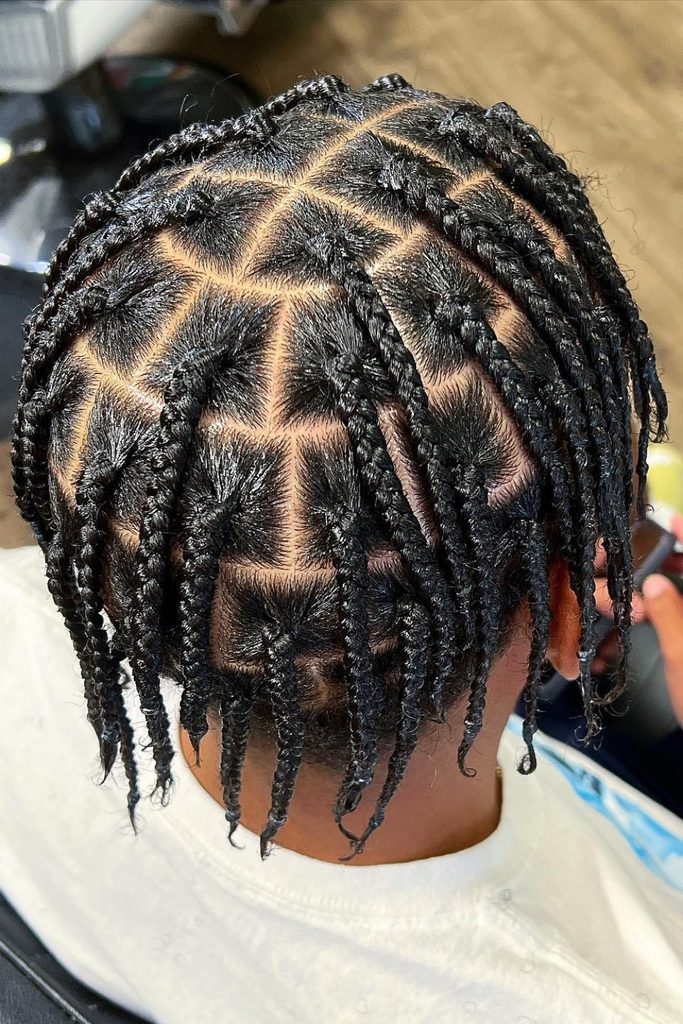
Jumbo Box Braids
Less braids might be more when you space out big parts to give each ample clean scalp to work with.
Use bigger boxes only if there is adequate hair in each part . Forcing thickness might cause extra tension around the roots .
Chunky braids of intermediate length will keep the weight manageable and still give you the striking shape that makes this style stand out.
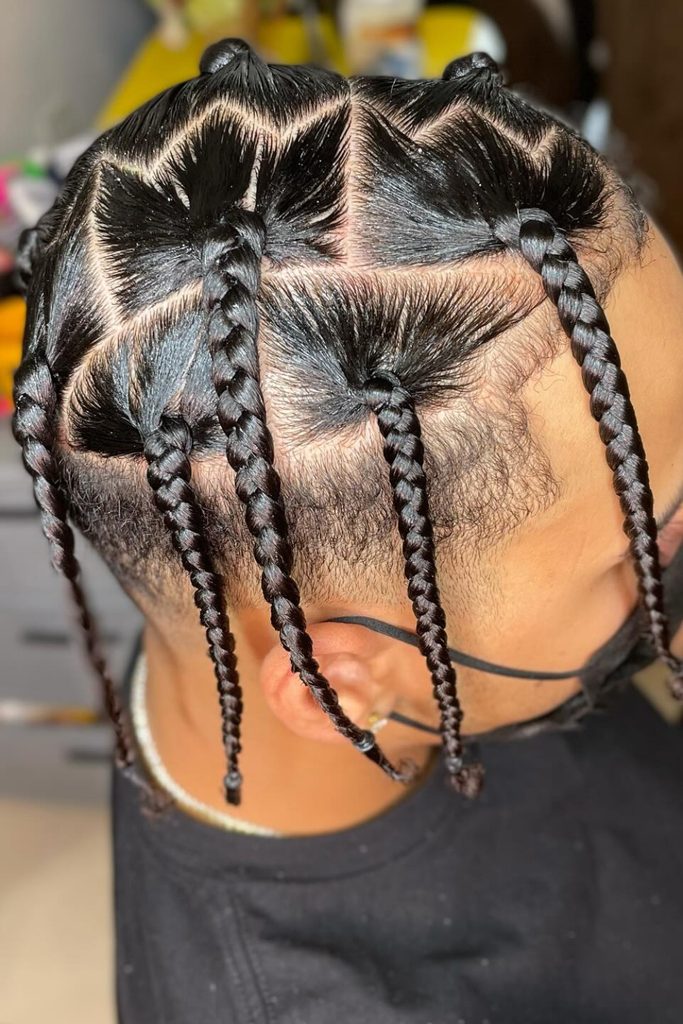
Long Thin Braids
greater length doesn’t have to mean greater mass, especially when thinner braids are uniformly distributed through medium-sized sections.
If you like to move about a lot, let a few strands fall below the shoulders, but remember that longer braids could need extra protection at night.
A balanced section pattern keeps the length from looking dispersed and lets the braids fall naturally about your face and neck.
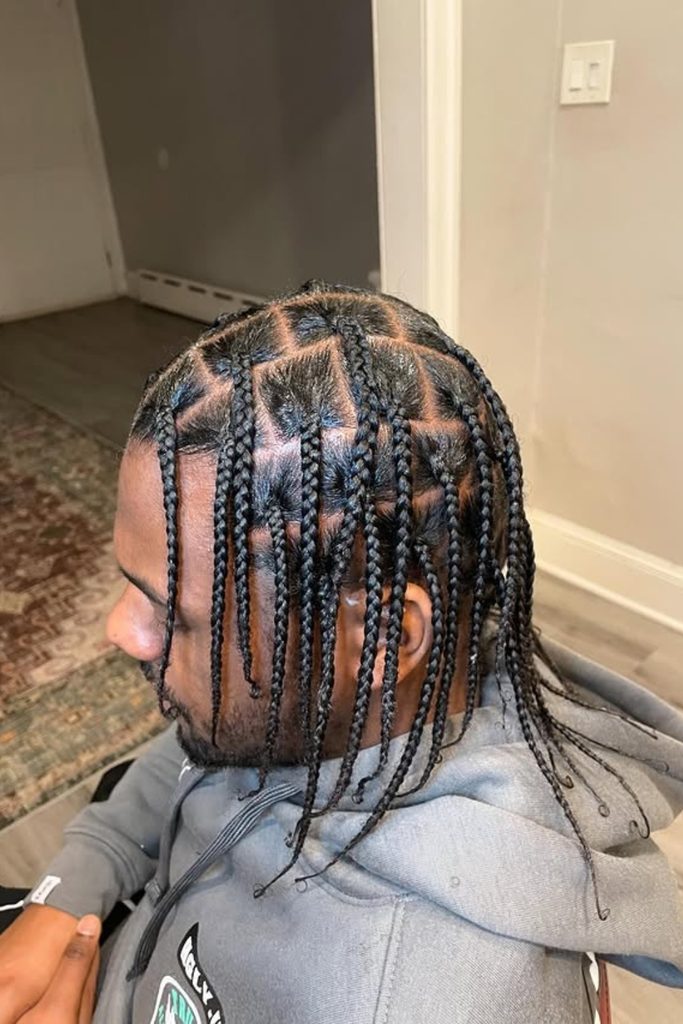
Short Box Braids
You don’t need shoulder-length hair to achieve a complete-looking box braid, especially when much of the visual interest is in the sharp portions.
Short braids that end around your temples and ears keep them off your neck, making them practical for active everyday routines.
Ask for medium, uniform boxes and clean endings so the limited length seems intentional, not like incomplete longer braids.
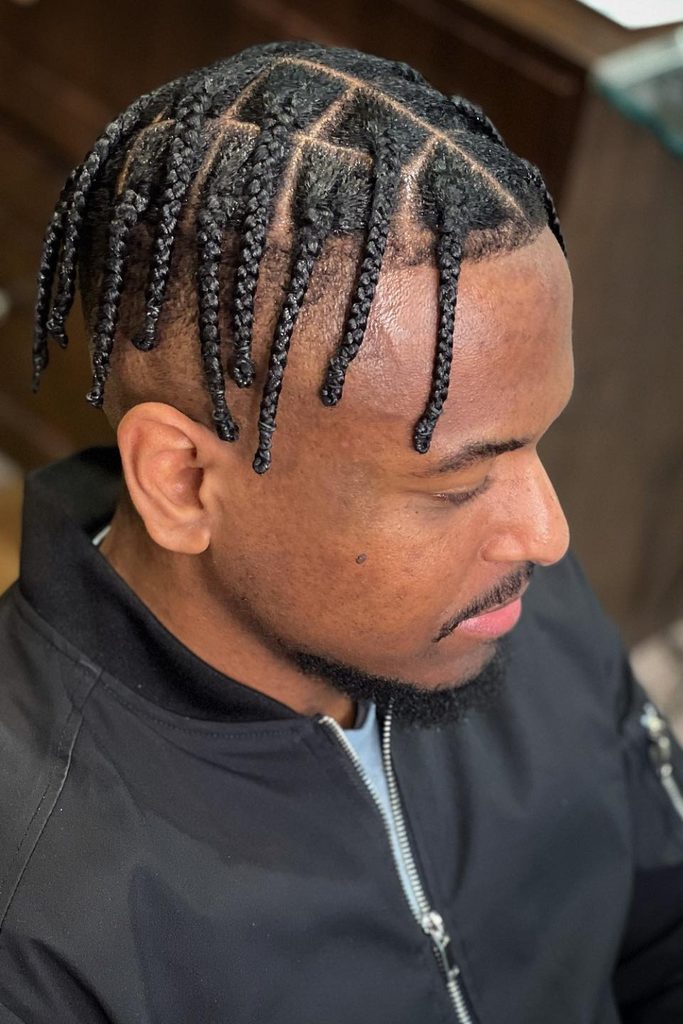
Front Framing Braids
You don’t have to line up the place of every braid, but the two longer braids in the front might modify the whole look framing your face.
Place those parts at the hairline so they naturally fall forward and don’t always drift into your eyes.
The other braids can sit further back, creating separation across the forehead, but leaving lots of movement through the sides.
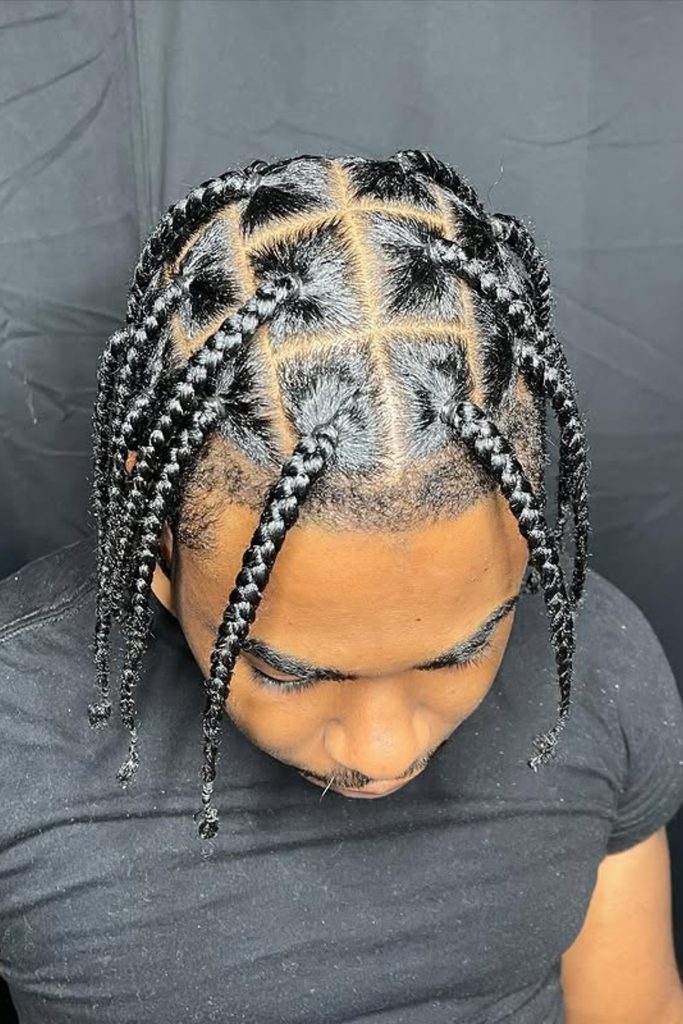
Mini Box Braids
Separate the hair into smaller pieces that will give you more individual braids to produce a fuller finish without adding too much bulk.
Select this choice if you like to see movement. The lighter braids are very easy to separate and move organically around the head.
If any segment seems excruciatingly tight when being installed tell your braider immediately as smaller pieces require cautious root tension.
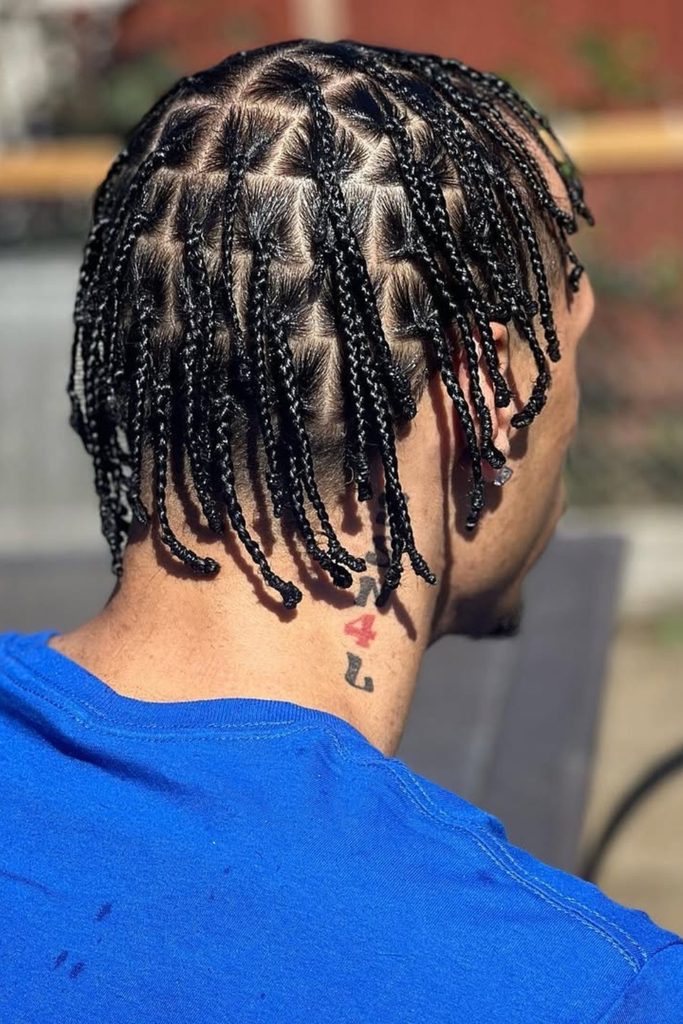
Staggered Box Braids
If you stagger the parts so the braids fall into the gaps instead of right on top of each other, you don’t need perfect symmetry.
You can ask your braider to stagger the rows but keep the sections the same size as much as possible so it seems bigger along the sides and back.
It also helps shorter braids to spread out more evenly, which can help make medium-density hair look more visually full without huge parts.
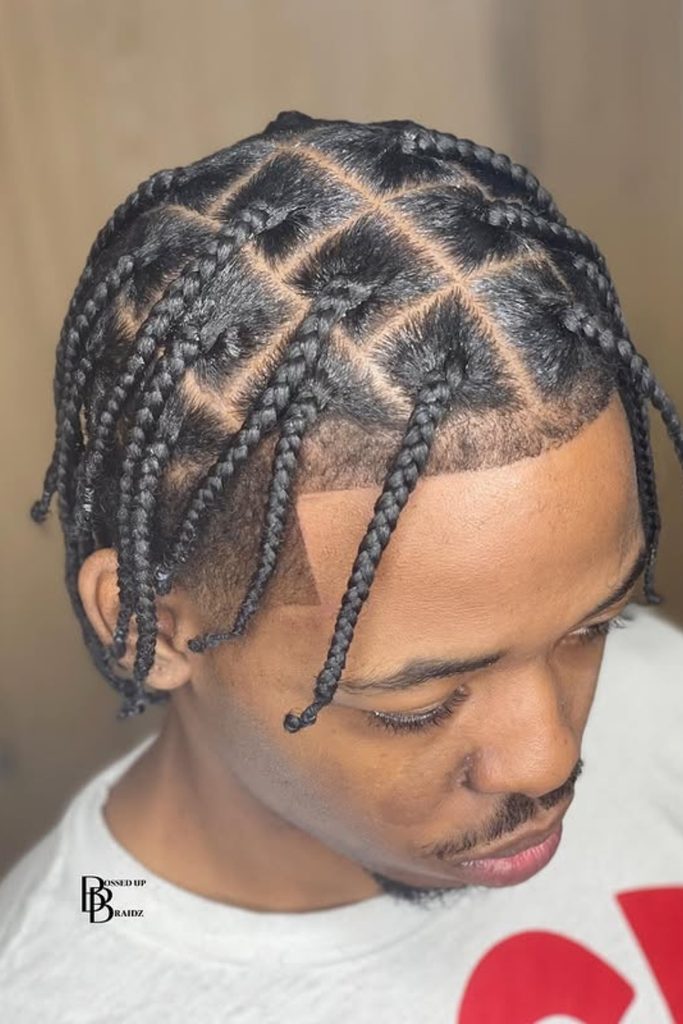
Shoulder Length Braids
If you’re worried about coverage on your forehead, shoulder-length braids give you enough drop to frame both sides without going to extremes.
A distinct center part helps to distribute weight evenly, while middle parts avoid too many strands from crowding your face.
You may tuck selected braids behind your ears anytime you like, which makes it easy to modify the length from casual to cleaner styles.
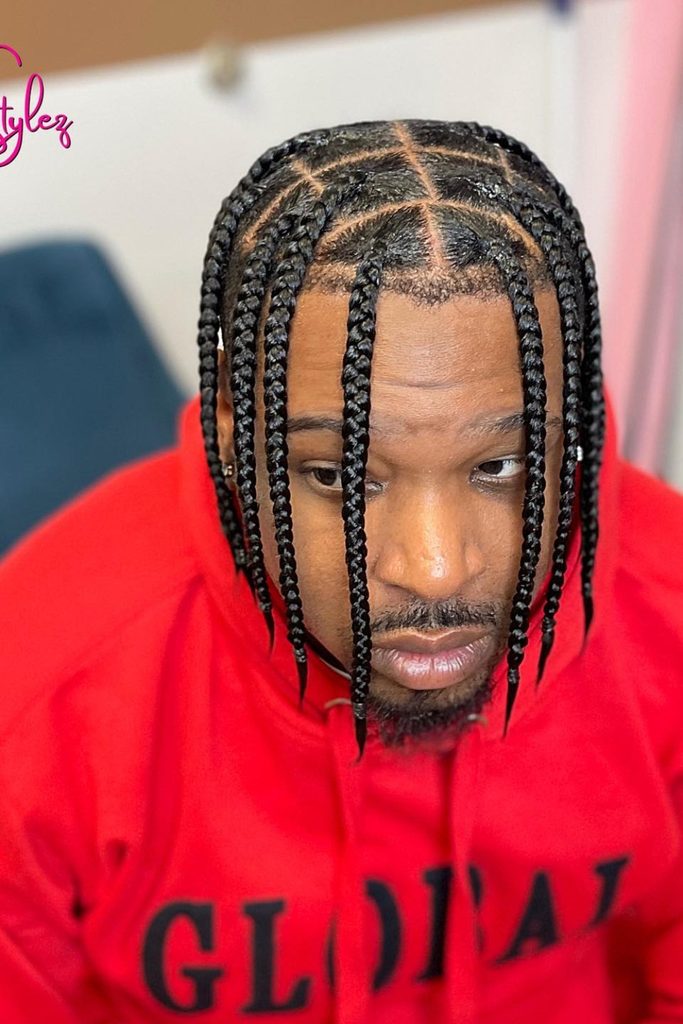
Beaded Long Braids
Clear beads can finish lengthier box braids without introducing a bold color, letting the braid design take center stage.
A few beads near the chosen ends work better than up the braid, when the added weight can pull closer to your roots.
If you sleep on your side, less temple accessories can relieve unwanted strain against your skull at nite.
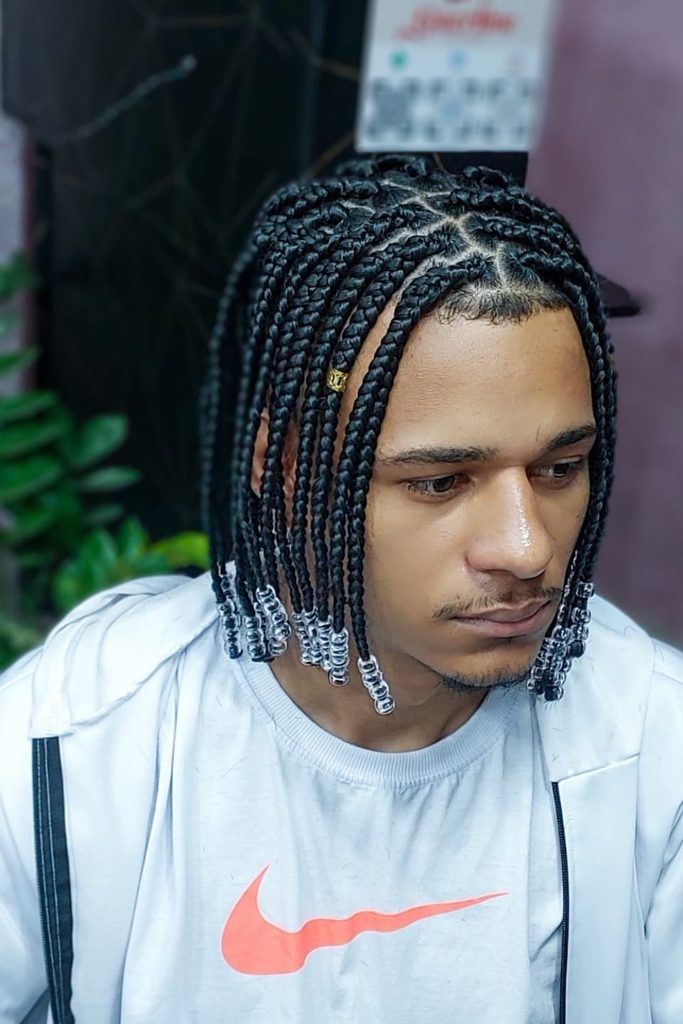
Clear Beaded Braids
If you’re looking for accessories that will pop without adding another color, transparent beads can offer detail while remaining all-black.
Place them primarily around the ends so the embellishment follows the braid movement rather than conflicting with your clean scalp design.
Keeping bead sizes consistent on shorter braids adds uniformity, particularly if lots of little sections already give a lot of visual texture.
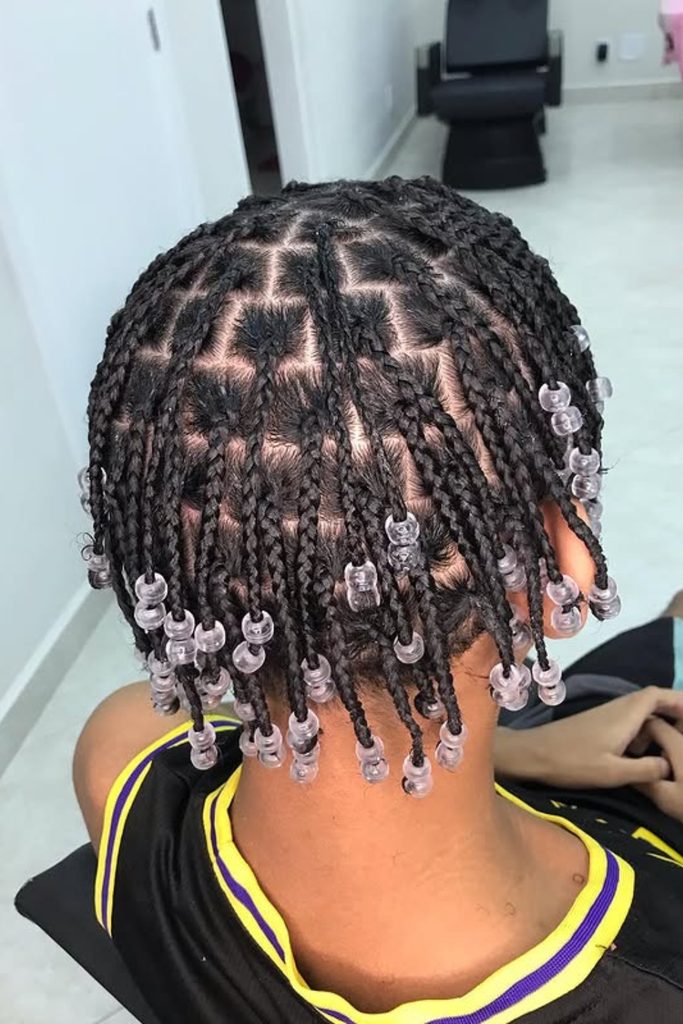
Long Square Braids
The longer it gets, the longer box braids you can get that just frame your face without the extra decorative features.
Larger square sections help you control your braid count and keep longer strands from forming a curtain that’s too dense around your head.
Consider your workouts and sleep before choosing this length as longer pieces are more to deal with than short braids in normal life.
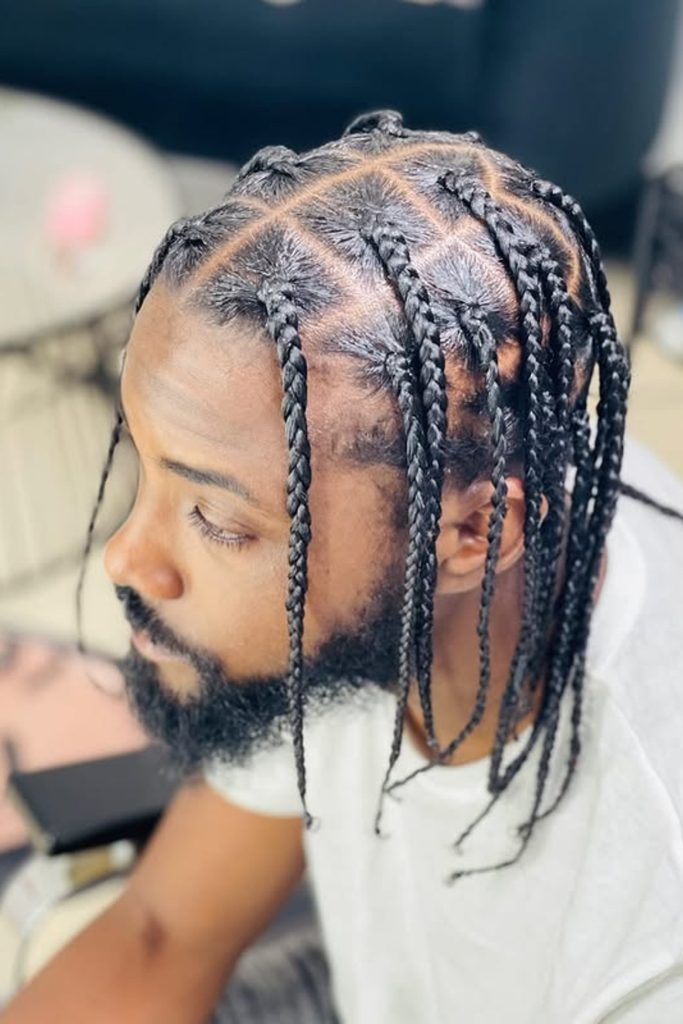
Connected Box Braids
Individual box braids can feel radically different when selected strands are linked together across the scalp before they end in loose braided ends.
Use these links carefully so the square parting remains readable and the design does not becoming too convoluted in your thoughts.
This is a good move when regular hanging braids are feeling a tad too familiar, but you still want recognizable box-braid structure below.
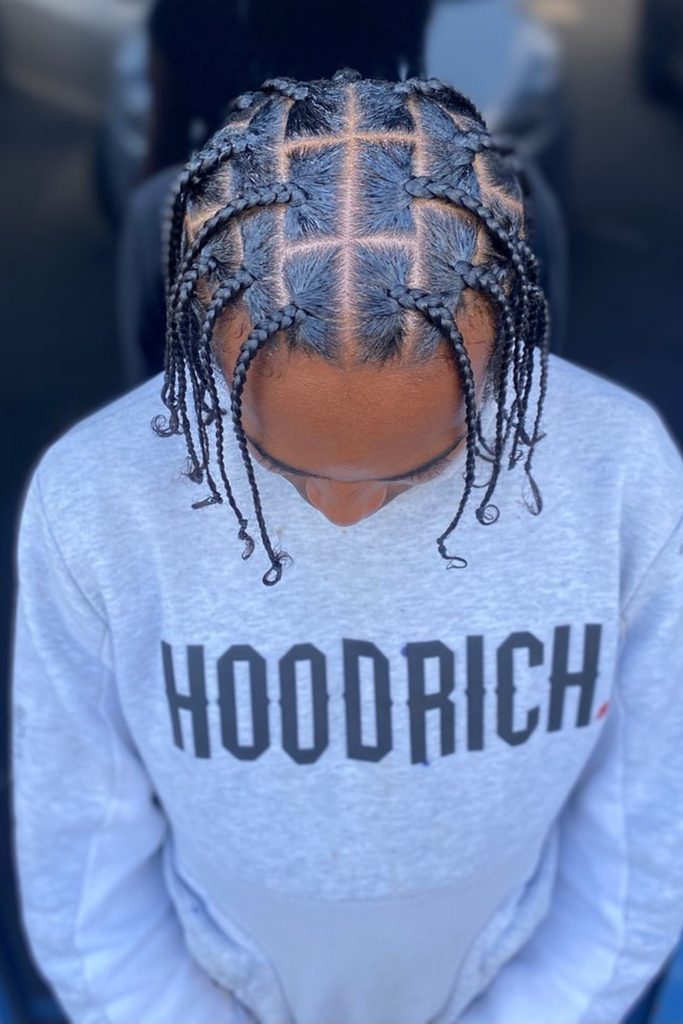
Mixed Part Braids
Change the separating design for greater interest than adding color, especially when the geometric pieces are visible between longer braids.
Team smooth geometric divides of equal thickness in braids so your scalp design doesn’t look like a random assortment of different shapes.
The longer ends are contrasted to the detailed roots, so you can enjoy an elaborate pattern without having to make every braid itself too complicated.
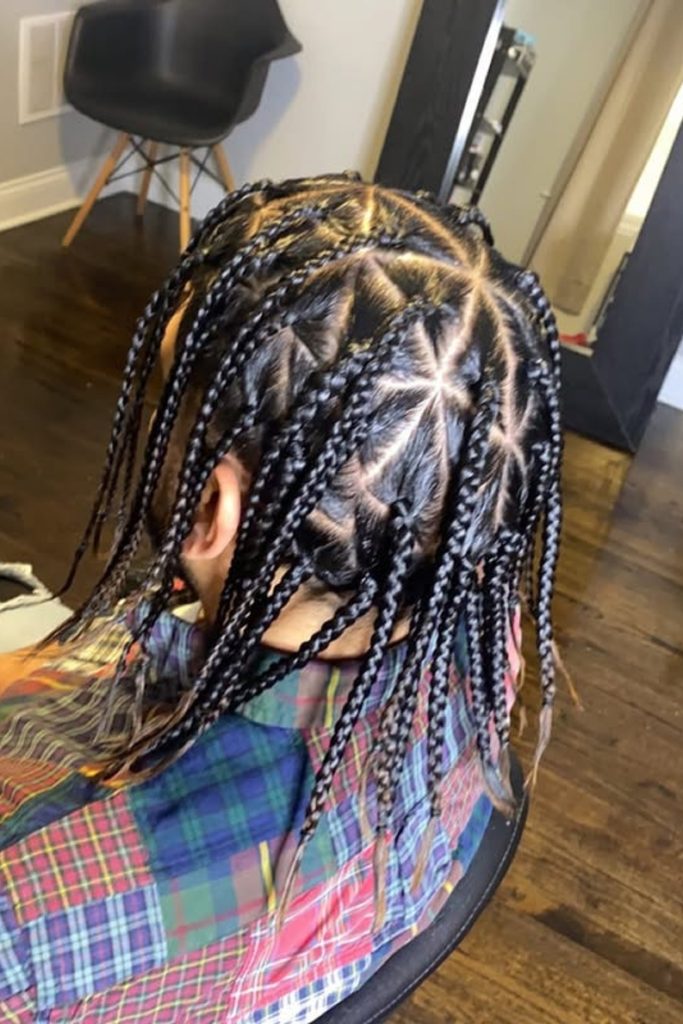
Tapered Box Braids
A taper can help medium box braids feel sharper by eliminating bulk from the temples while retaining enough hair for movement.
If you’re going to keep using this look, ask your barber to leave the braids above the fade line.
The medium-length ends balance out the exposed sides perfectly, giving your face shape without the need for longer braids or extra accessories.
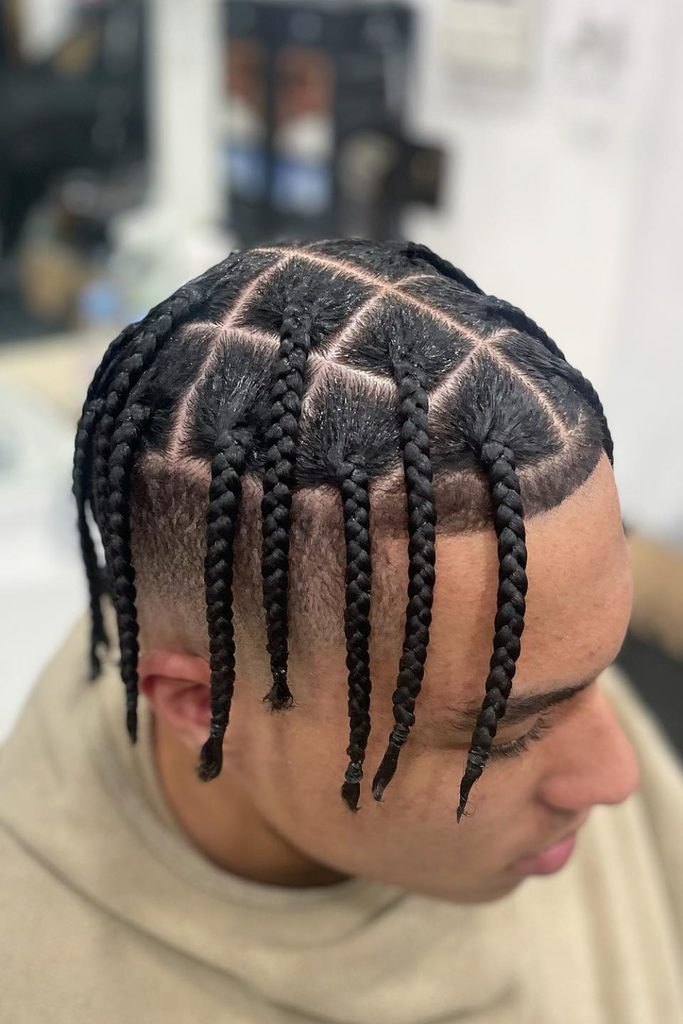
Neat Medium Braids
Medium braids are an easy middle ground, providing some visible texture without the weight of jumbo or the hassle of a ton of little parts.
To ensure each braid falls independently instead of bunching together, aim for equal rectangular pieces over the scalp, so the clear spacing will work.
You can still work with this length around the face and it gives you enough freedom to change the direction of selected braids when you need to.
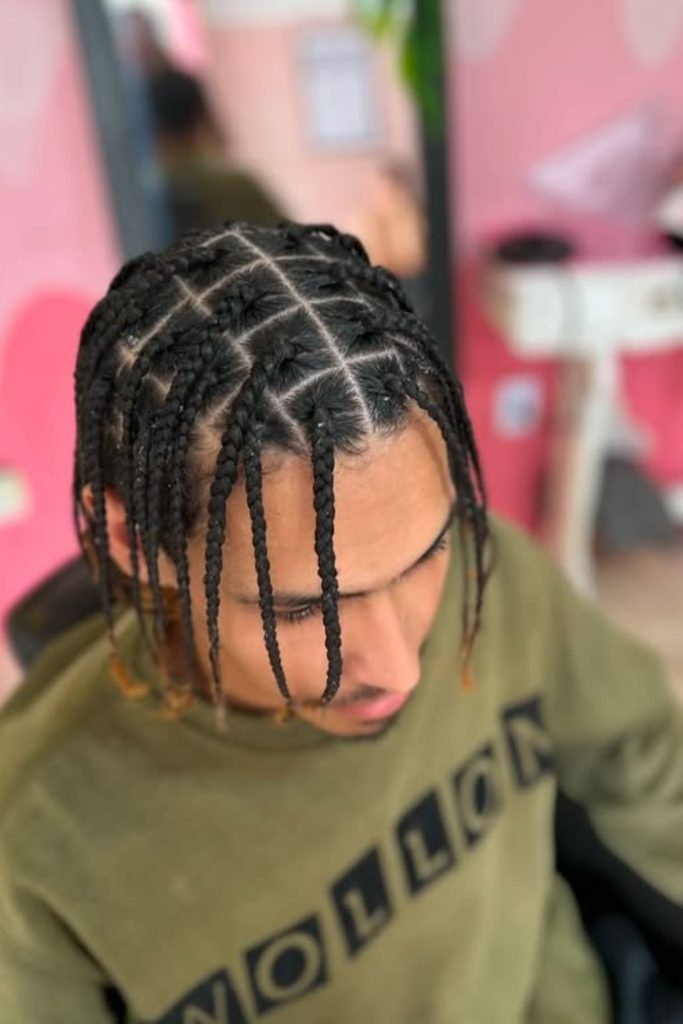
Geometric Box Braids
Angular separating may make even quite simple braids feel much more customized and straight rows need not be your only option.
The detail is in the scalp pattern but the thickness of the braids remains constant so the competing parts of design do not overpower each other.
Thus this is something to keep in mind when delicate separation is the most important factor.
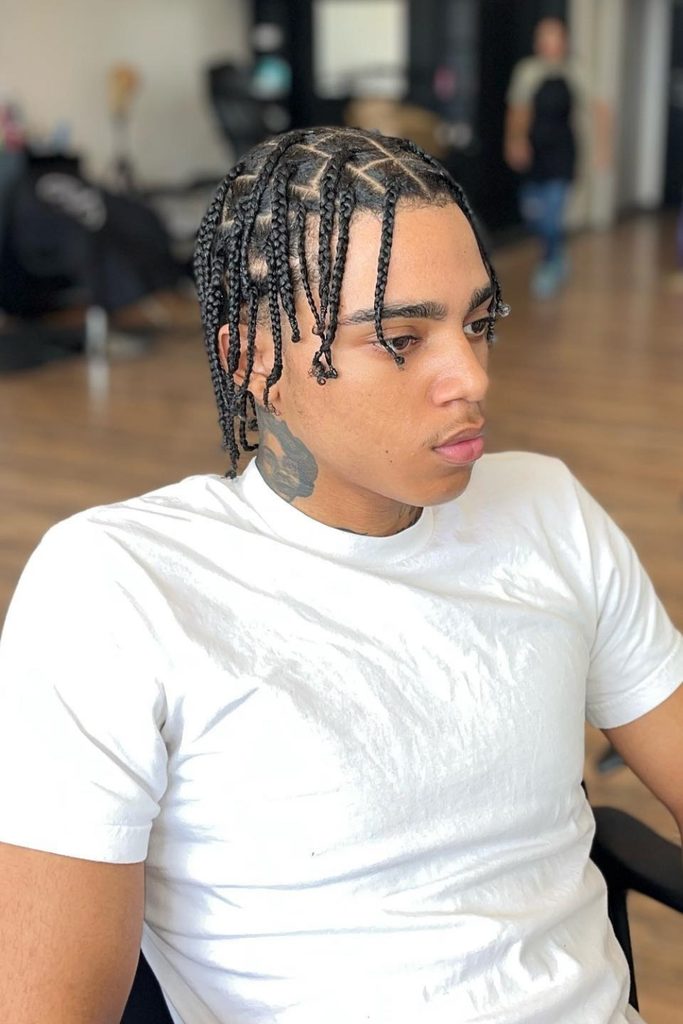
Compact Diamond Braids
If larger braids are often getting in the way, shorter lengths can still be embellished with diamond portions to convey the visual interest.
Ask for uniformly spaced geometric pieces all over the head. Uneven sizing is really evident with so much scalp left showing.
A cut that ends at the ears and nape reduces loose length. This is a practical option if you want box braids that are easier to manage on a daily basis.
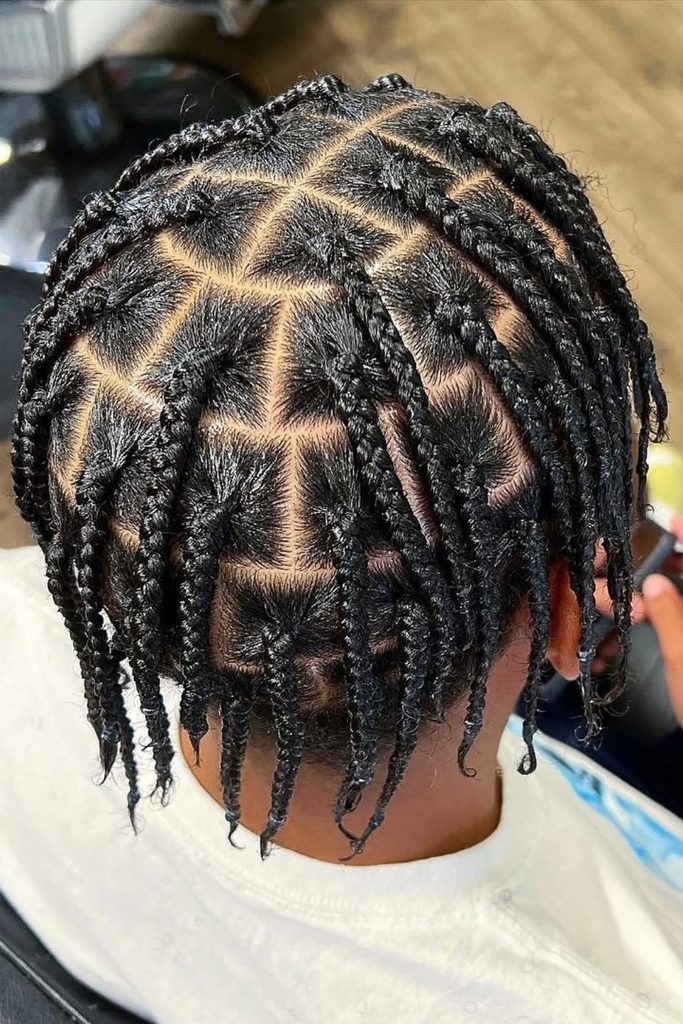
Accent Box Braids
A little braid accessory can add enough contrast when a hairstyle is already heavily defined by the sectioning.
Place the emphasis on a front braid where it is visible and does not decorate many strands and distract from clean sections.
Medium thickness is very effective here, as each braid is distinct, yet there is enough scalp showing between adjacent parts.
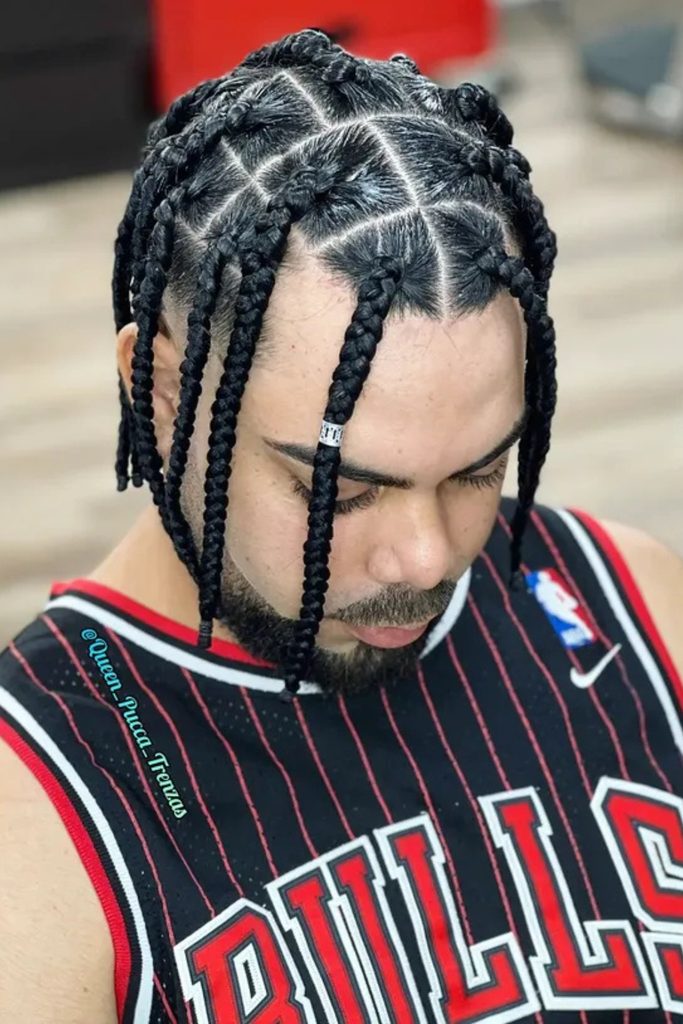
Side Swept Braids
By angling box braids slightly to one side, you may vary the way they move without adding extra length, color, or elaborate decorations.
Plan your sections from the beginning in the direction you like so the braids lay naturally instead than fighting placement at the root.
This style also exposes part of the forehead, ideal when straight forward-hanging braids are too thick around your face.
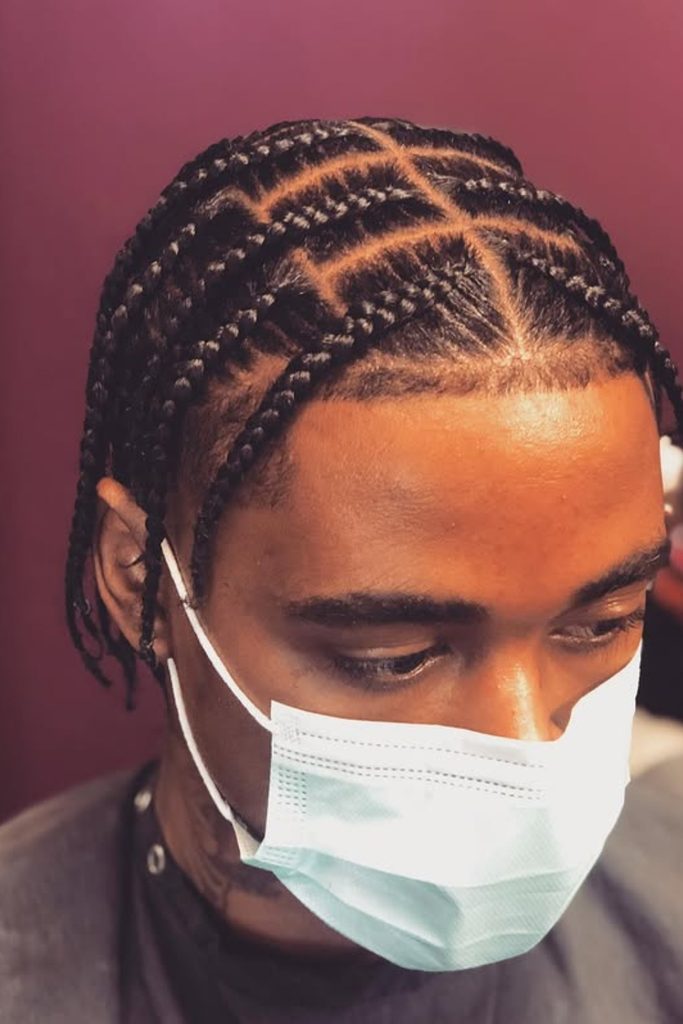
Long Face Braids
Longer front pieces make for a stronger facial frame, but placement is essential if you don’t want braids crossing your eyes all the time.
Request balanced parts around the hairline and lots of separation so individual braids can hang freely without getting bunched up near your temples.
A quick fix for when you want a neater look without having to redo it all is to tuck strands of your choice behind the ear.

FAQs
Can You Wash Box Braids Without Making Them Frizzy?
Yes. But spend most of the shampooing on your scalp, not on the braids themselves or you’ll rub them forcefully.
Gentle cleaning will assist remove sweat and buildup while decreasing unneeded friction that can make the roots and braid surfaces look fuzzy.
How Should You Sleep With Box Braids?
To decrease friction against your pillow, protect your braids with a satin or silk hat, durag or scarf when you sleep.
Don’t pull them too tightly at nite since any extra tension along the hairline can be painful and put strain on the roots.