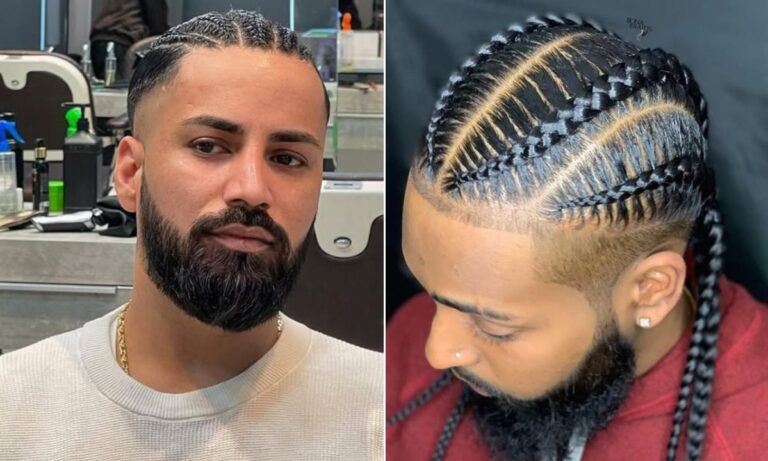
There are tons of braid styles to save, but trying to figure out which one would actually fit with your hair can get difficult fast.
You may love sharp stitch braids, immaculate cornrows or larger box braids, but still doubt if you have enough length.
Then there’s the option of keeping a full head of braids or adding a taper or fade for a cleaner finish.
The thickness of the braids, the pattern, the length of the hair, the parting and how much hair is left around the sides can dramatically vary the final look.
To help make that selection easier, I’ve put together 26 braid ideas, which give you a ton of different ways you can go in.
Let’s start to explore!
Which Braids Work Best for Your Hair Type?
Pick a style that complements your hair’s natural texture to keep your braids looking neat without causing excessive strain on your hair.
Naturally curly and coily hair offers greater grip making cornrows, stitch braids, box braids and smaller complex patterns easier to do.
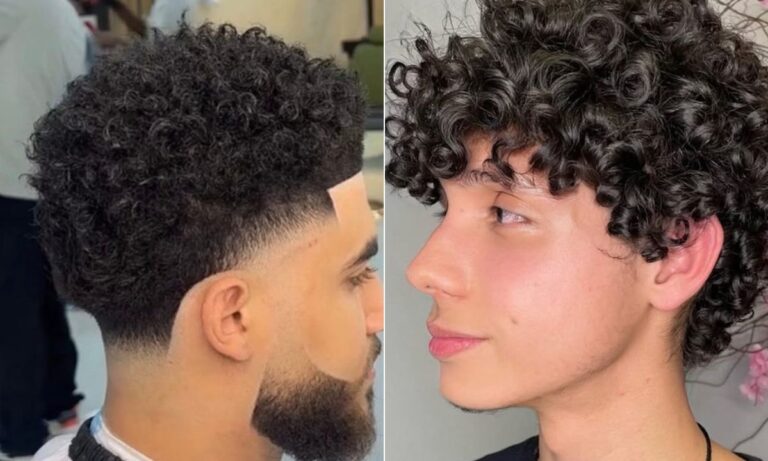
If you have straight or wavy hair you can still have braids, but having more length can offer your braider more hair to grab and can assist decrease sliding.
Thick, thick hair can handle chunkier braids and richer patterns, whereas fine or lower-density hair often does better with lighter styles that don’t pull too much.
The American Academy of Dermatology warns that repetitive strain from tight braids can lead to traction alopecia.
Thus comfortable tension should always come before imposing a certain appearance.
Curved Freestyle Cornrows
Want your cornrows to look more personalized than traditional straight backs? Instead have curving portions which curl round the head.
The main braids should be a bit thicker than the smaller accent rows so the pattern is legible and doesn’t look too crowded.
Take the time to show your braider exactly how you want your parting to look because most of the charm in this style comes from those curved lines.
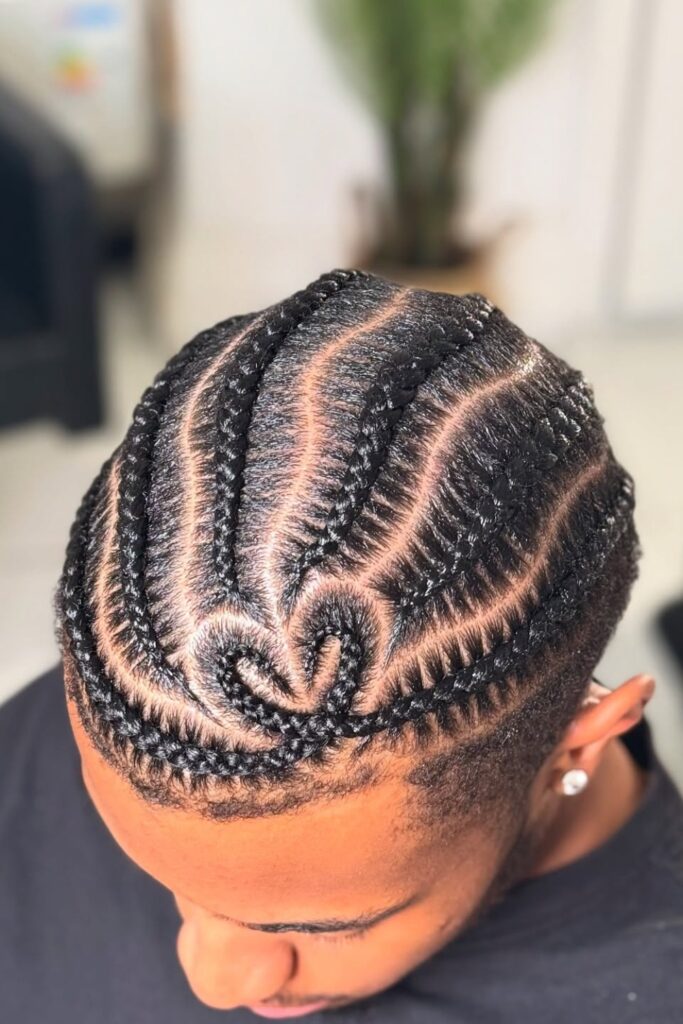
Looped Stitch Braids
A modest looped touch at the crown may make plain, straight-back braids look deliberate without complicating the entire hairstyle.
Request narrow rows of feed-in around the design, keeping them evenly spaced so that the primary pattern is the first thing you see.
This is great especially if you desire creative braiding but yet like a tidy shape that looks balanced from every aspect.
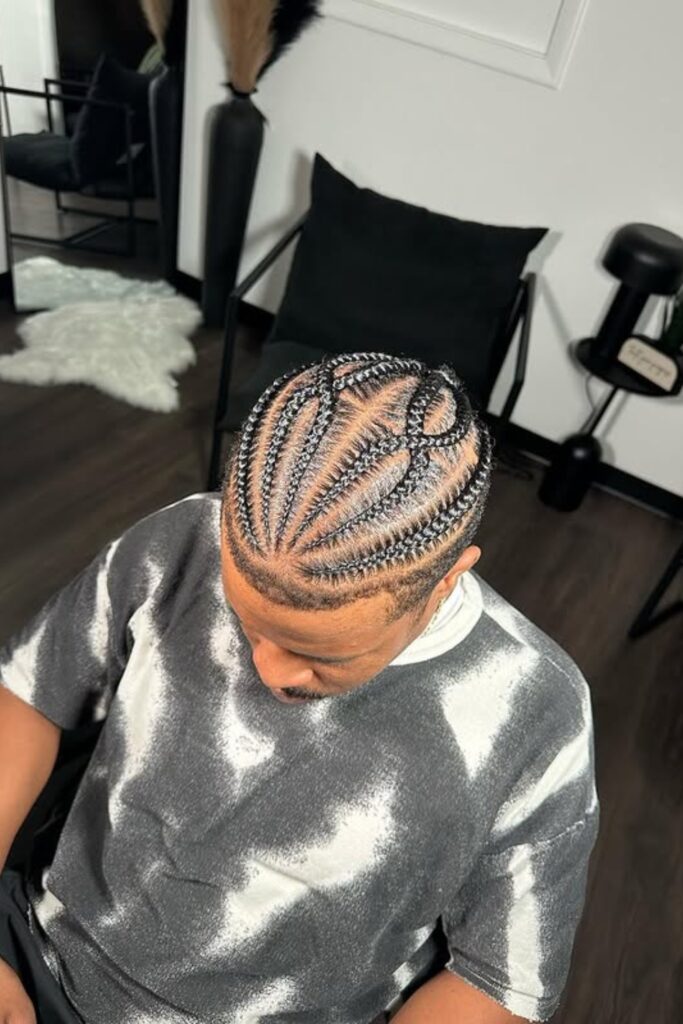
Straight Back Cornrows
When you want cornrows that look clean and uncomplicated, start with evenly sized rows, because regular spacing maintains everything visually balanced.
The medium width braids are a nice compromise, they give you obvious definition without the extra intricacy and labor of micro rows.
If your hair is long enough to grip firmly, ask your braider to keep the sections parallel from forehead to nape.
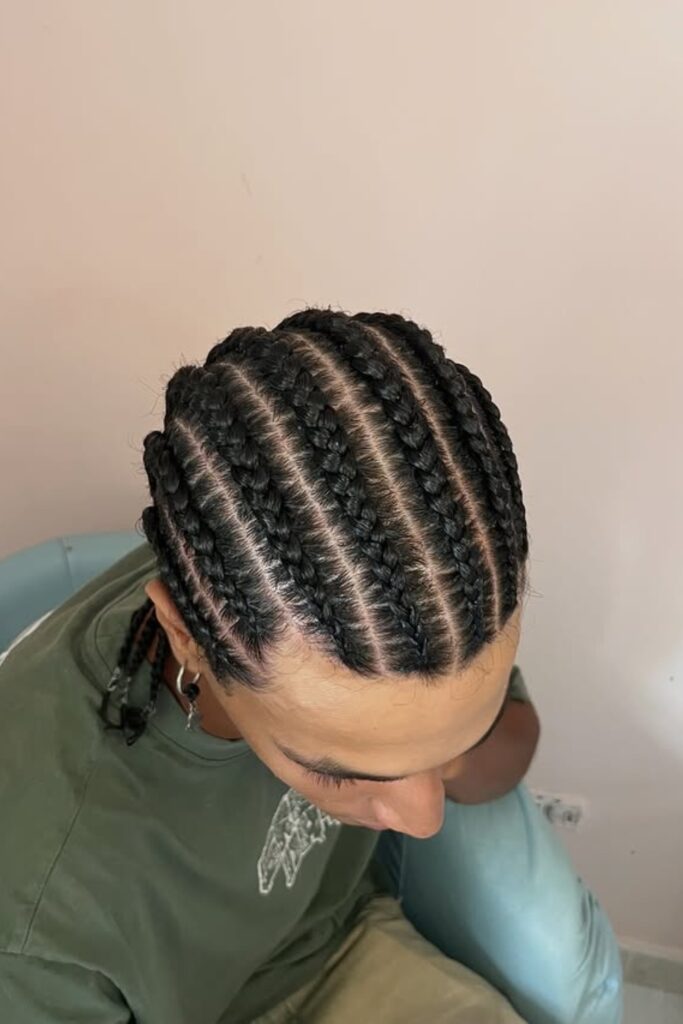
Mixed Pattern Cornrows
It creates a more rhythmic, complex pattern by alternating thick and thin cornrows, which gives the final style a layered rather than a uniformly cluttered look.
Keep the smaller rows as accents in between stronger braids. That contrast helps difficult curves read plainly when you see them from different angles.
With such a precise design, bring the reference photo and talk about the parting map first, as improvisation can affect the whole pattern.
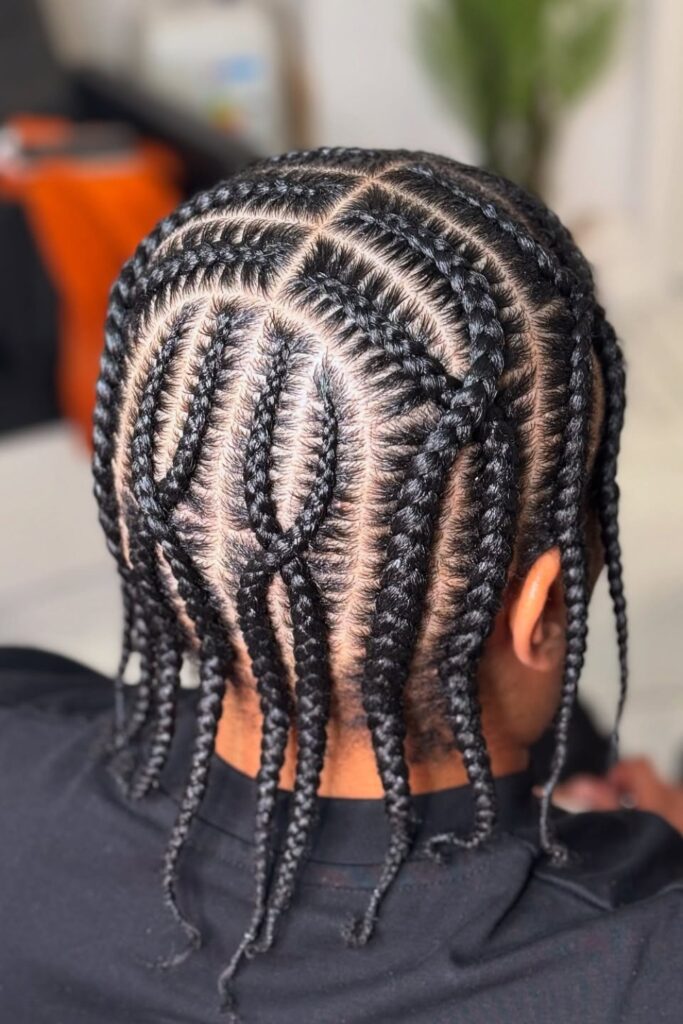
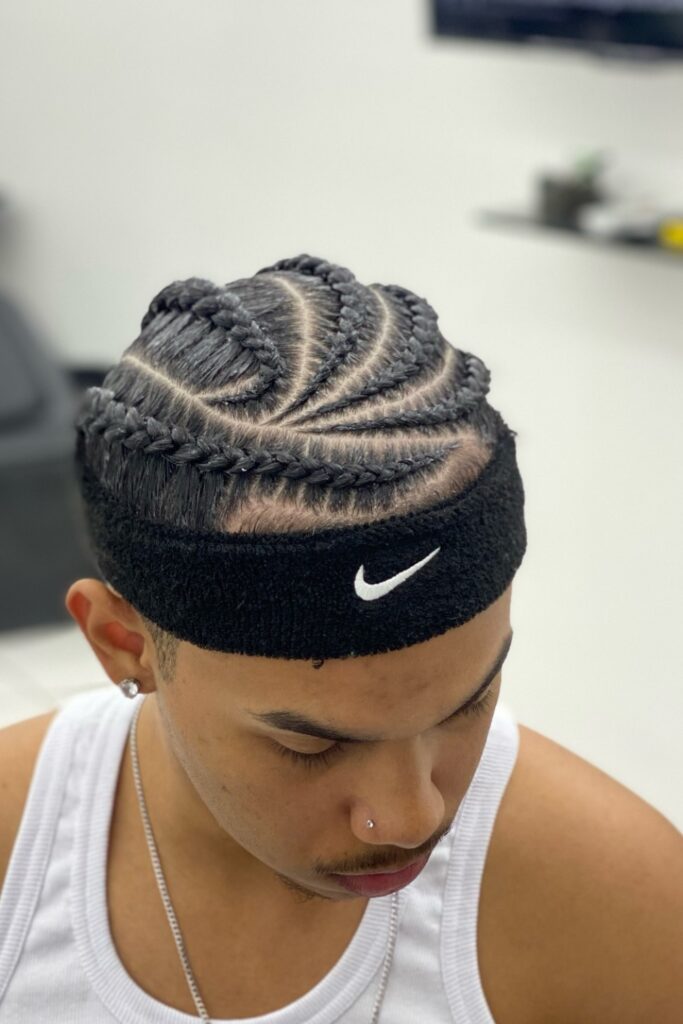
Sweeping Wave Cornrows
You may also let the rows bend around the crown instead of taking each braid straight back for a sense of movement without adding too much intricacy.
Leave the sections wide and properly spaced to keep those sweeping lines crisp, especially if you have thick hair that warrants thicker braids.
It is good showing your braider this from above as the direction of each section is as important as the thickness of the braid.
Cornrows With Fade
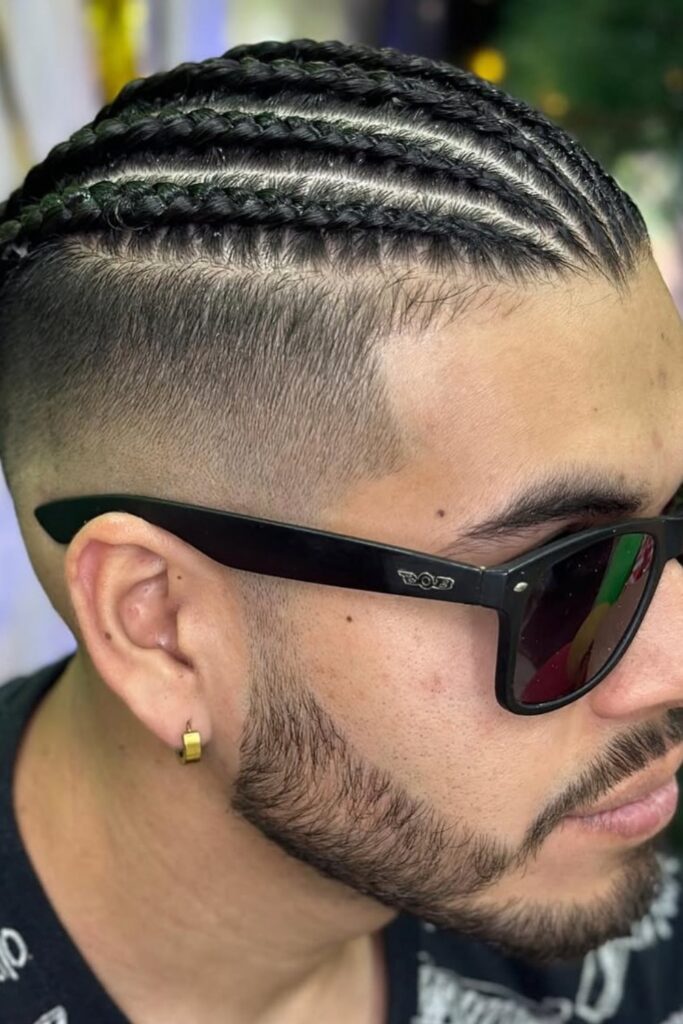
The high fade is a great way to switch up conventional cornrows by reducing side bulk and placing all the attention on those parallel rows up top.
Go for this combo if you want a crisper barbered finish, but be aware that faded sides give you less hair for future braid styles.
Do the braids before you do the fade and edges so your barber can shape the sides around the braided part when it’s done.
Braided Top Knot
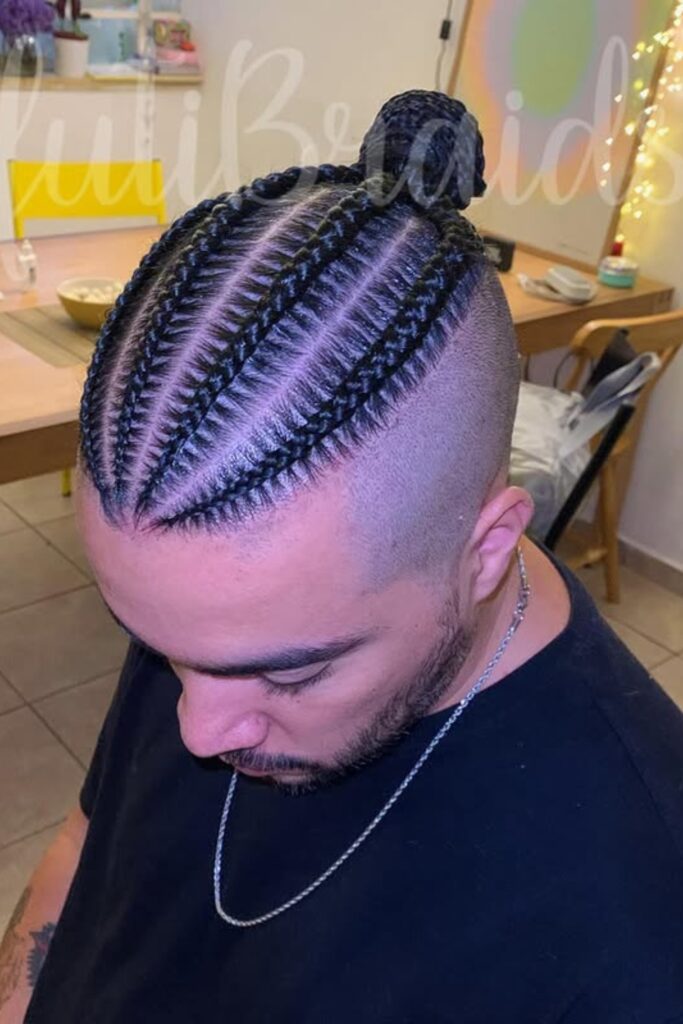
Another alternative for longer hair: Run thicker cornrows toward the crown and gather their ends into a compact braided knot.
The shaved sides really keep this style much lighter around the head and the knotted finish keeps longer braid ends from falling free.
Ask your braider to place the meeting point carefully, as the knot placed too far front or too far back affects the overall balance.
Geometric Stitch Braids
Clean diagonal sections can handle most of the styling work, particularly when heavier stitch braids follow those precise lines over the head.
Don’t have a lot of little rows, but leave good gaps between the major braids so that the angled bits stay sharp and easy to see.
Good overhead reference on this one, geometric patterns rely significantly on proper sectioning before your braider ever starts the braiding.
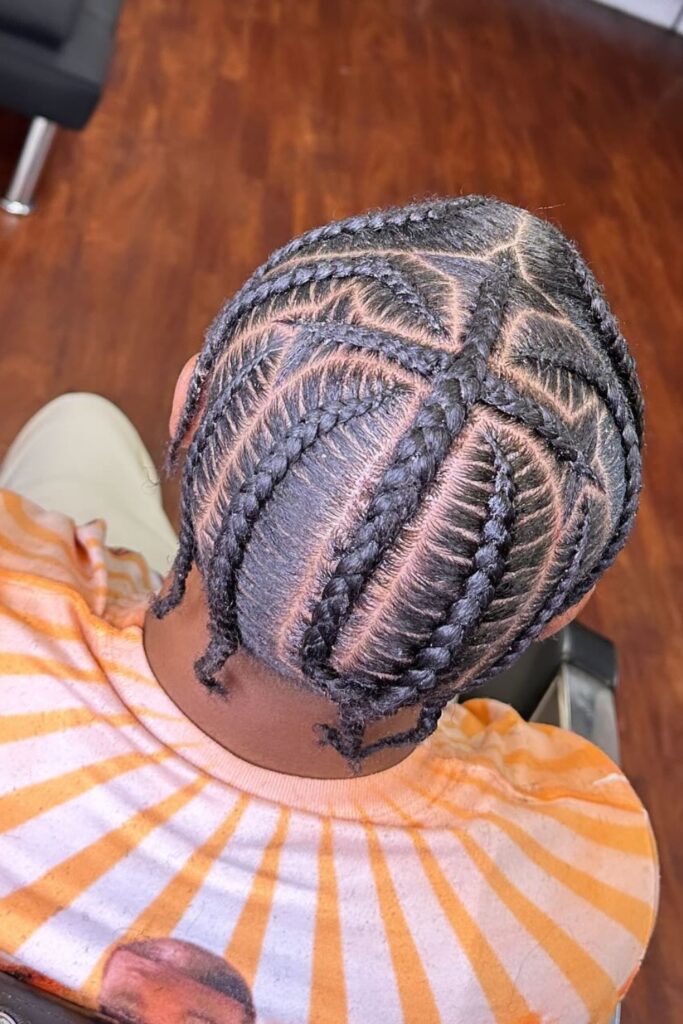
Crossed Cornrows
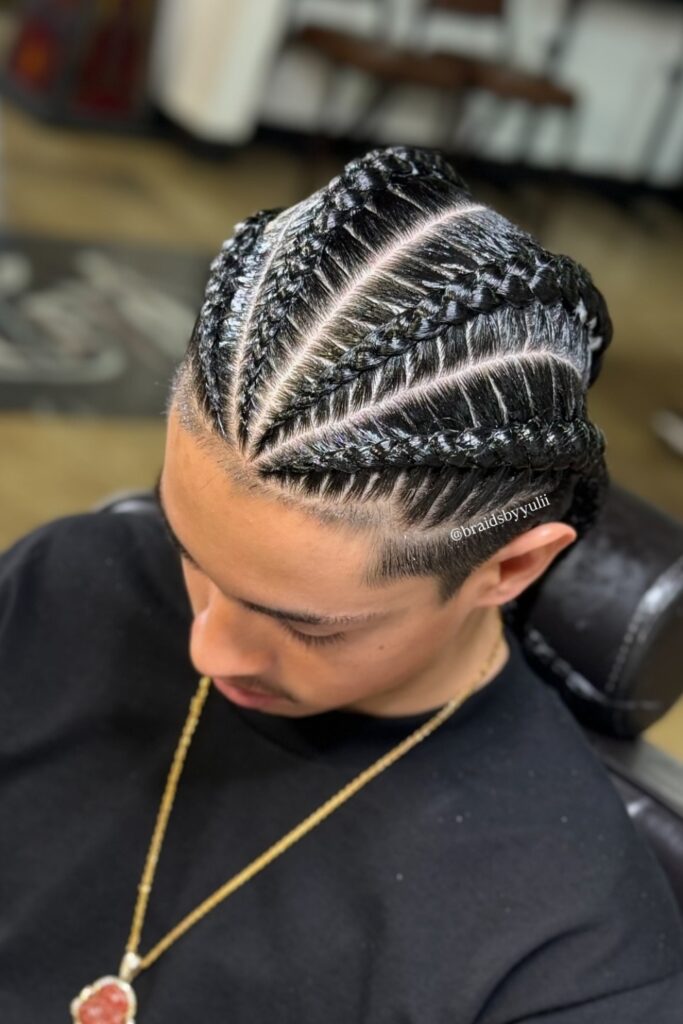
Crossing some braids across the middle breaks up the simple straight rows and creates a stronger pattern without requiring thousands of smaller pieces.
Keep the outer braids on cleaner paths so the crossing is still easy to spot, instead than being lost inside an overly convoluted pattern.
For this style of design, have your braider lay out the parts first, because each crossing point needs adequate room to sit neatly.
Cuffed Cornrows
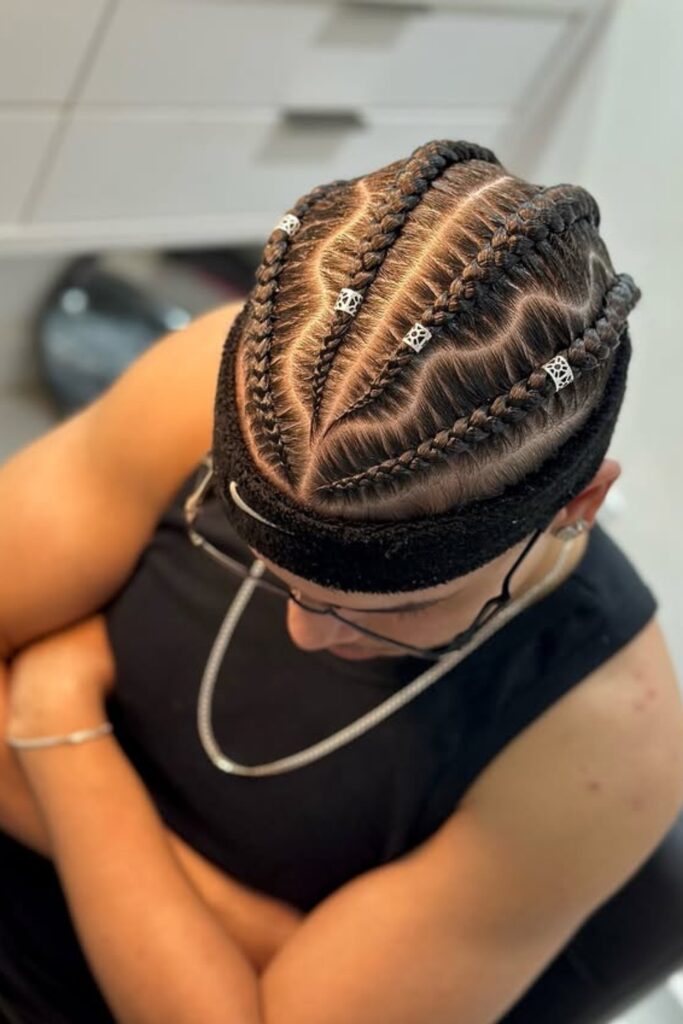
Accessories work best as accents, so a few metallic cuffs offer personality without distracting from the clean curved direction of the structural cornrows.
If you’re planning on adding cuffs, choose for medium width braids. They provide enough strength for the accessories to sit securely and obviously.
Instead of adorning each braid, sprinkle some cuffs about the head so your completed appearance is balanced and easy to maintain.
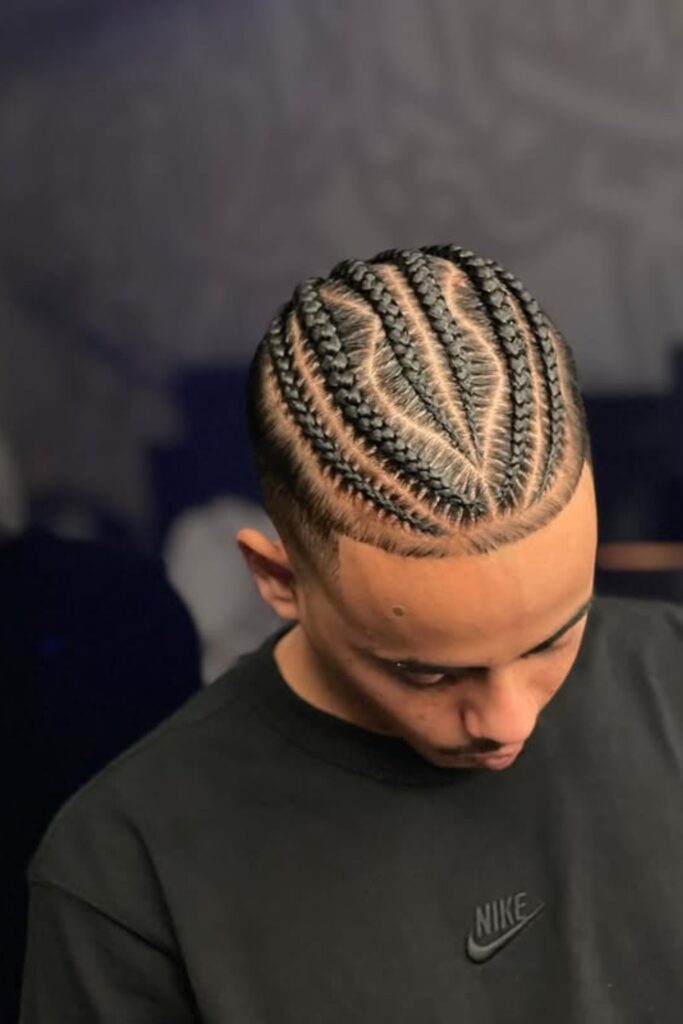
V-Shaped Cornrows
A sharp center part pulls the braid pattern inward, creating a great option when basic parallel cornrows begin to feel a bit predictable.
Keep the V shape sharp from the front by making both sides symmetrical and having thinner accent rows frame the bigger braids.
Ask for clean spacing around the center point since uneven parts can rapidly make a symmetrical arrangement like this look obviously off.
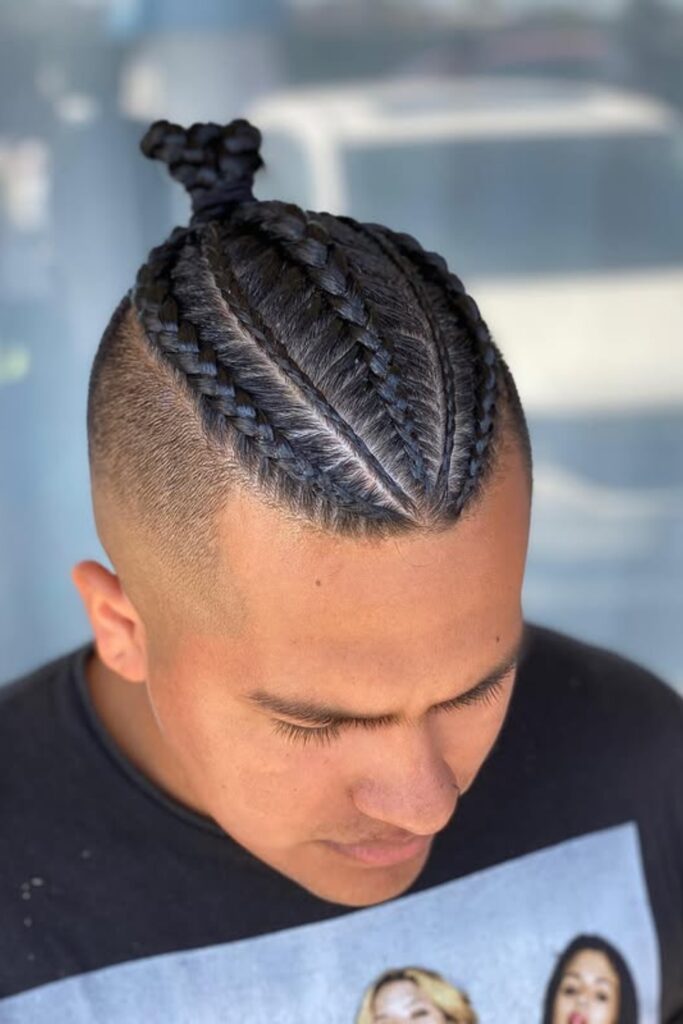
Braided Top Knot
If you already have your sides faded, you can almost use that extra length to your advantage by pulling lengthier top braids into a little knot.
Direct the primary cornrows in one direction, so the ends will naturally meet in the middle instead of being tugged in strange directions.
Use this technique only when your top has enough length to tie comfortably as tying a knot too early will cause unneeded tension.
Layered Cornrows
Use thick main braids contrasted with thin accent rows when you want to have lots of intricacy without making every piece equally aggressive.
Have the braids go in slightly different ways toward the rear, to create movement in the pattern, while keeping the front tidy and balanced.
This arrangement is good for thick hair; wider portions assist the bigger cornrows to stand out next to the skinnier supporting rows.
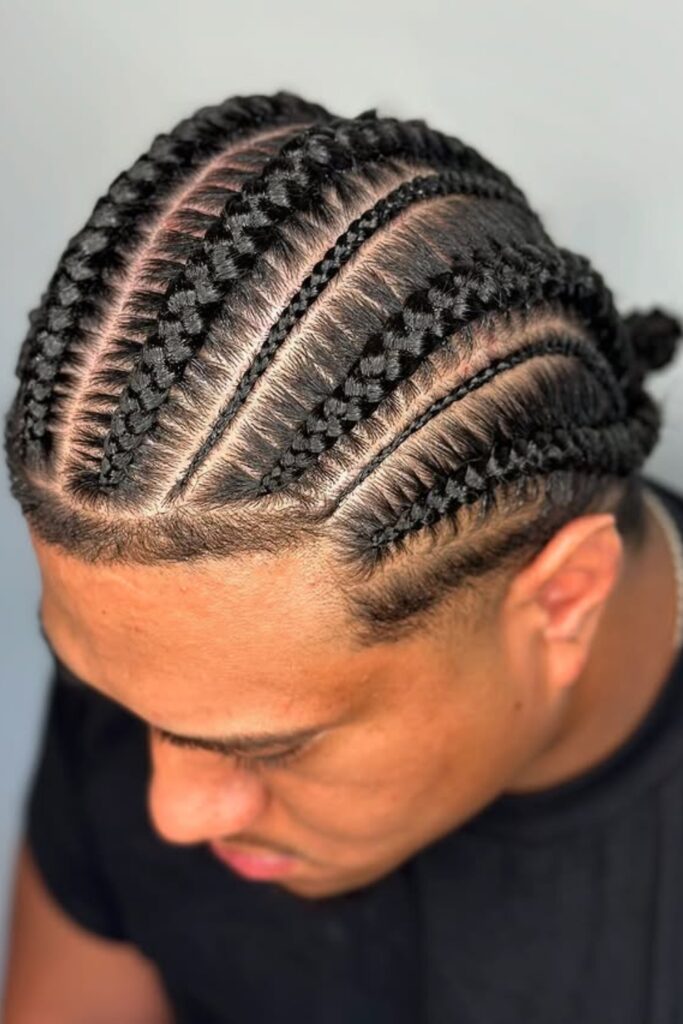
Gold Cuff Braids
If you’re not into fancy curves or crisscross patterns, a couple of gold cuffs are all you need to customize conventional cornrows.
Keep the braid thicknesses reasonably even so the metallic elements become little highlights instead than compete with an already busy pattern.
Instead of adding cuffs to all of the braids, try adding them to just the divided rows. This will add a nice detail without making the overall look too busy.
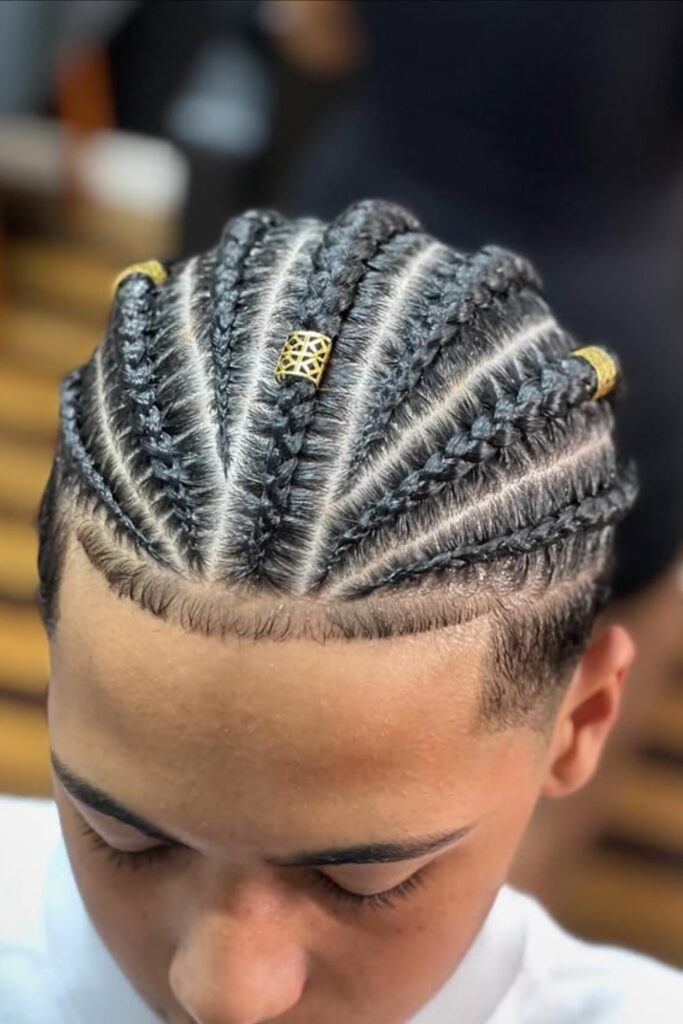
Crown Bun Braids
Longer hair is easier to manage when you route the main braids toward the crown and bind their ends into one bun.
If you want the larger curving rows to look balanced on both sides, keep a strong center section through the front.
Before you opt for this finish, make sure that your braids can comfortably reach the crown without tugging too hard to create the bun.
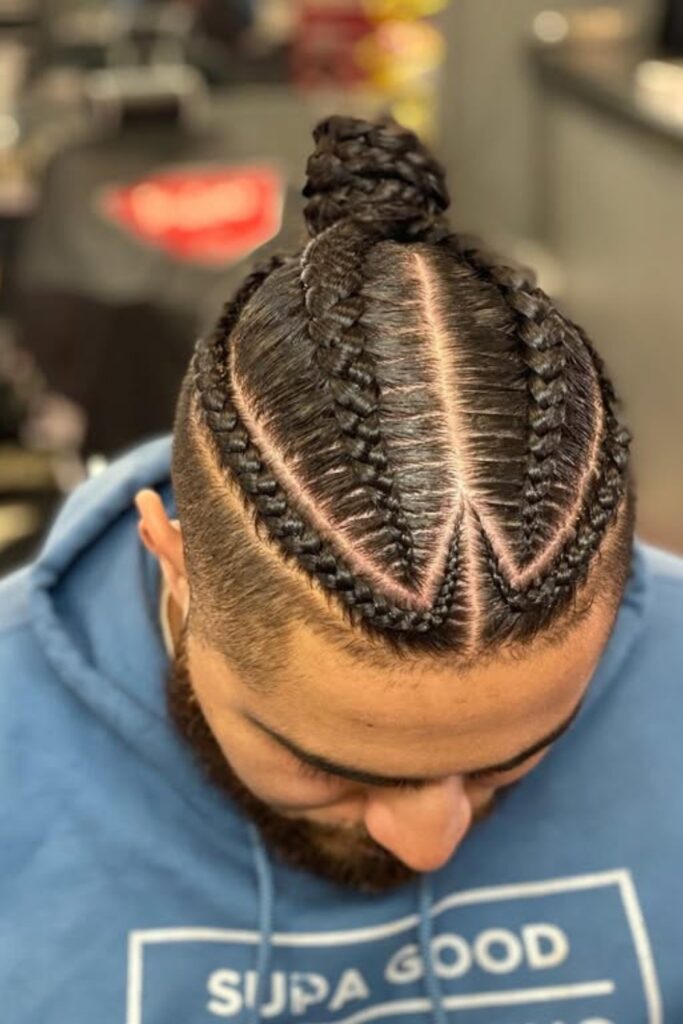
Diagonal Cornrows
Diagonal rows are an easy way to get outside the box of straight-back cornrows and still have a haircut structured enough for everyday.
Slowly change the direction of the braid over the head so that the angled look is just because of the angle and not because the rows are bent unevenly.
For this particular flow, you also want to show your braider the side angle as this is the easiest angle to see the direction of the separation.
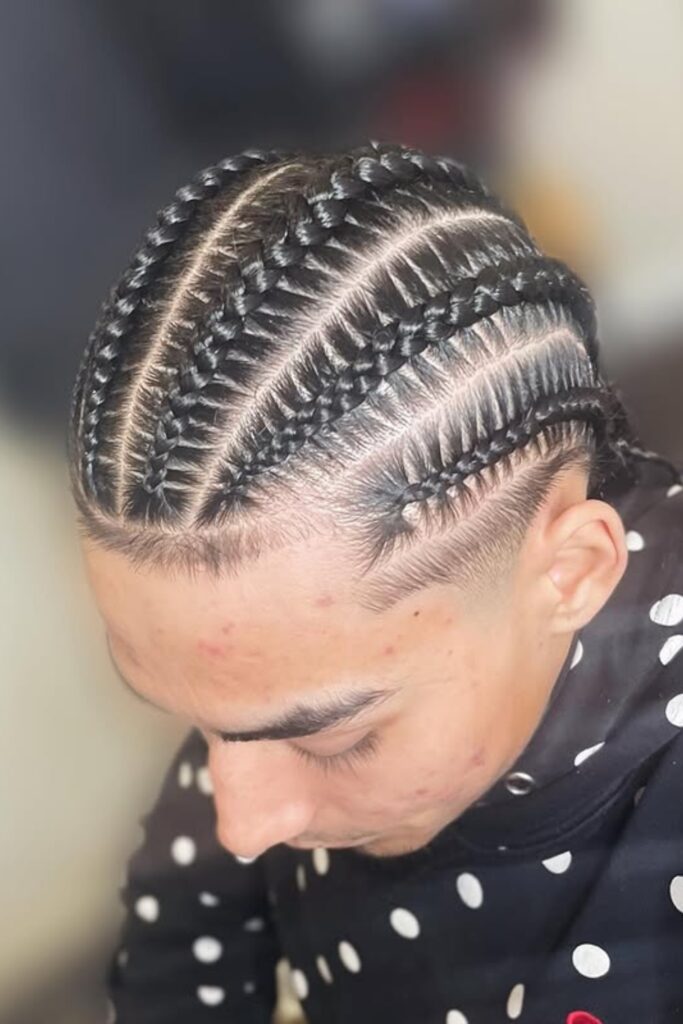
Classic Straight Backs
If you desire plain, straight-back, evenly spaced braids, you have definition without accessories or crazy parting.
For a more detailed look, use medium-width cornrows, especially if your hair density can handle larger parts without showing excessive scalp.
Make sure the rows match from front to back. Clean space is what makes this simple style look sharp instead of plain.
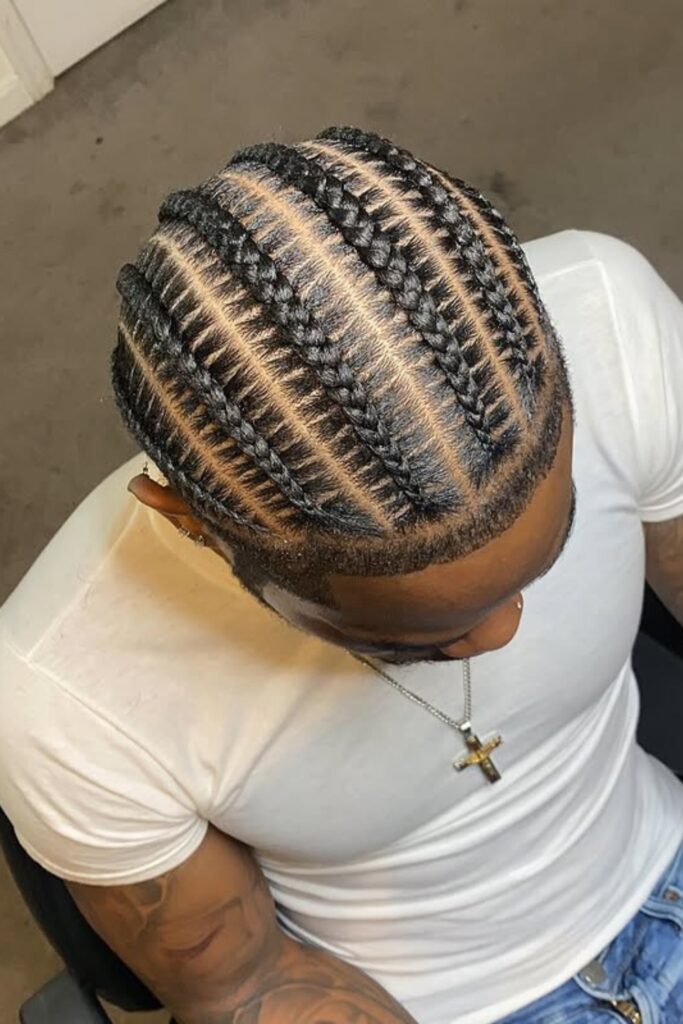
Cuffed Fade Braids
Faded sides combined with hanging cornrows offer you movement on top while keeping the area around your ears significantly cleaner and lighter.
If you want extra detail, add little cuffs near the braid ends, but keep accessories modest so they never over-power the hairdo.
This works best when your top has plenty of length for loose ends, so check your usable braiding length before deciding on the finish.
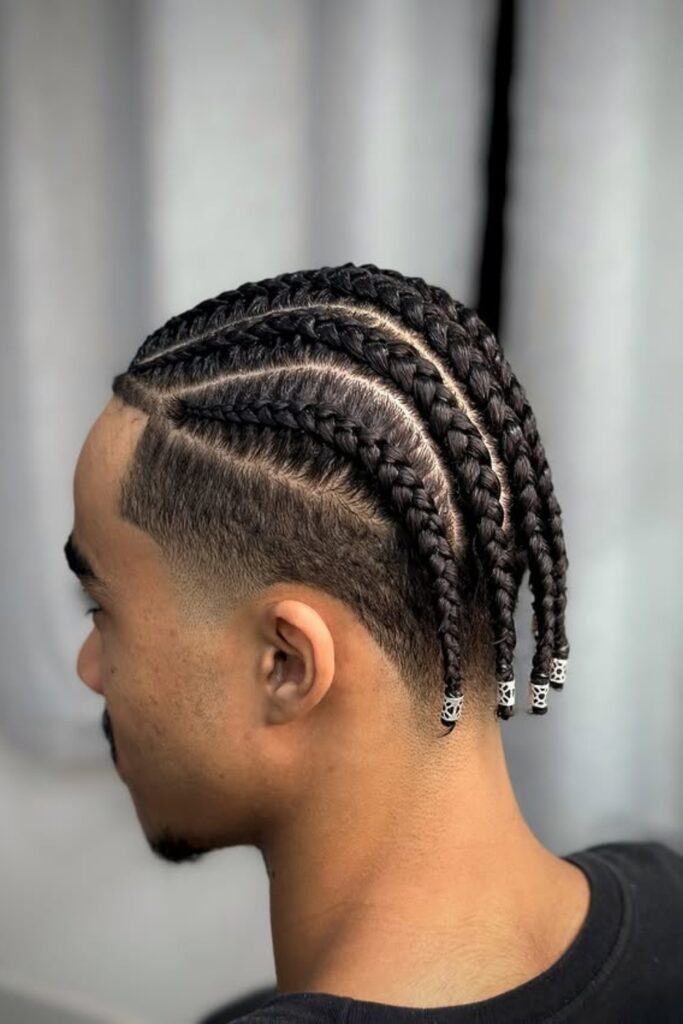
Halo Bun Braids
One braid wrapped around the hairline creates a framing for the straighter center rows, so the whole design feels more carefully constructed.
When you prefer to keep your lengthier ends confined rather than letting individual braids hang behind, gather them into a compact crown bun.
Ask your braider to center the curving outside row first, as that border sets the whole finished arrangement.
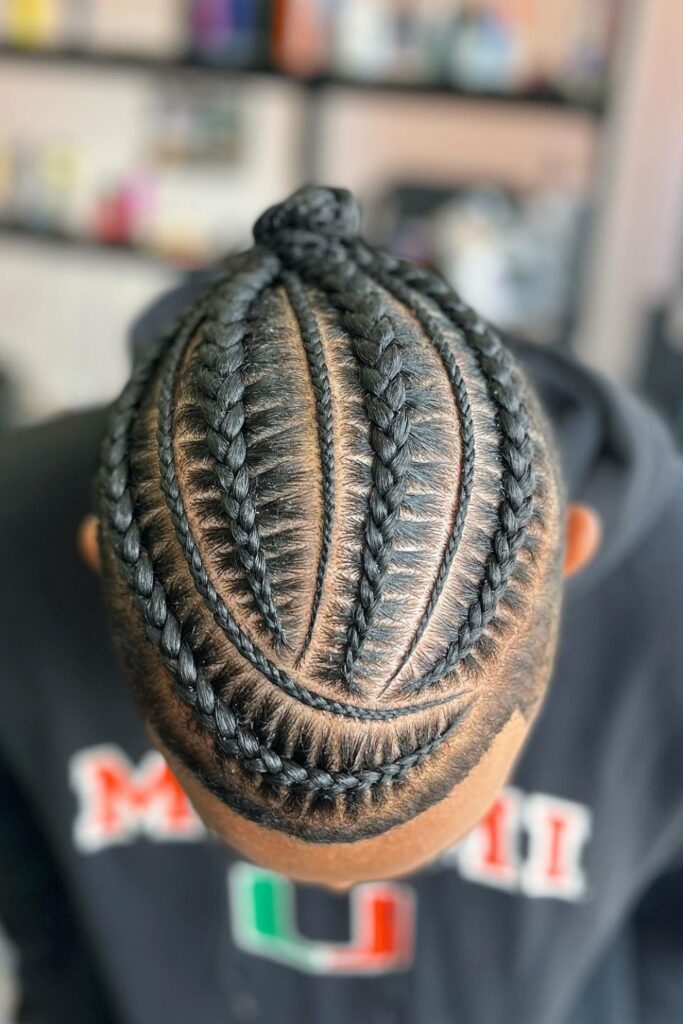
Detailed Bun Braids
If plain cornrows are a little too basic for you, try adding narrow accent rows to thicker braids before collecting it all up into a compact top bun.
Allow a handful of little braids to run between the main portions, providing detail without trying to have every row demand your attention simultaneously.
A small bit of contrasting color can go a far way in accentuating the pattern, but keep it mild if you want the complex parting to be evident.
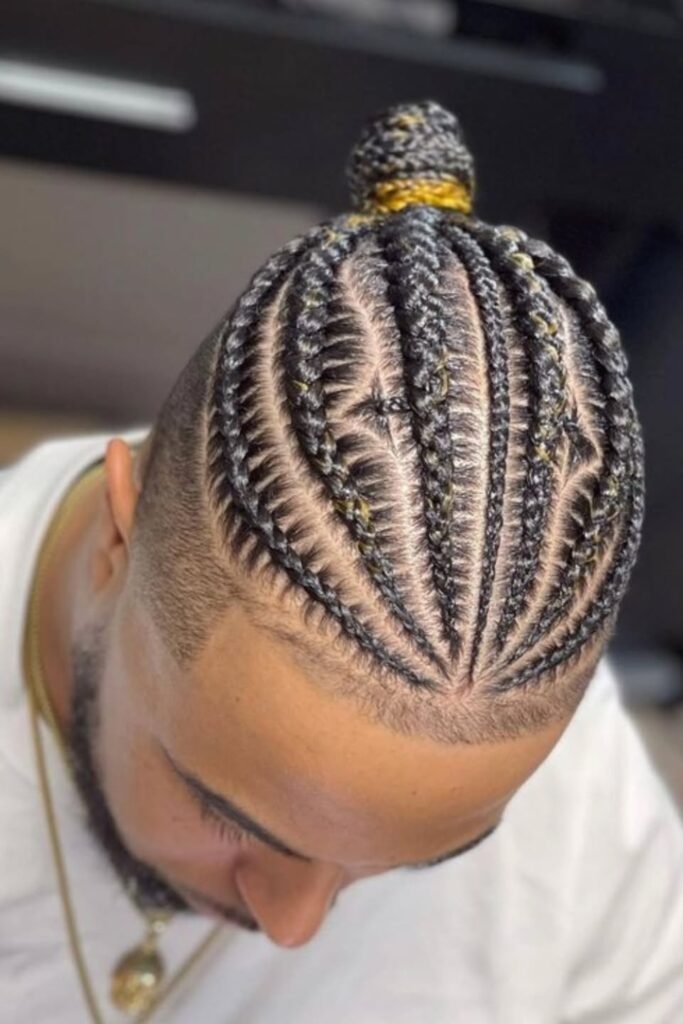
Swirl Bun Braids
If you want a bun style that flows more, you can turn the braid orientation inward and let curved rows naturally direct everything toward the back.
Separate the bigger cornrows with tiny accent braids to keep the swirling pattern seen rather than melting into one hefty part.
This design calls for some forethought before you get started braiding, so bring an overhead reference clearly showing how each curving row connects.
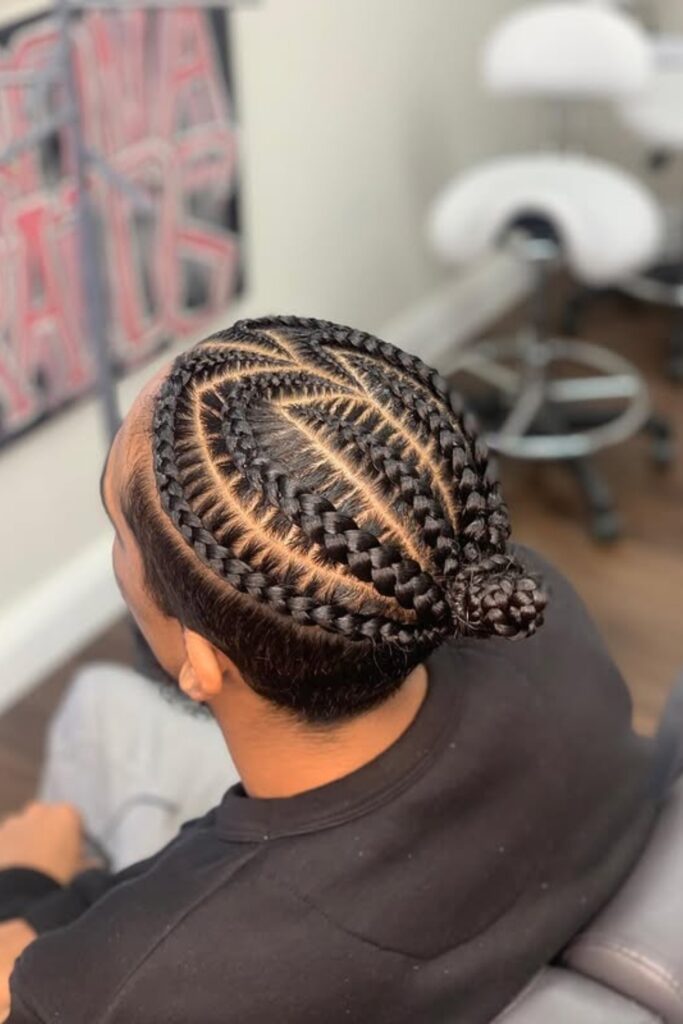
Hanging Box Braids
If you want more movement around your face, leave the individual braids loose as opposed to attaching them closely to the scalp.
Medium square portions will allow enough space for each braid to hang freely. The longer the hair, the more drop and movement you will see.
If you go for this length, prepare for nighttime protection and delicate handling because loose ends suffer more friction than tucked away cornrows.
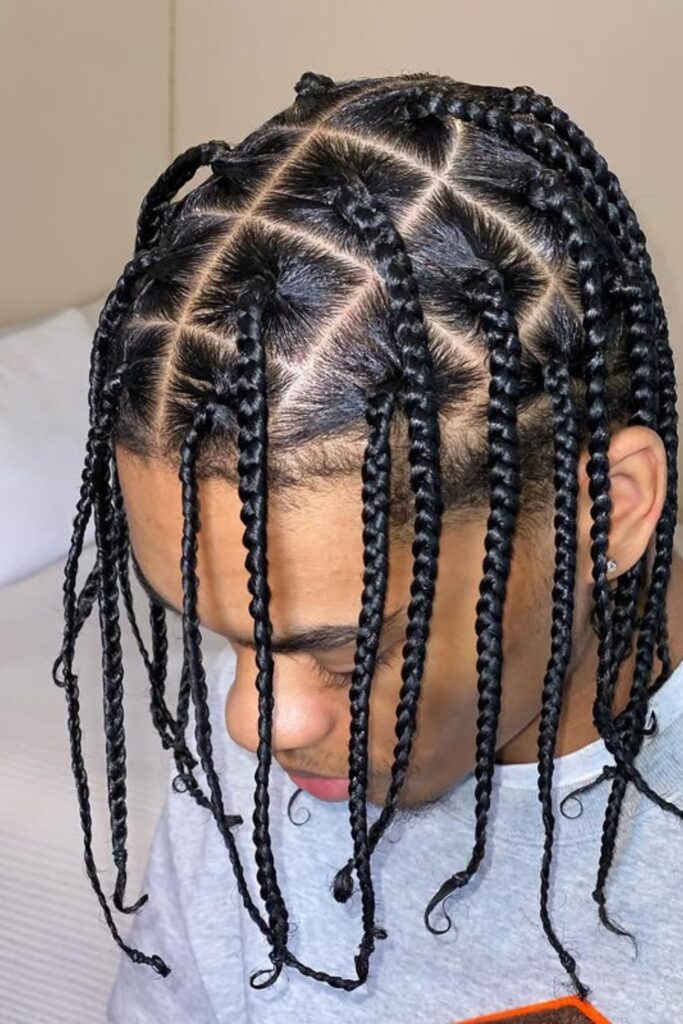
Natural Tone Cornrows
Classic cornrows look gentler with your natural hair color, especially if you already have enough of obvious contrast with clean parts.
For a simple finish, keep the rows evenly sized so the look is carried by the texture of the braid and natural tone.
This is a sensible alternative if you want prominent braids without decorations, complicated designs, or a big variation between the sizes of the braids.
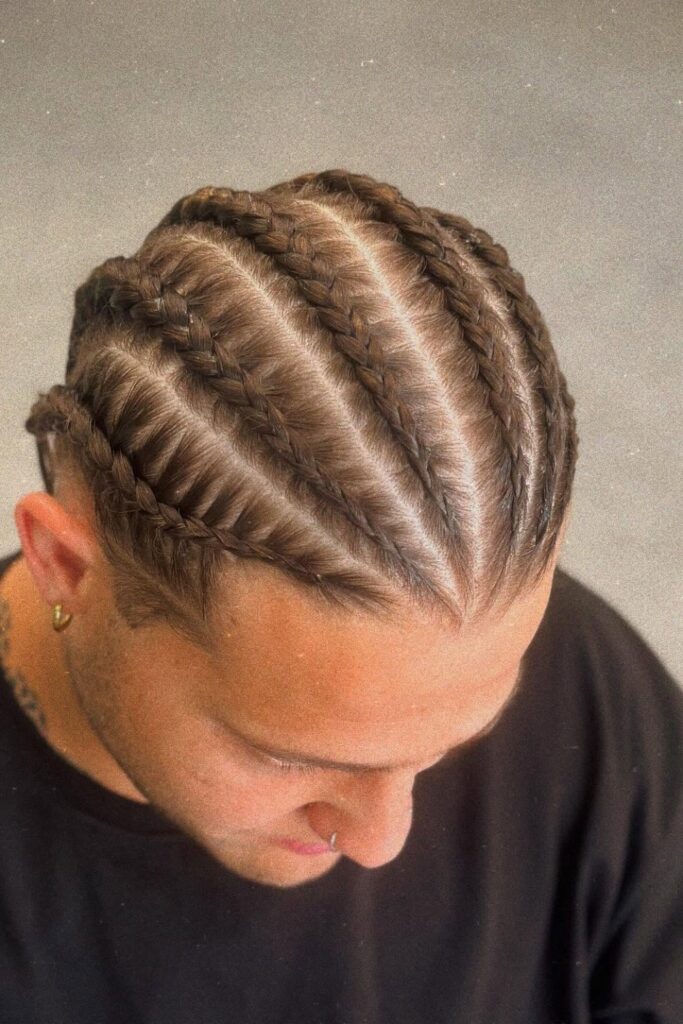
Center Stitch Braids
A deep center part instantly structures the style and directs the larger stitch braids with a clear path while maintaining the visual harmony of both sides.
If you want less, bolder braids instead of a head full of small precise cornrows use bigger portions for the main rows.
Tell the braider you want a super sharp middle part. That one portion is going to be a key aspect in the overall design.
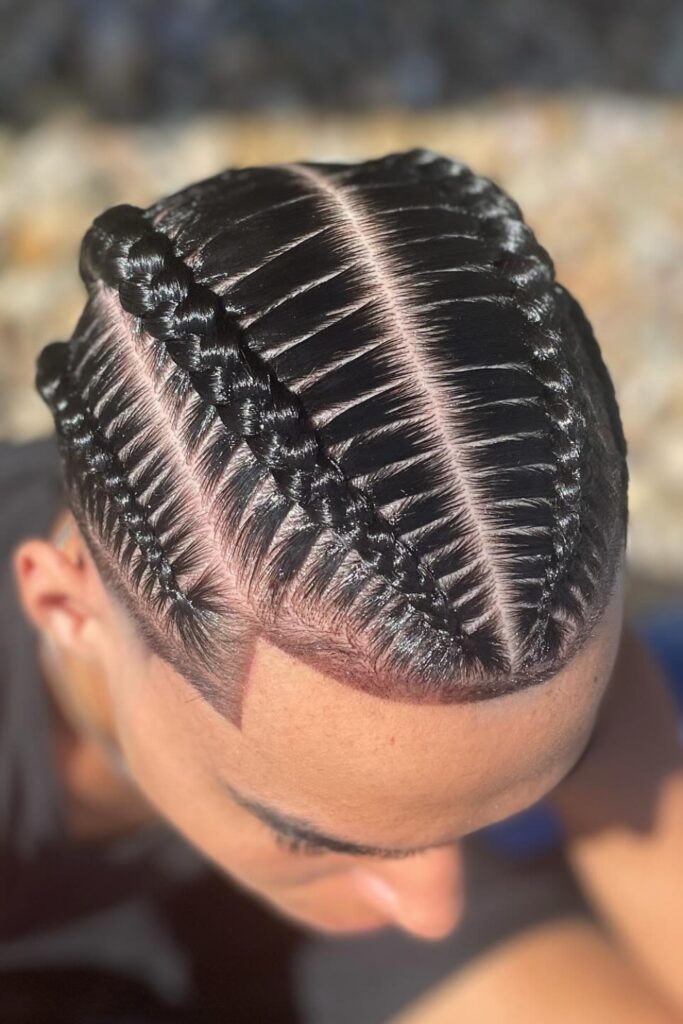
Fan Cornrows
Fanning out the braids from one front point creates a natural symmetry with a complex look without resorting to complicated decorative patterns.
Attempt to keep the breadth and space of each row the same, so the fan impression remains even as the braids move toward the back.
This pattern works particularly well with faded sides, because once you lose the bulk on the side, those crisp parallel parts really pop much more clearly.
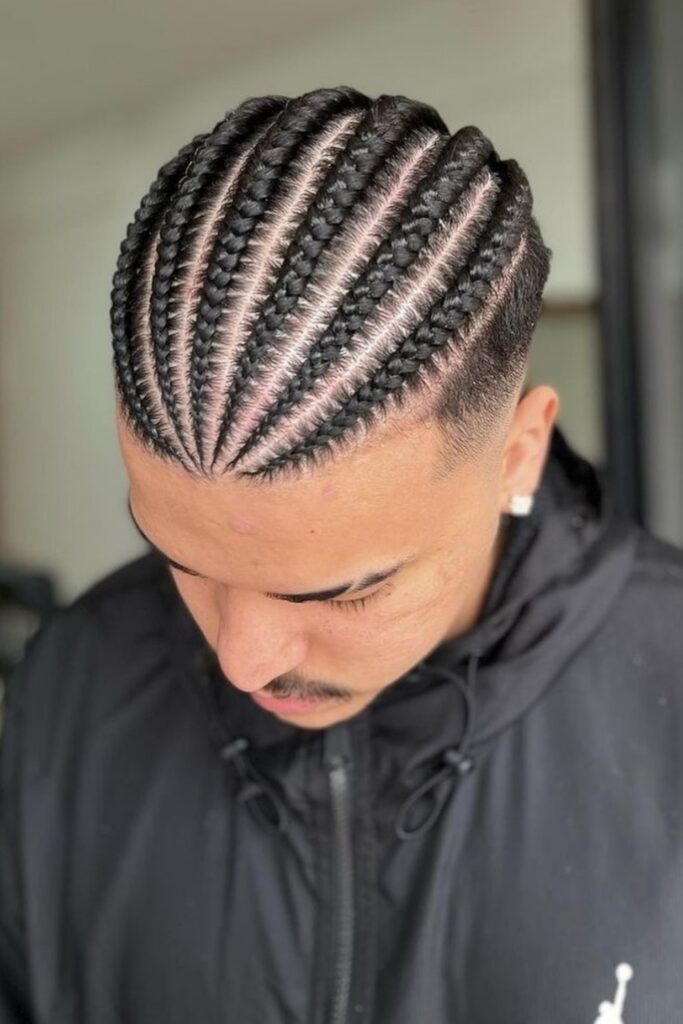
Sweeping Cornrows
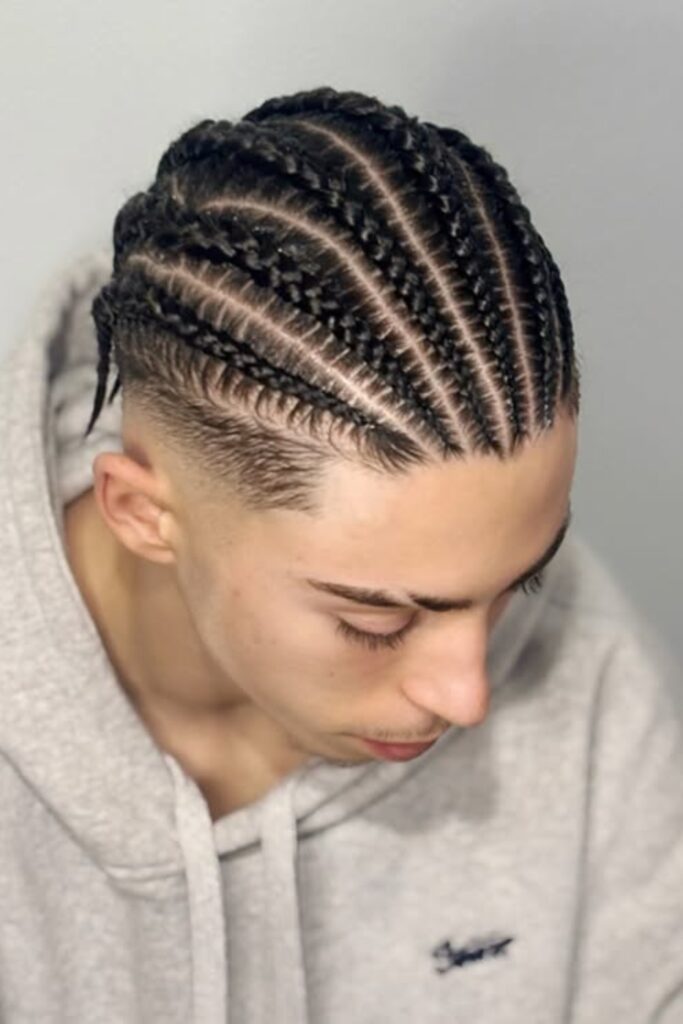
Instead of pulling each row straight back, sweep the cornrows around the head for a softer flow with lots of structure.
If you want the curved direction to be the major detail, rather than mixing up multiple competing aspects, use similar thicknesses of braid throughout.
When sketching out each piece, have your braider follow the form of your head, so those sweeping rows will lay organically from front to back.
FAQs
How Long Do Braids Usually Last on Men?
Most men should expect their braids to remain neat for between two to six weeks depending on the braid style, hair texture, activity level and scalp care.
Sleeping with your braids in satin or silk and not pulling them unnecessarily will help them seem fresh longer.
Should Braids Feel Tight After You Get Them?
When you leave the salon after a braiding visit, your braids may feel tight but they shouldn’t be causing you constant pain, headaches, lumps, or discomfort.
If your braids are feeling too tight, don’t wait for the pain to subside; ask your braider to loosen them up.