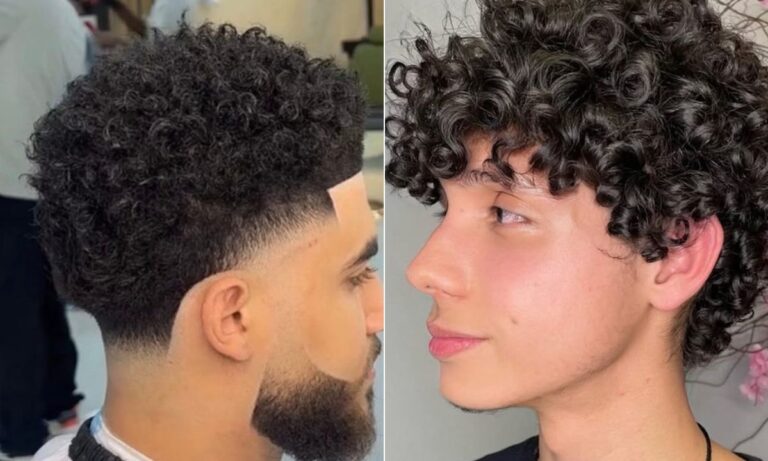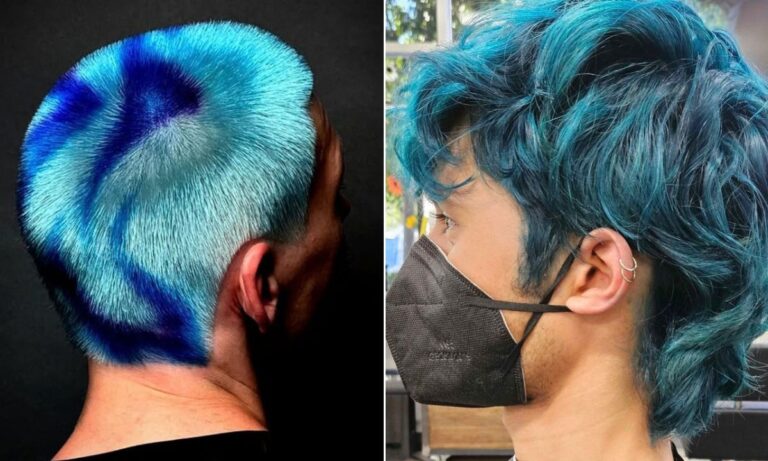
A front taper can appear neat until you take too much from the front and suddenly your hairline looks further back than you wanted.
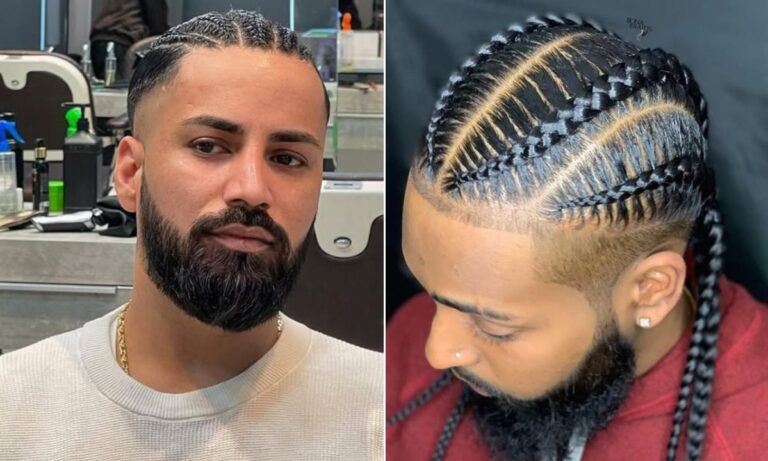
That’s when the appropriate depth, width and blend truly make a difference especially if you wear braids, twists, locs.
You also need to know what to tell your barber so a minor taper doesn’t slowly morph into a much deeper one over a few cuts.
In this article I’ll walk you through several front taper styles, what makes a modest taper distinct from a wider look.
What Should You Tell Your Barber Before Getting a Front Taper?
Instead of just saying, “front taper” when you’re in the barber’s chair before the clippers hit your hairline.
If you wear braids, twists or locs specify what front hairs are part of the style so they aren’t unintentionally chopped into the taper.
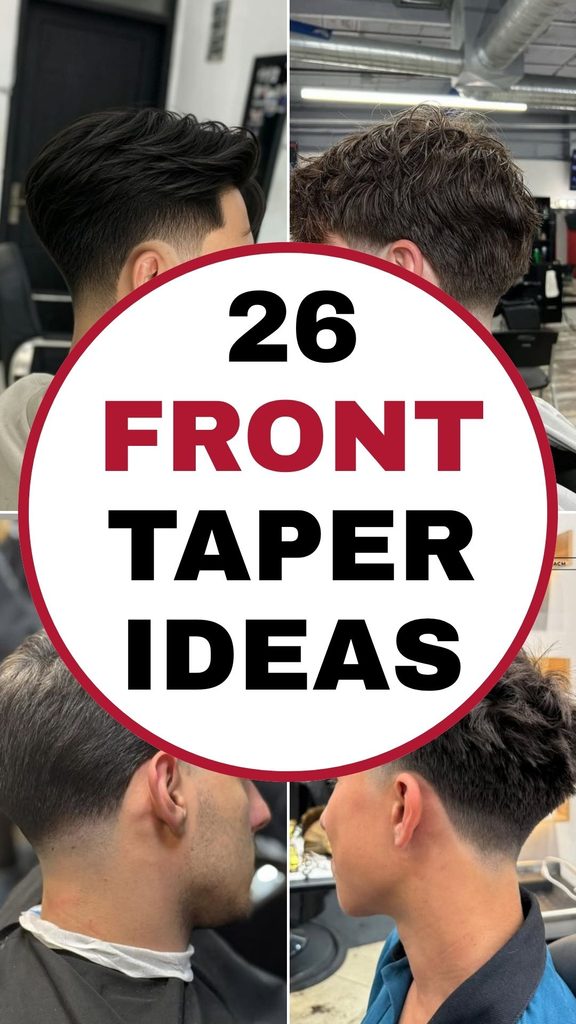
You should also talk about whether you want a sharp line-up or a softer, more natural edge, and whether you want the front to connect with your temple taper.
If you already have a front taper, tell your barber to follow the line of the taper and not cut any new hair below it.
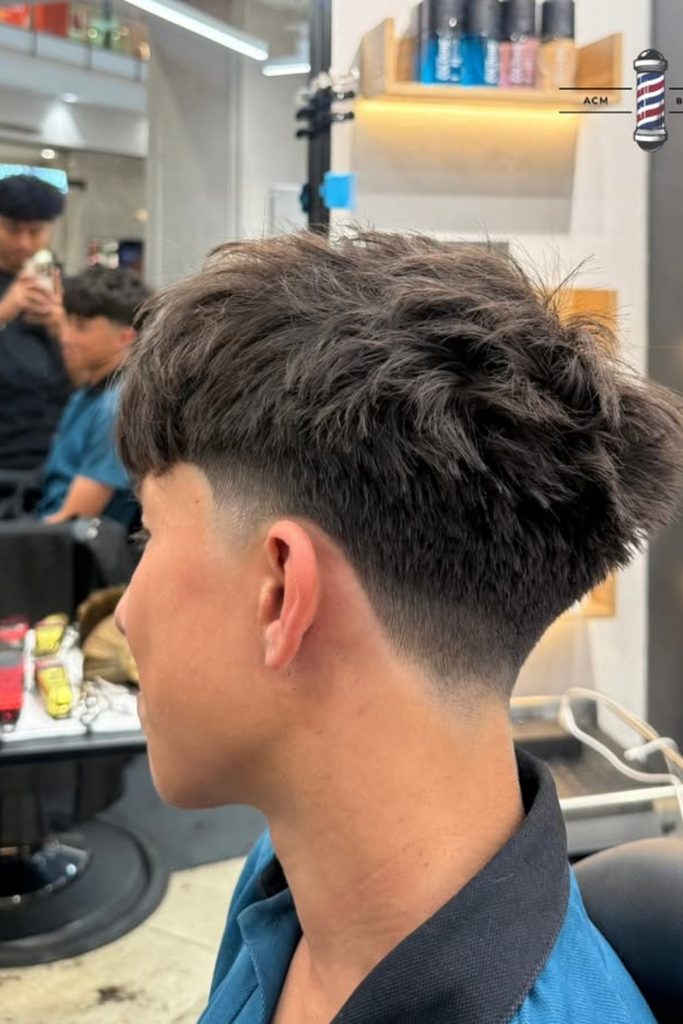
Textured Low Taper
Let the lengthier texture do the work with a modest taper to take the weight off around your ears and neckline.
Ask your barber to leave some weight on top of the blend so the untidy top blends nicely into the shorter sides.
This is especially good on thick straight or wavy hair because you have the movement, but you have a cleaner profile.
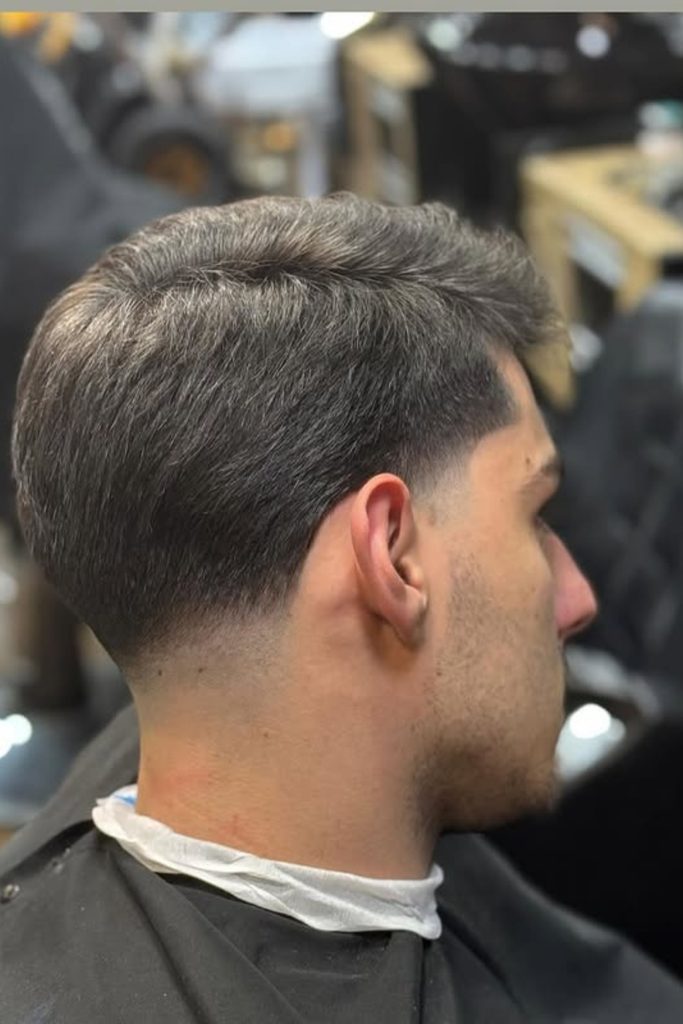
Subtle Taper Blend
Subtle works when you want a cleaner outline without a significant contrast between the perimeter and fuller hair.
Have your barber start the transition low around your ears and neckline while maintaining natural density through the sides.
This gentler look works well with short straight hair when a sharp skin fade feels too forceful for everyday wear.
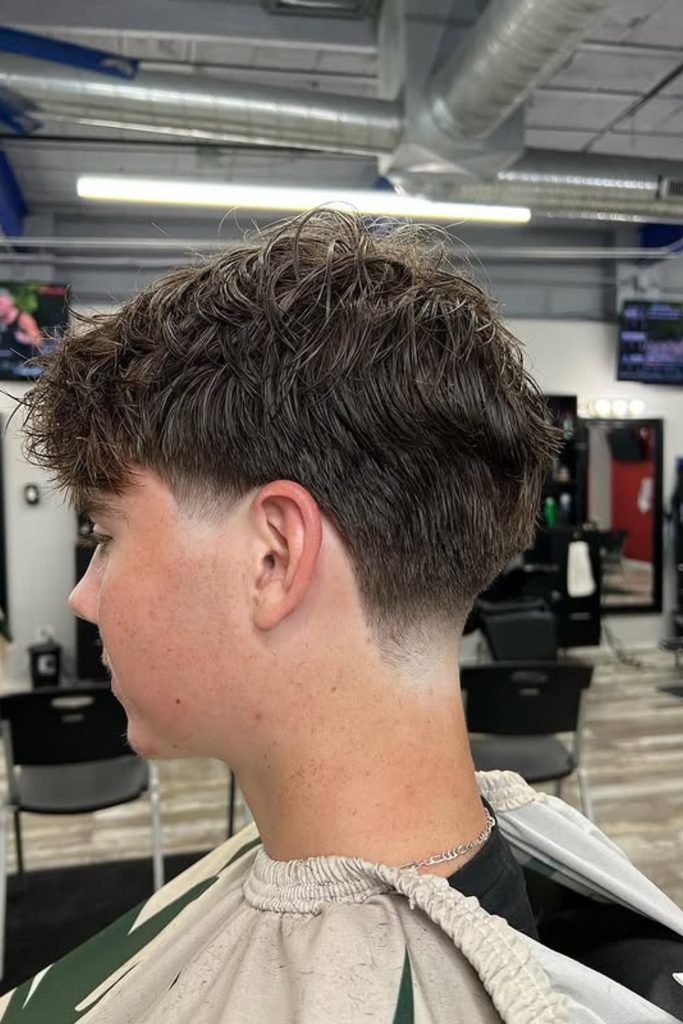
Wavy Drop Taper
Let your natural waves be the star, with a low taper cleaning up the excess bulk around the nape.
The greater length on the crown area allows for mobility while the shorter perimeter makes loose textured styling look notably more controlled.
Ask for slow blending underneath the heavier sides so your waves stay big without showing too much scalp.
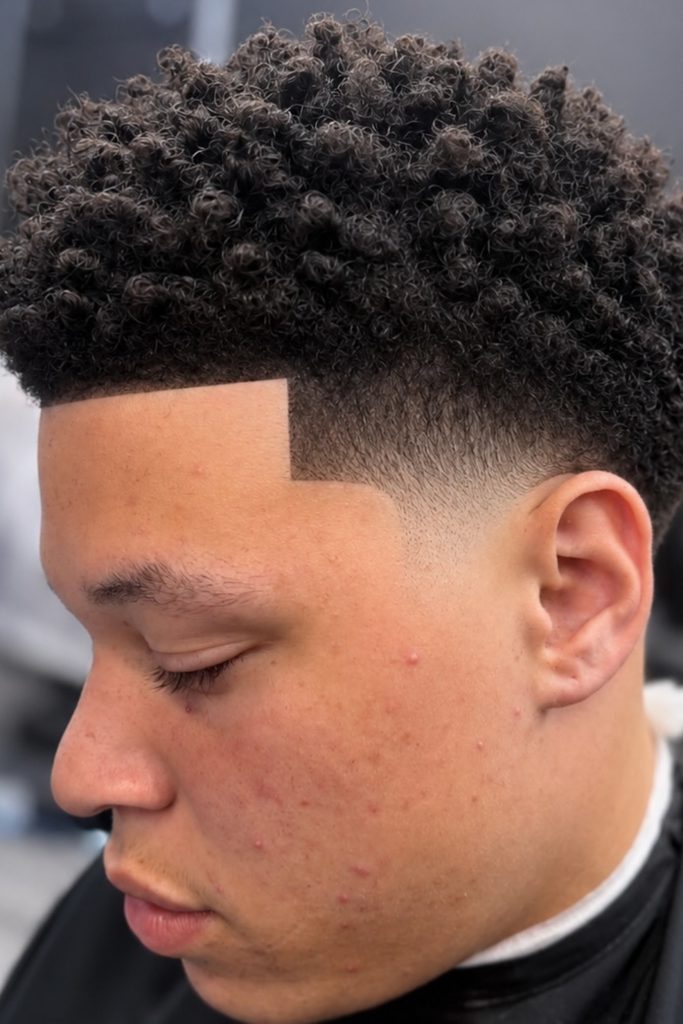
Curly Front Taper
With dense curls, you already have a lot of volume, so a narrow taper at the temple can accentuate your perimeter without compromising fullness.
Tell your barber to stay close to the existing edge, because if he pushes the corner back, it can slowly open up your taper.
Pair it with a clean line up, and keep the density behind the edge so you can still have fullness around your forehead.
Slicked Curly Taper
Pulling your curls back can make the taper more pronounced and the fade around your temple will look sharper.
Request sufficient blackness at the top to blend your curls and shorter sides without forming a noticeable separate strip.
The polished finish features a sharp temple edge, and the length tucked toward the rear allows your natural curl pattern to play.
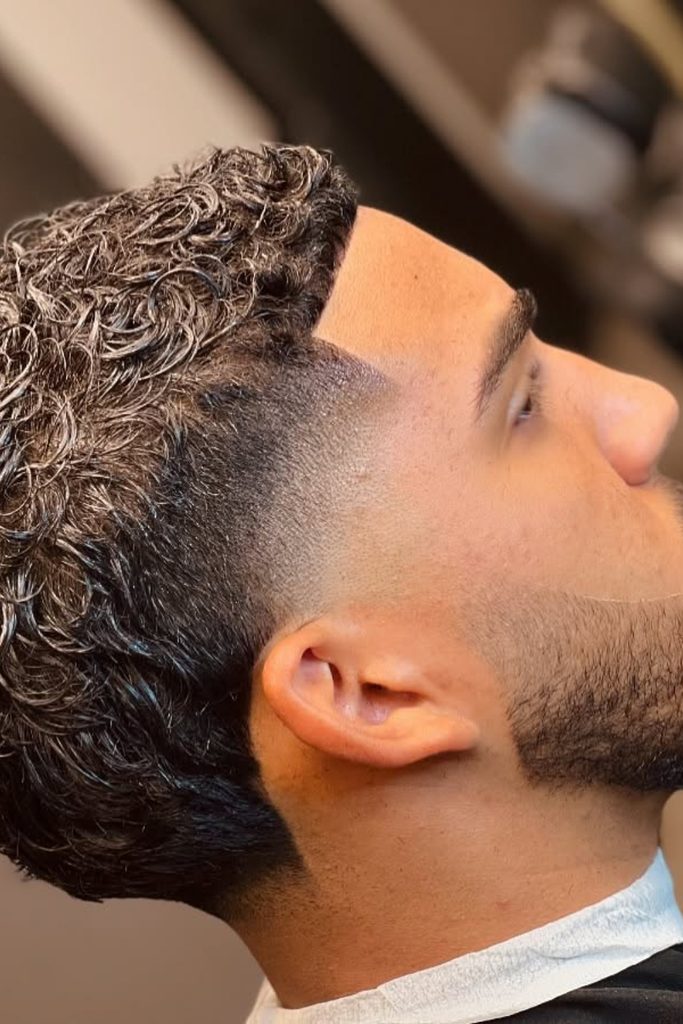
Brushed Top Taper
A brushed top means you can keep plenty of length in the top while the low taper subtly cleans up around your ears.
Ask your barber to blend under the heavier side portion and not cut up, which keeps the broader form on top.
Balanced transition works especially well on straight, dense hair when you want to keep your styling in check without going all the way to an exposed high fade.
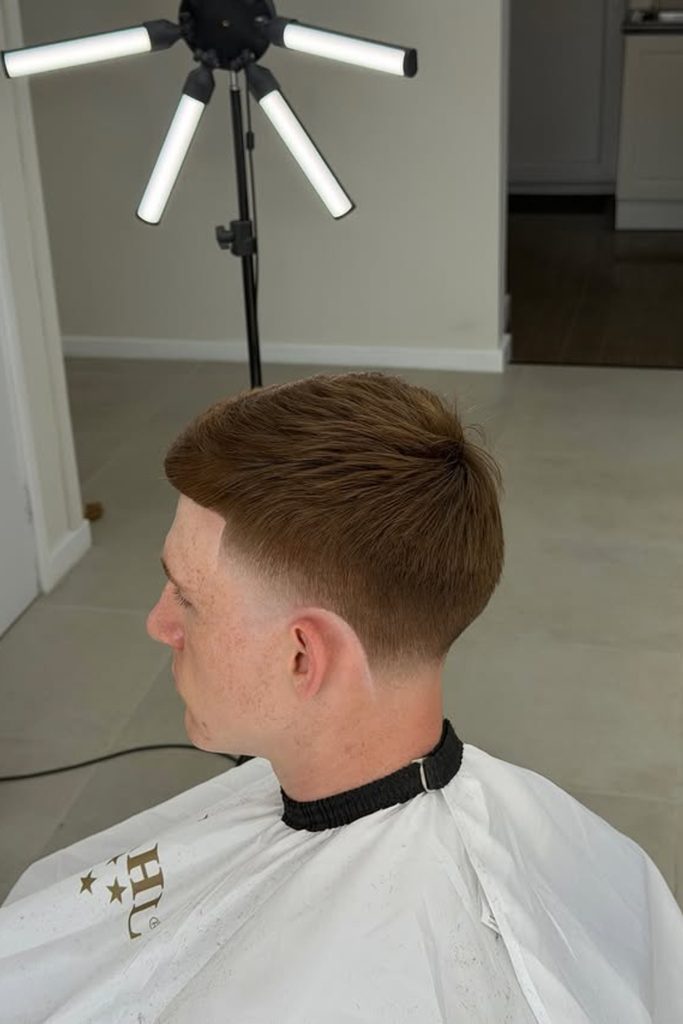
Loc Ponytail Taper
A well-placed taper is useful to separate around the front and sides, since longer locs pulled back will naturally show your temples.
Be sure your barber understands which hairs are feeding the locs before cutting, so that the tapered part does not slowly grow into them.
A precise lineup can refine this combo even further, while keeping enough density behind the edge preserves a stronger transition.
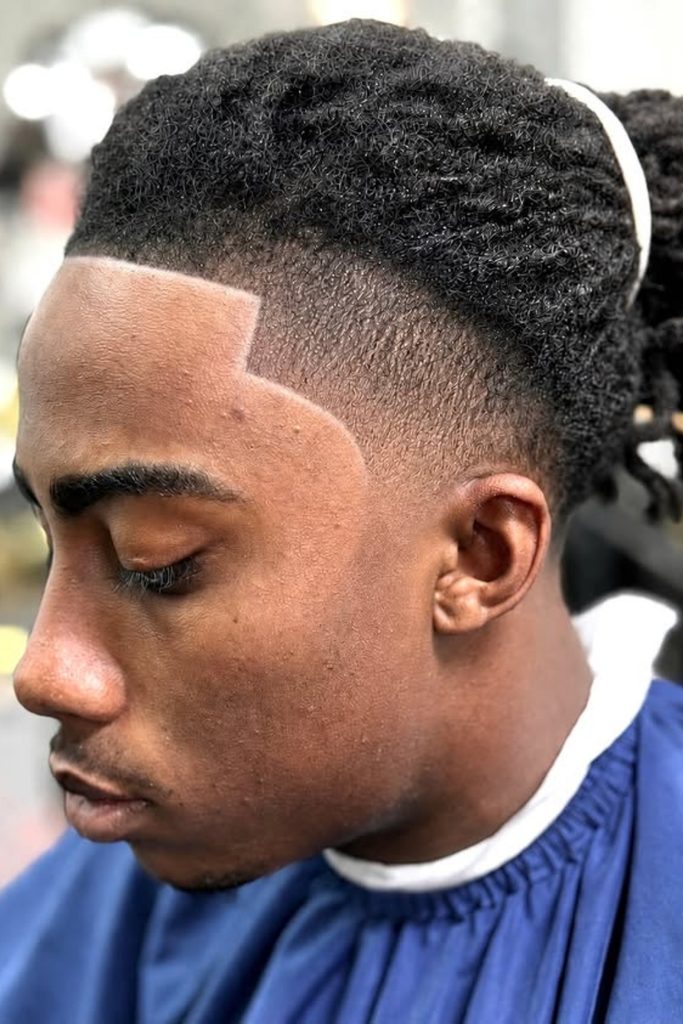
Waves Temple Taper
Waves are already filled in with detail and texture all over the head. Tapering around your temple means you may keep more of that visual pattern intact.
Have your barber taper the short part into your waves smoothly instead than excessively boosting the fade up the sides.
Here it’s also important that you stick to your set front edge, since repeated pushes can modify the contour of the hairline even if the waves are still full.
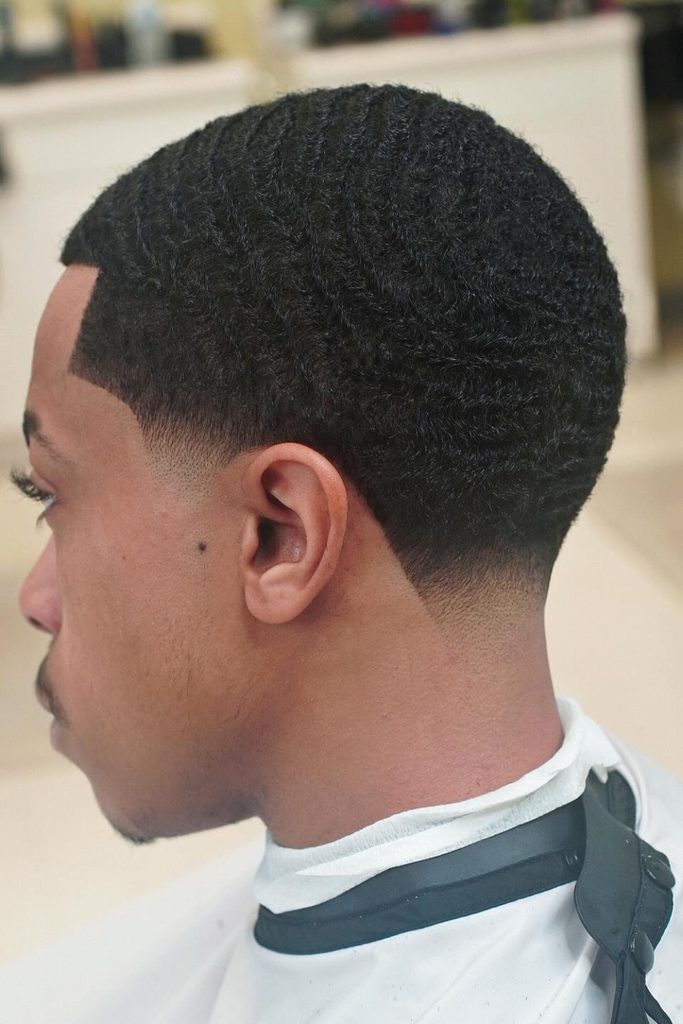
Swept Back Taper
The lengthier hair is brushed back for a natural height and the taper removes bulk behind your ears without upsetting that slick upper shape.
Ask for a gentle transition underneath the longer sides so you may style everything back without showing a strong weight line.
It’s a great combo for dense, straight hair, because the length that is left allows for mobility, but the perimeter is obviously controlled.
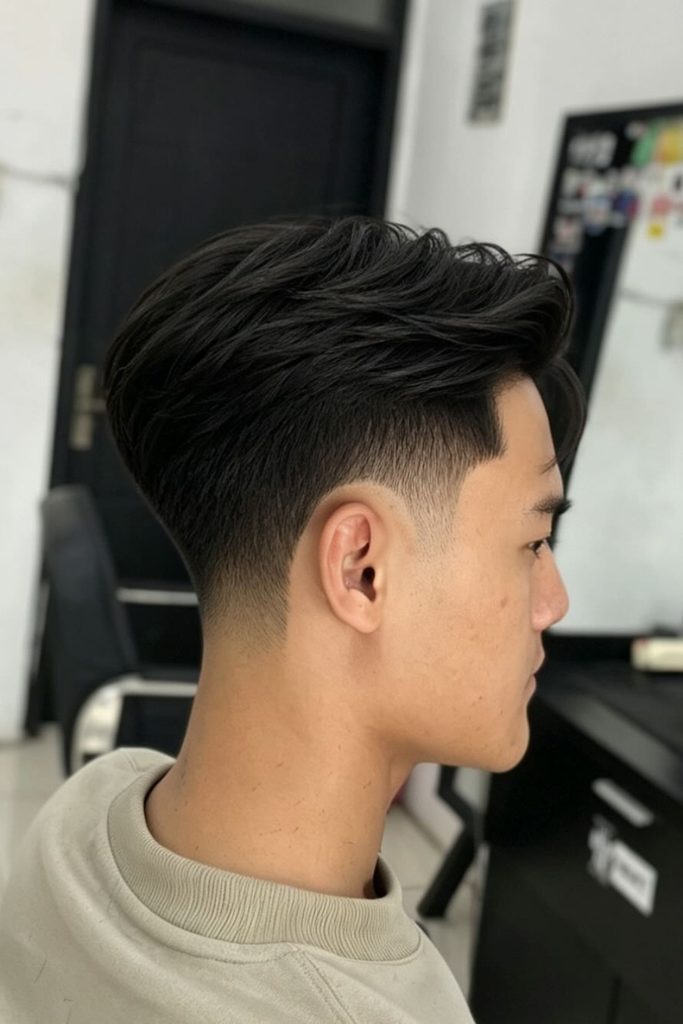
Soft Temple Taper
Not every taper needs to have a high contrast and a softer temple cleanup can help thick textured hair seem tidier without losing volume.
Tell your barber to maintain the natural weight around the sides, with a cut mostly around your temple and neckline for a conservative transition.
Wear the top loosely forward or tousled so the movement of the top balances the cleaner edges without appearing too rigid.
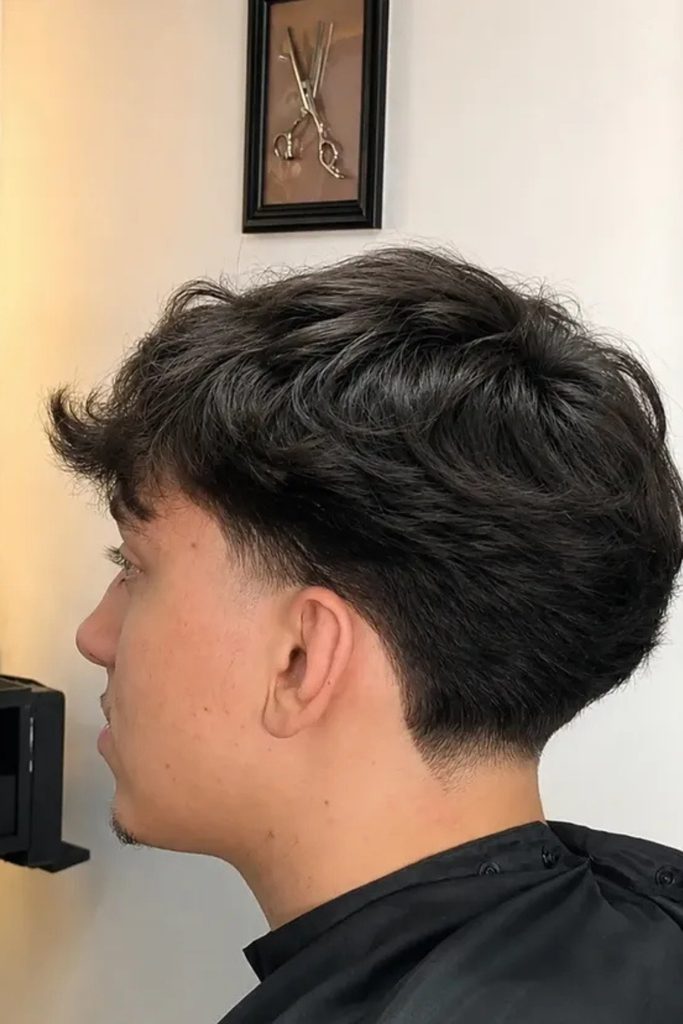
Blonde Fringe Taper
A longer fringe already pulls the eye forward, so a little taper around your temple avoids the sides from competing with that strong shape.
Tell your barber to leave some length on the sides under the fringe so it all connects rather than disconnecting the top.
The method allows you to wear the fringe sloppy or brushed across the forehead and keeps a lighter, more controlled profile around the ears.
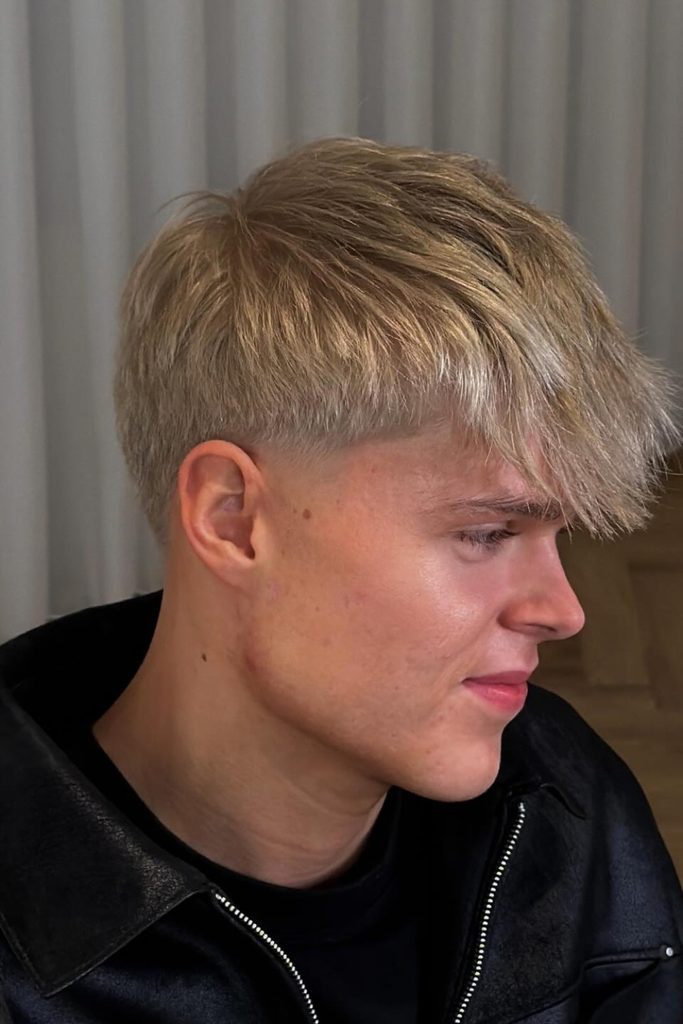
Curly Temple Fade
Defined curls provide volume, while a compact temple fade adds contrast just as the richer texture starts to feel heavy.
Keeping the fade tight at your temple allows you good density through the back, letting the cut keep its naturally rounded curly shape.
Ask for a gentle transition into the beard, too, so the haircut and facial hair link without fighting for attention.
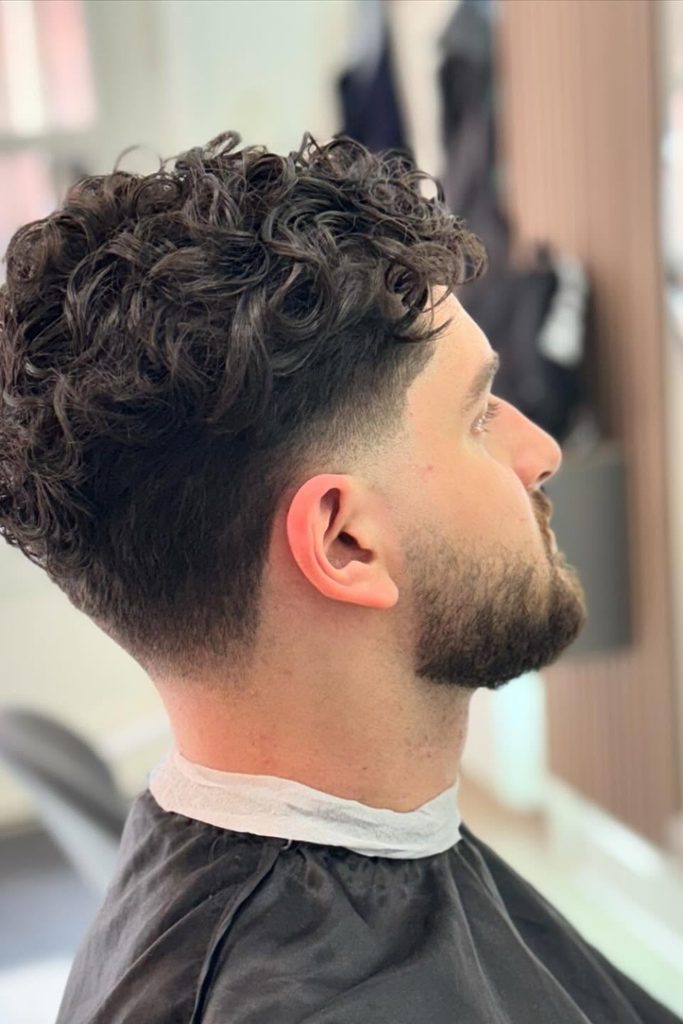
Coiled Front Taper
Short coils can help maintain density along the top while a compact temple taper sheds just enough weight to refine the outside shape.
Ask your barber to keep the density in the front, and follow your natural hairline for that squared lineup constantly.
When touching up, concentrate on the tapering region that’s already there rather than going higher.
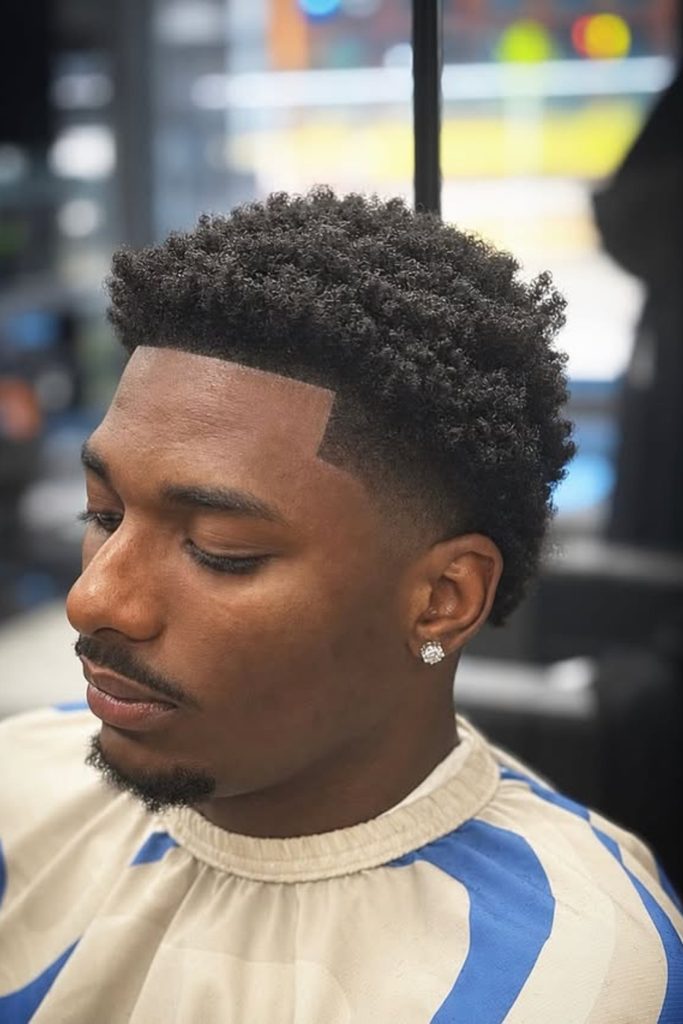
Highlighted Curl Taper
Highlights naturally emphasize each curl, so restricting the taper around your temple lets that color and texture stay in charge.
Don’t thin the sides too much, but let them mix underneath the curls. This keeps the rounder shape and larger contrast on top.
Works well if you want texture that’s obvious but without a drastic fade particularly if you’ve already got plenty of visual distinction.
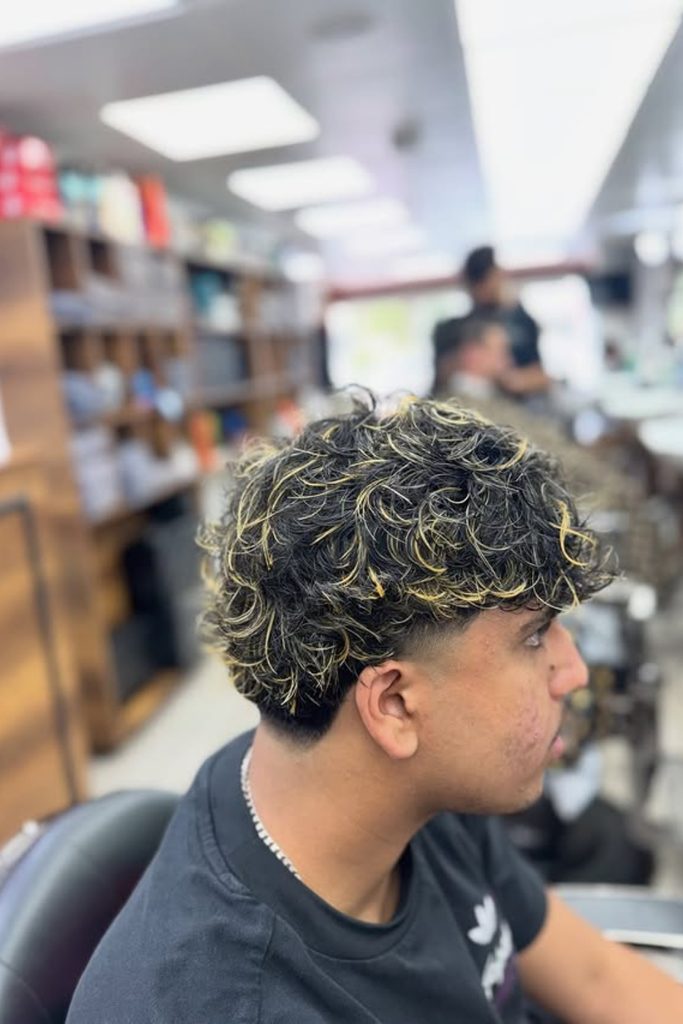
Textured Fringe Taper
A short textured fringe adds movement across your forehead, while a slight taper at the temple keeps the sides from seeming too heavy.
Tell your barber to leave enough length above the taper for the fringe to link naturally, rather than looking disconnected from the shorter sides.
A little forward top styling may improve the choppy texture, while the cleaner perimeter maintains the overall haircut regulated and casual.
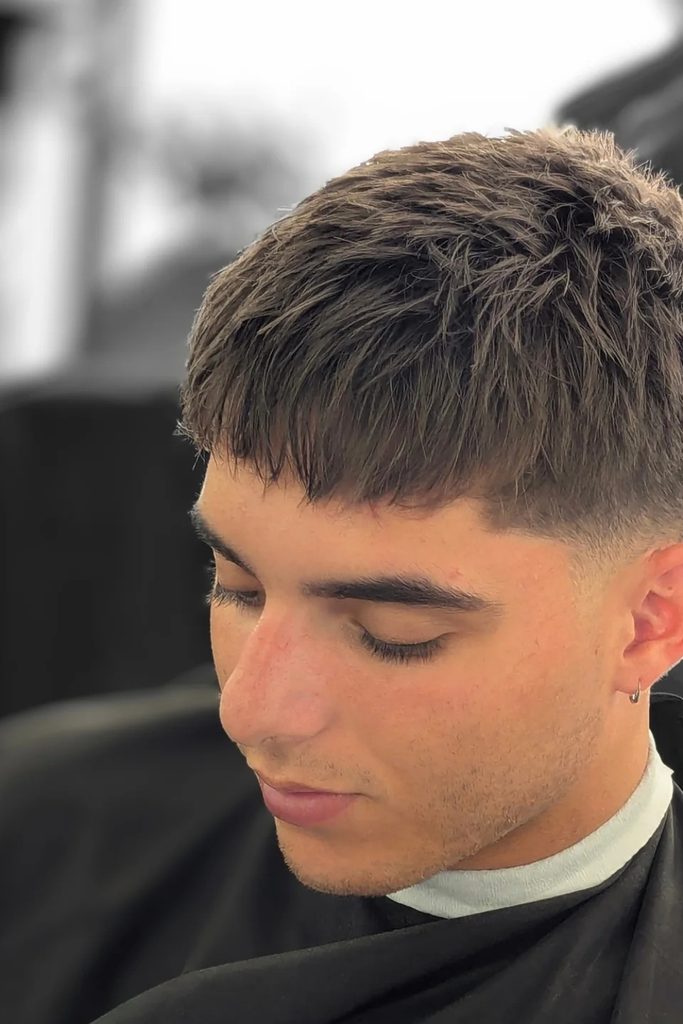
Curly Neck Taper
When curls have lots of volume through the crown, tapering largely toward the neckline can tidy up the silhouette without flattening that texture.
Ask for a low mix behind your ears so that darker weight is kept above and curls are left with the natural rounded shape.
This placement is good if you want less bulk around the neck but want the sides and back to still look much bigger.
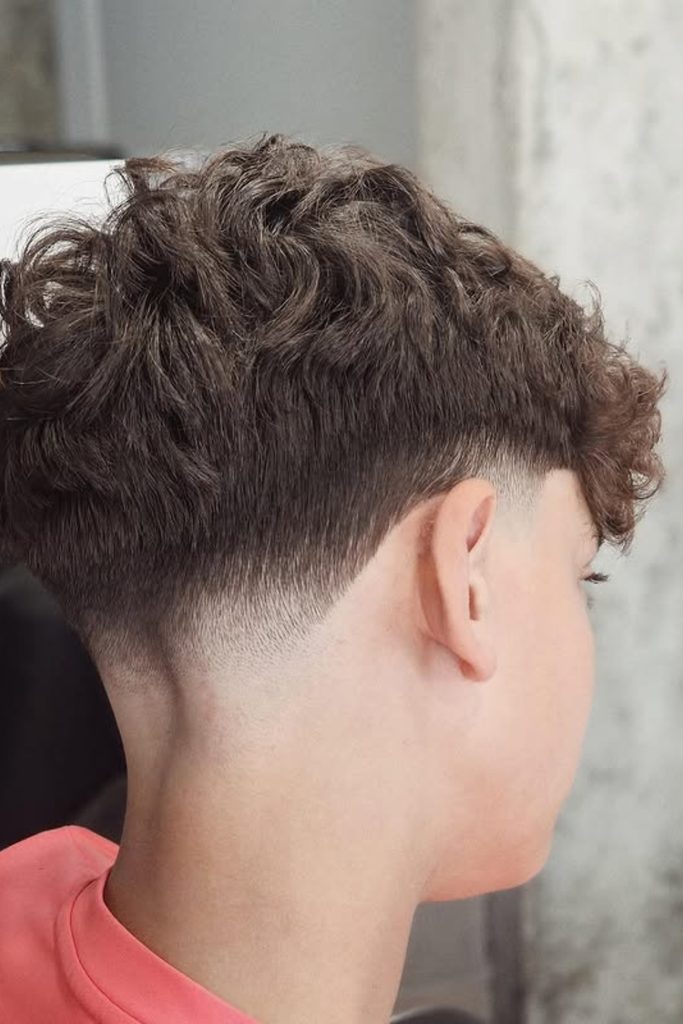
Slick Back Taper
Longer hair slicked back really shows off the temple area nicely – a controlled taper can sharpen up the sides without losing your flowing top.
Ask for darker weight over the ear before the fade starts, so the longer hair will blend seamlessly, not seem detached.
A small amount of style product can keep the swept direction but allow enough natural movement so the finish doesn’t look too rigid.
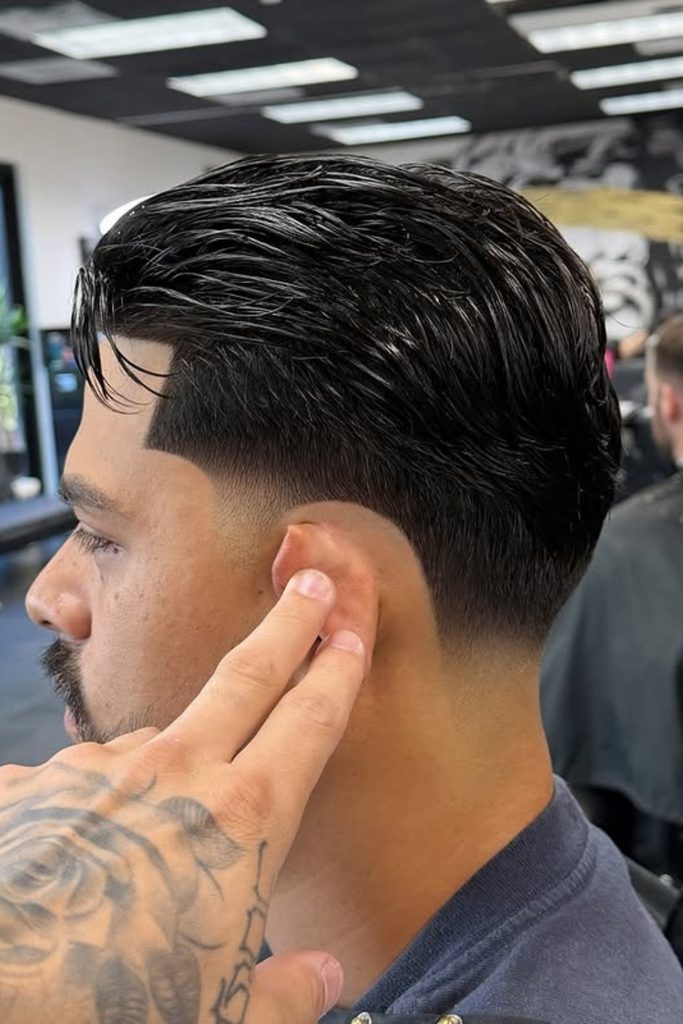
Neckline Taper
This taper is good when you want the back scrubbed tight but still want to keep a lot of length and density across the upper part.
Have your barber slowly work the transition up from the neck, stopping short of removing the darker weight that holds your haircut up.
Restrained placement also grows out more organically, making it practical if you want a polished back without having to keep up a full skin fade.
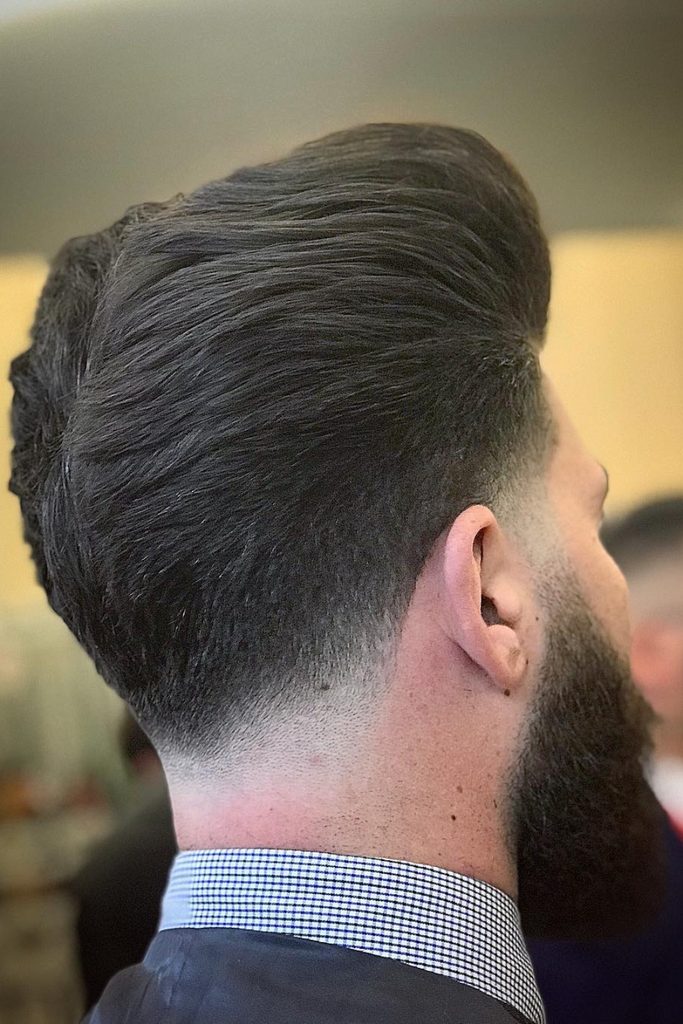
Wavy Temple Taper
Purposefully sloppy loose waves at the top paired with a narrow temple taper give just enough shape to your side profile.
Ask your barber to keep the shortest part around the ear and merge into the stronger texture instead of raising the fade.
Lets you style the waves forward or tousled while the controlled perimeter prevents the haircut from feeling too bulky.
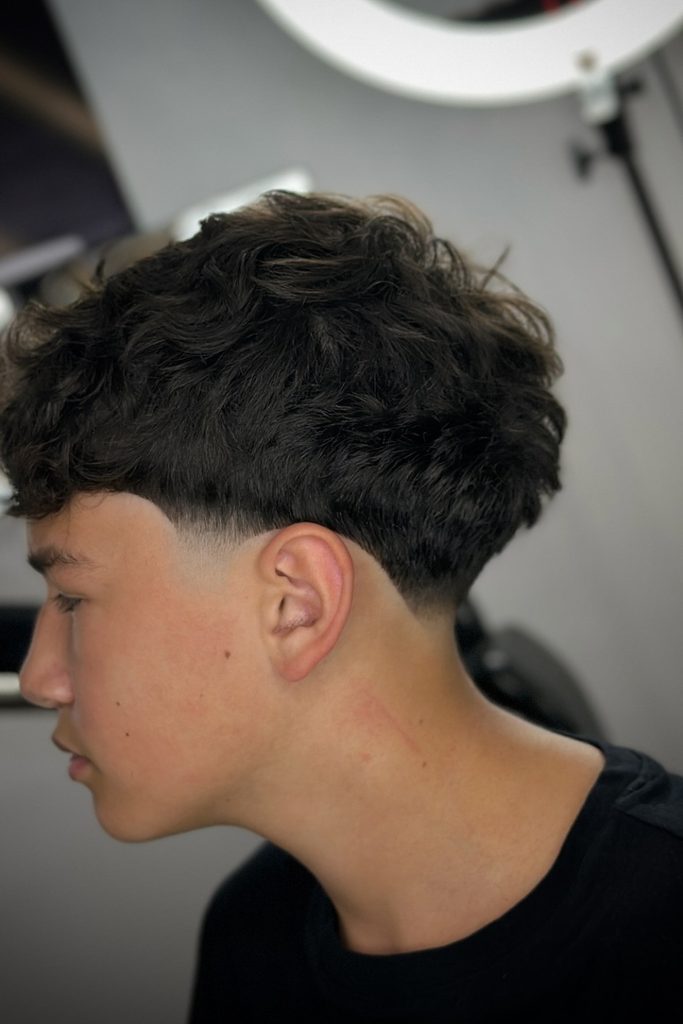
Short Waves Taper
For short waves you want a compact temple taper so you can keep the pattern visible and increase the definition near your hairline.
Tell him to follow the existing corner, not to cut it any more inward. Especially if you want the dimensions to be the same from one appointment to the next.
You can also taper gently toward the beard to get a smoother profile without losing the darker wave pattern above the ear.
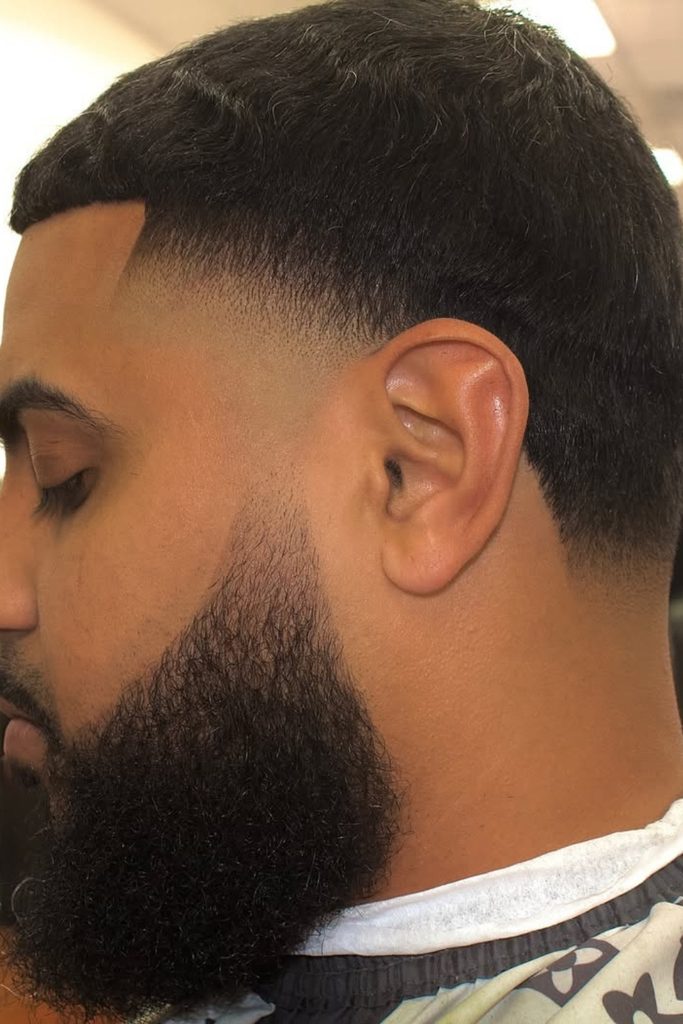
Layered Neck Taper
Thicker layered hair can continue full into the back while a narrow neckline taper takes out bulk where the style starts to feel heavy.
Keep the darker area above the neck ( ask your barber ) . If you cut it higher , it will limit the gentle layered flow through the back .
Subtle clean up is great when you want natural mobility and more length without the lower edge getting messy in between sessions.
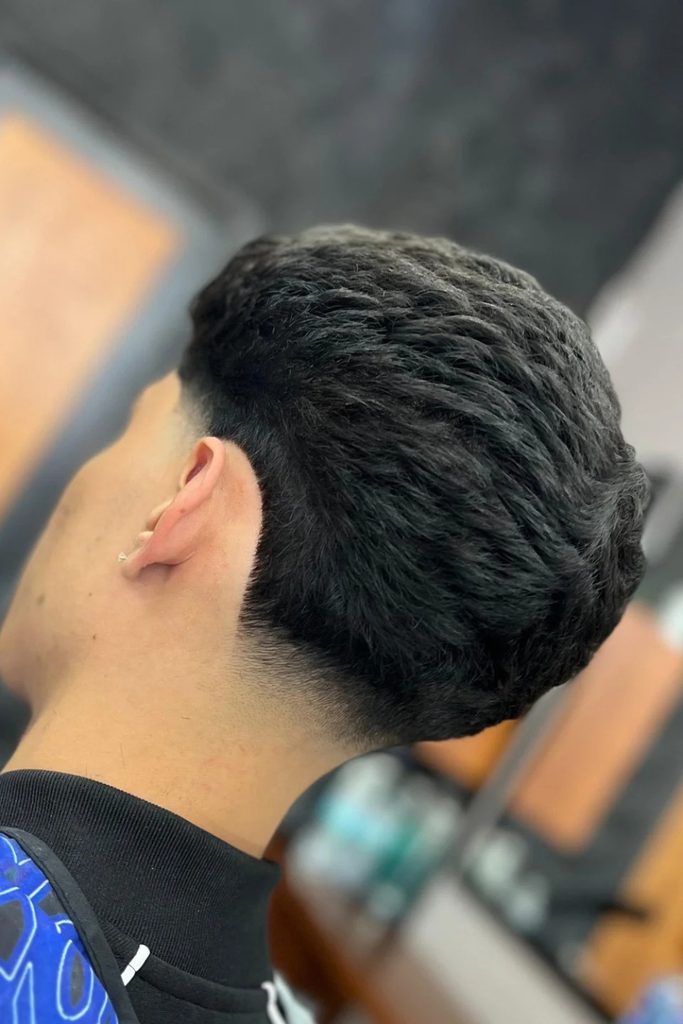
Curly Low Taper
Soft curls on top naturally pair with a low taper if you want definition around the temple but don’t want to lose side density.
Position the shortest blend closest to the ear, then work your way up, allowing your textured top to still blend in naturally with the sides.
A controlled temple fade can neatly divide the two areas if you have a beard, but still leave enough facial hair for a fuller appearance.
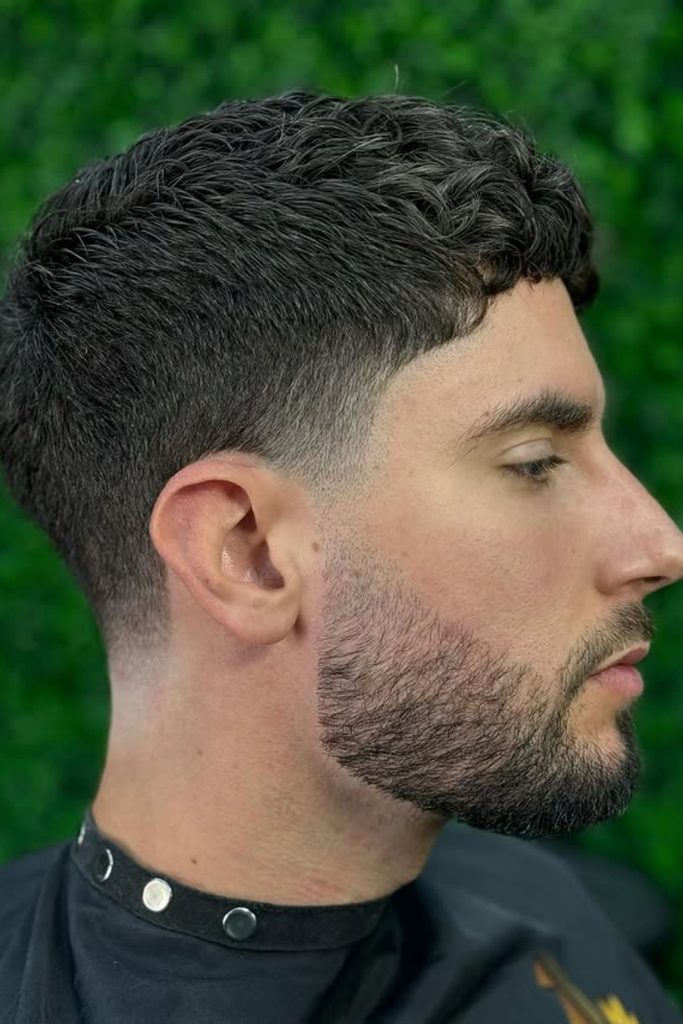
Textured Back Taper
For a thicker textured top you need some weight underneath so reducing only the lower back means the haircut doesn’t lose its rounded contour.
Tell your barber to start very short at the neckline and mix up gently, stopping short of the heavier texture area above.
This is a good way to go if you prefer volume but not an overgrown perimeter. You obtain a cleaner neck without losing useful length.
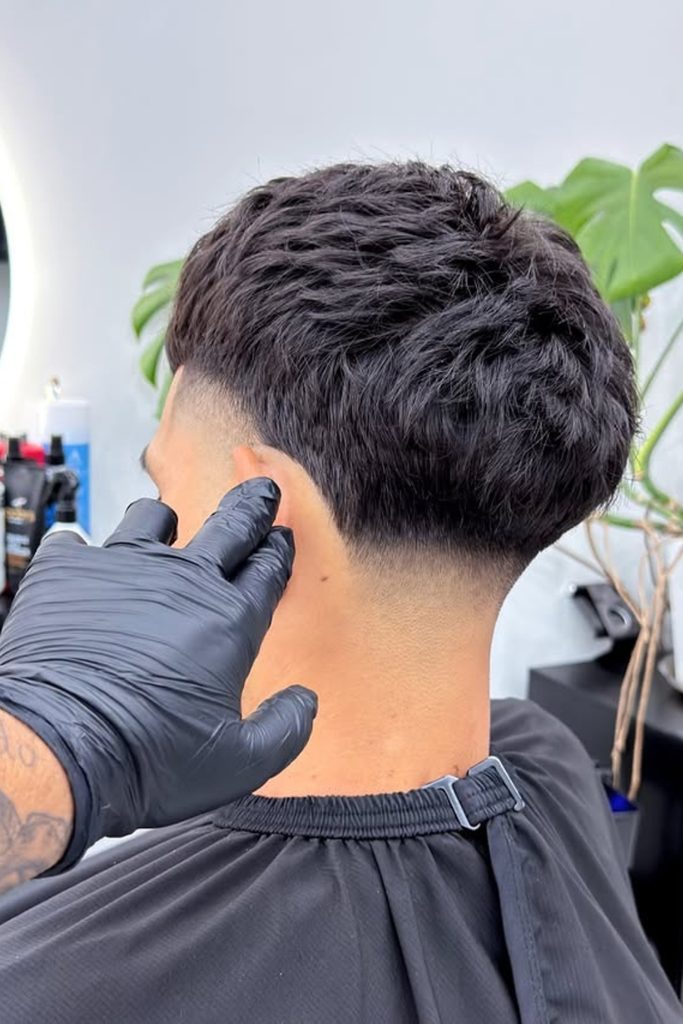
Flowing Temple Taper
Longer, flowing hair doesn’t require a harsh fade, and a modest temple taper can softly clean up the area by your ears.
Leave the majority of the length on the sides and back to allow the natural waves to fall back without sacrificing their laid-back, linked shape.
If you’re growing your hair longer, ask for minimal removal at the temple, as the excess fading may interfere with that progressive growth process.
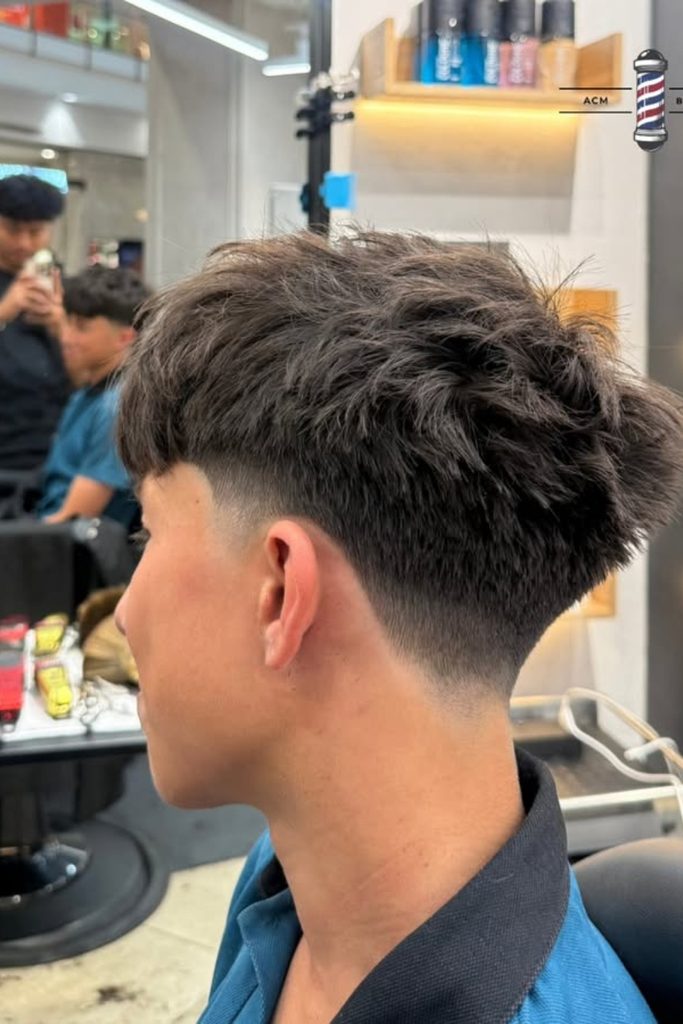
Coiled Neck Taper
Dense coils already provide a lot of shape, so by only decreasing the neckline you can clean up the bottom edge without sacrificing natural volume.
Ask your barber to respect the current growth pattern at the rear, and merge it gradually upwards leaving the coiled part distinctly full.
A restrained finish is great if you want a natural silhouette that keeps neat without showing a lot of skin at the neckline.
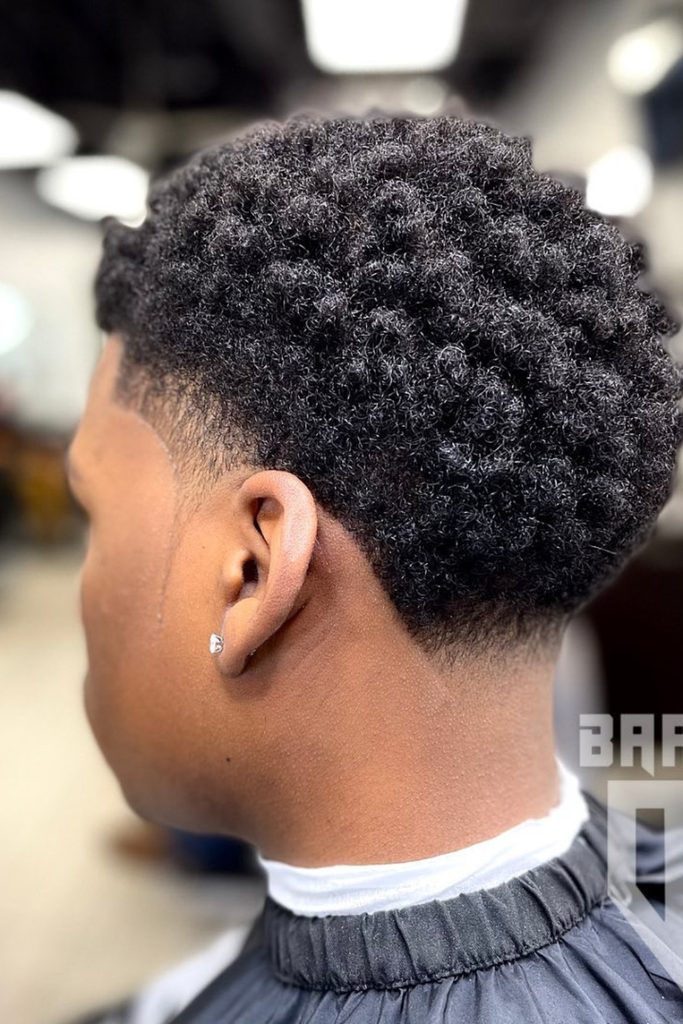
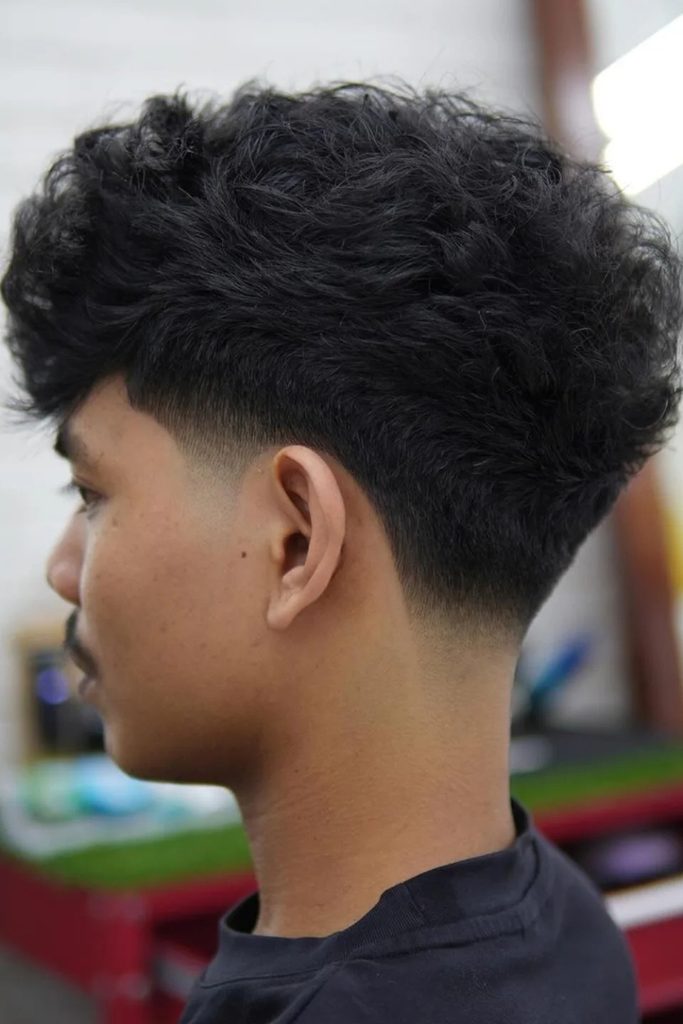
Tousled Low Taper
If you want to wear your hair loose and tousled, a low taper will help manage bulk around the perimeter of your hair but keep the top relaxed and naturally textured.
Have your barber keep the weight darker above the ears, so the lengthier layers can blend in naturally without a separate shelf.
The low location also provides you the option to wear the top forward, sloppy, or swept away, while still maintaining a cleaner lower profile.
FAQs
How Often Should You Get a Front Taper Touched Up?
You can touch up a front taper anytime the short part begins to lose definition. Never let each appointment push the boundary back more though.
This will assist keep your proportions in check as your longer hair continues to grow normally.
Can You Grow a Front Taper Back Into Your Regular Hair?
It’s the awkward period where those front hairs are clearly shorter than the rest of the hair.
With enough development they can slowly mix back into curls, waves, braids or some other longer style.