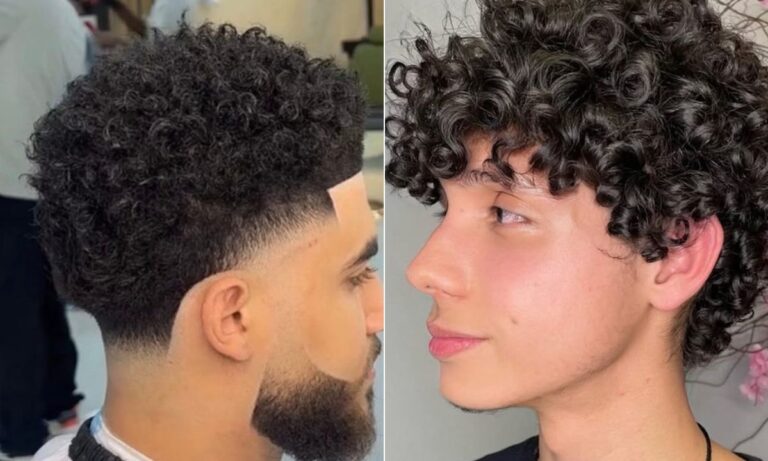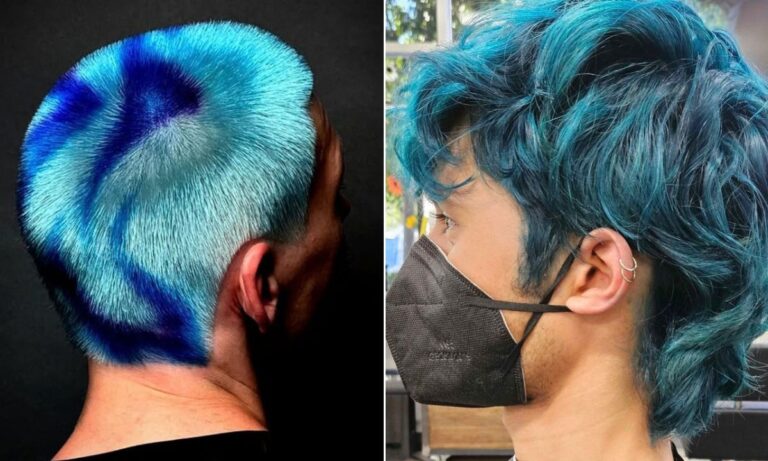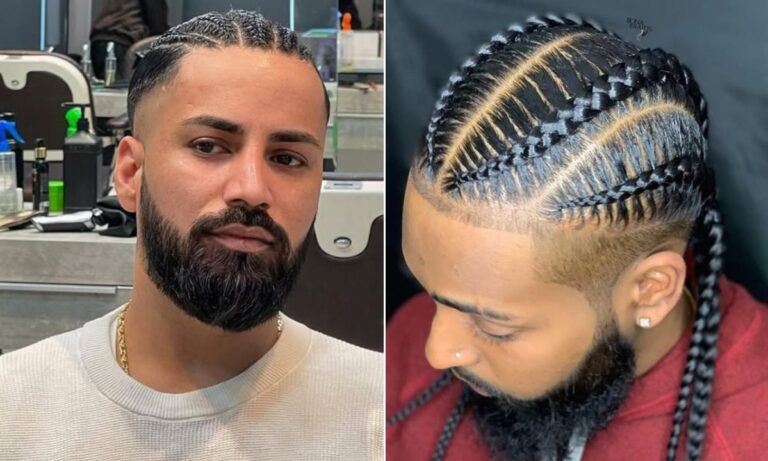
A high taper looks simple enough, until the barber trims the sides higher than you imagined, taking off too much weight.
It’s frequently the little things that make the difference, including where the taper starts, how short it is and how much hair is left around the temples.
Your hair texture, facial shape and length on top might also alter the style of the cut when it’s all done.
In this post, you may find great taper ideas that are suited for different hair kinds, lengths, and styling preferences.
Which Hair Types Work Best With a High Taper?
A high taper can work with straight, wavy, curly and coily hair but the greatest look depends on how much density and natural volume you have.
A gentler transition tends to seem cleaner in general, especially if your hair is fine because straight hair displays the mix quite clearly.
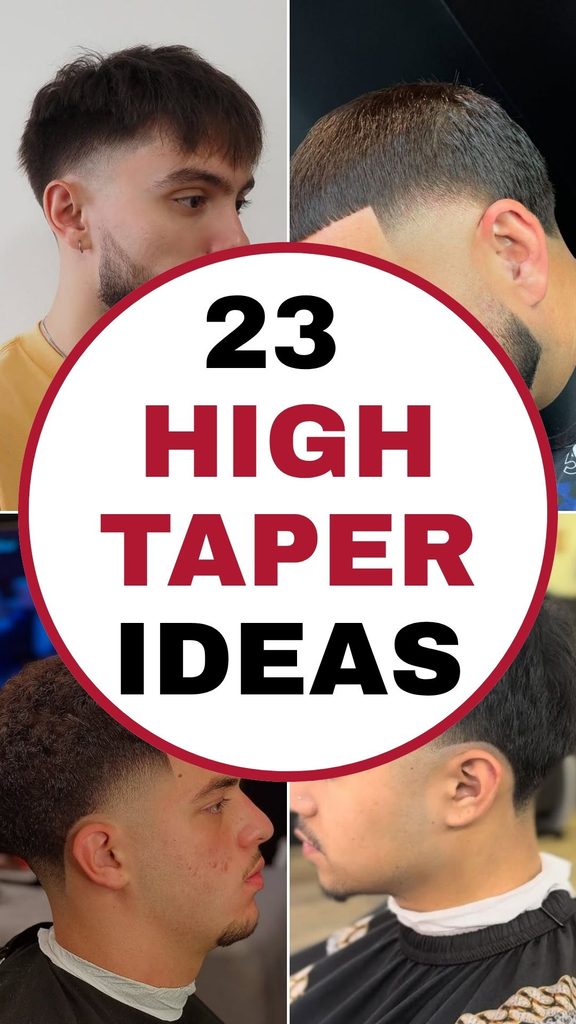
The taper cuts the bulk and the top preserves mobility, so it’s a fantastic match for wavy hair.”
With curly and coily hair, the contrast is a little more pronounced since the clean temples and neckline allow the texture on top.
Textured High Taper
High taper is good for thick straight hair, provided there’s enough weight above the temples to provide a smooth balanced transition.
Match with a short-textured top and a managed fringe to keep the sides looking tidy without revealing the haircut.
Gradually blend into the bulk toward the higher sides so the shape remains natural instead of suddenly severed above.
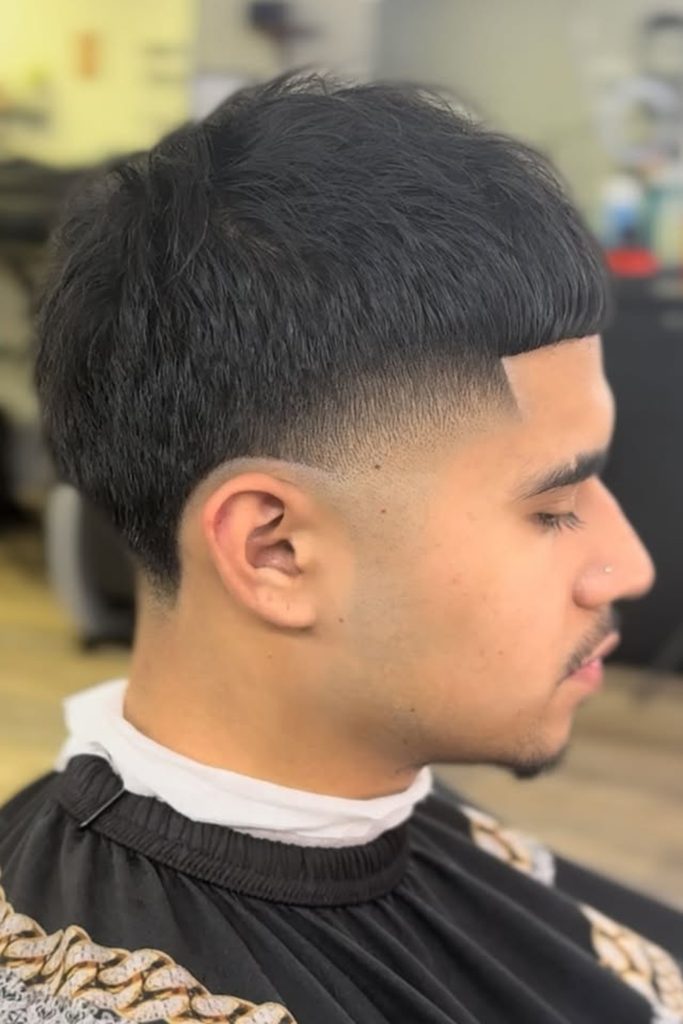
Curly High Taper
Natural curls have movement, and a high taper sharpens the outline without stealing attention from the texture on top.
Keep the top a little longer for a correct curl formation and a crisp lineup to keep the whole shape looking tidy.
Heavy pomade has a disadvantage over light curl cream if you want a natural pattern definition without flattening the natural pattern through the top.
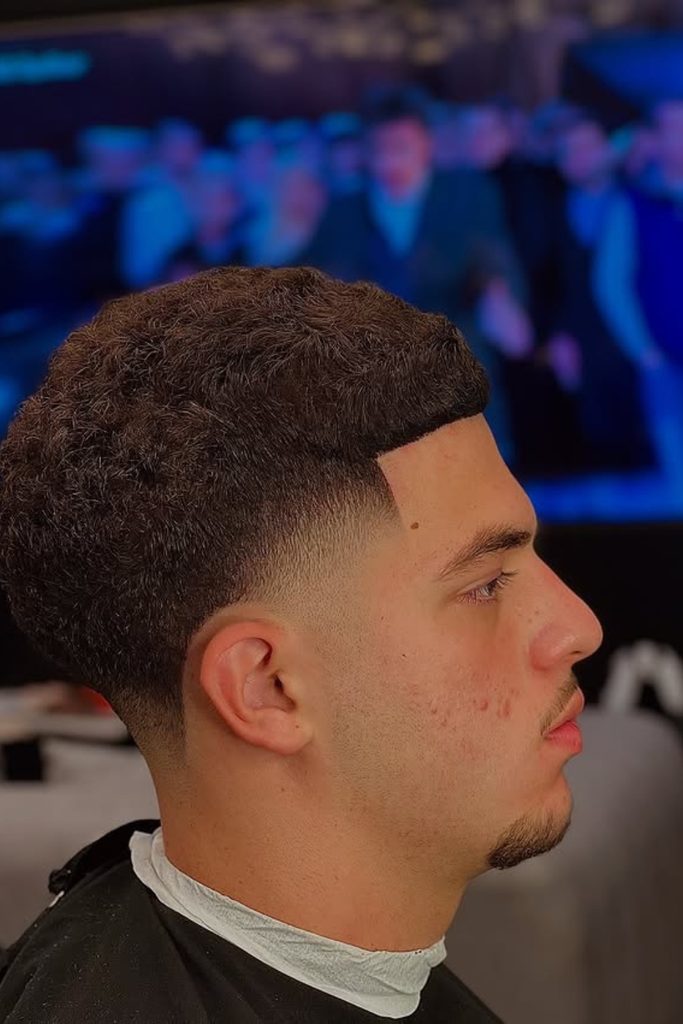
Blunt Crop Taper
A blunt fringe works well with a high taper, as long as the top is kept tight enough to hold a strong front edge.
Do not overthinning. Too much removal may undermine the rounded form of the haircut, so keep some density through the crown.
Sharp sides are well balanced with a larger beard and neat cheek and temple lines keep both transitions smooth and connected.
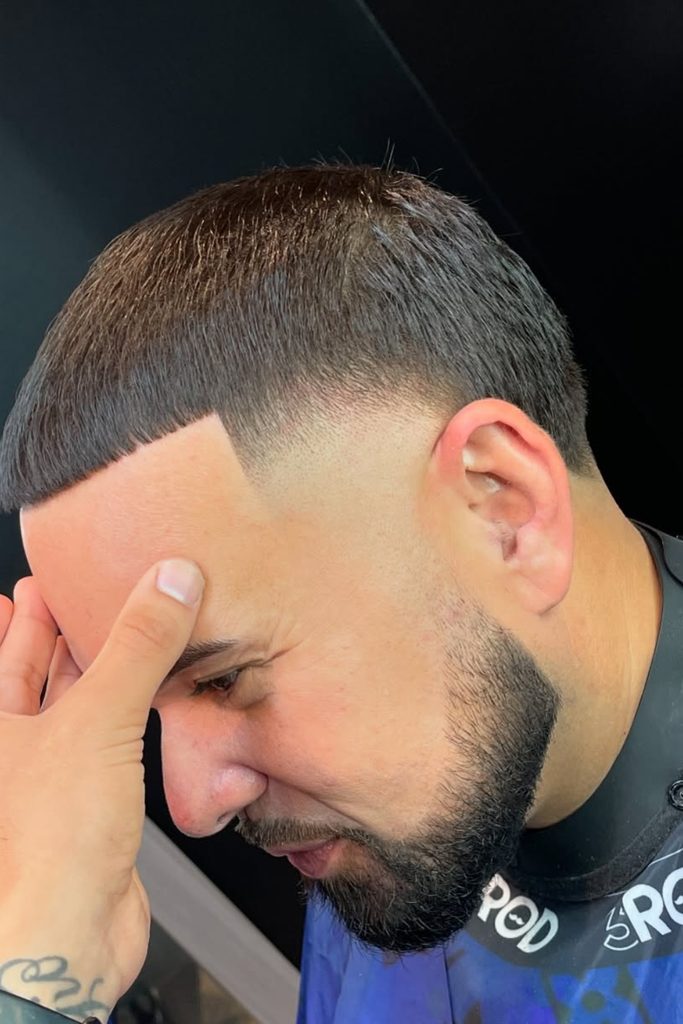
High Taper Bun
A high taper still works with long hair and pulling it back helps the clean temple area stand out even more.
Leave length on the top sides to avoid having the bun appear disjointed when worn loose or down.
The regular edge cleanups keep the taper crisp without losing length, making this option especially ideal for naturally very thick hair.
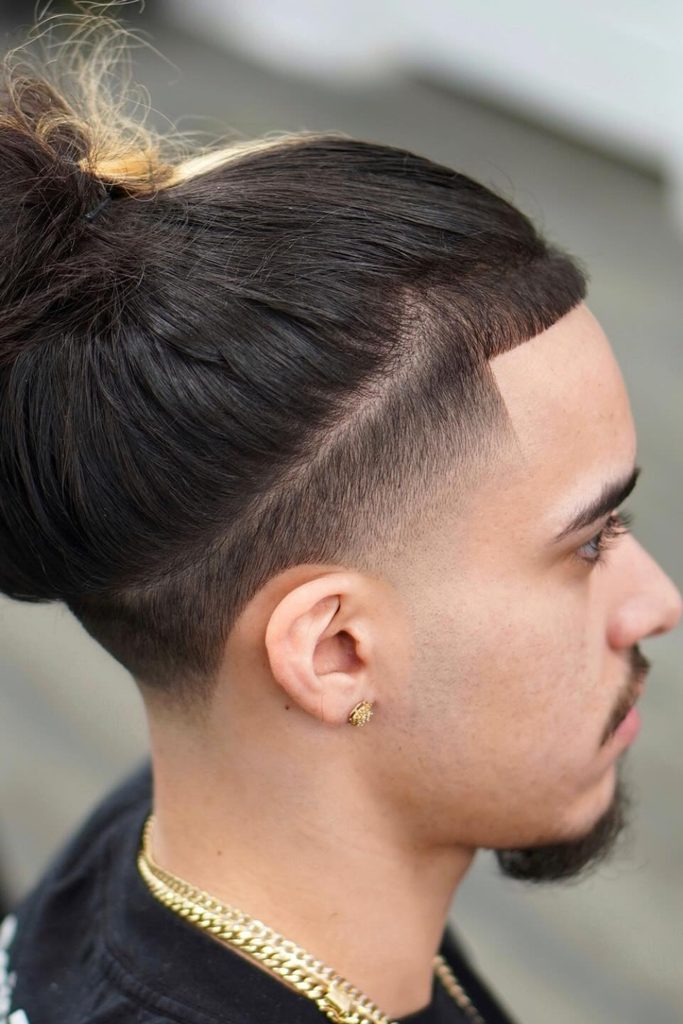
Wavy Fringe Taper
High taper cuts down the bulk on the sides but gives enough length for loose movement above, which is great for natural waves.
Don’t make things super neat, use a light weight matte product and allow the fringe fall forward a bit damaged.
This is a good style for thicker hair because the sides are managed so the top doesn’t look overly big or heavy.
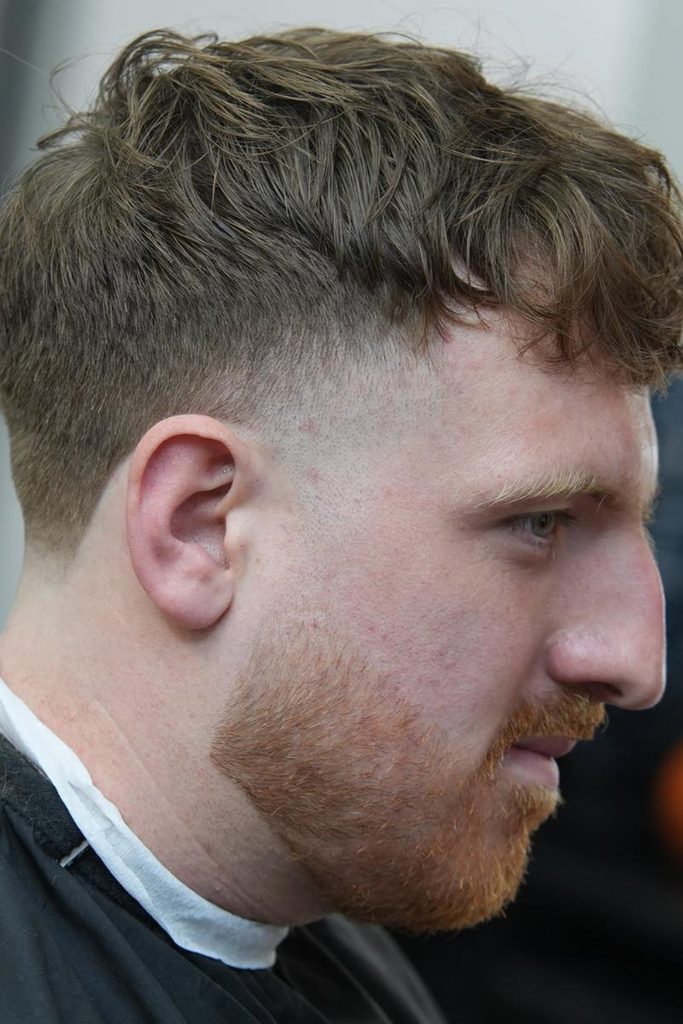
Side Sweep Taper
A side sweep with a crisp finish lends a cleaner, more grown-up look to a high taper, without requiring much height on top.
While hair is still damp, comb it back and slightly to the side, then apply a medium hold product that allows mobility but doesn’t stiffen.
Add a little weight into the taper to help with the transition when your top is a little longer and styled with control.
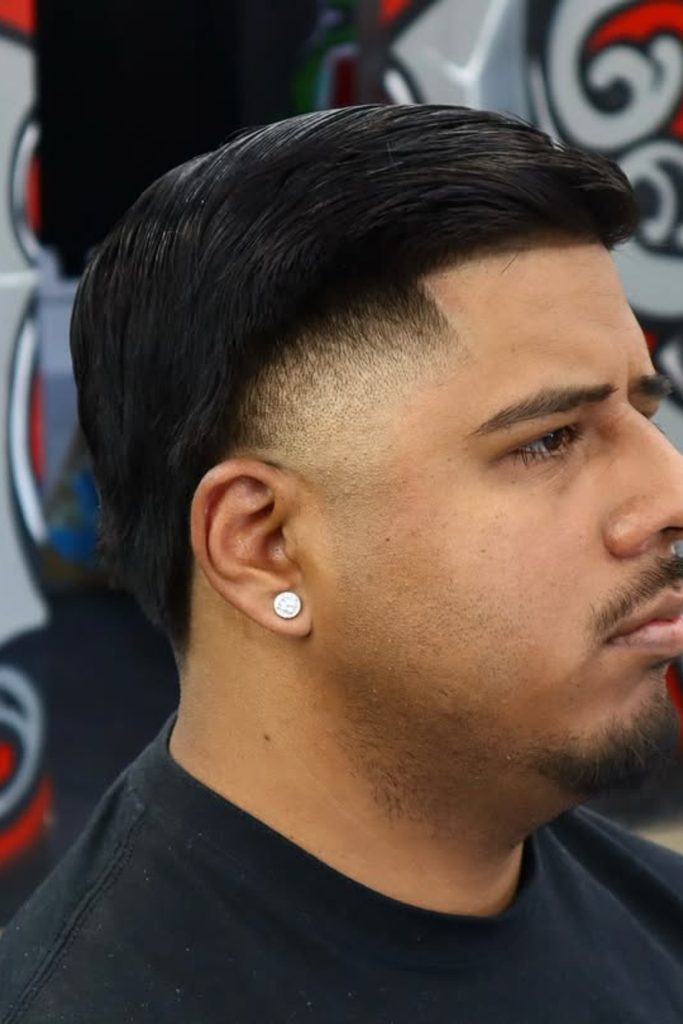
Messy Fringe Taper
A messy fringe breaks up the high taper so it’s not as harsh and makes the cut simpler to use with gentler everyday styling choices.
Rather than trying to force one completely uniform texture pattern all over, work a small bit of matte clay through dry hair and pinch random sections as you go.
This technique is great on medium density, straight to slightly wavy hair, since the added top movement balances the clean sides.
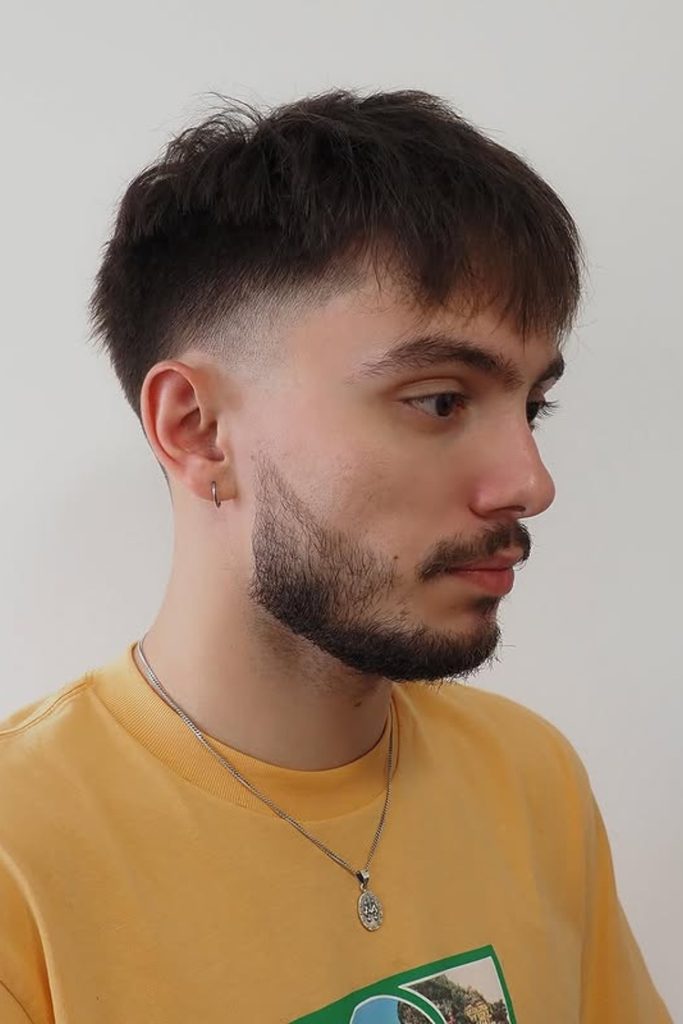
Compact Crop Taper
A high taper is a great choice if you want a small crop with a defined front edge, but without adding excessive height or style time.
The blunt fringe and regulated crown are important as this cut depends on the strong rounded shape that may be lost easily with too much texture.
This combo works great on dense straight hair, handling the bulk while leaving enough weight on top of the taper for a flawless finish.
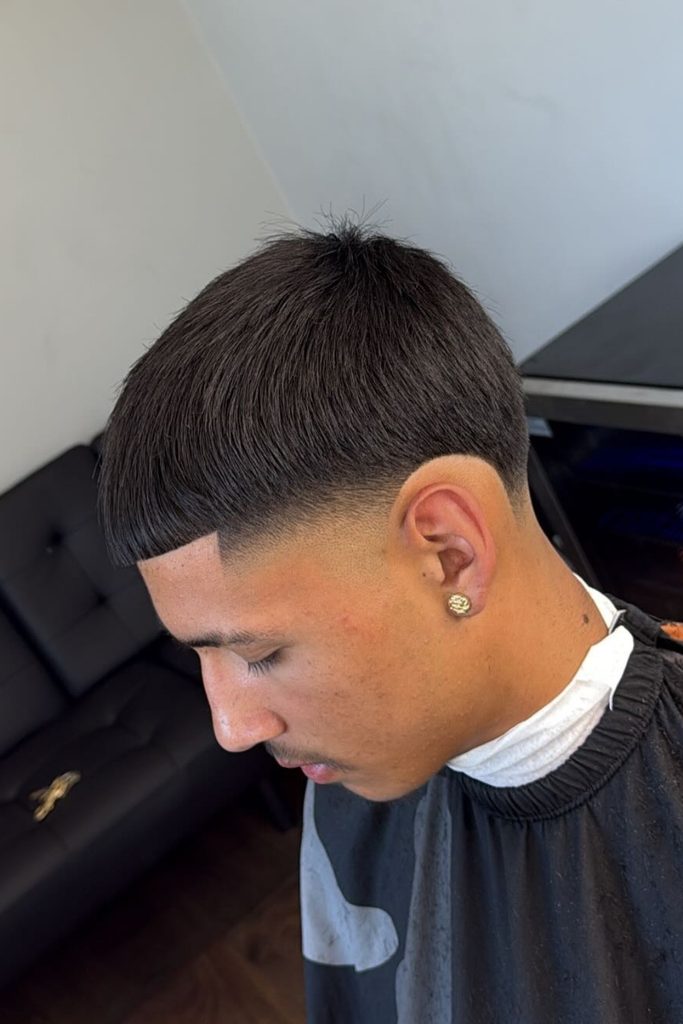
Wet Texture Taper
A wet style can make a high taper look sharper, especially if longer strands are pushed forward instead than up.
Apply a light cream or styling lotion through damp hair and run your fingers through the hair to separate portions for controlled natural movement.
The extra length through the crown keeps the design balanced and the smooth taper on the temple avoids thick hair from looking cumbersome.
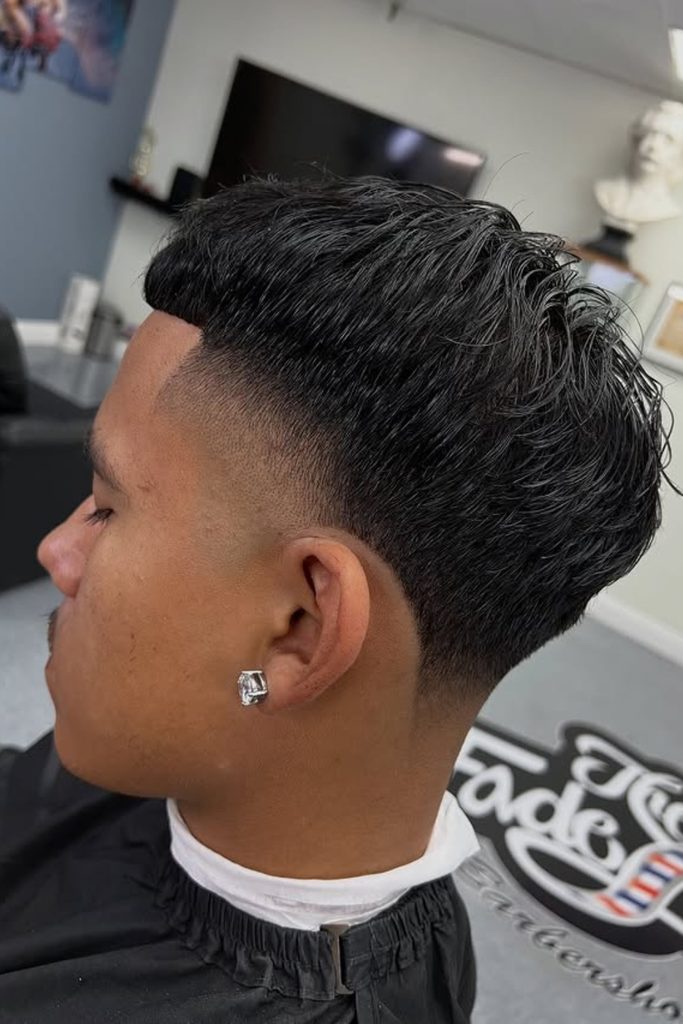
Short Top Taper
If the transition is smooth then a high taper is appropriate with a short top to prevent a too harsh contrast.
Just make sure the borders of the beard are equally precise, because a matching temple and cheek line make the haircut feel more purposeful and connected.
This combo works especially well for dense straight hair. A little top style keeps maintenance simple between regular scheduled barber cleanups.
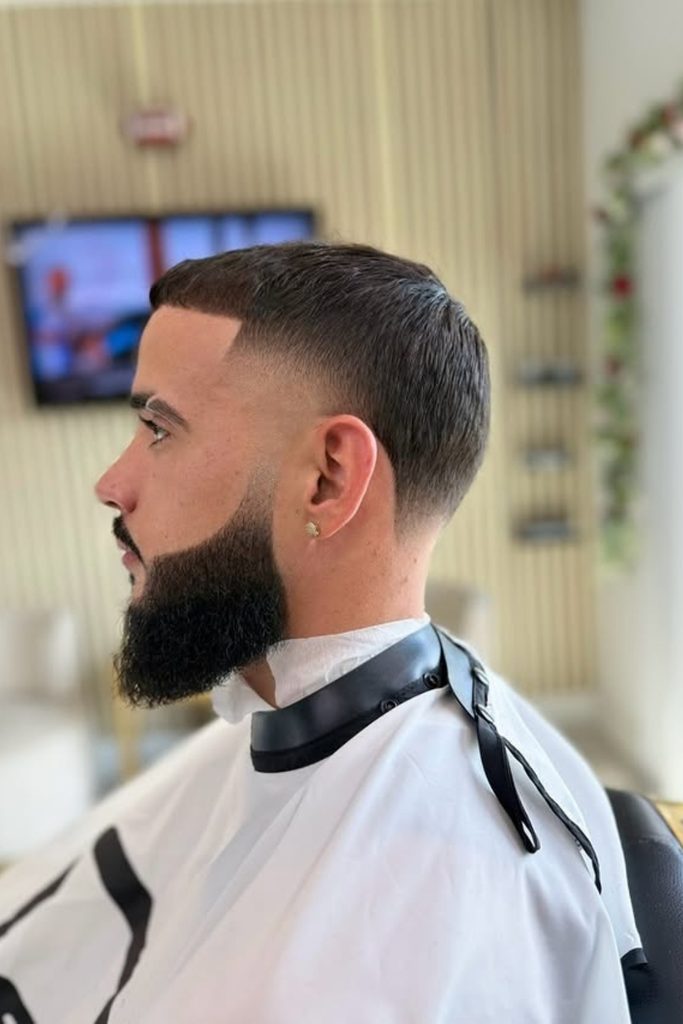
Coily High Taper
A high taper that clears the temples but retains enough density to preserve the shape on top helps coily hair achieve definition quickly.
A crisp lineup can provide strength to the finish, but you want to keep the front edge natural so you don’t push the hairline back unduly.
Use a light quantity of moisturizer or curl cream to keep short coils soft, defined and simpler to style each day.
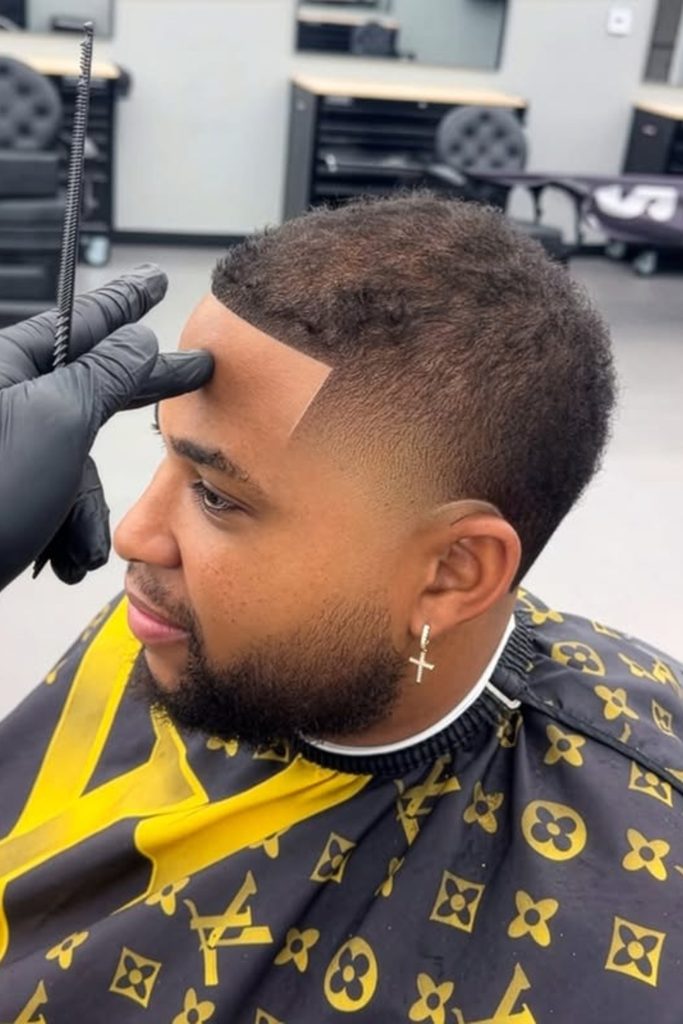
Messy Texture Taper
The added texture provides a high taper more overall individuality, especially if you want movement without commitment to a finished design.
Ask for weight behind the temple area so the haircut maintains fullness rather than turning into a full fade shape.
Dry with fingertips and use matte paste sparingly. Let nature do its thing for volume and don’t stiffen the top.
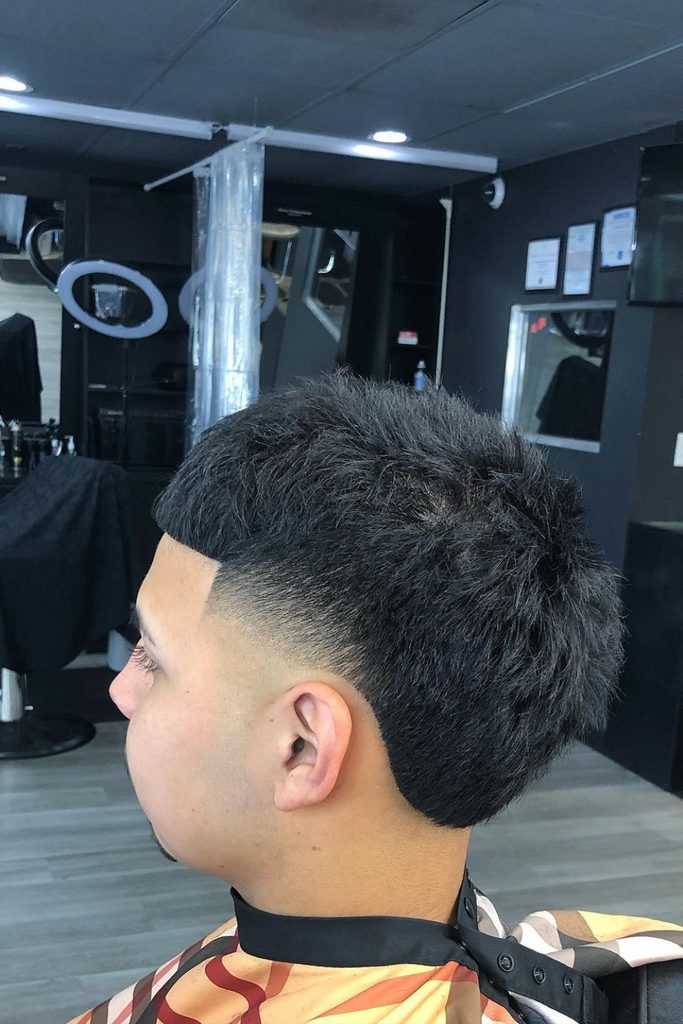
Blunt Crop Taper
A sharp fringe works well if the hair on top is thick and compact, providing a clean frame for the high taper without any style.
Ask your barber to keep weight on top of the temples so the fade doesn’t grow too far into a rounded shape.
You just need a matte cream to manage it, especially if your straight hair falls forward naturally and wears a harsh edge.
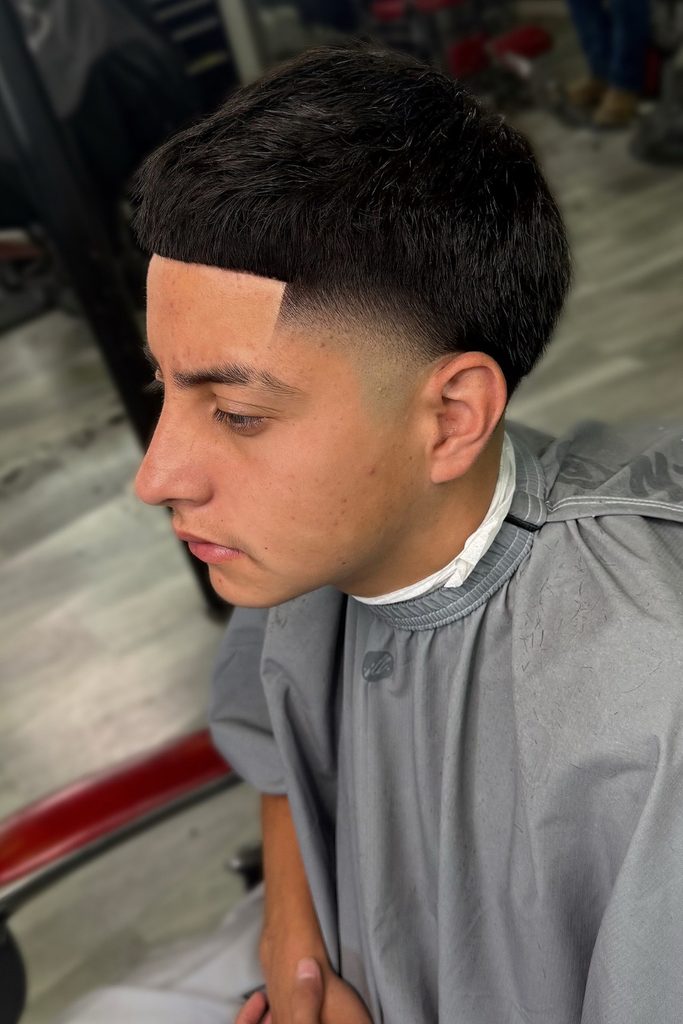
360 Wave Taper
Waves already define pattern and motion, thus a steep taper should crisp up the edges without cutting into wave progress.
Make sure to always brush toward your temple area and keep the temple area moisturized, as dryness can make the transition look rough faster.
Select a taper height that will clear the bulk behind the ears, but still leave enough hair on top to keep the waves together.
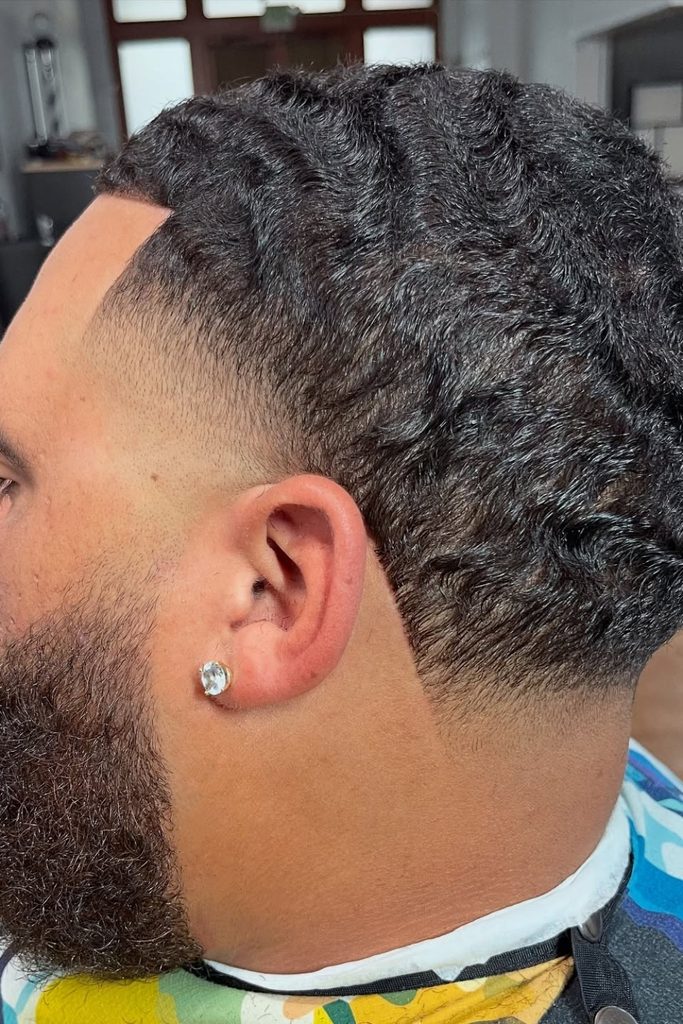
Short Crop Taper
A high taper needs to have a smooth transition, not skin fade, because short hair shows blend lines more.
If your hair is straight, dense and consistent, the haircut can look flat. Keeping the top a little fuller will help to prevent this.
The taper provides structure when paired with facial hair, but keep the beard a bit broader if your face needs a little more balance.
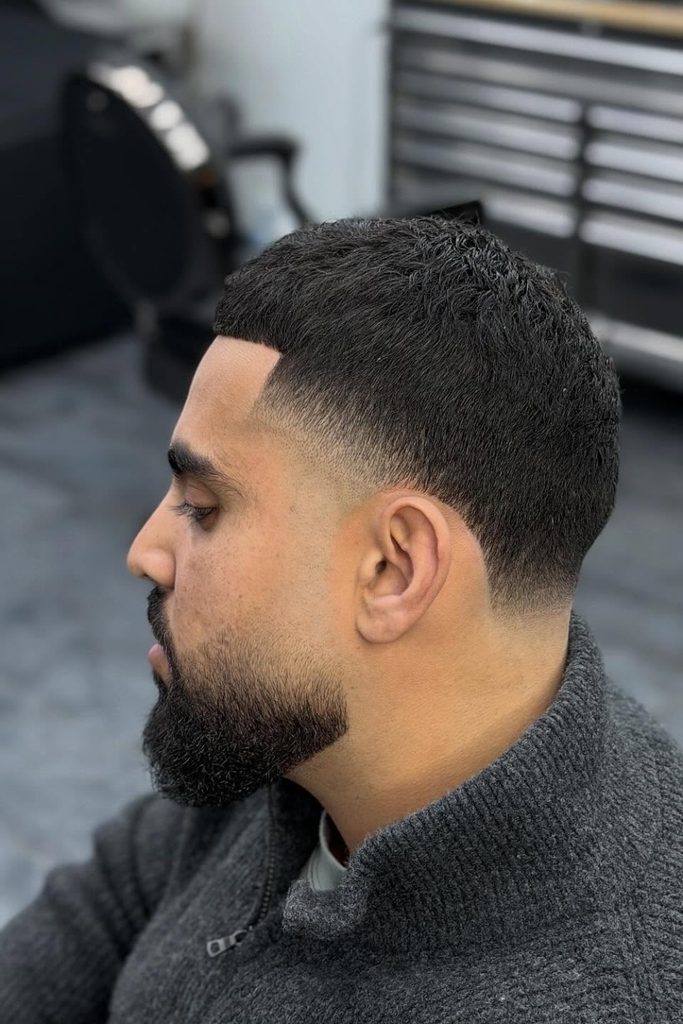
Wave High Taper
Deep waves always look best when the taper is kept around the temples so that there is still length and the pattern is not broken.
Before the haircut, comb your waves down so your barber can see the grain and not cut against the grain.
This style can be finished in a lineup and keeping the corners natural might help cut down on any excess stress near the hairline.
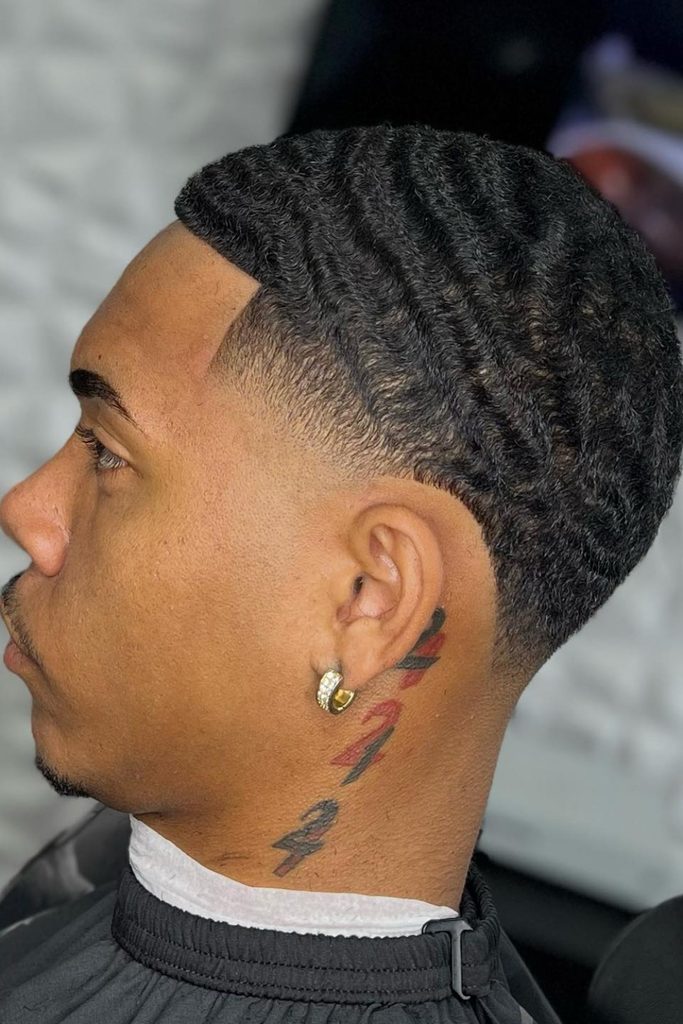
Short Curl Taper
Temple bulk is cut out with the high taper, giving the short curls a crisper contour while still maintaining appropriate density through the crown.
Do not brush the curls flat, but preserve their natural shape as it is the texture that provides character to this small haircut.
A gentle neckline blend keeps the back clean, avoiding a high finish that can make the shape feel small.
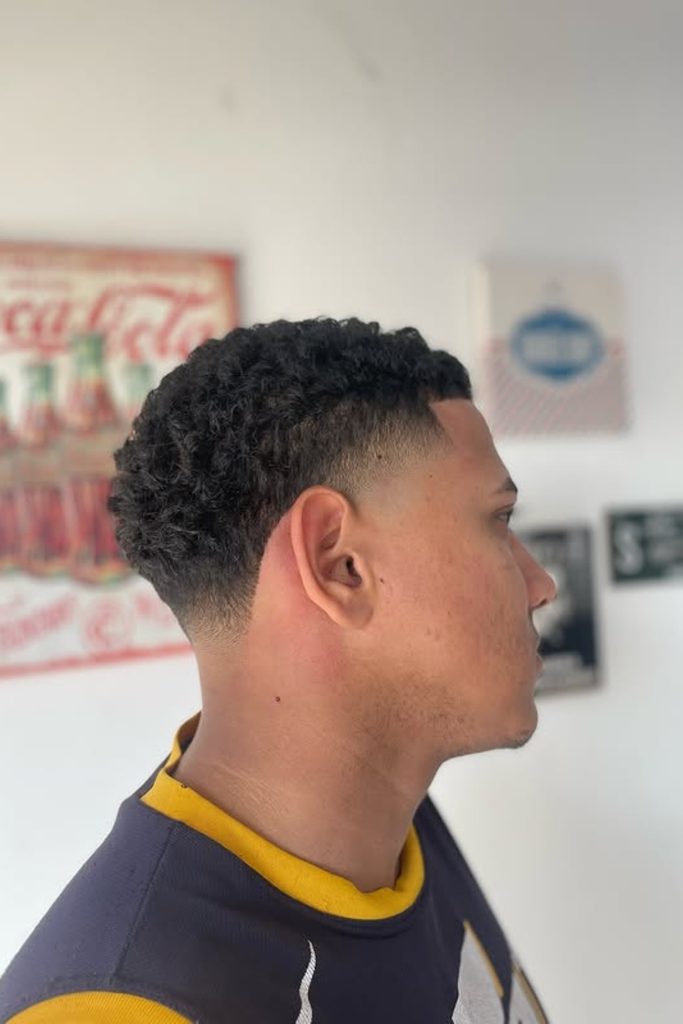
Curly Back Taper
The taper keeps the weight clear around the ears, while keeping considerable volume over the back, making full curls look more balanced.
The easiest way to keep the curls rounded and not starkly detached is to fade gradually into the nape.
This shape is easier to refresh between barber appointments and wash days, and curl cream helps tame frizz without weighing down definition.
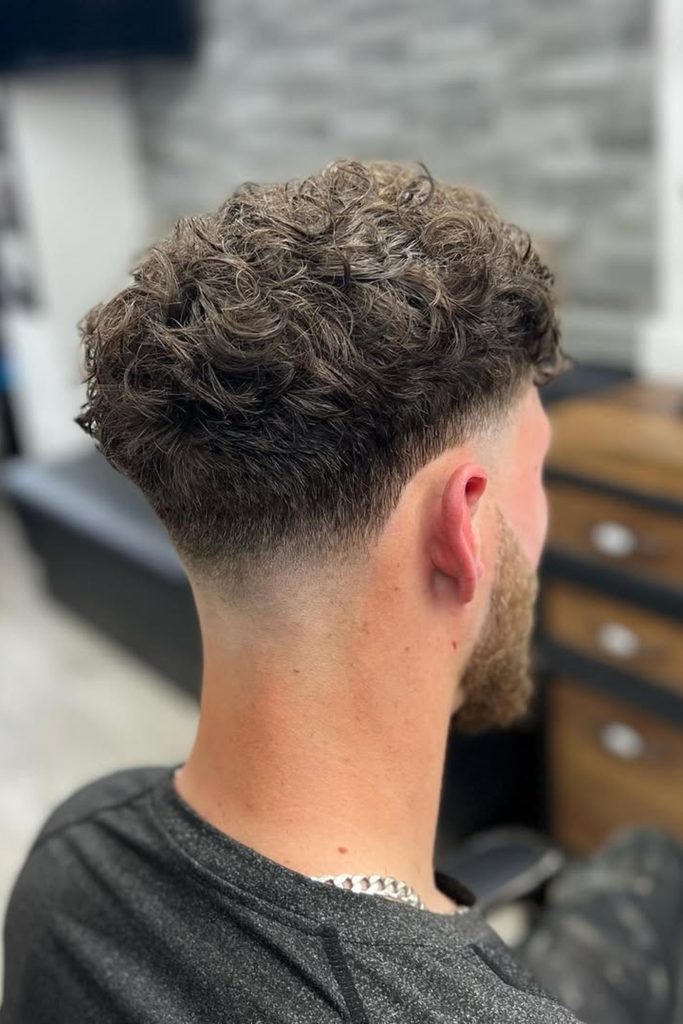
Voluminous Curl Taper
The high taper should skim the temples without going too far into the upper sides since larger curls need room to grow.
Some more length in the crown helps you get height and movement, while the tighter edges stop the haircut from feeling too heavy.
Don’t brush your curls, shape them with your fingers, then separate with a light product so you don’t get a rigid finish.
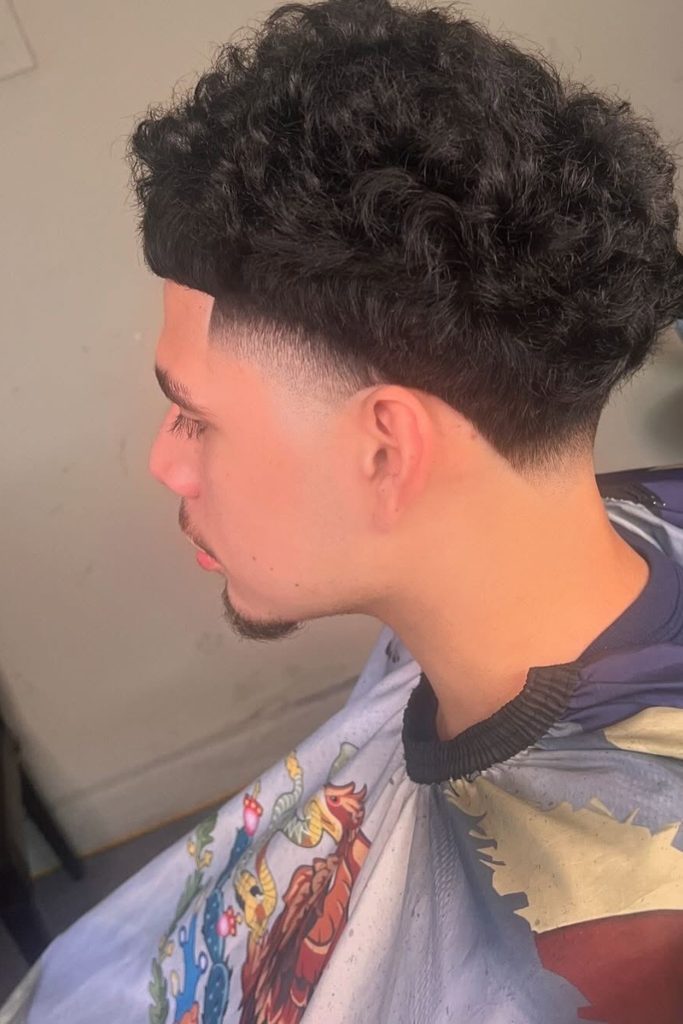
Textured Top Taper
The loose textured top makes the taper feel more relaxed, helpful if you hate crisp or too polished design.
Keep enough length around the parietal ridge to keep the transition natural and not expose too much scalp above the ears.
For everyday styling work matte paste through dry hair with your hands leaving a little uneven movement across the top.
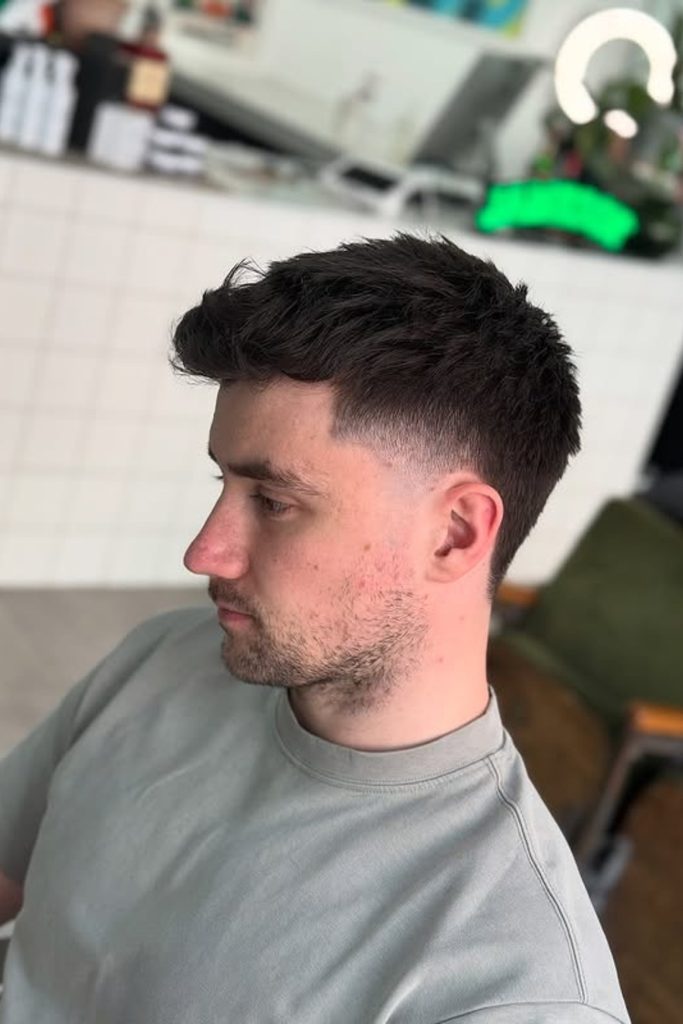
Rounded Coil Taper
Coily texture is greatest when the taper is only taking away lower mass, leaving enough fullness through the crown and back to preserve its shape.
Here, moisture is key so go for a light leave-in or curl cream to prevent dryness without weighing the coils down on a daily basis.
The gentler neckline allows the haircut to grow out more naturally, while retaining the rounded contour that makes this style work.
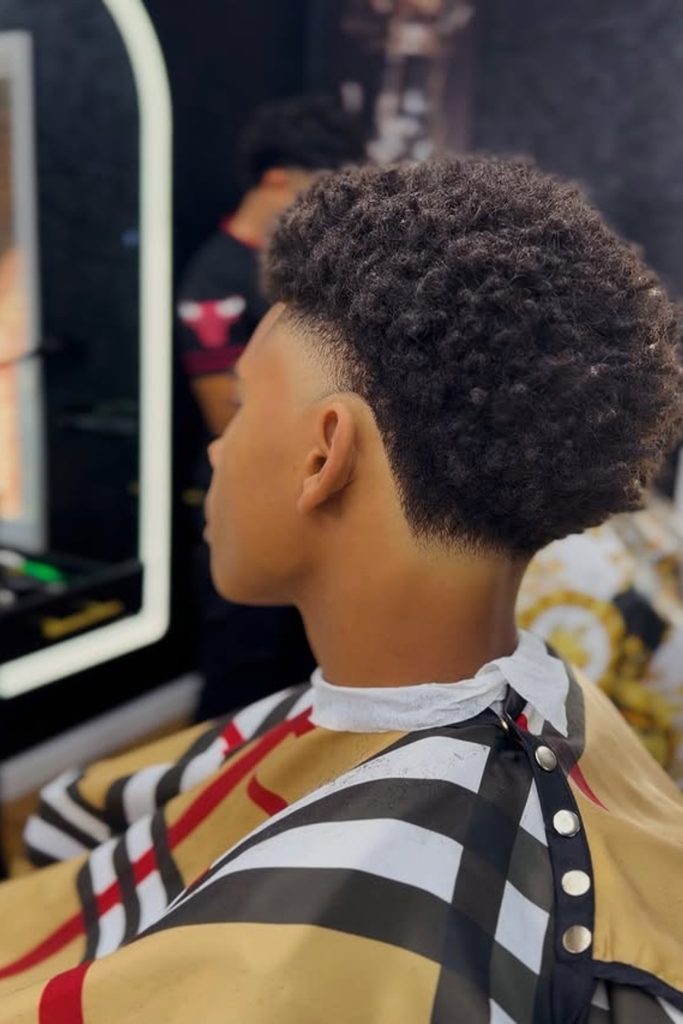
Textured Flow Taper
A longer textured top can also work well with a high taper, especially if the sides are cut down without flattening the top.
Leave some weight around the temples since that link maintains the cut balanced rather than the top floating.
Work through with matte paste, breaking it up with your hands. Keep the back a little heavier to maintain a loose overall shape.
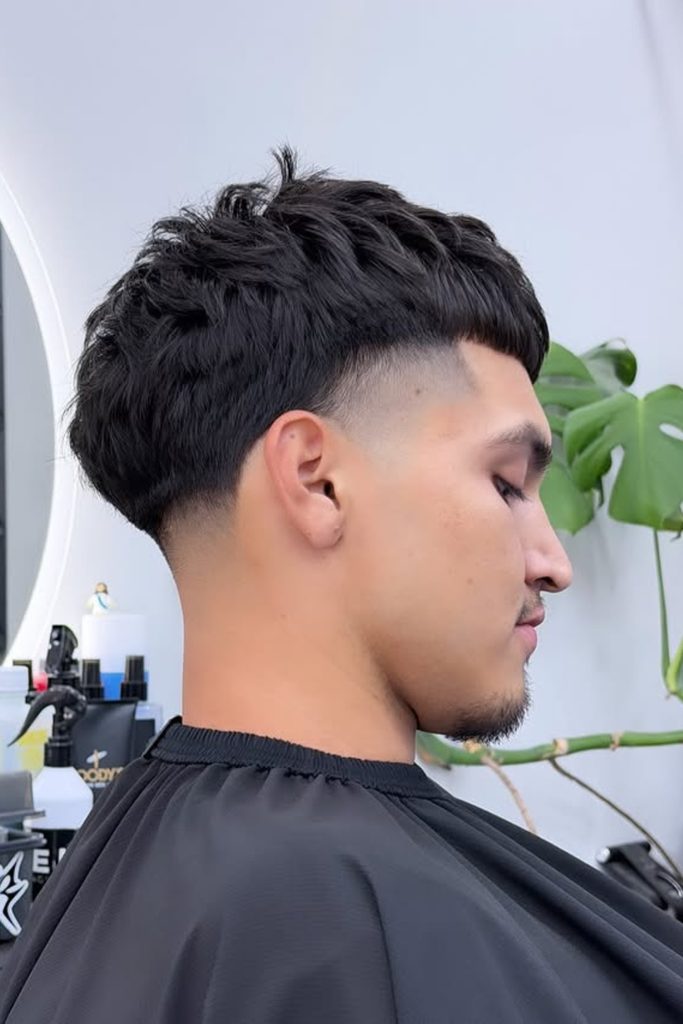
Wavy Crop Taper
A high taper works better on wavy hair because it looks cleaner, but you need enough length on top so it has movement instead of lying flat.
Use your fingers to brush the fringe forward and apply a light layer of matte cream to maintain a softer texture, avoiding an overly styled look.
A harsh jump is not as good as a gradual mix around the ears, especially if you are growing the hair out properly.
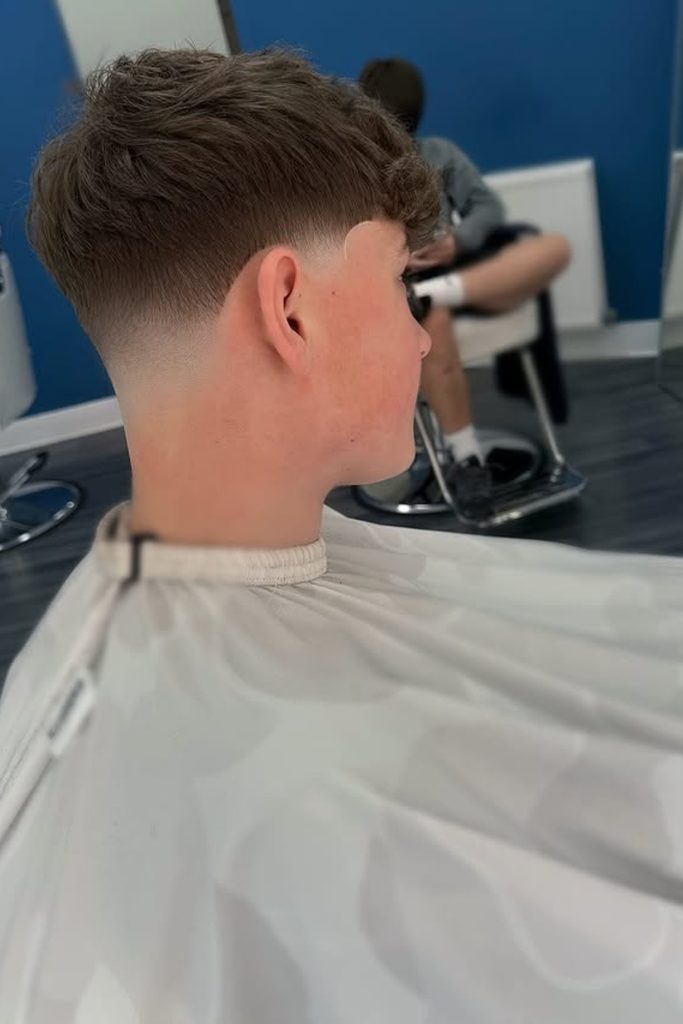
FAQs
How Often Should You Refresh a High Taper?
Most high tapers are crisp for around two to three weeks, however finishes at the skin level can start to get a softer look sooner.
If you desire a consistent sharp outline, schedule light temple and neckline touchups before the top needs another full haircut.
Is a High Taper the Same as a High Fade?
No, not quite. A high taper usually cleans up the temples and neckline but leaves more weight through the sides than a high fade.
A high fade cuts more hair all around the side and back . This gives more contrast and more scalp exposure overall .