Choosing cornrows sounds easy until you start storing photographs and realize how many details may change the finished look dramatically.
Should you choose straight backs, stitch braiding, curved patterns or something a bit more creative?
Then there is the hair length, the braid thickness, the parting and if you want to go for a taper or fade in the style.
Showing your braider a photo is helpful but knowing what makes that particular style tick can make the conversation much smoother.
I’ve put up 25 distinct inspirations from clean and basic patterns to intricate designs.
Let’s dive in!
What Should You Ask Your Braider for Cornrows?
If you want your cornrows to appear like what you saved, then use the picture and show it to your braider, don’t just use the name of the style.
Tell them how many braids you want, how thick, what parting pattern and which direction you want because these can radically impact the end appearance.
Tell your braider if you want straight backs, curved parts, stitch details or a freestyle pattern.
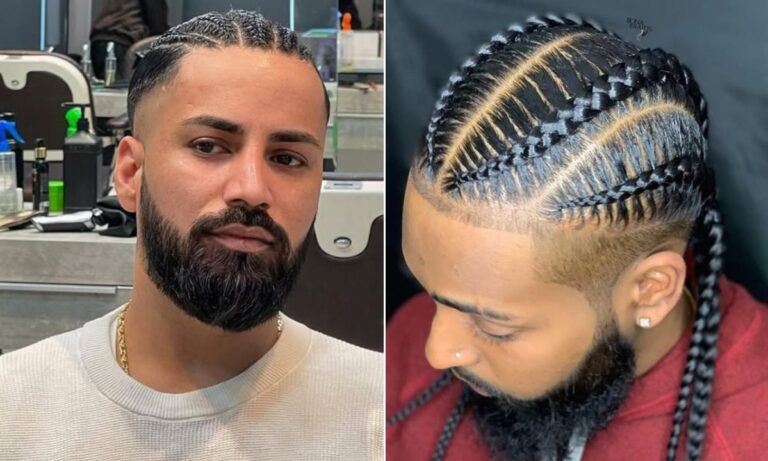
You should also inform the braider if you want a taper, fade or hairline left alone so they know what hair needs to stay out of the cornrows.
And most crucially, talk about tension. Cornrows should be tight, but not too tight that it causes pain, especially near the hairline.
It’s much better to give clear directions before you begin braiding than to try to adjust the pattern halfway through.
Geometric Cornrow Fade
When regular straight backs feel too predictable, get geometric. Angled parts will offer shorter cornrows structure without adding length or extensive detailing.
Tight braids on top look great with fading sides because the contrast makes the parts pop.
Tell the braider exactly how you want it sectioned out, because symmetry is more important than just choosing a certain amount of rows.
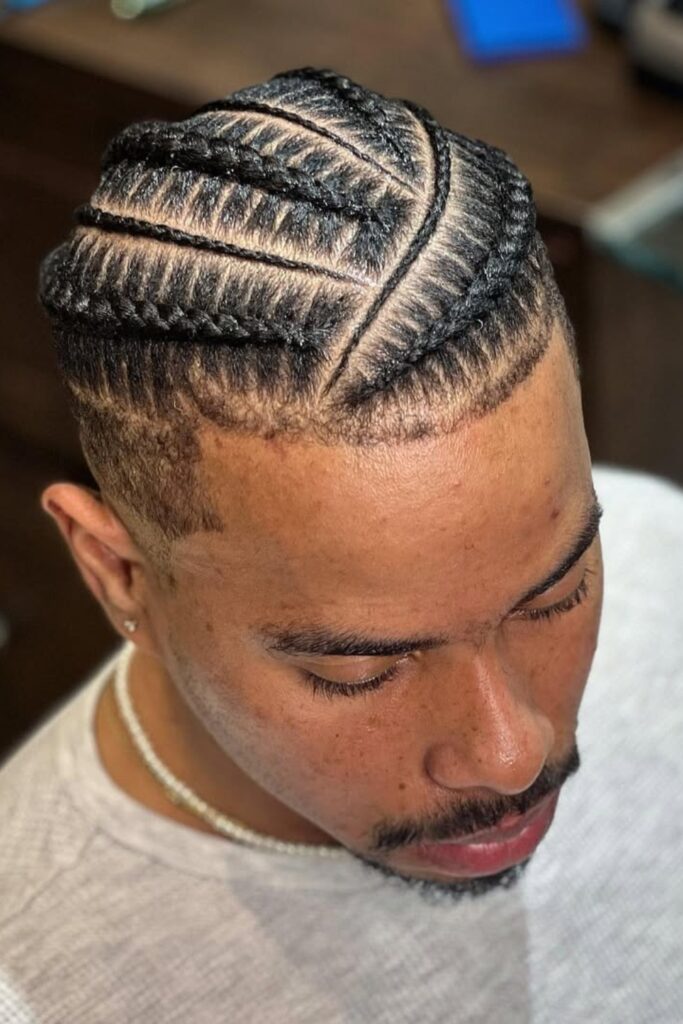
Curved Stitch Cornrows
Curved rows are a great choice if you want movement across the scalp to the rigid finish of standard straight backs.
The parts are well spaced and help keep this design controlled so you can add more sweeping braids without the overall pattern feeling cluttered.
Request uniform braid thickness from front to back; that balance helps the curves remain readable, and maintains the end style seeming intentional.
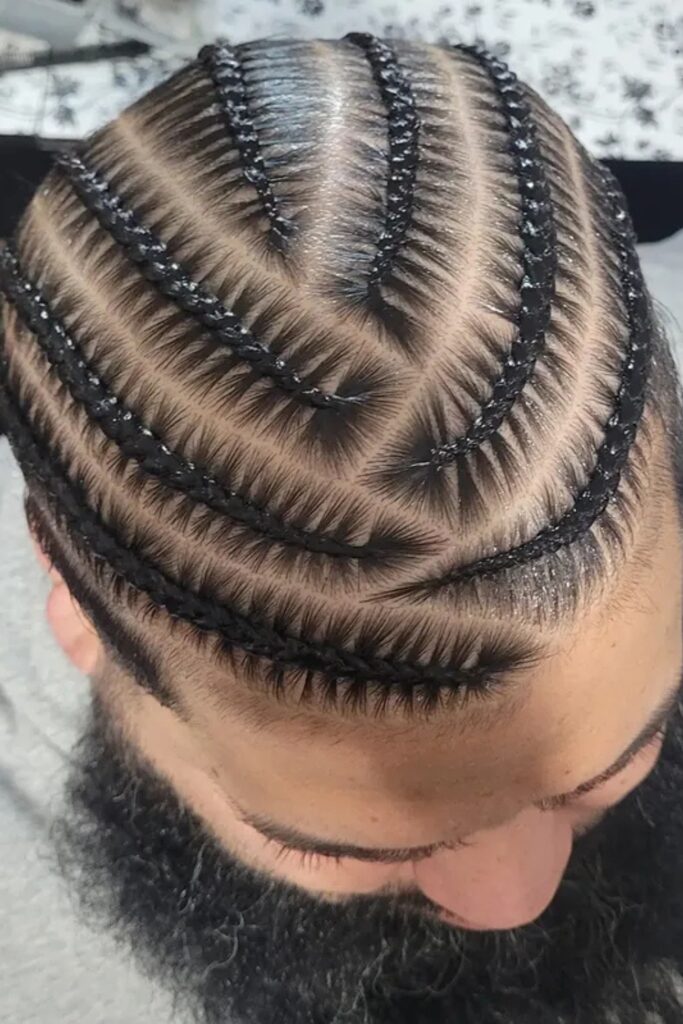
Mixed-Size Straight Backs
Straight backs with a mix of thick and thin cornrows give this style some dimension and make it a nice middle ground between conventional rows and elaborate patterns.
And be sure to keep the sections evenly spaced, for that crisp finish. Different braid sizes will naturally lead the eye to the scalp lines, so don’t worry about that.
This is a good method if you want to see the intricacy without a curved parting and the tapered sides can help to keep the edges a little smoother around the finished braided top.
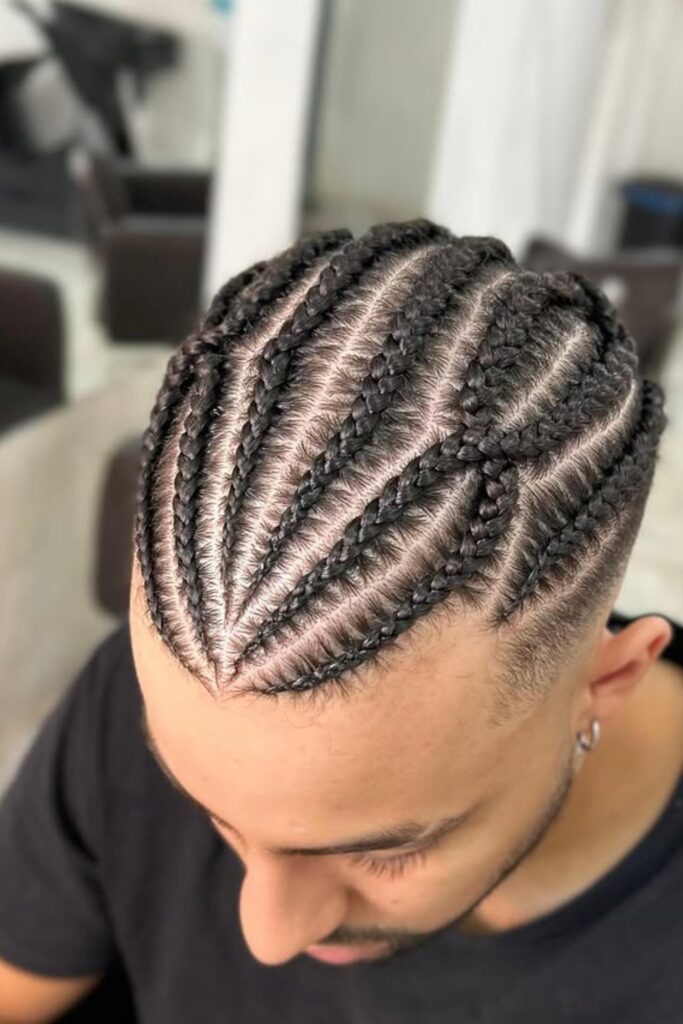
Fan Pattern Cornrows
A fan-shaped pattern may make regular cornrows feel much more unique, with numerous rows fanning out instead of going in one straight way.
Use this pattern when you have enough covering on top for numerous defined sections as the impact relies largely on clear, balanced spacing.
Simplify the front hairline and use the change in the direction of the braid to create the detail. There are too many competing parts jostling for attention and this can be confusing.
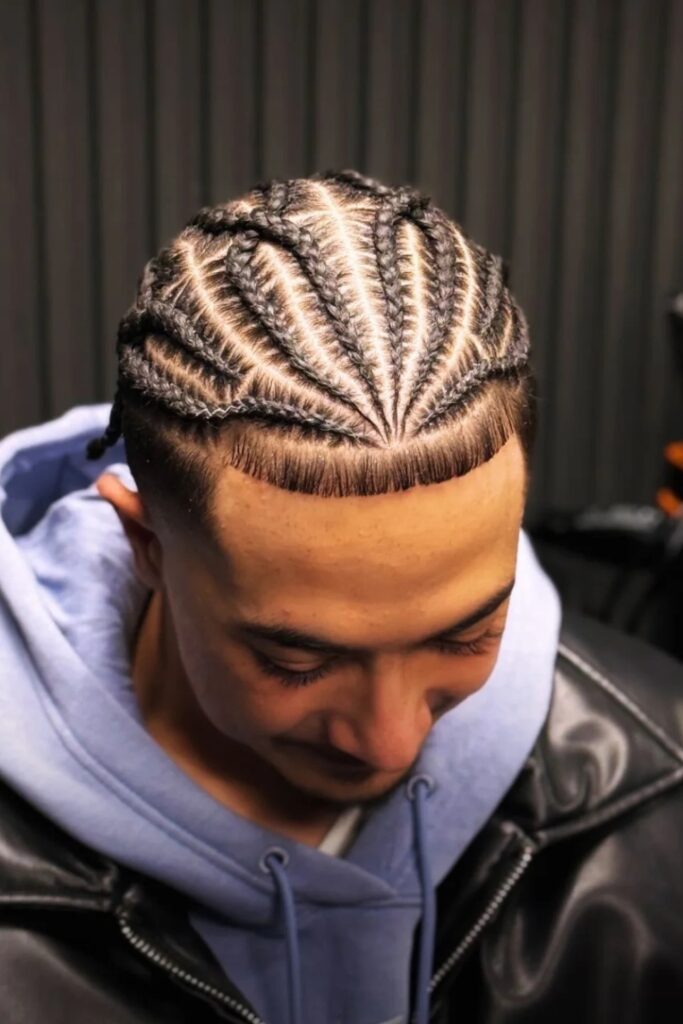
Beaded Cornrow Ends
Want accessories but don’t want the whole look to be bright? Keep cornrows simple, and place beads sparingly around certain braid ends.
This is a good look for this since a clean temple fade separates the braided part while letting those fancy ends shine.
Select light beads and do not overstuff each braid; a few well-placed embellishments can give personality to your cornrows without extra weight or straining.
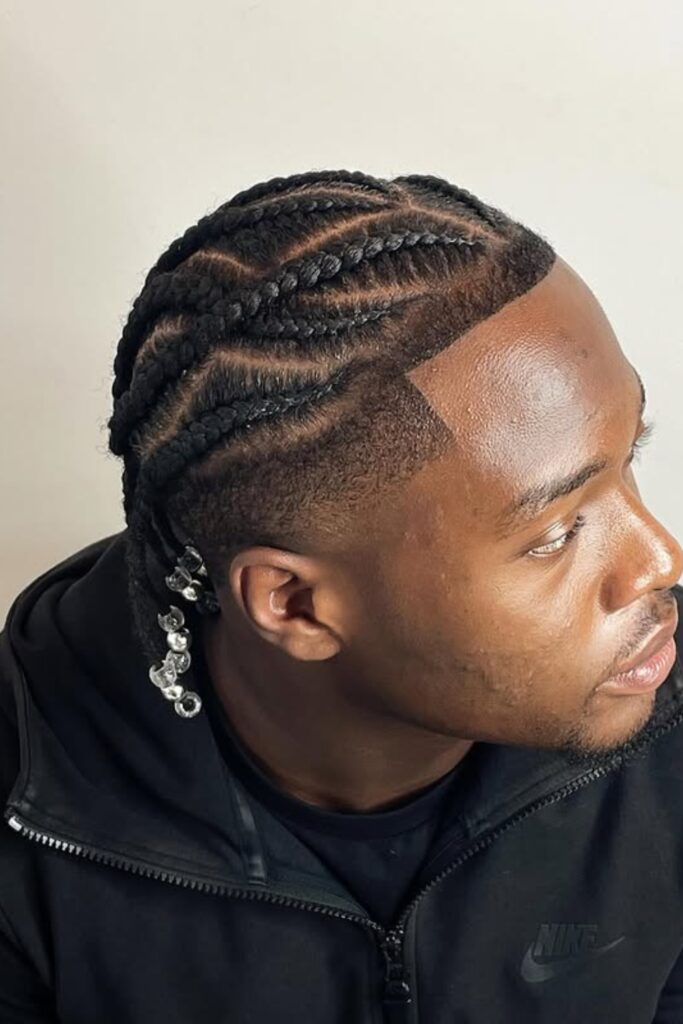
Alternating Cornrow Rows
If you like straight cornrows better than intricate curves or patterns, a simple method to add intricacy is to alternate larger and smaller rows.
Let your braider know to maintain the distance between sizes, because those clean parts on the scalp are what make the contrast look purposeful.
This cut is particularly great for medium length hair, with plenty of capacity for numerous rows while still keeping things compact and easy to wear.
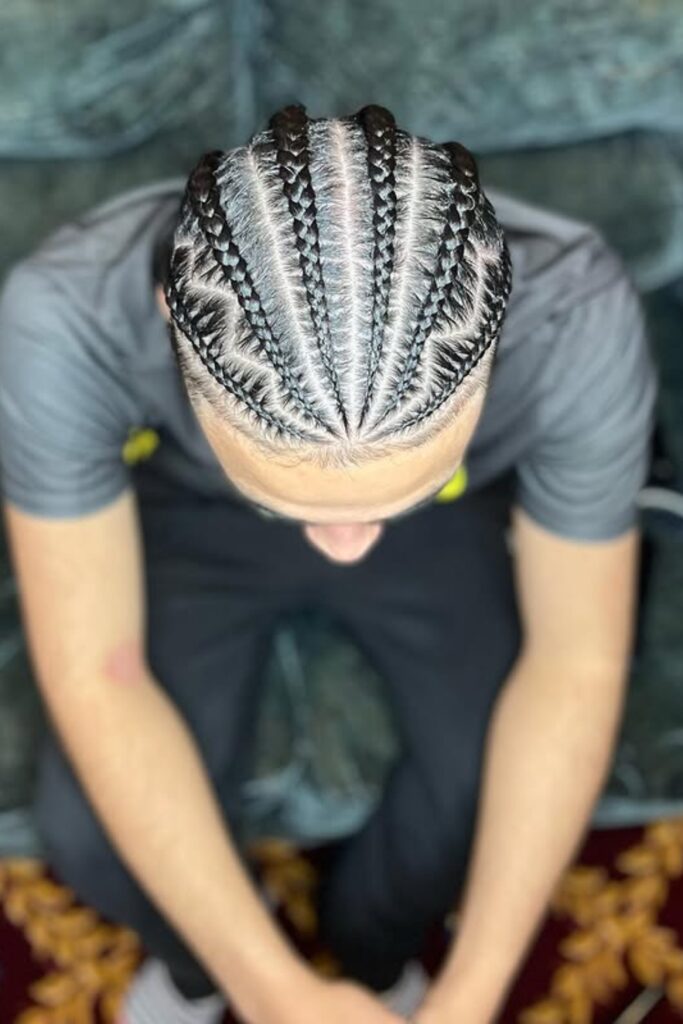
Four Hanging Cornrows
The back is left with four thicker cornrows which offers you visible length without the commitment of several tiny braids all over the head.
The wider parts also make each braid bolder, so use this option when you want fewer rows with a more powerful visual impact.
For a bit of movement without making the scalp pattern too complicated, let the ends be natural instead of tying them tightly.
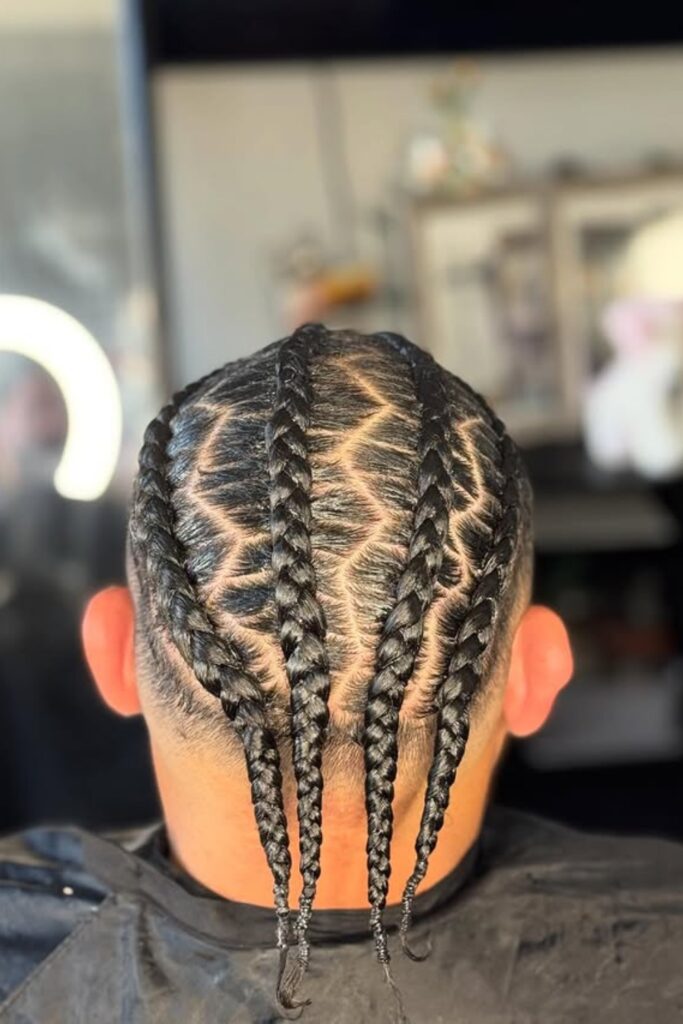
Sweeping Side Cornrows
Rather than sending every pigtail straight back, sweep the rows to the side for movement but still manage the overall pattern.
This method is very useful when you want to get visible details of the scalp from different angles without using zigzags or really complex portions.
To create a balanced sweeping arrangement, try to keep the braid sizes fairly consistent, then utilize crisp edges to finish off the front with a sharper look.
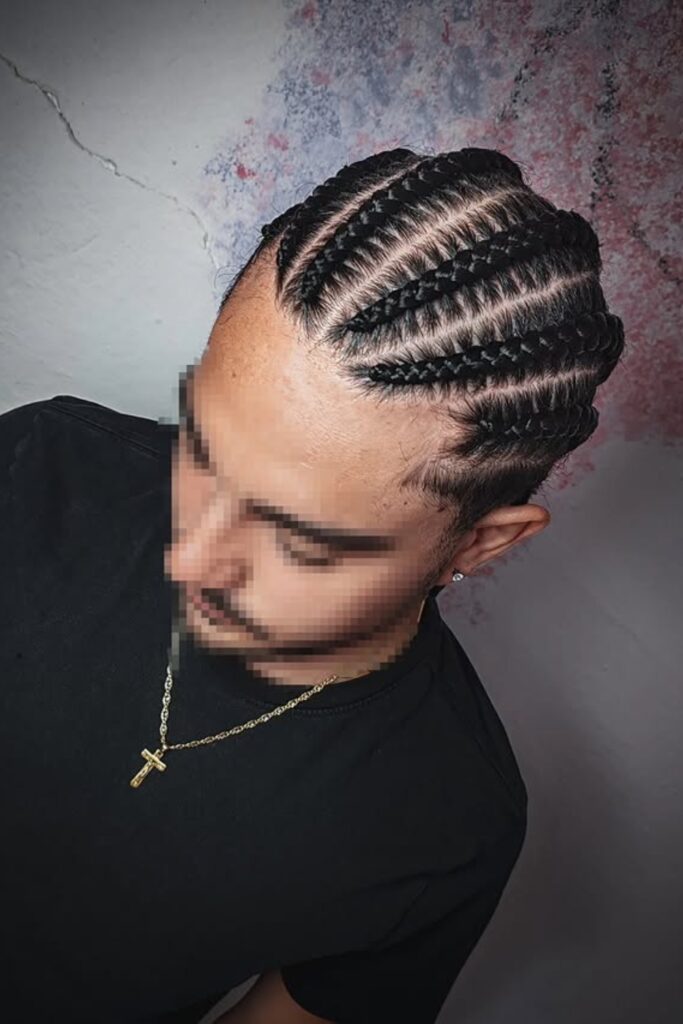
Web Pattern Cornrows
If you find straight rows too predictable, have many cornrows intersect in the center so that the pattern on the scalp is the focus.
Keep the neighboring braids very simple and regularly spaced; that limitation prevents the central feature from becoming crowded and allows it to remain obvious.
Bring a reference photo for this one as the exact crossing places are important and far easier to express visually than vocally.
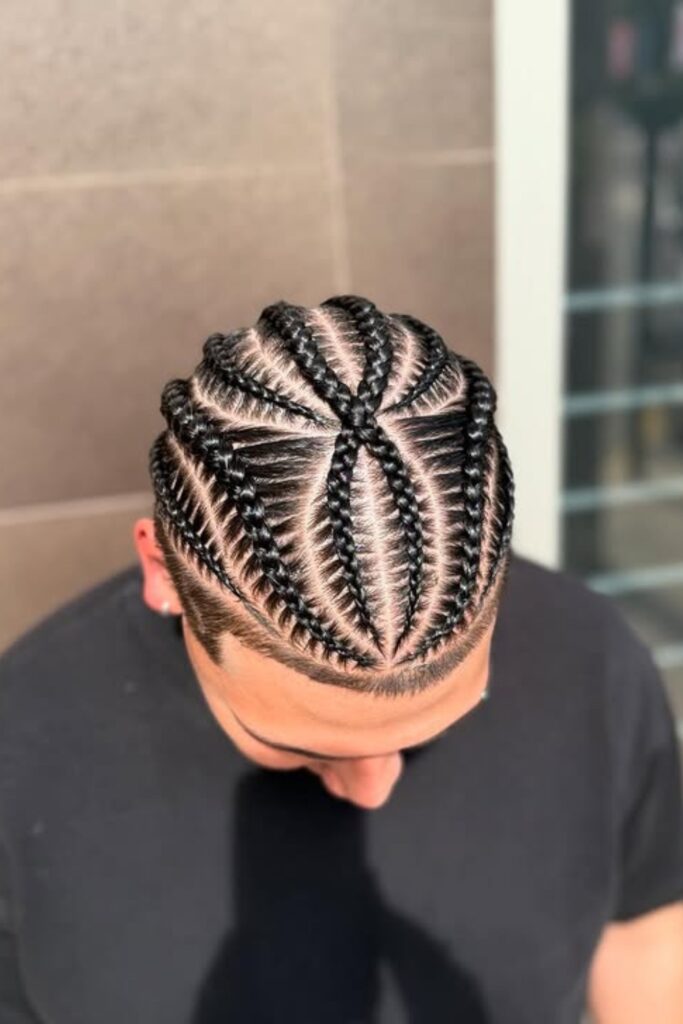
Maze Cornrows
You want cornrows to look different from each angle, and a plan inspired by mazes with curved portions to create visual intrigue.
You want to try to make the braid relatively even in thickness so you don’t end up with a super busy design across your scalp.
Freestyle designs like these demand a bit of good planning, so choose for a braider that has experience with curved pieces, rather than asking for improvisation during your session.
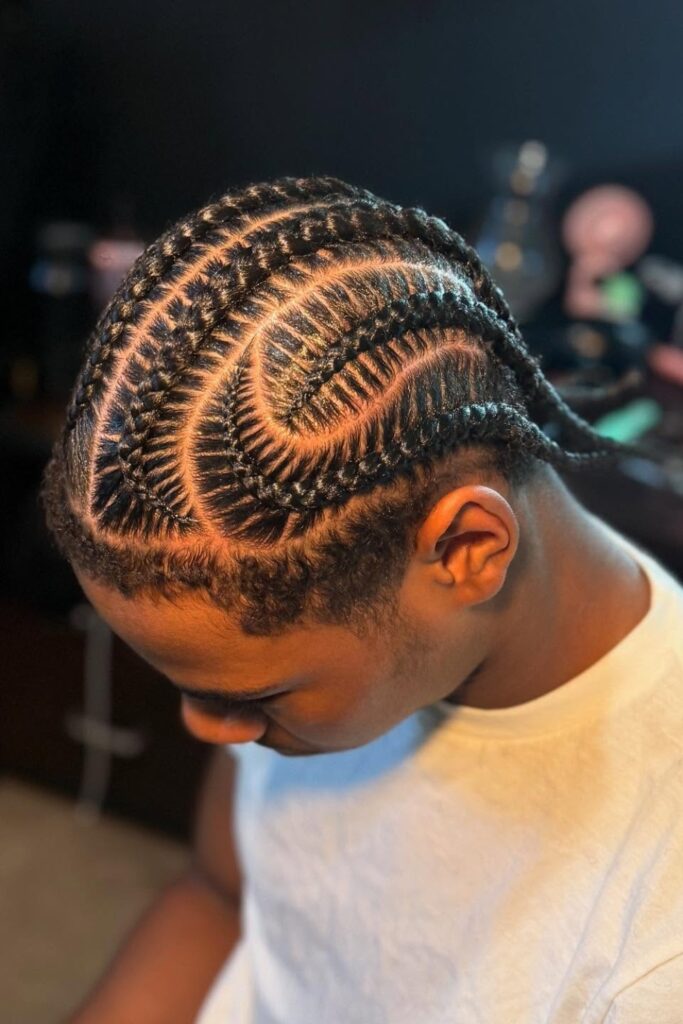
Cornrows With Fade
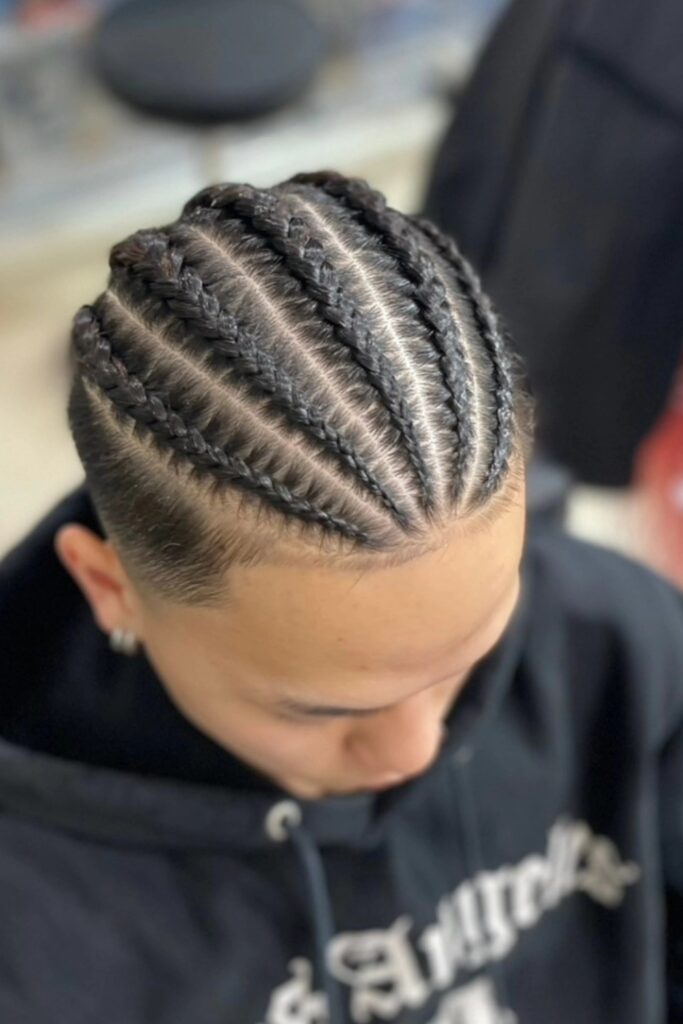
If you want a cleaner look with less hair on the sides, then a higher fade with tight cornrows is a great way to go.
Talk to the barber and braider and establish where the end of the braided portion will be, otherwise fading too high can decrease your possible braiding area.
This pairing performs extremely well on medium and tiny rows with the top having adequate detail and the tightly faded sides keeping everything looking controlled.
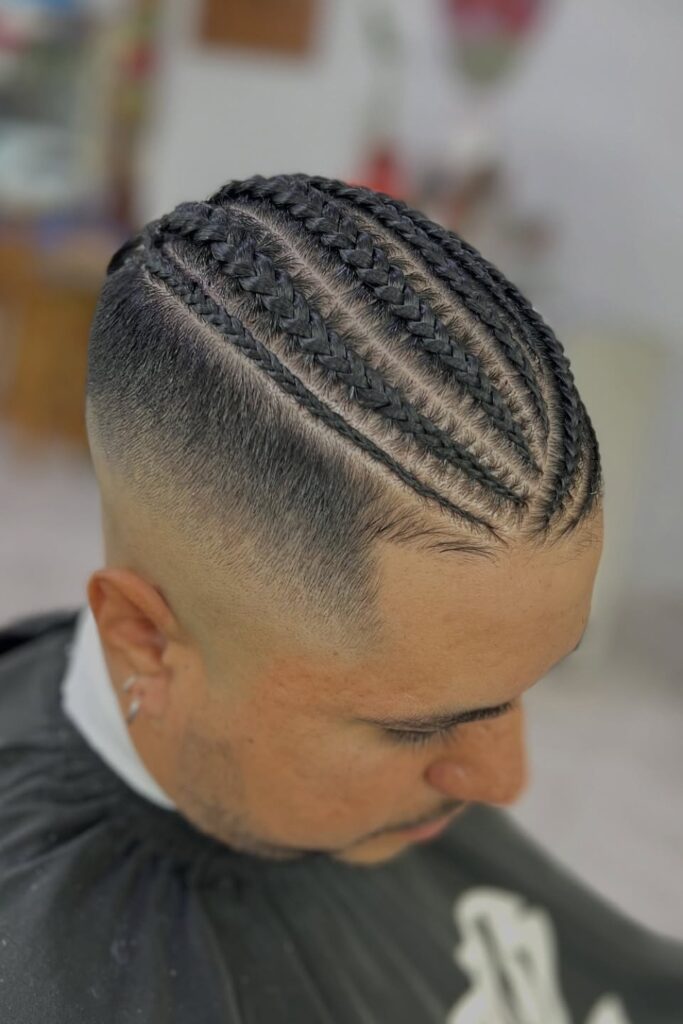
Loop Design Cornrows
Cornrows that loop over each other are a great way to make parting a memorable event, especially when simple straight or diagonal sections seem too basic.
Leave adequate scalp space in the design to breathe. Wider curved parts make those loops easier to distinguish and prevent nearby braids competing.
A clean crisp hairline can complete the style, but don’t request too much tension in the front only to make the edges look a little tighter.
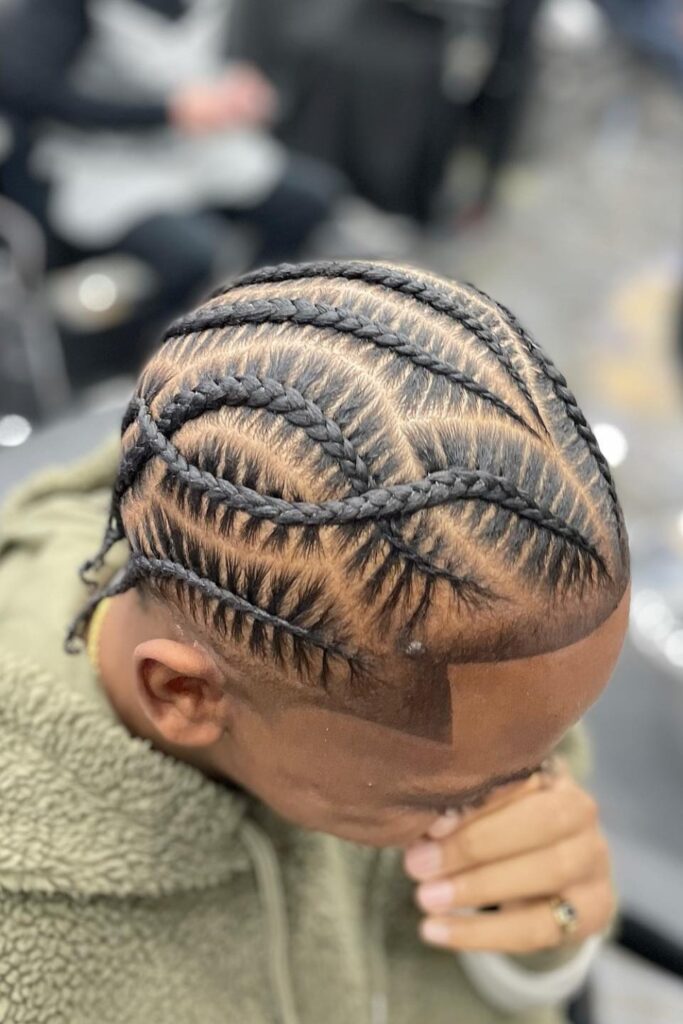
V-Part Cornrows
A sharp V-shaped center is a fantastic option if you want symmetry up front but more interesting braid directions around the sides.
The middle rows stay thicker, and the outer braids can follow those angled parts. Providing definition to the pattern without too much complication.
This style requires precision separation, so indicate your braider the V location you want before they start dividing the front hairline parts.
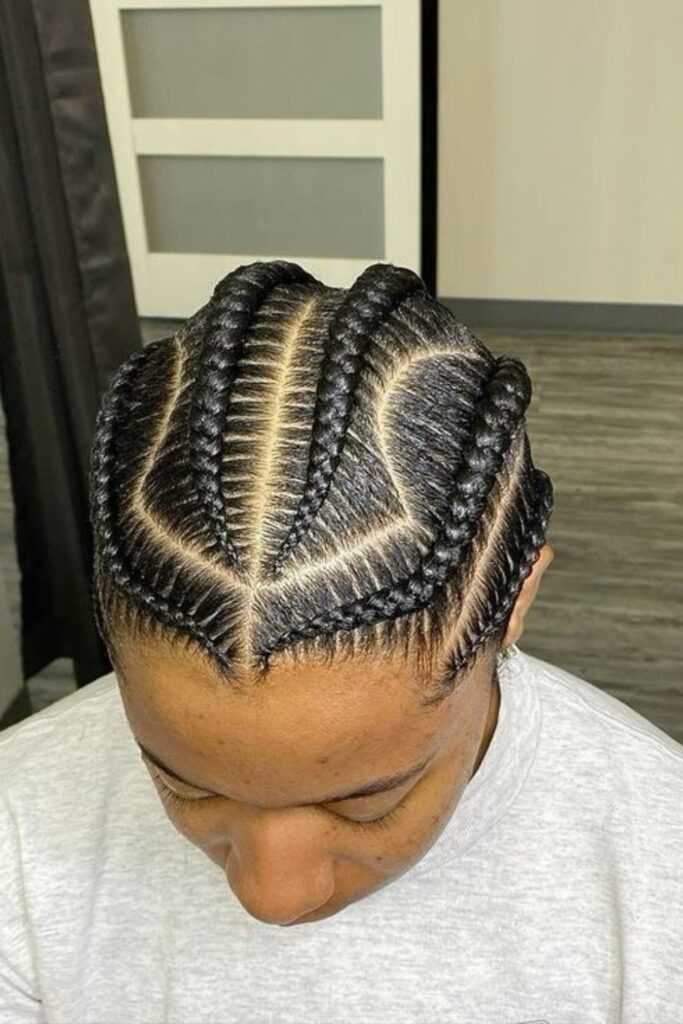
U-Shaped Cornrows
If straight backs are too rigid, try U-shaped parting; the curved outer rows can frame central braids without becoming too complex.
You can make the middle cornrows smaller to keep the curves around them looking good, especially if you want the design to be seen from the front.
A clean temple area works well with this style, leaving enough hair around the periphery for your braider to do full curves.
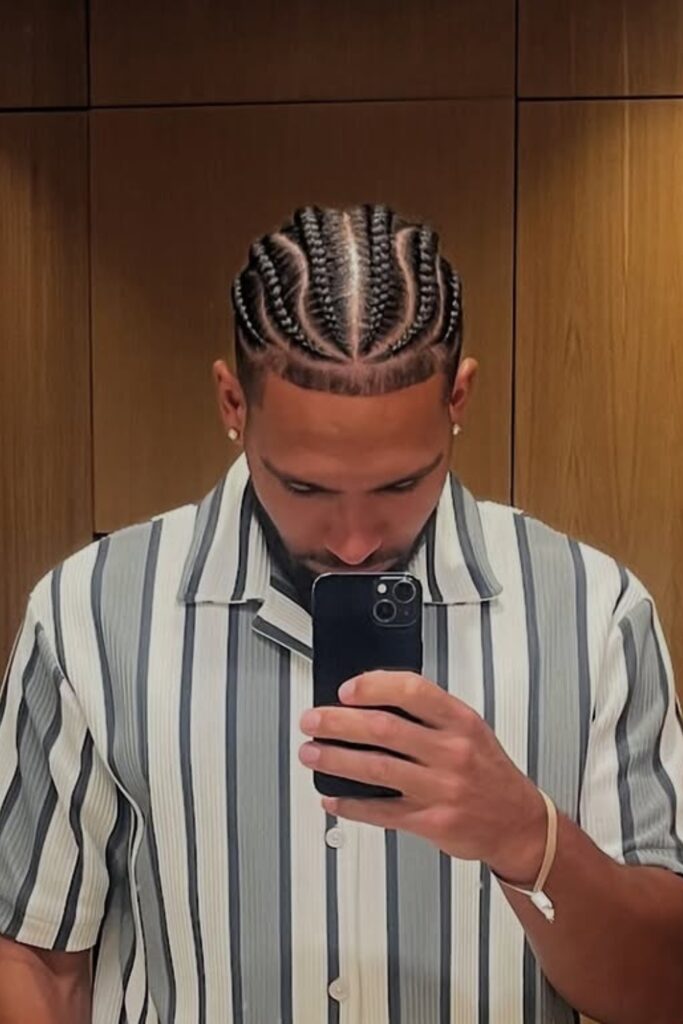
Straight Backs With Minis
Classic straight backs feel a little plain? Try narrow cornrows and broader rows to offer you extra texture while keeping their recognizable direction.
The smaller accent braids look best with constant spacing so the larger cornrows may remain prominent and not compete for attention.
Go for this combo if you want the scalp detail to be evident yet want an easy pattern to convey to your braider.
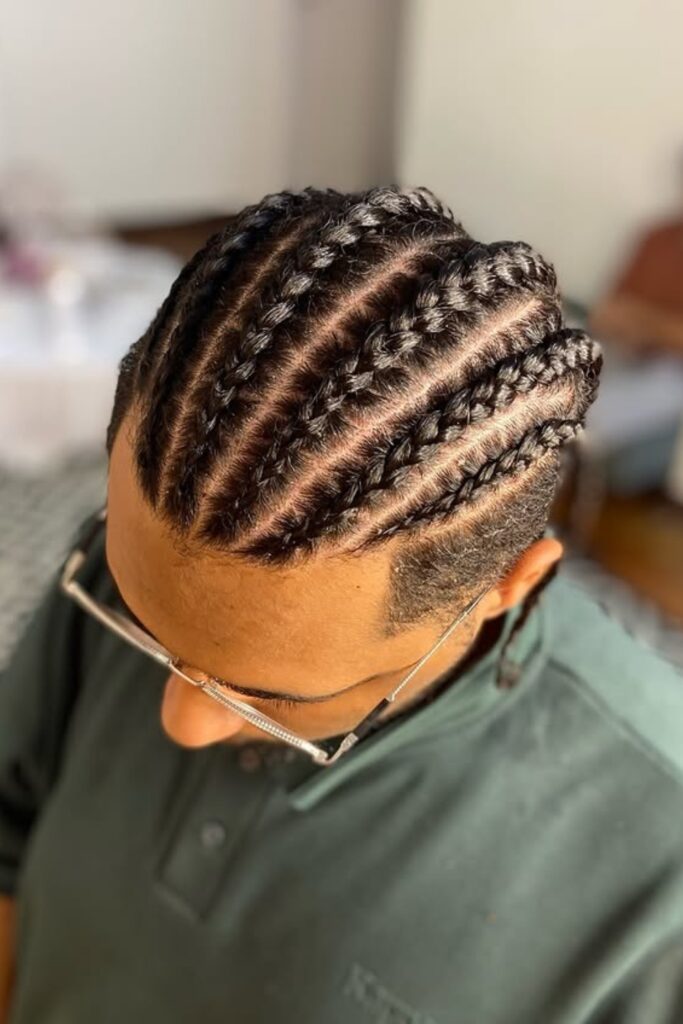
Chunky Cornrows
Bump it up if you want each braid to carry more visual punch. You can get away with fewer chunky cornrows and yet look full without intricate splitting.
Most larger sections need enough hair density to get even braids, so talk about your natural thickness before you decide on the exact amount.
Keeping the rows parallel helps make this bigger style more wearable, and cleanly completed ends keep those heavier braids from looking too thick.
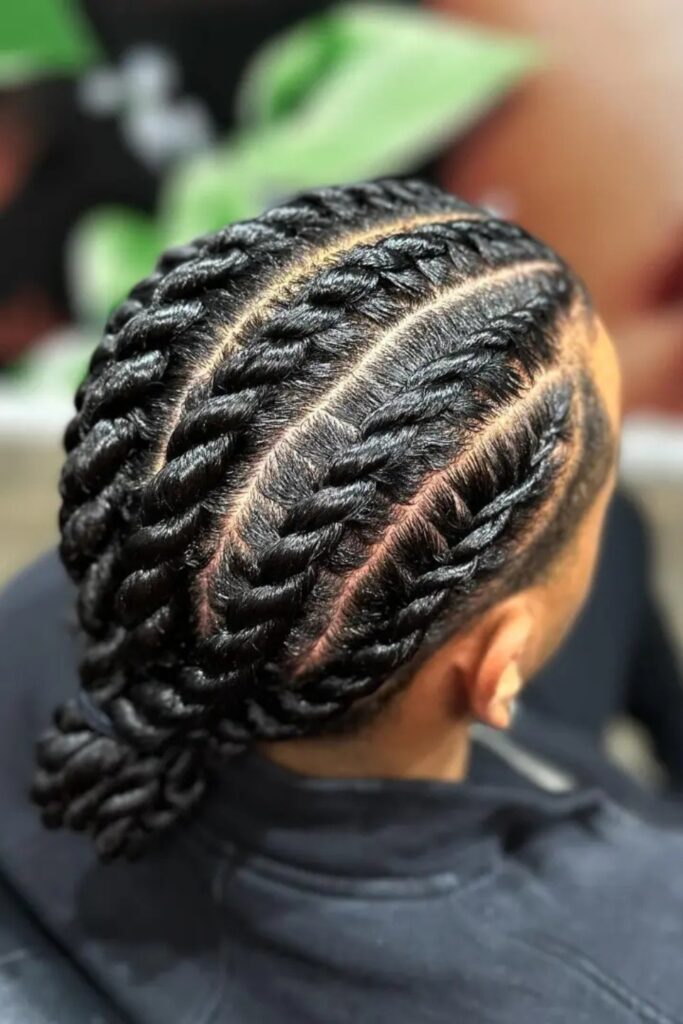
Five Straight Backs
If you want classic cornrows with apparent structure but fewer portions to maintain, five thicker rows are a good starting point.
Leave enough space between each braid so that you can see the part. This is particularly important if your hair is dense enough to support thicker individual rows.
Ask for a constant thickness from the hairline back. When you’re wearing only a few cornrows, inconsistent size is much easier to notice.
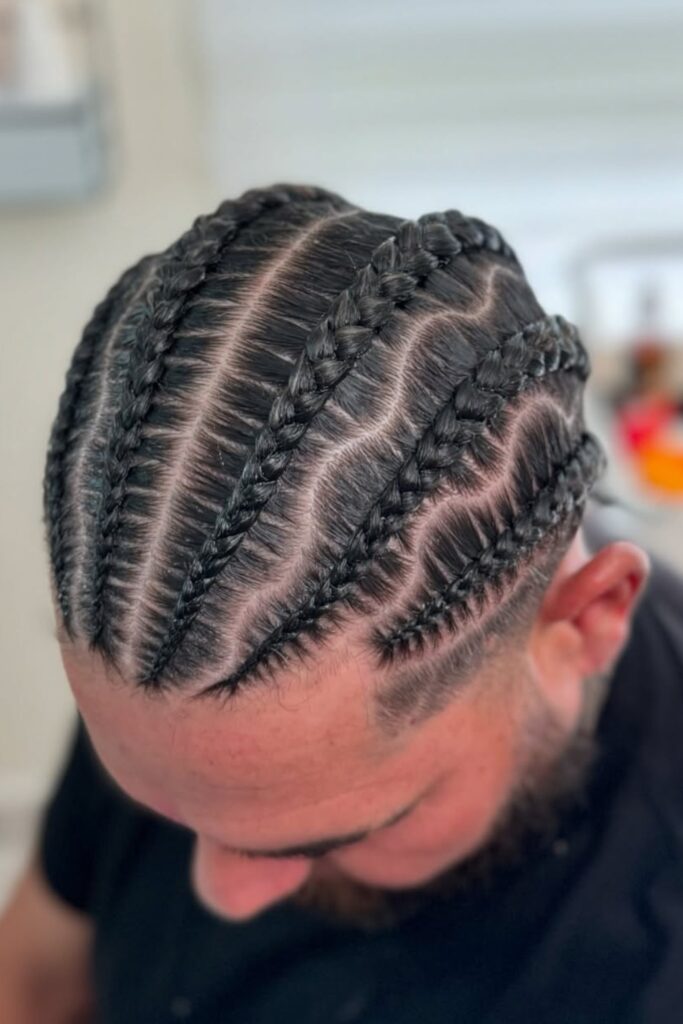
Side-Swept Stitch Rows
Sweeping rows to the side can transform the entire feel of cornrows, making the eye go diagonally rather than shooting each braid toward the back.
Adding in thin accent braids in between bigger rows gives definition but keep their direction aligned so the pattern still reads as one design.
Pick this one if you want precise parting but want the braids close to your head with no free or hanging parts.
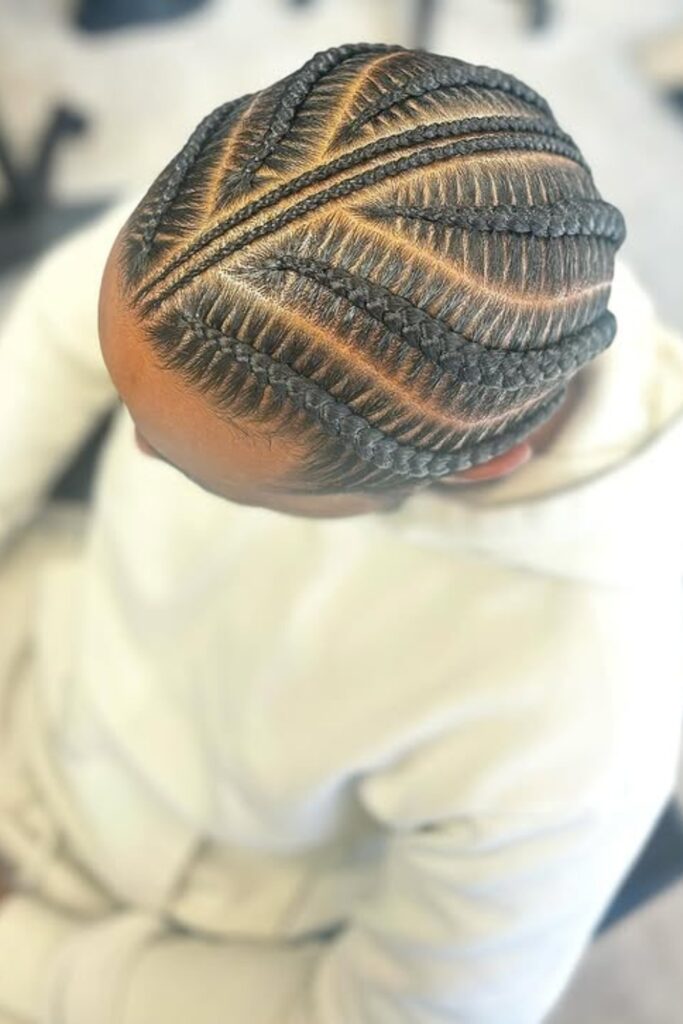
Centered Fan Cornrows
The fan look is achieved by starting multiple cornrows at one central location and letting the braids spread naturally over the span of your head.
This pattern works best with well balanced portions, since uneven spacing is noticeable when each row branches from the same front area.
To give depth, some rows go thinner next to thicker braids, while still keeping the overall direction steady enough to maintain that fan form.
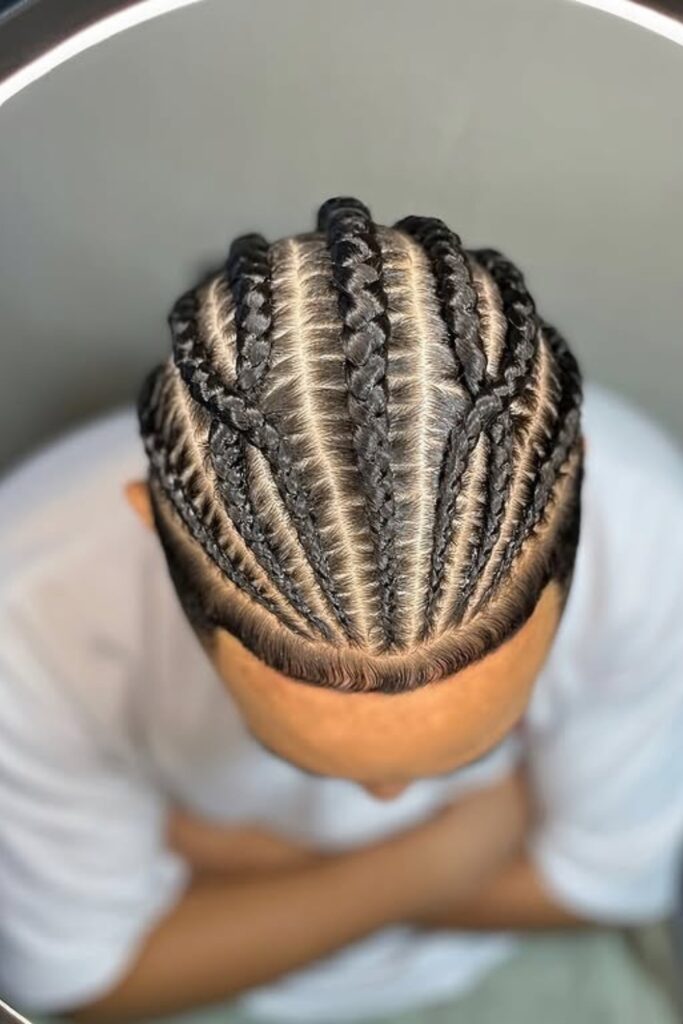
Cornrows With Cuffs
If you’re already a fan of clean cornrows, and just want something to give them a more you feel, metal cuffs are an easy update.
Instead of embellishing every row, place a few cuffs on select braids so the accessories are visible but don’t take over the parting.
Ask for secure yet comfortable braids below . Decorative hardware should enhance the end design , not compensate for too much braid strain .
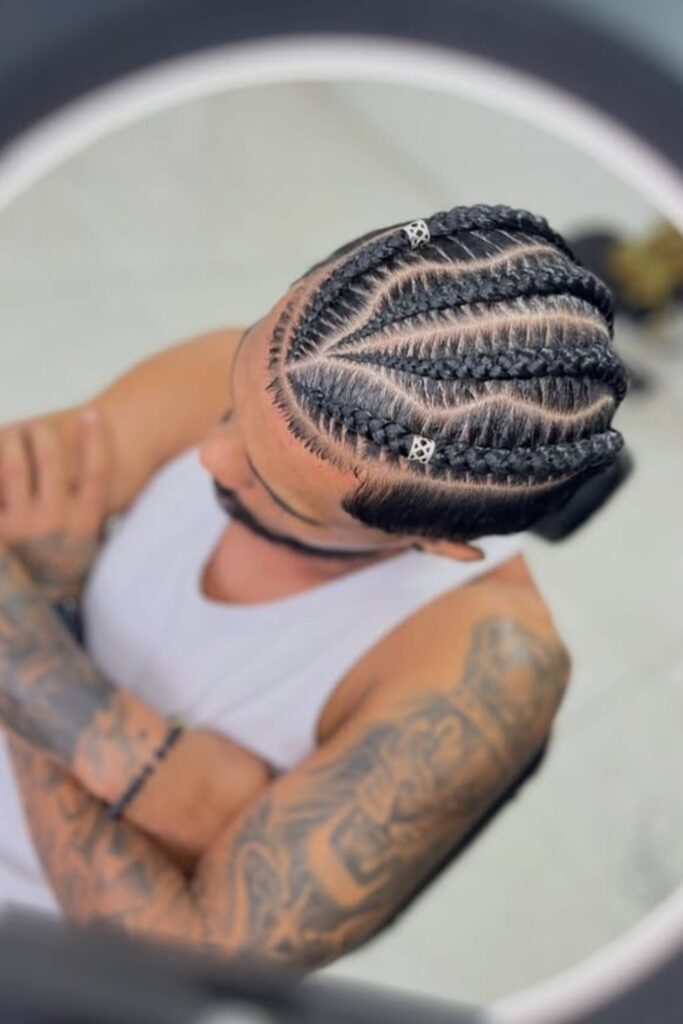
Wave Pattern Cornrows
Go with flowing wave portions for a lot of detail without accessories, and allow the changing braid direction make the statement naturally.
You want to keep neighboring rows on similar curves so the pattern remains readable, but altering the braid thickness slightly might add extra depth to the design.
Each bend must be placed accurately, so bring your reference picture and talk over the pattern before your braider begins making the individual portions.
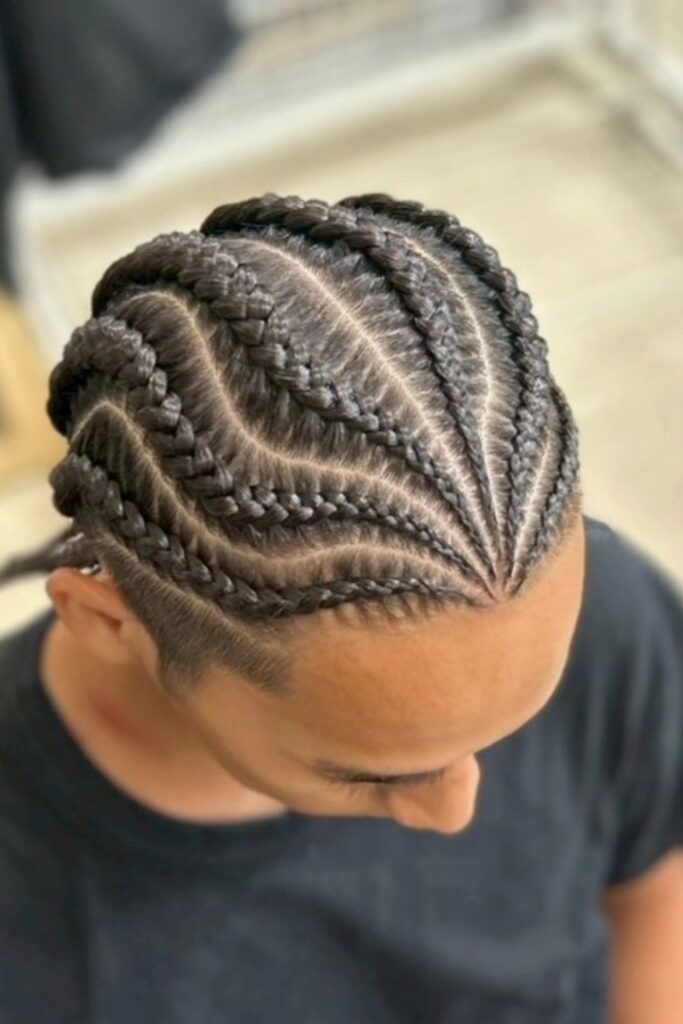
Cornrows With Charms
Classic rows can be customized with tiny metallic charms without disrupting the whole braid design. This is great when you need modest ornamental elements.
Just put the charms on one or two cornrows to make them deliberate accents rather than distracting from those tidy, parallel parts.
Opt for lightweight pieces that rest flat against your braid for everyday comfort and take off anything that keeps getting caught on your clothes or bedding.
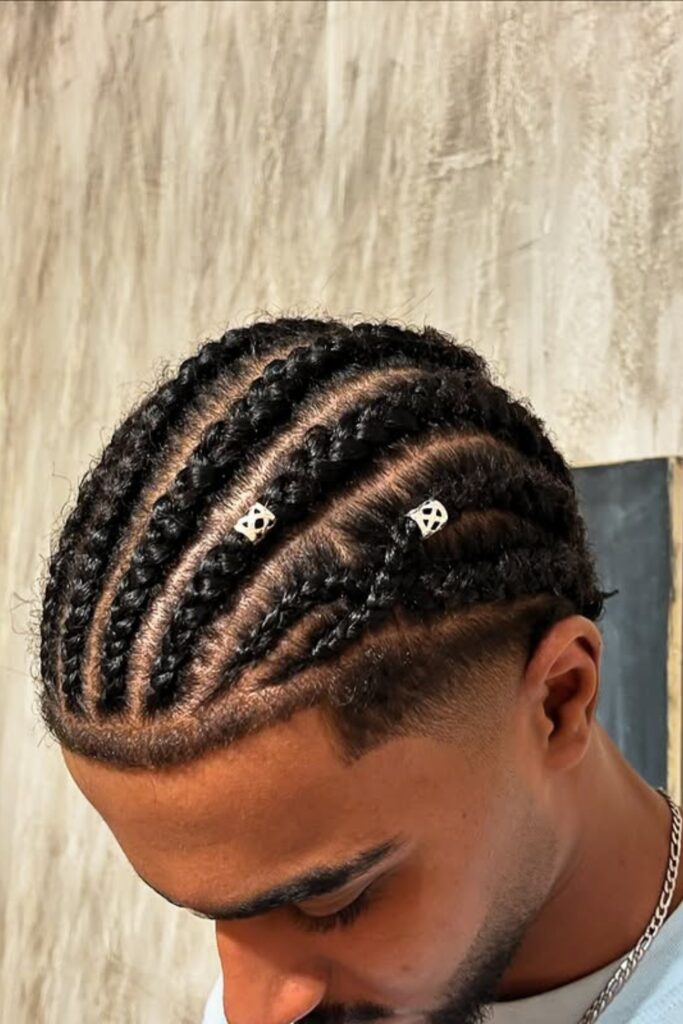
Cornrow Man Bun
If you want length, but don’t want loose braids hanging, pull the longer braided ends into a little bun for a practical solution.
This works particularly well with a few cornrows of the same size, as their matching thickness makes for a neater bundle at the back when all is said and done.
Ask your braider to not pull the bun too tight, the collected finish should feel solid without putting unnecessary tension on your scalp.
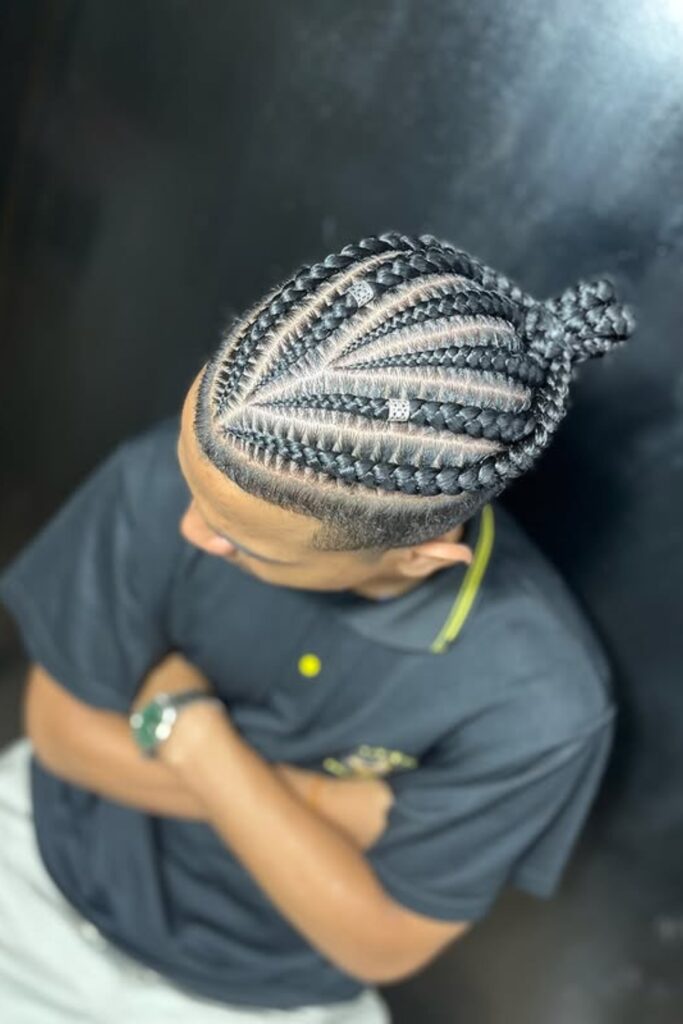
Zigzag Accent Cornrows
A single zigzag section may totally transform straight cornrows, giving you an interesting detail without making each row a complicated pattern.
Keep the remaining strands fairly straight so that the angled split gets enough attention and the completed pattern doesn’t feel too cluttered.
This is something to show your braider up close, as regular corners and spacing is what makes a zigzag design look sharp instead of inconsistent.
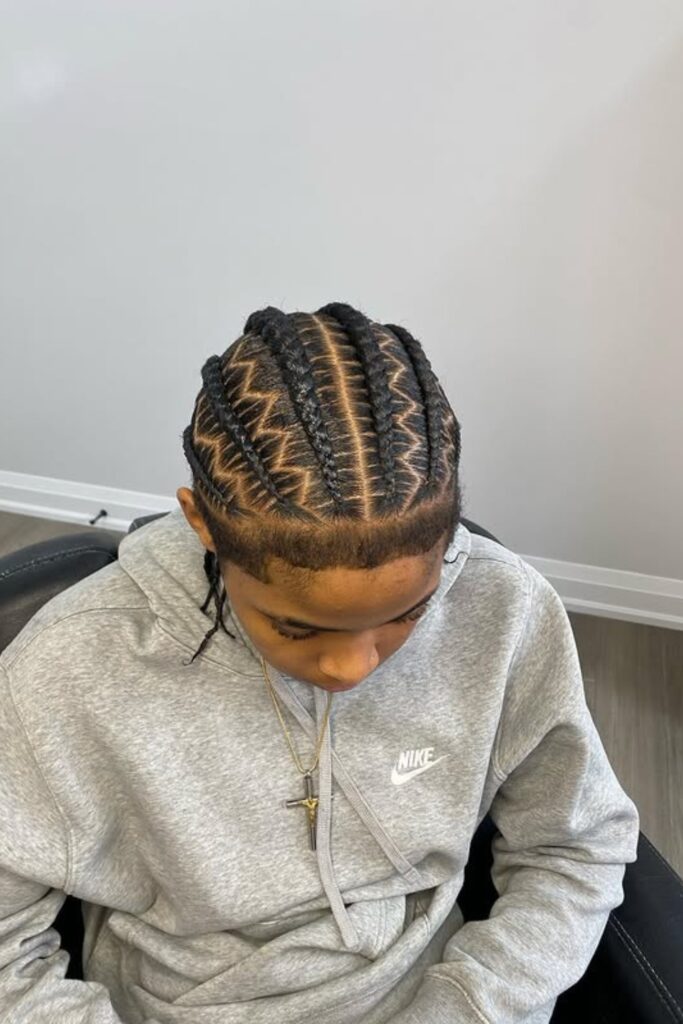
Clean Parallel Cornrows
If you’re looking for cornrows that feel simple, balanced and simpler to pair with a neat haircut, stick with equally spaced parallel rows.
Medium width braids are the perfect size to provide some presence to the pattern without having to use so many little parts that it becomes impractical for a simpler overall finish.
If you want a little more definition, keep the sides nicely tapered but be sure to leave enough hair for full outside cornrows.
FAQs
How Long Does Your Hair Need to Be for Cornrows?
Some cornrows can be as little as 2–3 inches, but the length that works for you depends on your hair texture, braid size, and your braider’s technique.
The longer you have, the better grip your braider will have and the more possibilities you’ll have for fewer rows, curved designs and longer braid endings.
How Long Do Cornrows Last on Men?
How long do cornrows last? Usually, cornrows last for 2-4 weeks, but it is contingent upon your hair growth, the size of the braid, your scalp’s health, your exercise and sleeping habits.
Covering them with satin or silk at nite and avoiding unnecessary handling might help decrease frizz and keep the parting cleaner.