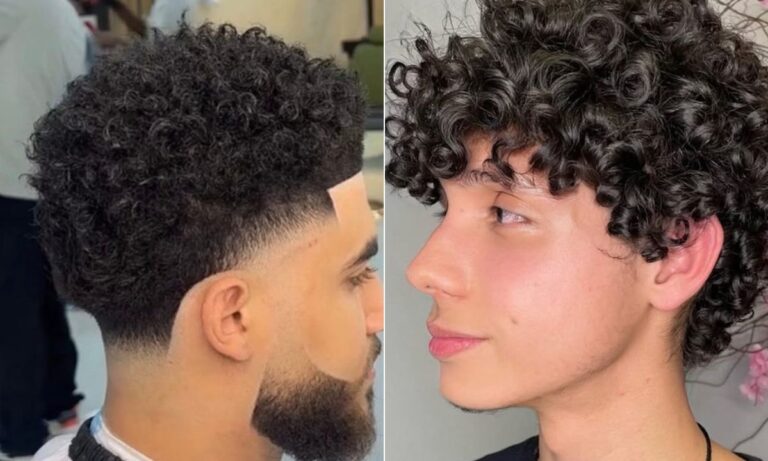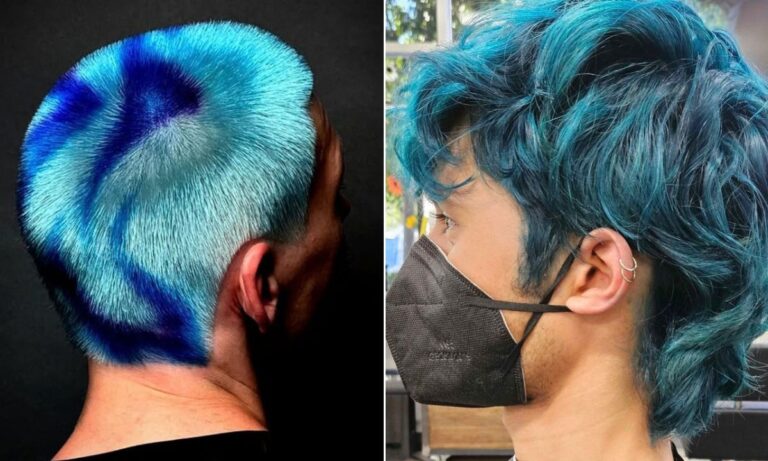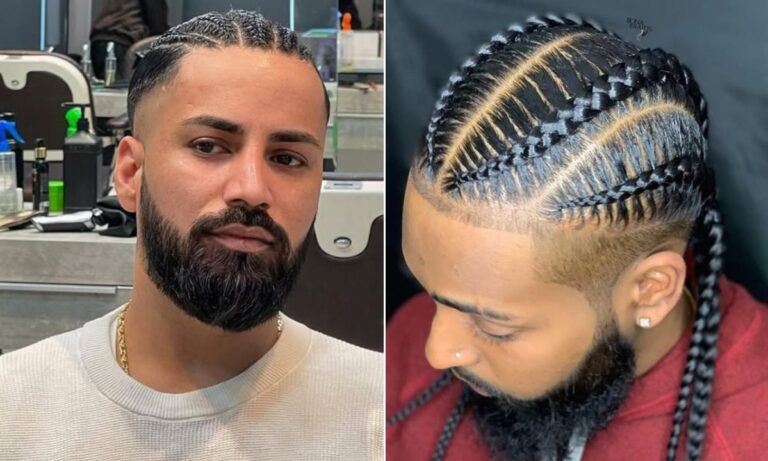
You can ask for a mid fade and yet walk out with a haircut that looks nothing like the picture you saved.
Maybe the fade is sitting too high, the mix feels too harsh, or the top just doesn’t suit your hair structure or face shape at all.
You also need to consider top length, whether you want a skin or softer finish, how much contrast you like, and how often you are willing to maintain it.
In this article, I will show you 27 mid fade haircut you can try yourself.
Let’s jump in!
What Haircut Looks Best With a Mid Fade?
There’s no one optimum haircut for a mid fade since the top needs to suit your hair texture, facial shape, and styling routine.
A mid fade begins at about temple height so it provides a nice amount of contrast to define the sides without making the hairstyle as dramatic as a high fade.
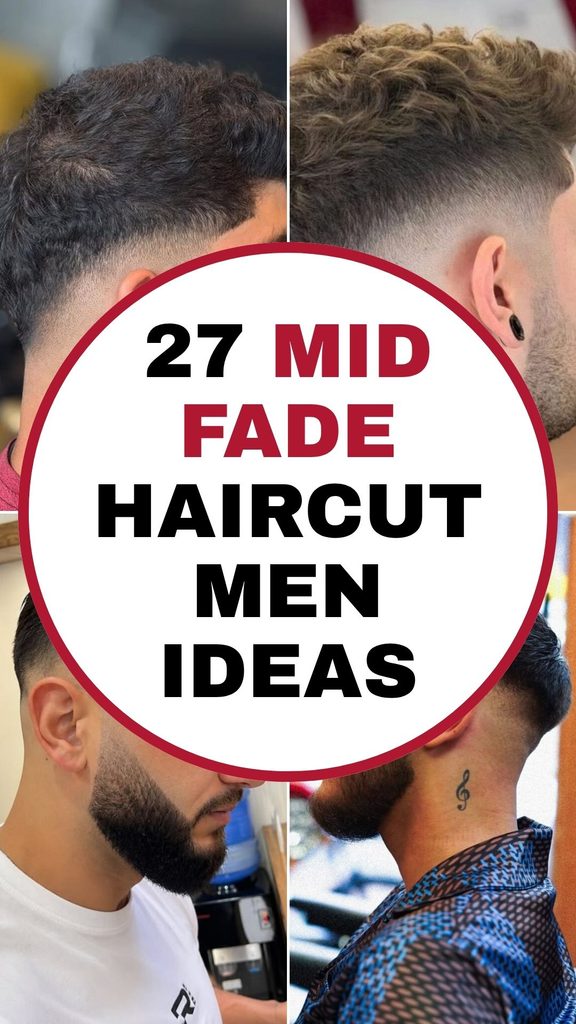
If you want something that is easy to maintain, match it with a buzz cut, crew cut or a short textured crop.
If you have curly hair, it works great to maintain it long enough to show the curl pattern.
If you have straight hair, you can style it with a side part, a crop, or brushed back.
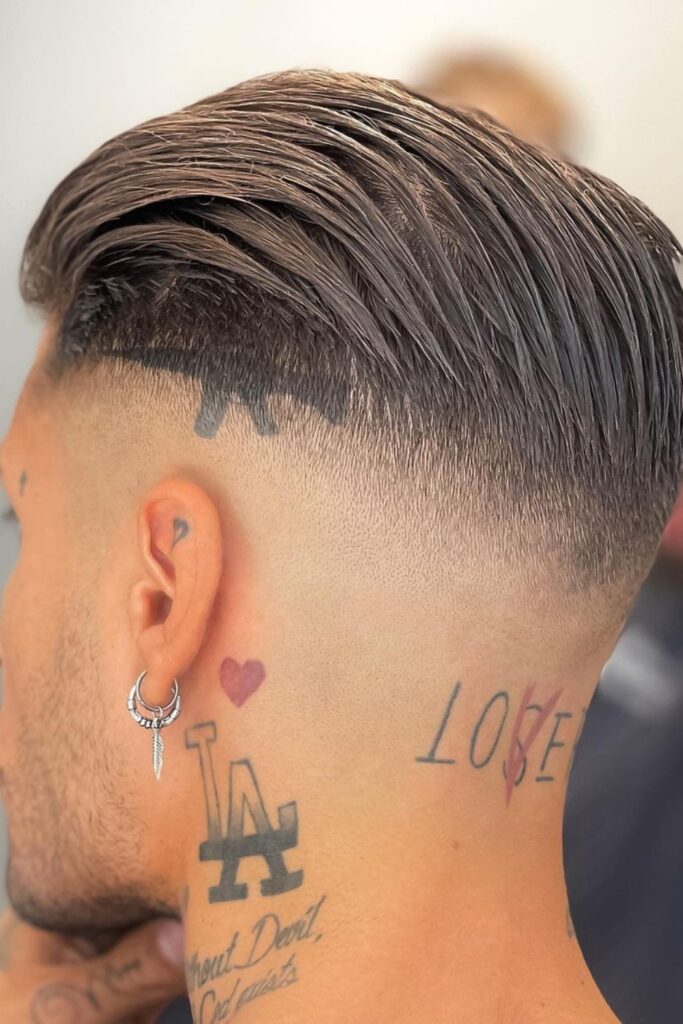
Side-Swept Slick Fade
If you want a clean, polished finish with significant contrast, leave the top long enough to sweep back and clean up with a fade on the sides.
Have your barber leave weight above the temple in such a way that it is obvious so that the slicked part does not fall into the fading area.
Work a light pomade or styling cream into damp hair to keep the longer top under control without stiffness, and comb it back.
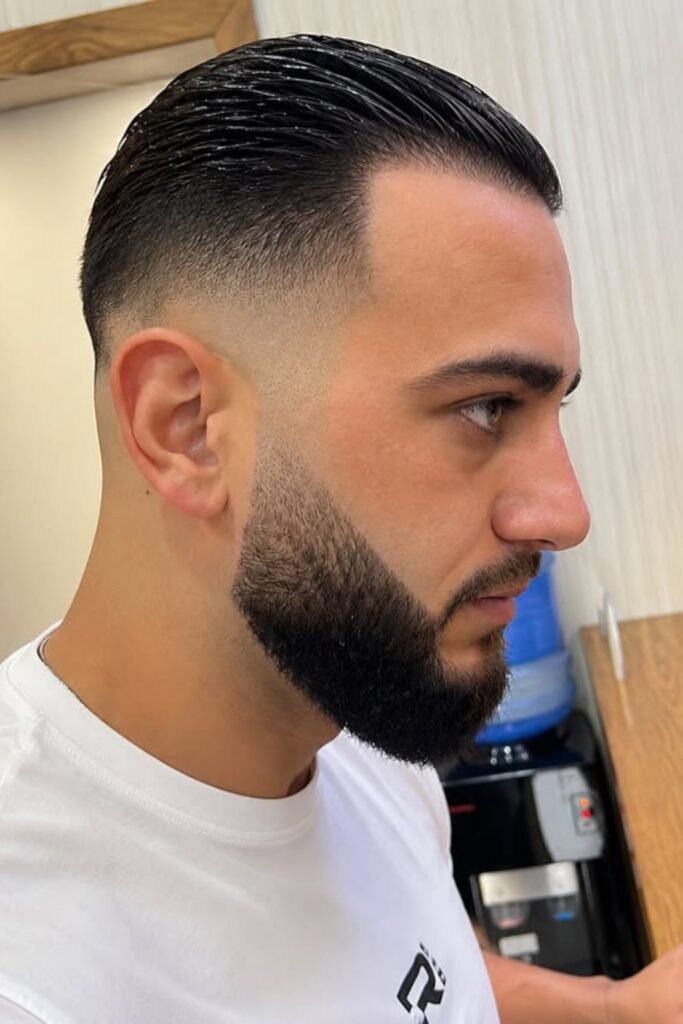
Bearded Slick Back
A shiner back is easier to wear with a more moderate mid fade since the gradual blend keeps the sides crisp without looking harsh.
This match is particularly effective if you have facial hair, since the fade can flow nicely into a short, well-groomed beard.
For the top, use product from roots to ends and comb everything back, not just the front section flat.
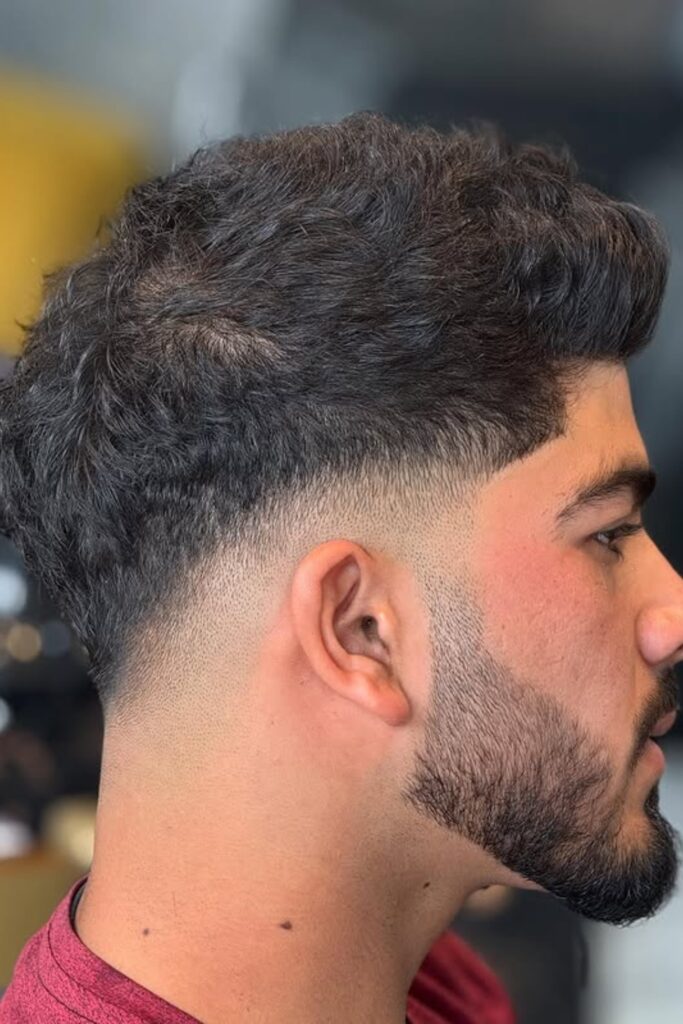
Wavy Volume Fade
Don’t flatten out thick, wavy hair. Keep the natural movement in the hair, but take out the bulk on the sides with the mid fade.
Let out some more length through the front and crown so the waves can be formed, not a heavy shelf.
Request a blended transition, not harsh thinning, then use a light matte cream to separate texture without eliminating its bounce.
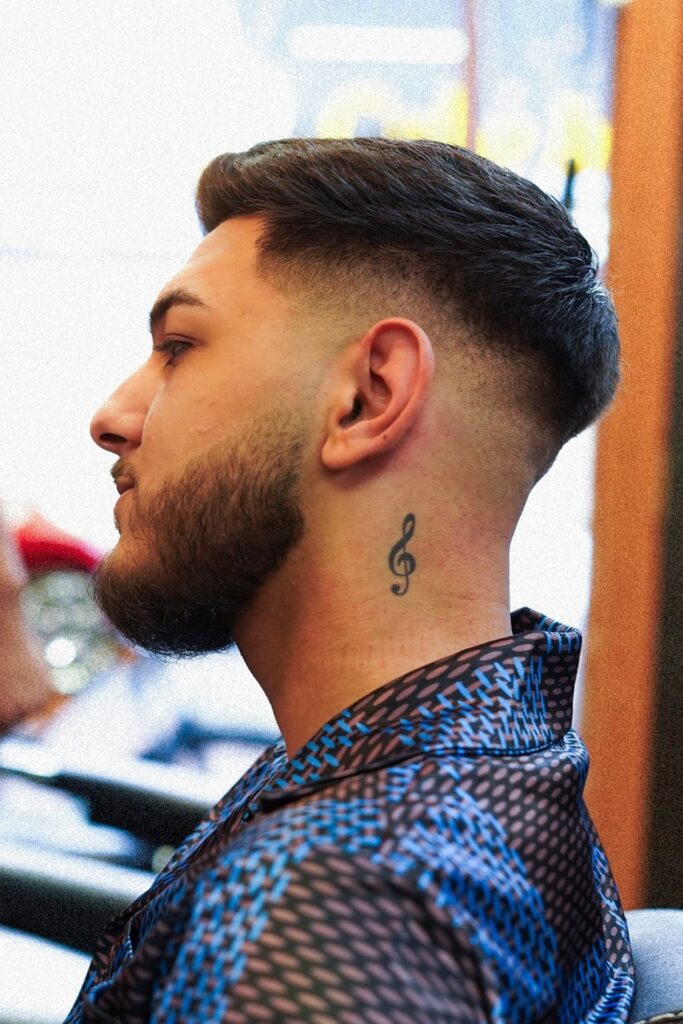
Brushed Back Fade
If you want a cleaner, business acceptable variation, keep the top medium short and brush back instead of generating exaggerated height in the front.
The mid fade should sit well around the temple, with enough darkness above to blend the shorter sides into the top.
A minimal amount of matte paste is used to achieve this shape control, and the natural finish makes the haircut suitable for work or weekends.
Textured Curl Fade
The curls will work for you here. Leave some length on top to create a thick or wavy hair style without the bulk on the sides.
Ask for a mid skin fade that leaves the temple smooth, then save enough weight above it for natural texture.
A little curl cream or matte paste will do, squish it through softly rather than comb the movement flat.
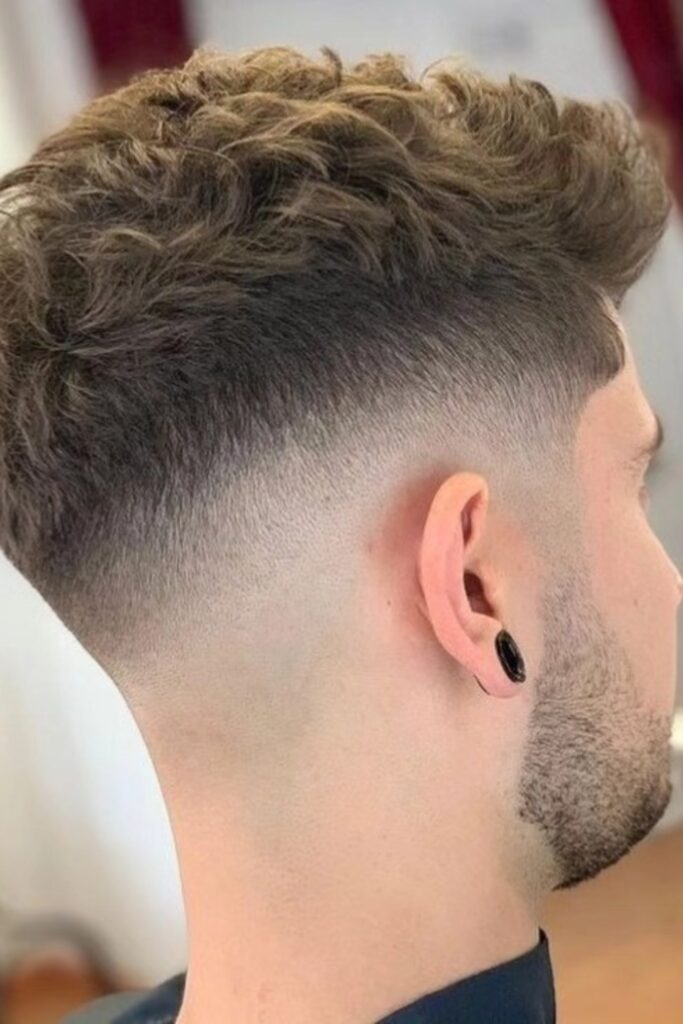
Short Side-Swept Fade
A cleaner look for short straight hair, the side-swept top gives direction without requiring much styling time in the mornings.
Keep the top tight and ask your barber for a mid skin fade that merges gradually rather than jumping in with hefty length.
Apply a light cream and comb hair diagonally forward, keeping the result regulated but still relaxed and wearable.
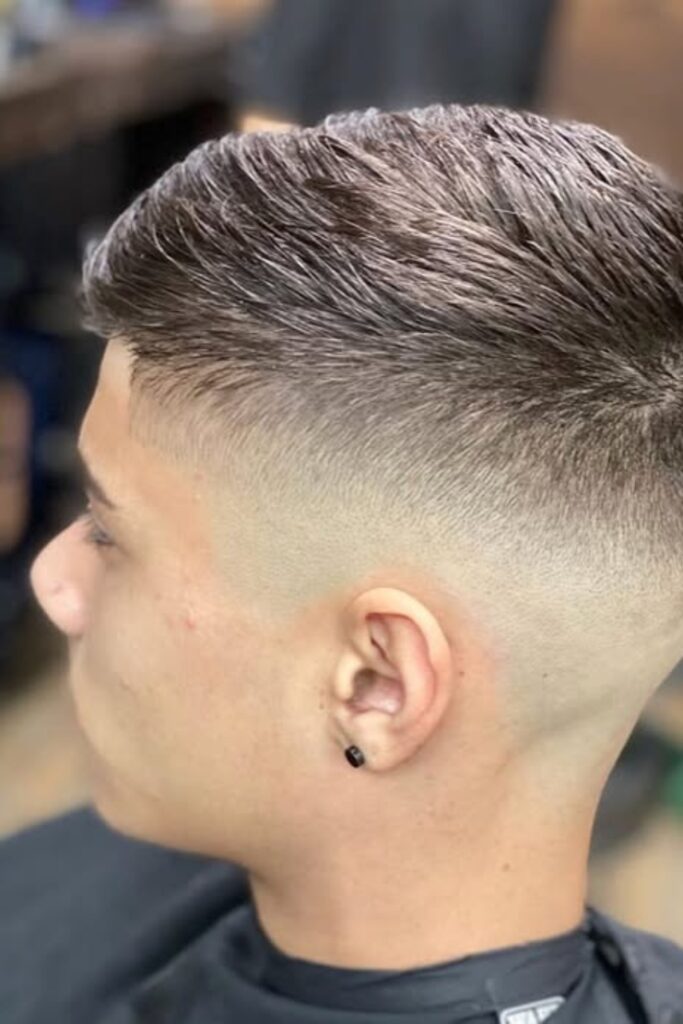
Pompadour Mid Fade
This is a great combo when you want height in the front. The mid fade keeps a bigger pompadour from looking too weighed down.
Leave a few of inches of length through the front, then blow-dry up and back so the volume is from the shape, not the product overload.
If you’re rocking facial hair, a clean beard line balances off the taller top and makes the fade feel more intentional overall.
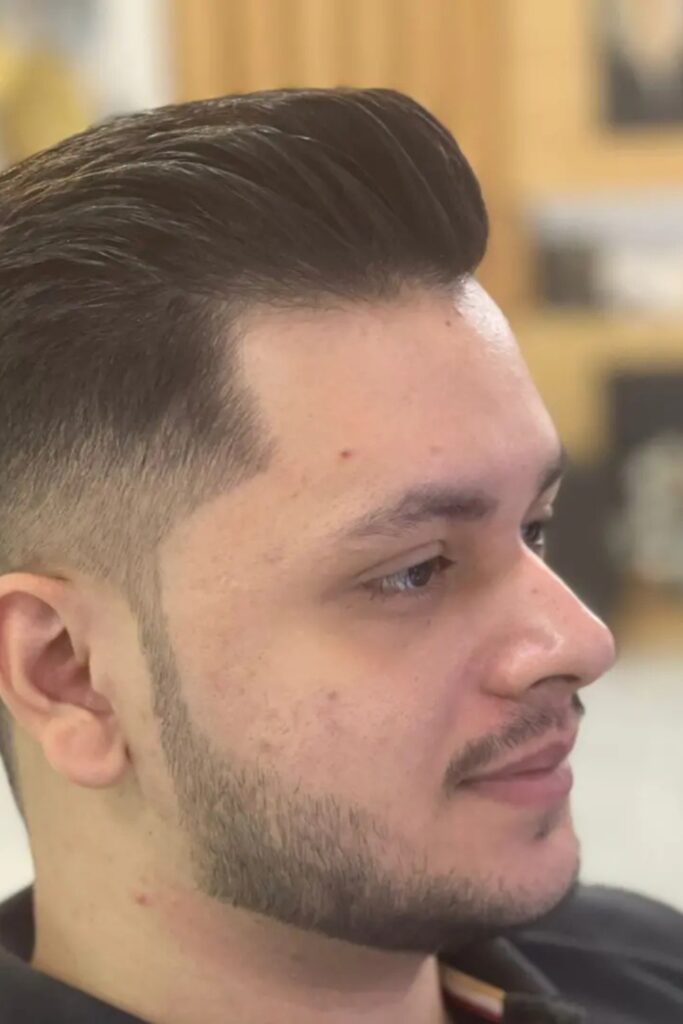
Compact Quiff Fade
If you want some lift but don’t want to commit to a lengthy top or a high-maintenance pompadour every day, a small quiff works great.
Request a tight mid fade to take the weight away from the ears, but maintain the density through the front.
A matte paste delicately brushed up and through the fringe gives straight or thick hair structure without stiffness.
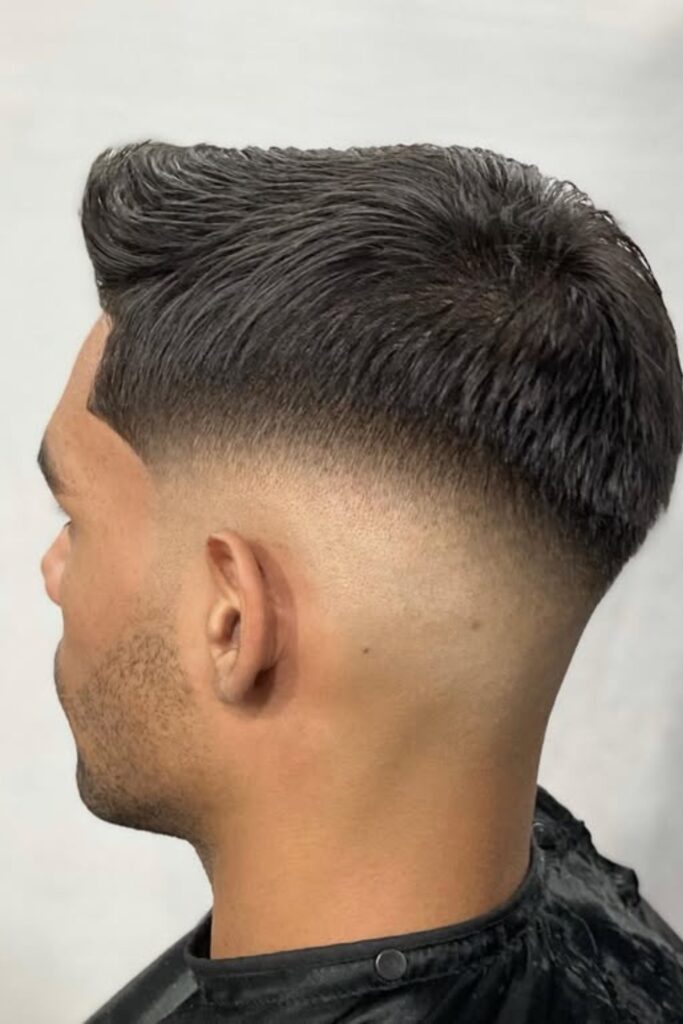
Loose Fringe Fade
If you want a more relaxed-looking mid fade, and not one that looks over-cut or aggressively styled, keep the fringe slightly forward and loose.
Keep weight in via the top, because taking too much off can cause this softer shape to go flat fast.
A light-textured spray or matte cream offers front movement while enabling thick straight hair to preserve its natural fullness and direction.
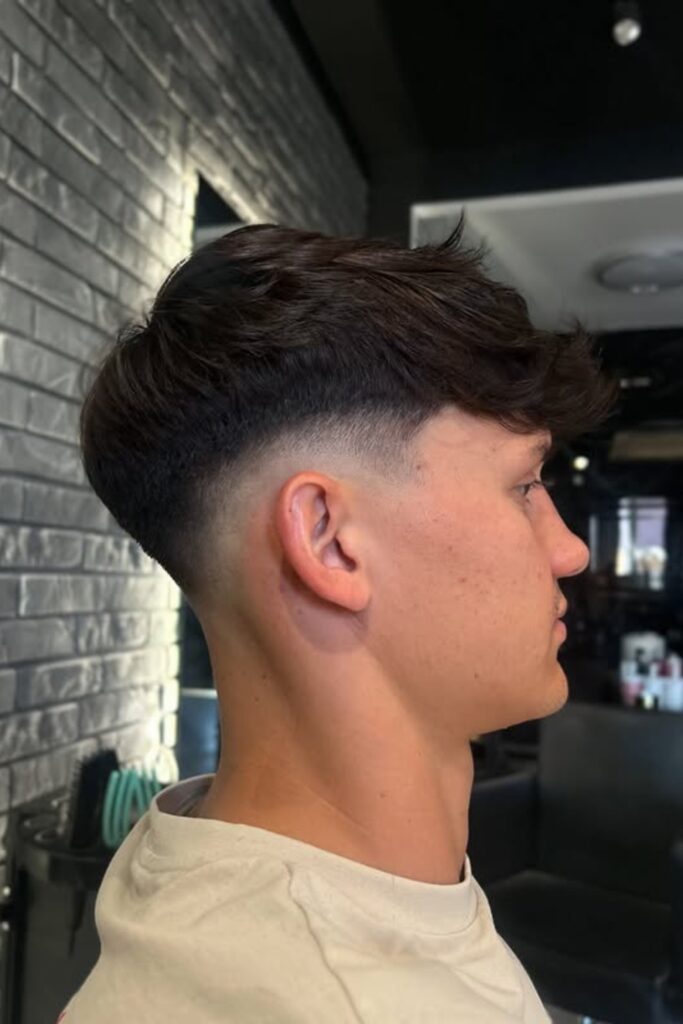
Textured Quiff Fade
If you want a cleaner shape then this short textured quiff will give you a boost without being so long that you have to style it every day.
Leave the front a bit longer than the crown, then let the mid fade take off bulk around the temples and lower sides.
Blow-dry the front upward with your fingertips, and finish with matte paste to keep the texture pliable, not too sculpted.
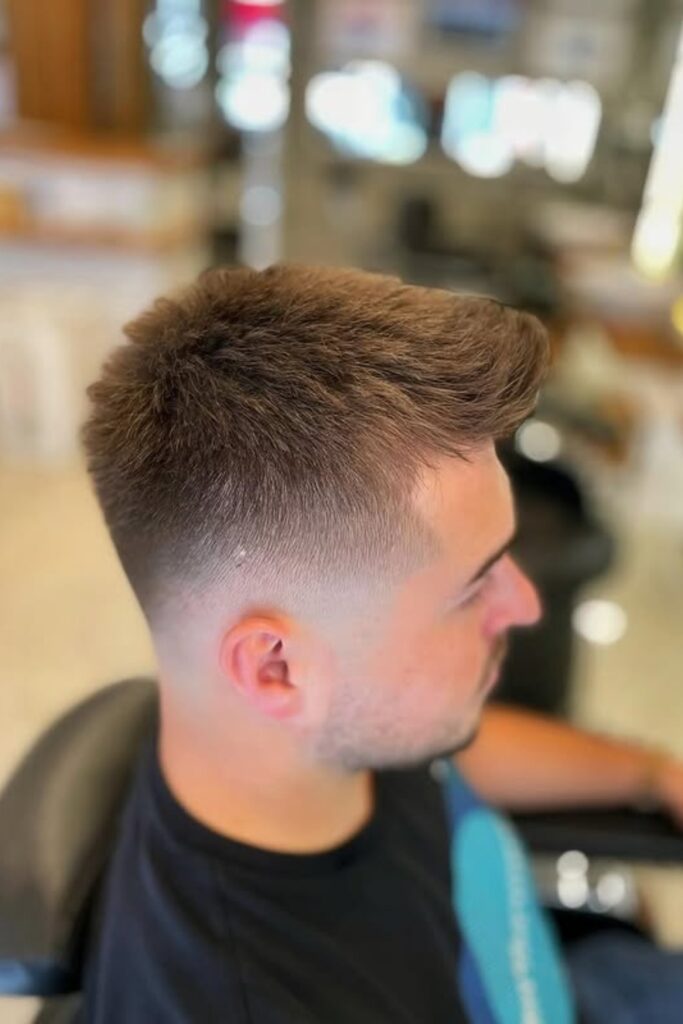
Curly Fringe Fade
The mid fade controls the side volume, but adequate length through the fringe allows definition in curly hair.
Tell your barber to not over-thin the top curls need some firmness to clump properly and not look thin or frizzy.
“Work curl cream through damp hair, allowing the front to fall naturally to give you movement without making the style a rigid fringe.
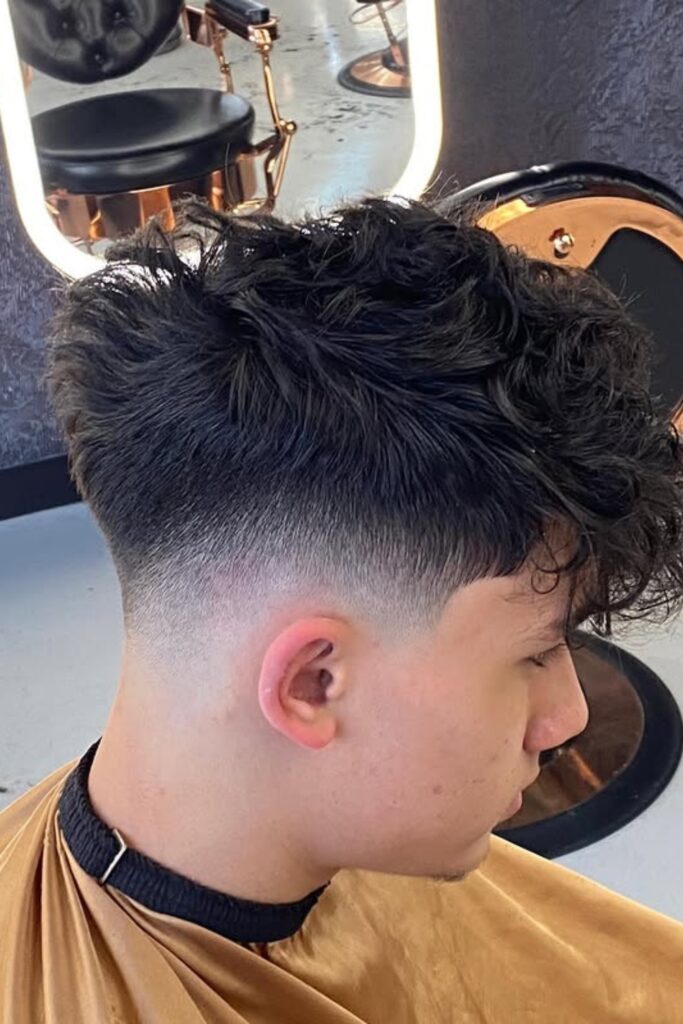
Blunt Fringe Fade
A sharper fringe will give a more defined edge than a softer crop, so it’s good when you want the fade to feel more graphic.
The mid fade adds contrast without going too high on the sides, and keeping the top tight and textured beneath the hair line.
If you’ve got a beard, a crisp cheek line can echo the fringe, making the whole haircut feel carefully planned.
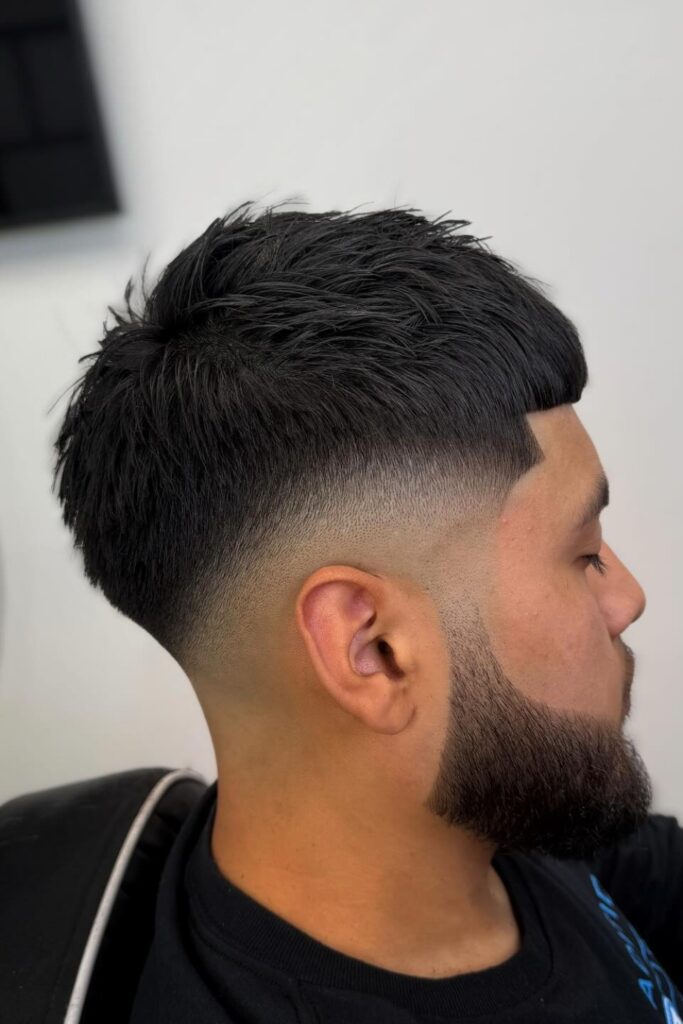
Slick Back Fade
This polished version keeps the top in check while the mid fade sharpens everything up, if you have enough hair length to sweep back.
Tell your barber to leave some density in the top of your temples so that the longer part blends in nicely and doesn’t look unconnected or undercut.
A medium-hold pomade works best for this: comb the hair back from the hairline, and don’t burden the roots with too much heavy product.
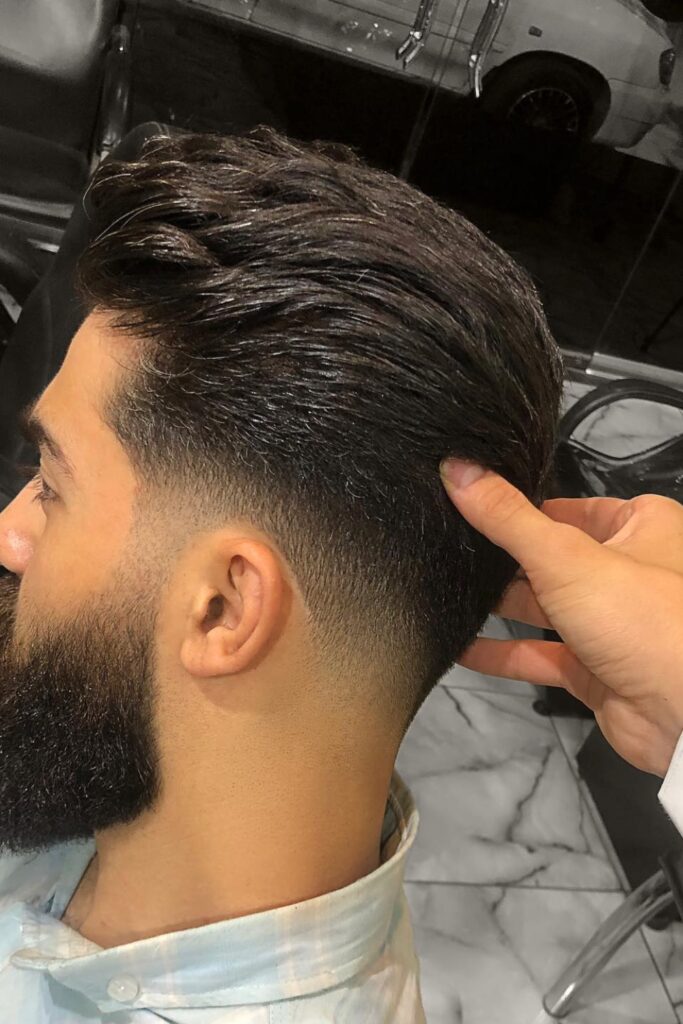
Soft Quiff Fade
This is a great in-between if you want some apparent height on top without turning your morning routine into a complete styling session.
Leave the front a little longer than the crown, then allow the mid fade to take care of side bulk while keeping a natural transition.
Blow-dry forward and up using your fingers, then finish with matte paste so the shape seems textured rather than too neat.
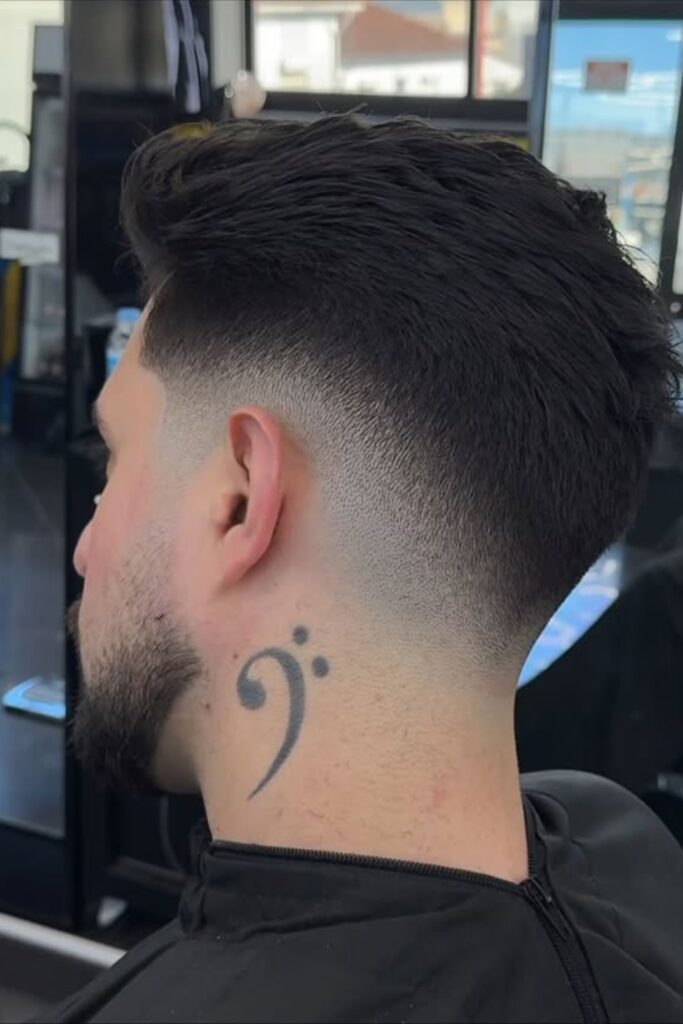
Curly Top Fade
“Natural curls have tons of movement so this cut is best when the fade removes bulk but doesn’t take away length on top.
Ask your barber to keep the transition tight at the temple level and don’t thin out the curls too much around the thicker ridge.
Apply a curl cream to damp hair and scrunch instead of combing. This will maintain the definition and help prevent unwanted frizz.
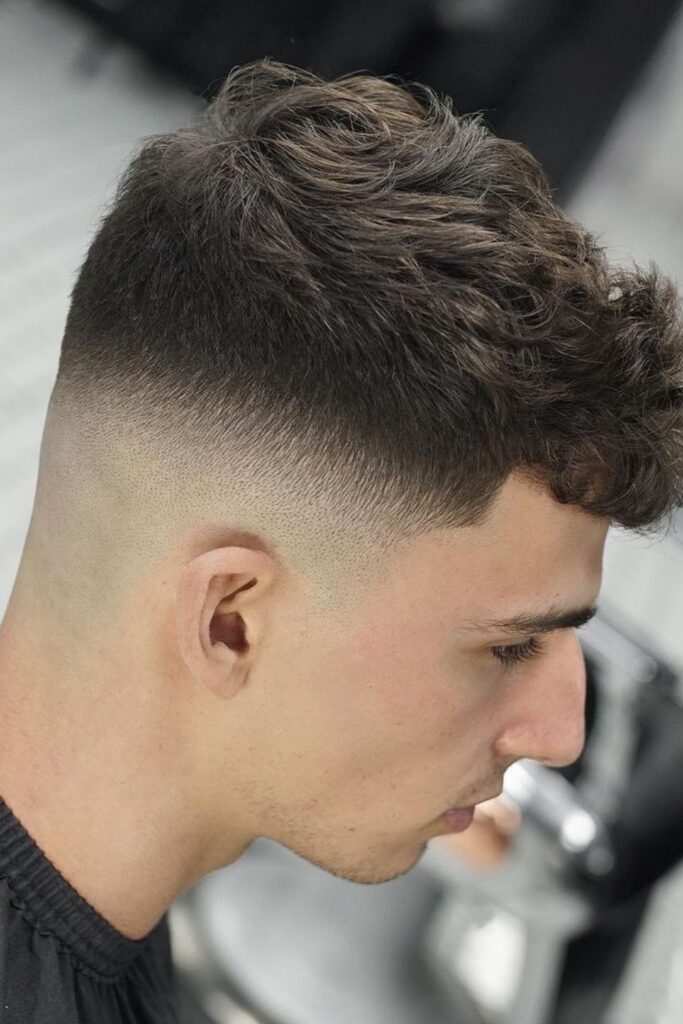
Short Crop Fade
If you want the mid fade to stay practical, especially if you like the shape without blow-drying or pomade every day, keep it shorter on top.
The slightly textured crop ensures the front doesn’t seem flat, and the darker band above the fade adds extra structure to the haircut.
This cut is especially good for straight or thick hair, with the shorter length helping to minimize bulk while still leaving enough texture for movement.
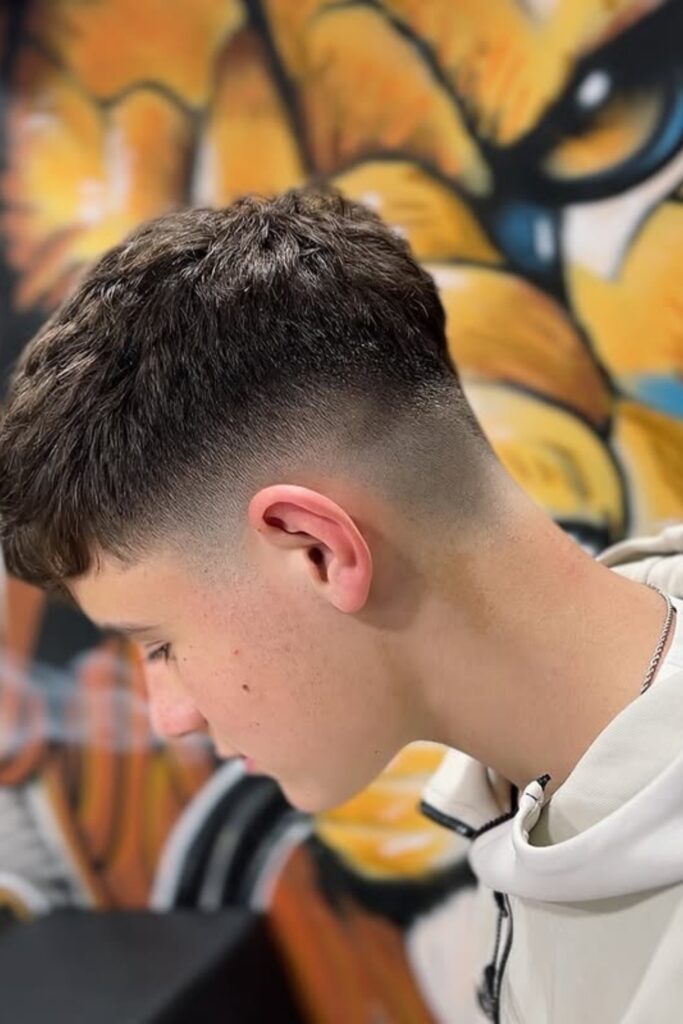
Voluminous Quiff Fade
If you want obvious height without going full pompadour, keep the front longer and let the mid fade tighten up the sides.
This shape works especially well for thick straight hair, because the length on top helps keep volume, so it doesn’t go flat too quickly.
Blow dry the front up and a little back, then matte paste so the lift is controlled, not shiny.
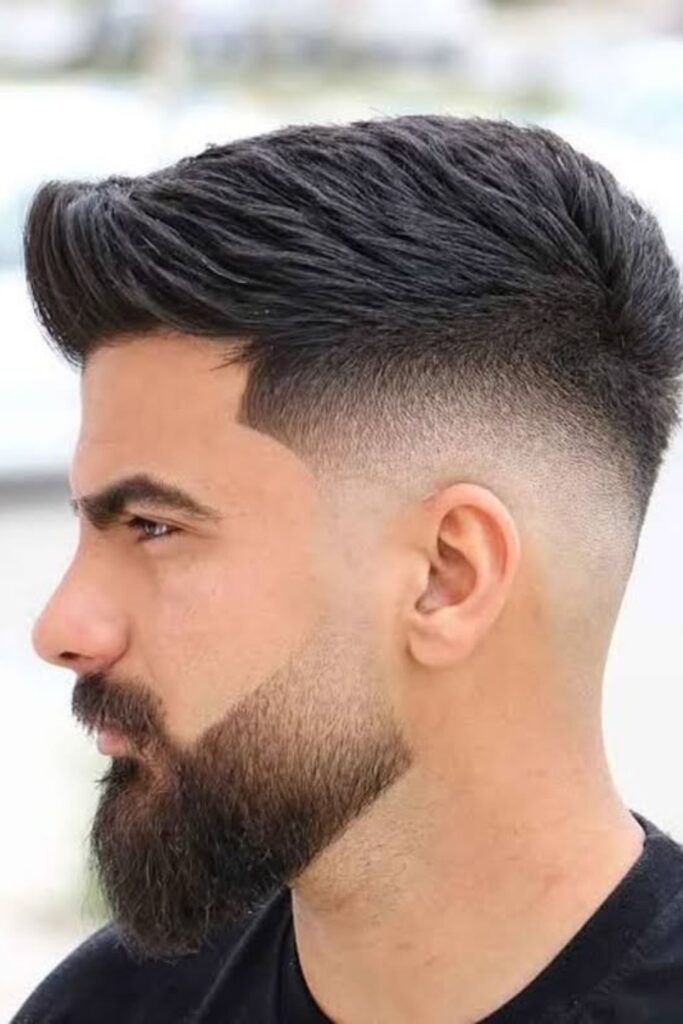
Curly Drop Fade
If your curls already have sufficient movement, keep the volume on top and only apply the fade to smooth up the perimeter.
A subtle falling mix around the back helps to keep the haircut balanced, especially when the curls sit deeper through the crown.
Don’t brush out the natural texture, instead work a lightweight curl cream through moist hair and use your fingers to separate portions.
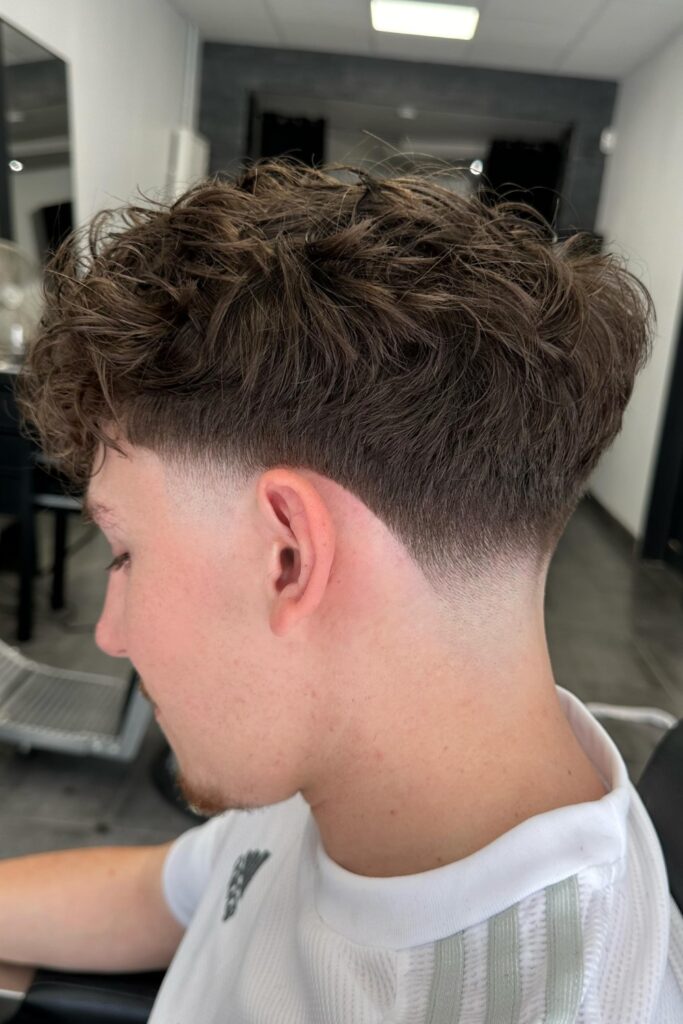
Wavy Brush Back
Mid fade If you have wavy hair that tends to bulk on the sides, a mid fade will clean off some weight but leave enough length to move up top.
Do not overlayer, keep the front and crown connected so the waves sweep back organically without a hollow appearing middle.
A little styling cream gives control, but allows some softness so the haircut still exhibits your natural wave pattern.
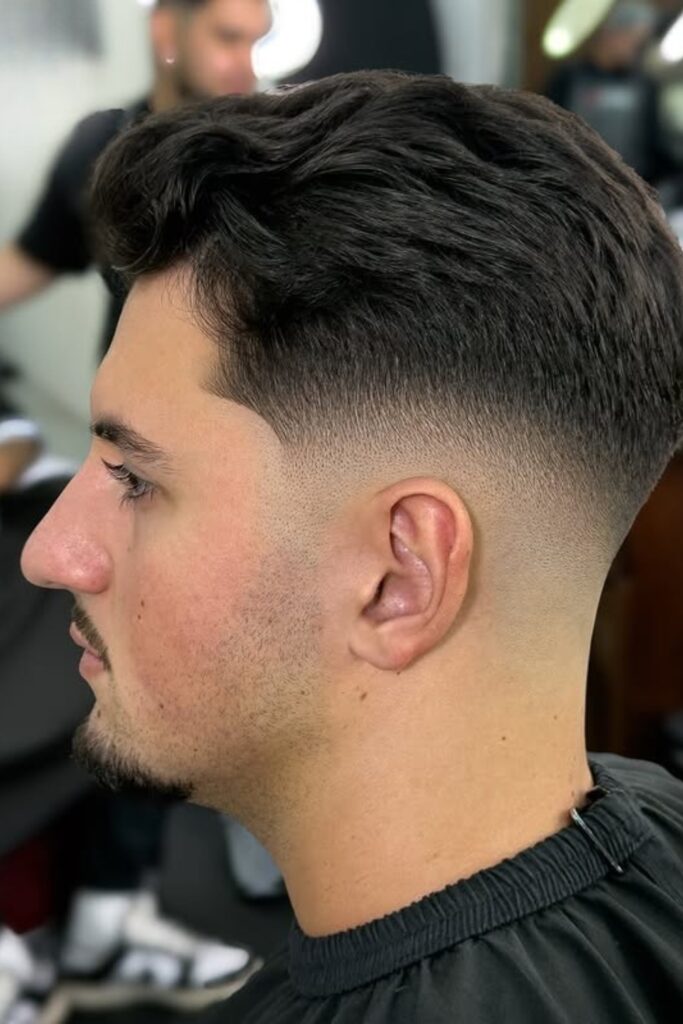
Short Brush-Up Fade
Shorter tops nevertheless keep their shape and this brushed up finish provides you structure without needing several inches of hair to arrange.
Ask for a gentle mid fade with a little blackness above it, for that contrast keeps the top from seeming too flat.
Use a matte paste and push the front up with your fingertips. This gives you a look that’s relaxed, yet still neat.
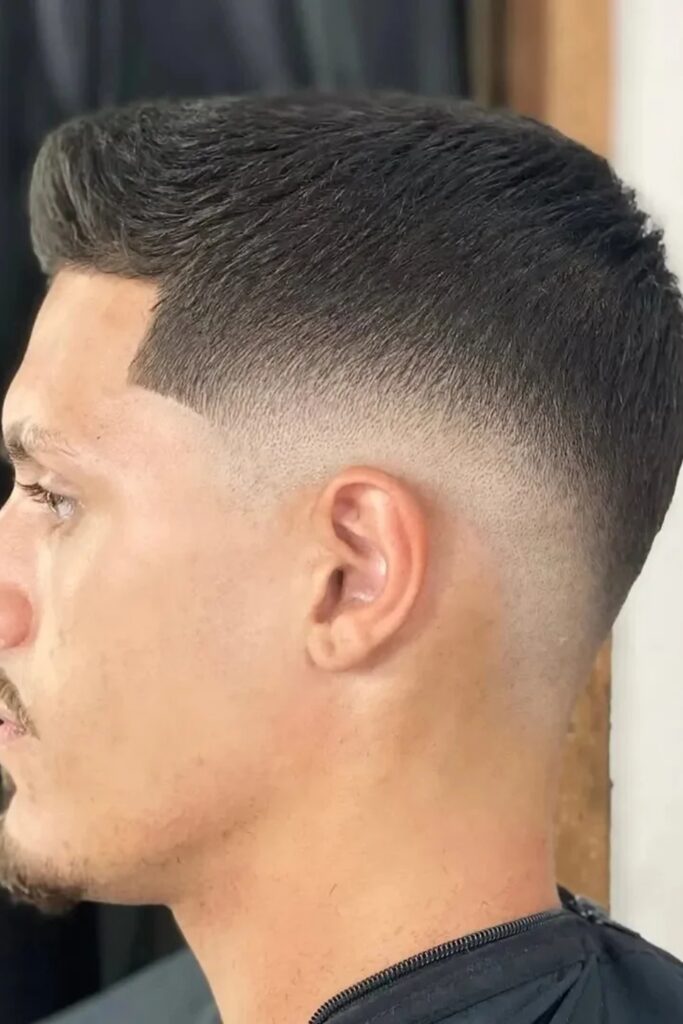
Forward Brush Fade
For a sharper everyday cut, keep the top short and slightly forward so that the mid fade is the major feature.
This length is particularly nice for straight or thick hair because it retains its shape without any heavy product or a long morning ritual.
Request a clean temple blend and allow enough structure through the front to keep the haircut from seeming flat.
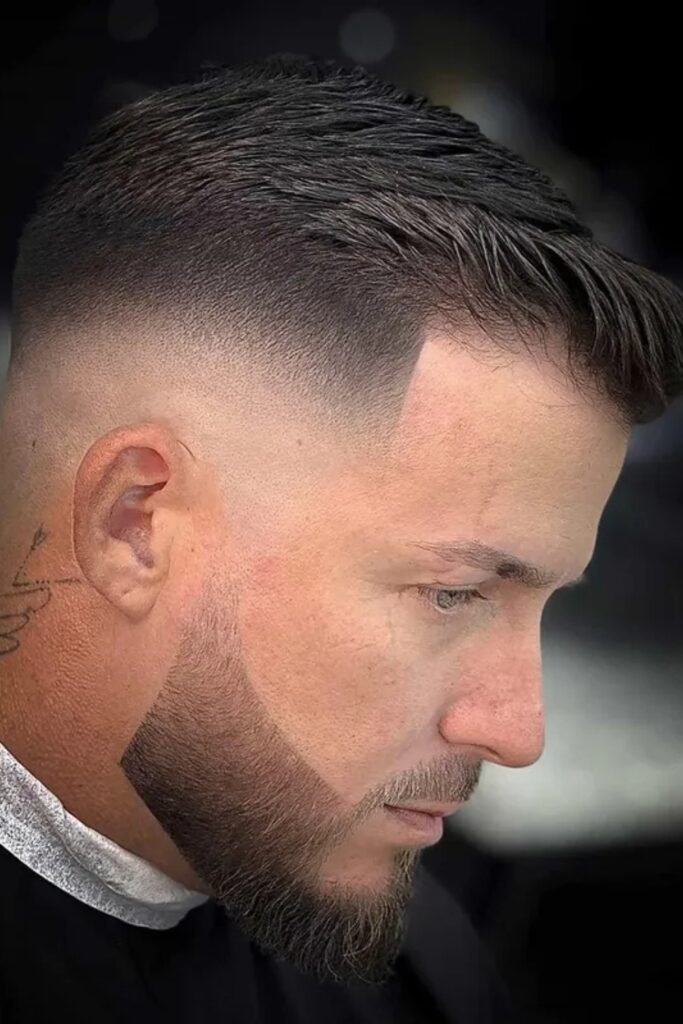
Clean Comb-Over Fade
A tidy comb over will keep the top in check while the mid fade will provide a touch of refinement without feeling stiff.
Leave some length on top and in the crown, then push the hair over to the side with a little light pomade for a natural separation.
It’s a great choice for work or gatherings because the fade stays sharp and the top is easy to restyle.
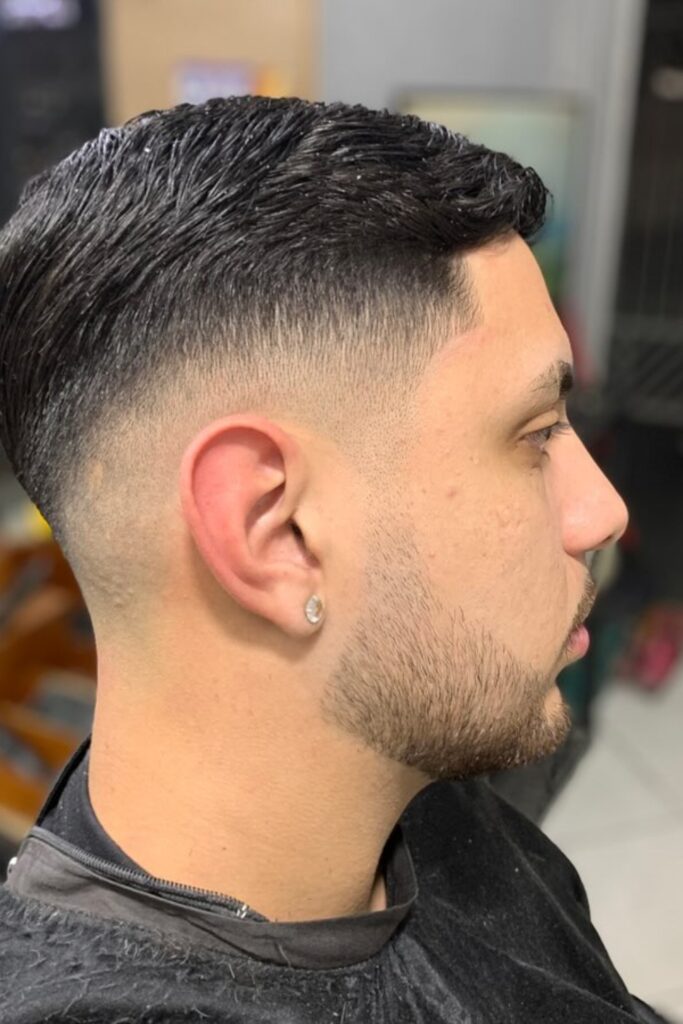
Wavy Fringe Fade
The fringe can fall naturally with a bit of extra softness on top for wavy hair and the mid fade keeps the sides clean.
Request your barber to leave adequate weight around the temples, as too much thinning can cause the wave pattern to soon lose shape.
Apply a light cream on damp hair and form with your fingertips; keep the movement loose, not over sculpted.
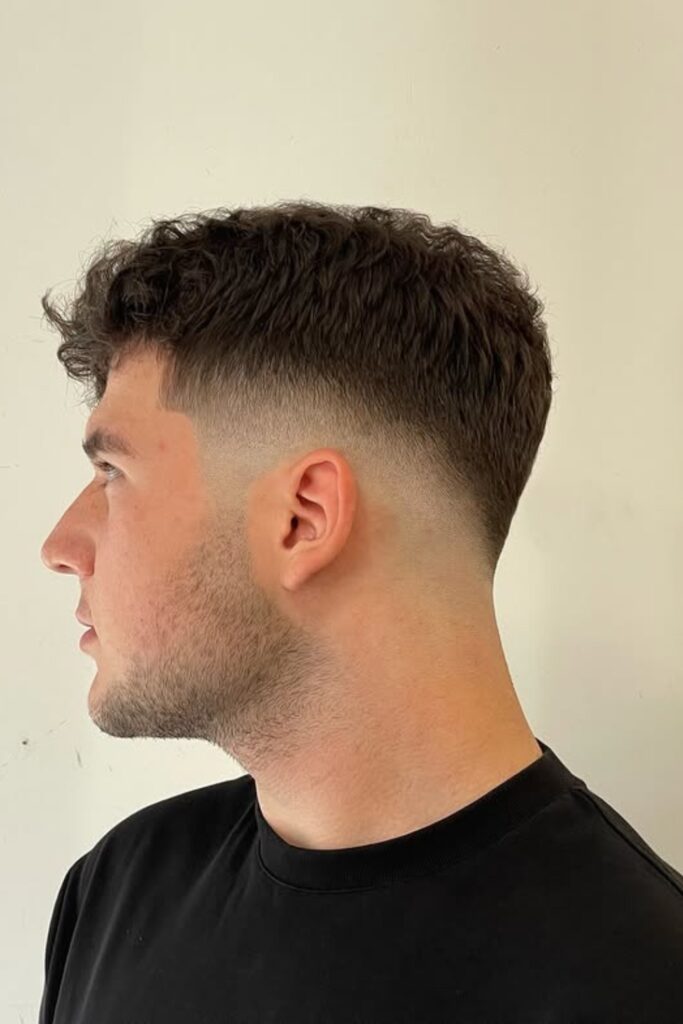
Short Curl Fade
Short curls don’t have to be really tall to stand out and a mid fade is enough contrast while keeping the top simple.
“Keep the curl pattern a bit longer through the front because cutting everything the same length can make the texture look less defined.
To minimize frizz and keep the top soft without weighing it down, use a little curl cream or leave-in conditioner.
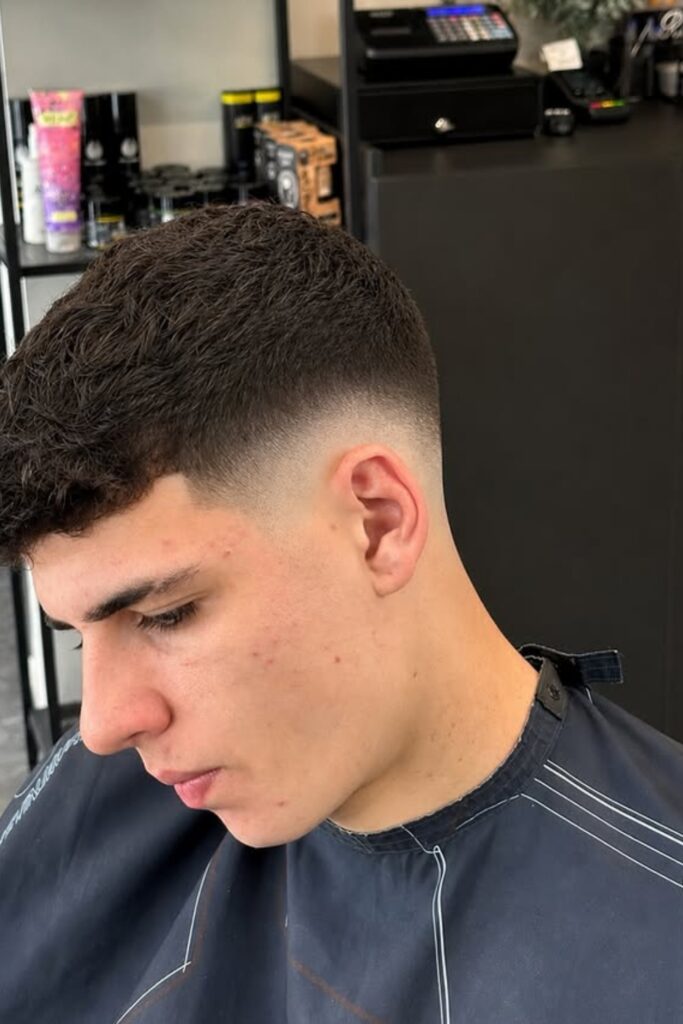
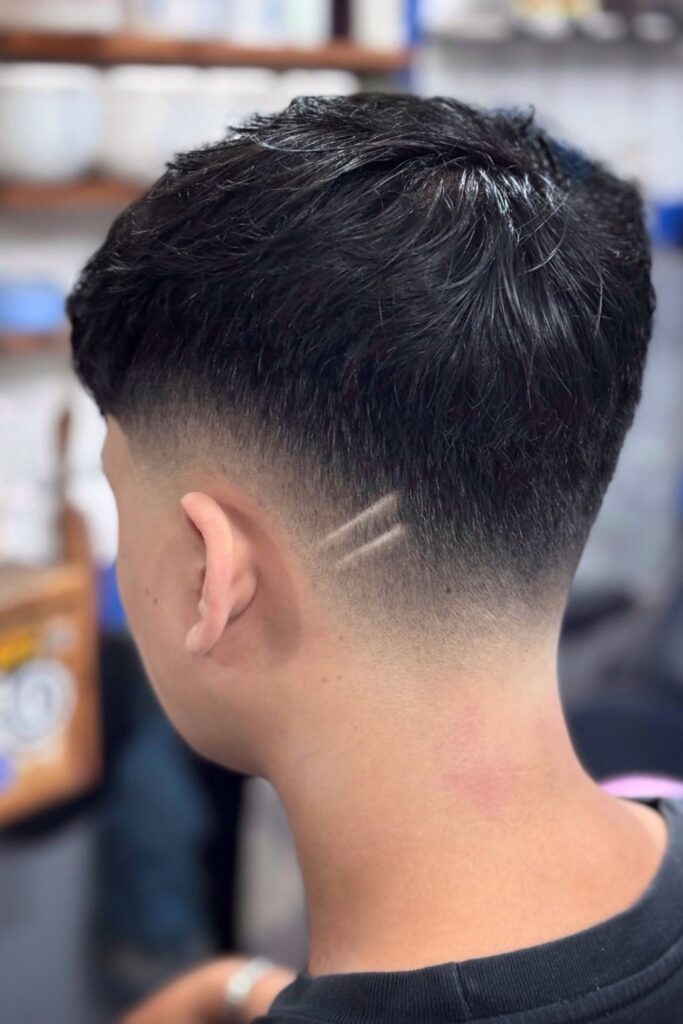
Design Line Fade
If you want a mid fade, you can add a modest shaved design to it, as long as you don’t overdo it, especially if the top has been left basic and naturally textured.
Keep the lines small, behind the ear, where they provide detail but still seem neat from the front.
Blending is important, then have your barber cut the design since it looks better clean against an evenly graduated mid fade.
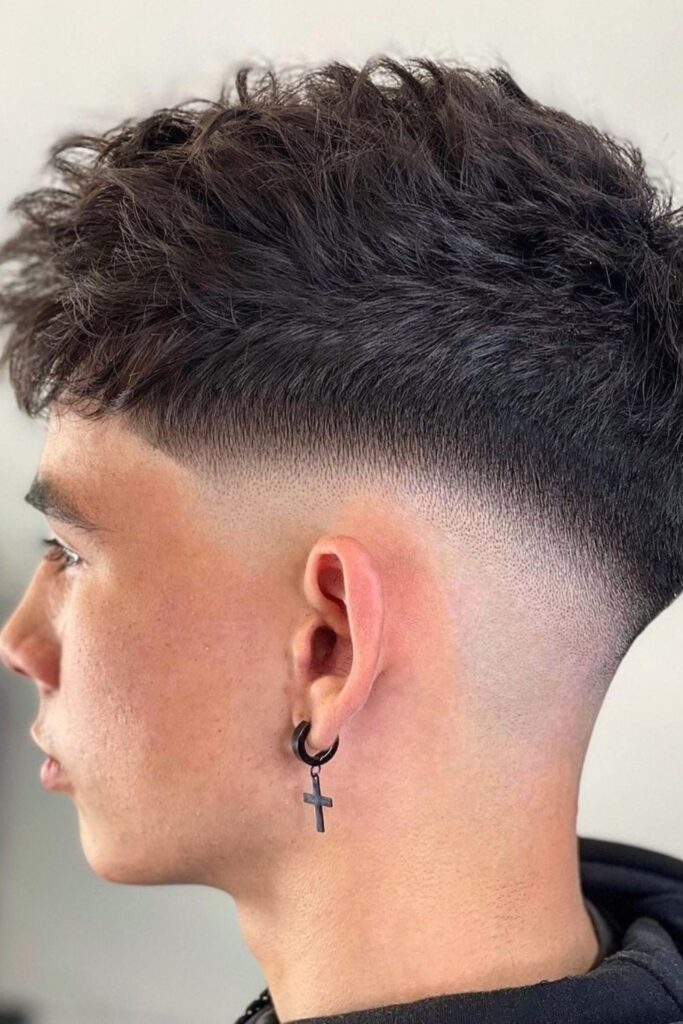
Curly Flow Fade
If your curls naturally fall forward, leave the length and let the mid fade to eliminate the weight instead of shortening the texture.
The fuller top works best when the fade leaves a dark transition band, so the curls don’t look abruptly separated.
Rake a light curl cream through damp hair, then allow it to air-dry or diffuse softly, so the movement stays loose and defined.
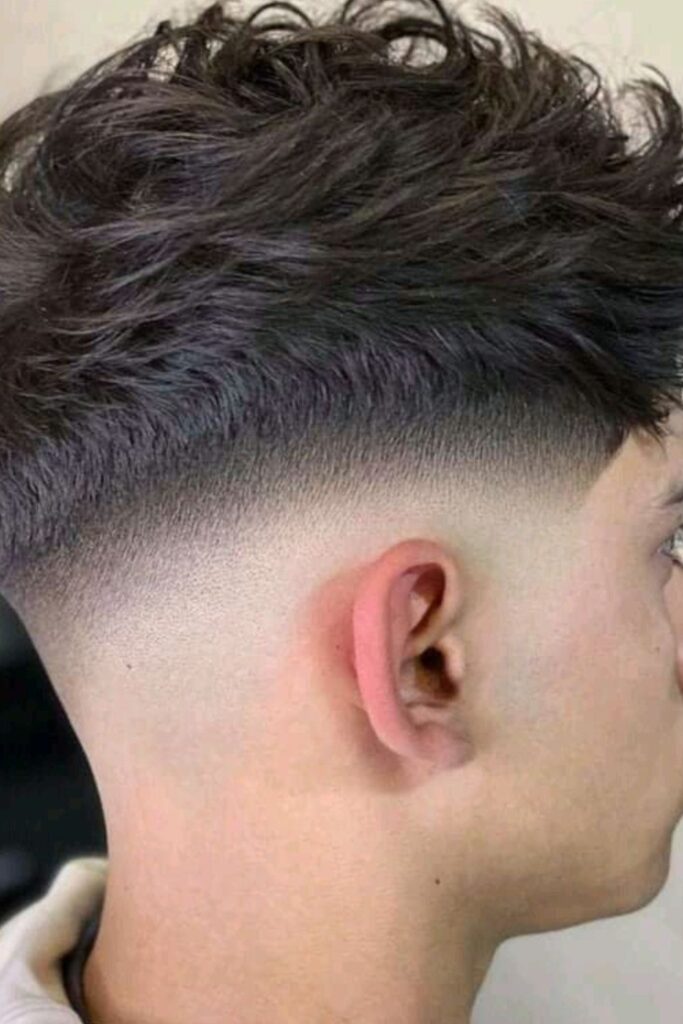
Messy Texture Fade
If you want a more undone look, leave the top coarsely textured and a little irregular rather than trying to get every area sitting perfectly.
The mid skin fade provides a crisp border to that messiness, so that the haircut remains intentional even while the top is seeming loose.
Matte paste applied sparingly to roots and ends to separate small sections for that separated look in thick hair without stiffness.
FAQs
Is a mid fade the same as a mid skin fade?
No. “Mid” indicates the position of the fade on the sides, and “skin fade” indicates the length of the bottom.
The mid skin fade blends into bare skin while the normal mid fade could leave some hair showing at the shortest point.
If you prefer a softer grow-out, inform your barber you want a mid fade without going to the skin.
How long does a mid fade stay looking fresh?
Generally a mid fade is going to seem its sharpest for around a week to two weeks before new growth starts to soften the blend.
If you want a crisp finish consistently you may need a cleanup every 2 weeks, whereas a softer mid fade can often go closer to 3 weeks.