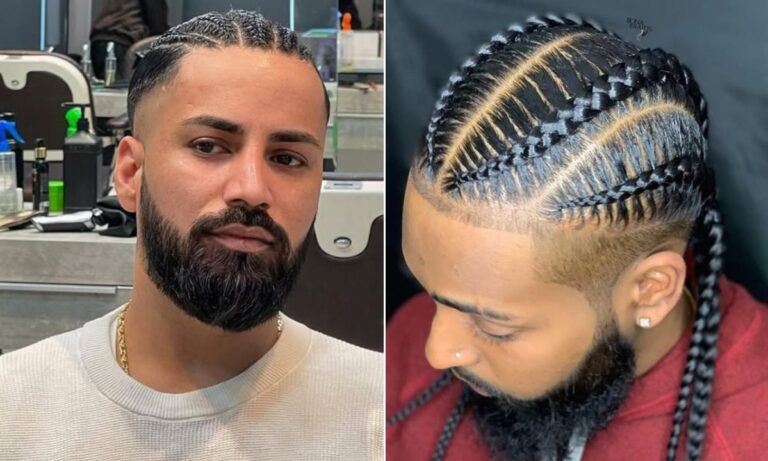
The downside of going for plaits is that each photo you save starts to look like a potential possibility.
You may adore a braid pattern but the length, texture, density or fade of your existing hair can totally affect how that same style looks.
Even deciding the thickness of a braid, the shape of the split and the amount of hair you leave around the sides makes a difference you can see.
In this articleI’ll show you what works for different hair lengths, and how to pick a realistic braid setup.
Which Plait Size Works Best With Your Hair Density?
Medium or larger braids can break up the thick and voluminous hair without creating too many heavy chunks.
If your hair is thinner or finer, don’t worry too much about how many braids you do, and focus on areas of hair that won’t put tension on the smaller strands.
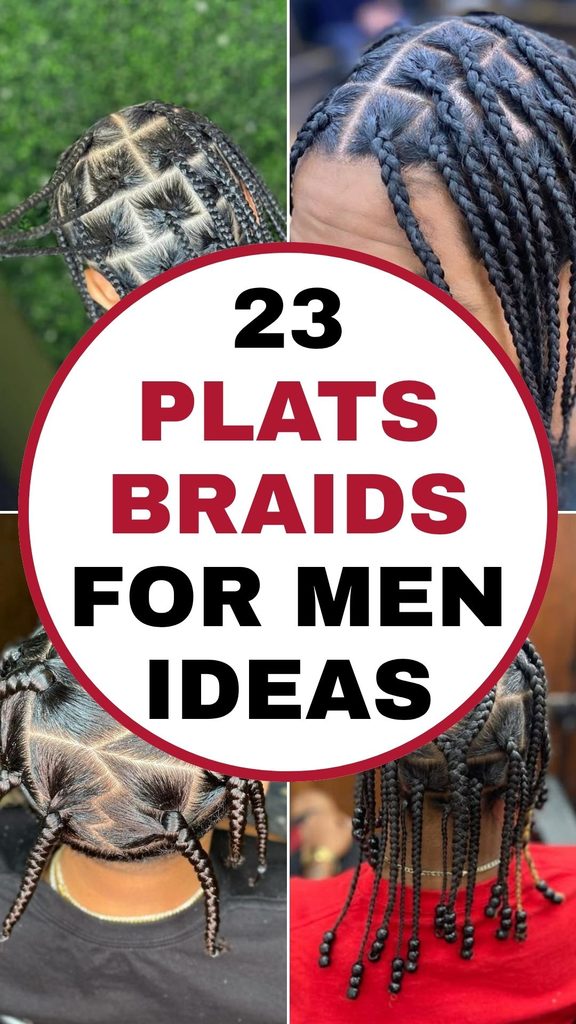
Your braider has to see how much hair naturally fills each part before they can figure out the ultimate plait size.
Weight also counts, especially with extensions adding length, although heavier doesn’t inherently mean safer.
Sculpted Long Plaits
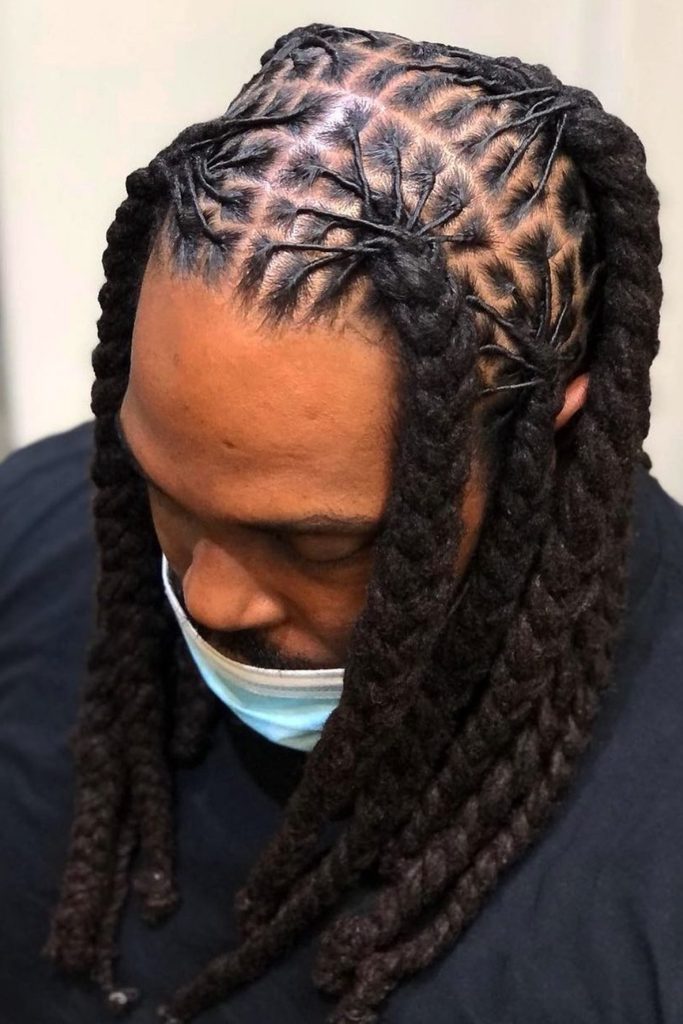
Long plaits are so much more interesting when the pattern on the scalp is as intricate as the length that hangs.
Ask your braider for curved, interwoven pieces instead than a predicted straight split for movement across the crown.
The thick hanging plaits balance the intricate roots well, especially if your hair density can handle big parts without too much tension.
Heart Part Plaits
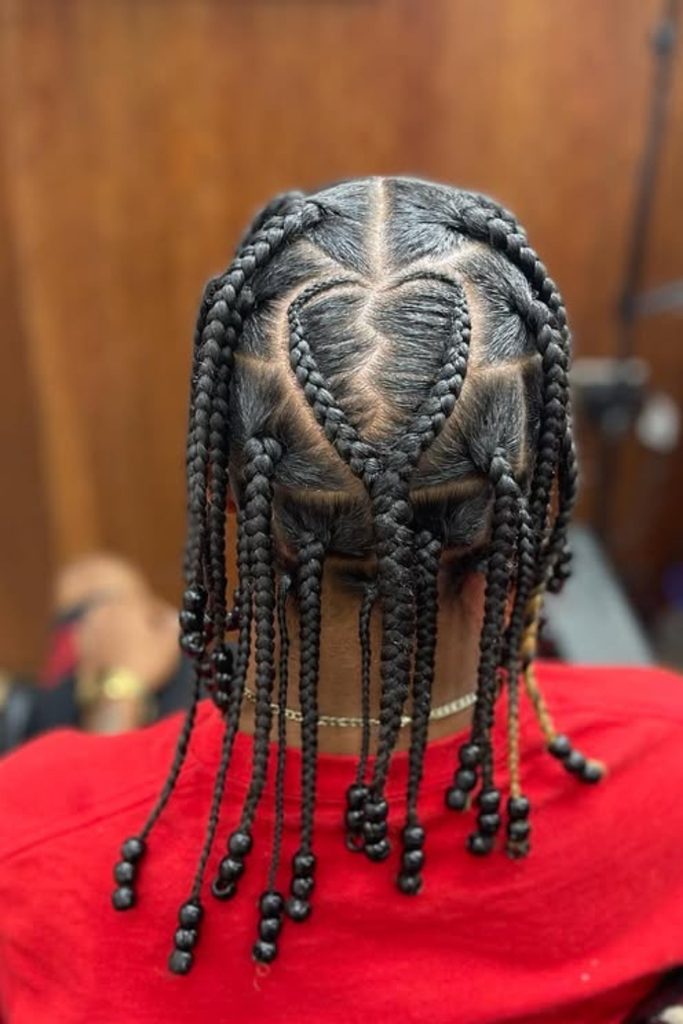
A middle segment in a heart shape can convert regular hanging braids into a statement without too much color and heavy accessories.
Allow the braids surrounding it to fall straight down so the decorative center is visible and not lost in a lot of complicated designs.
Small beads on the ends provide weight and dimension, but go for lightweight pieces if you plan to wear them often.
Geometric Chunky Plaits
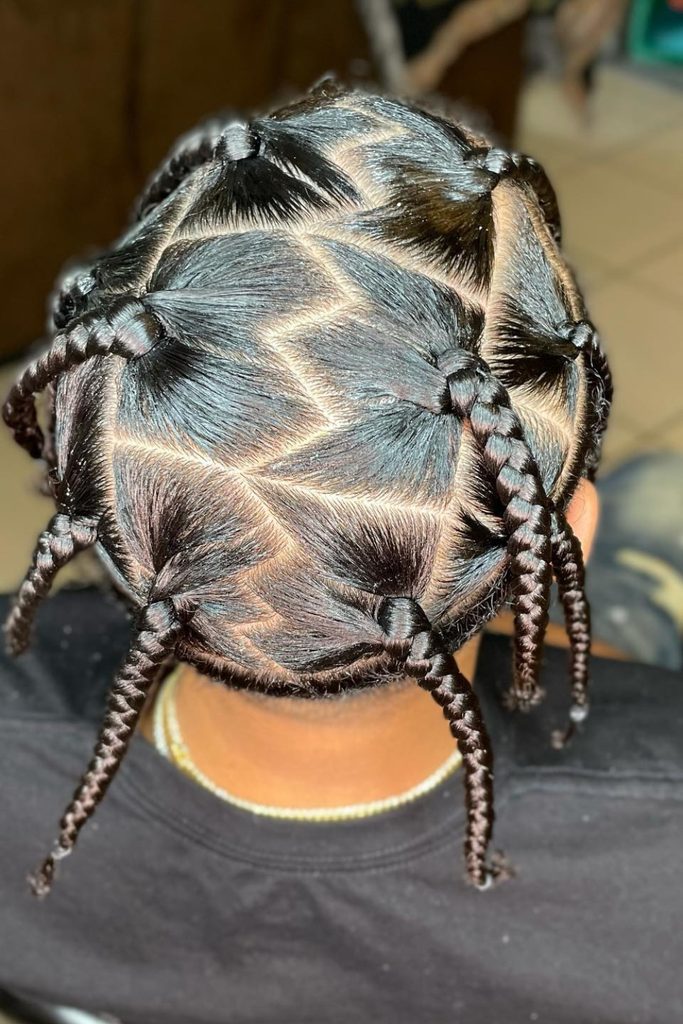
For a less-braid look with greater visual impact, choose for larger geometric parts that make each plait look carefully placed.
This is especially good for a higher density because each piece needs enough hair to make a large final braid.
Be sure to show the braider exactly what angular parting you want, since the sharp section lines are actually what distinguish this style.
Diamond Box Plaits
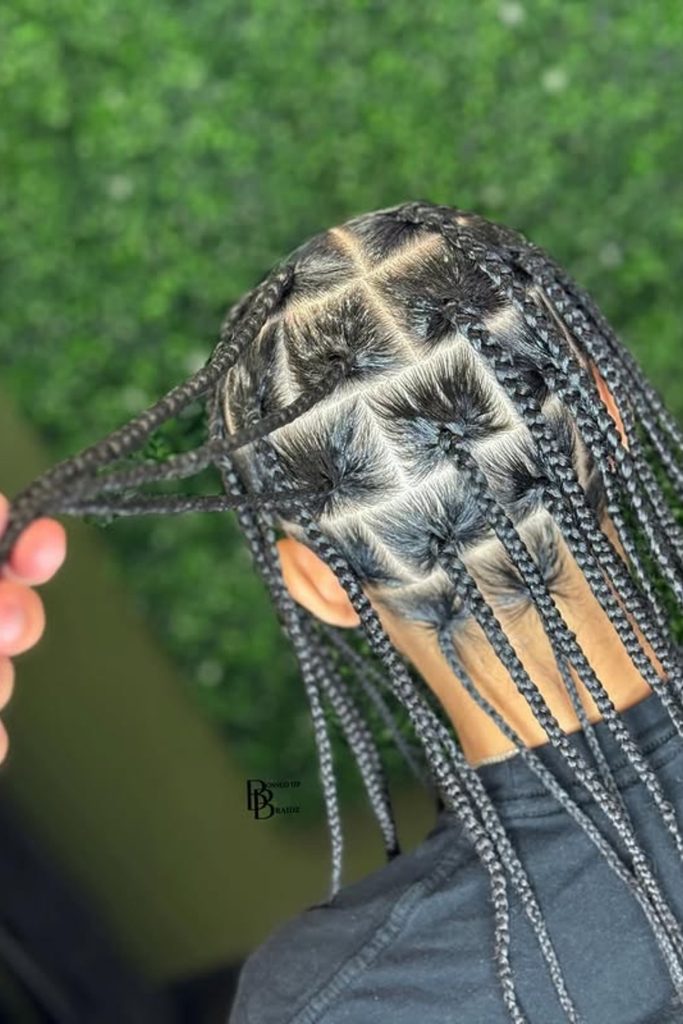
If the usual square box pieces are too predictable but you still want distinct hanging plaits, diamond sections are worth giving a try.
Smaller braids break the hair into numerous portions, giving a lot of movement without having to make each plait look really heavy.
Notice the comfortable amount of tension on the roots here, many small parts should look accurate without feeling excruciatingly tight to your scalp.
Shoulder Length Plaits
Shoulder length plaits have enough drop for movement without very long braids yet are manageable for everyday usage.
The medium portions mean that each braid can be quite thick, which can work really well if your natural density is quite full.
Ask for section size around the crown so the plaits fall evenly and don’t gather significantly in one location.
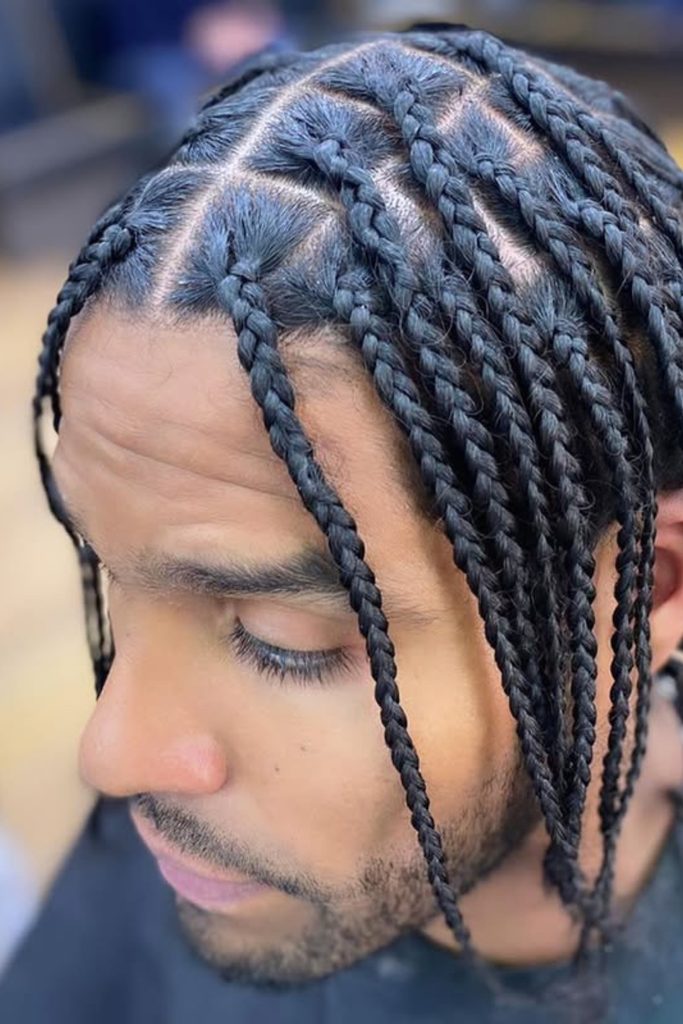
Offset Box Plaits
Offset box sections may make simple plaits feel much more dynamic, so you’re not limited to perfectly aligned rows.
When you braid, ensure you request your braider to stagger the parts adjacent to one another while retaining the braids of similar thickness. This will ensure the design appears purposeful from any viewing angle.
Several pigtails left in the front naturally frame the face, without the need for a separate fringe or a difficult braid pattern.
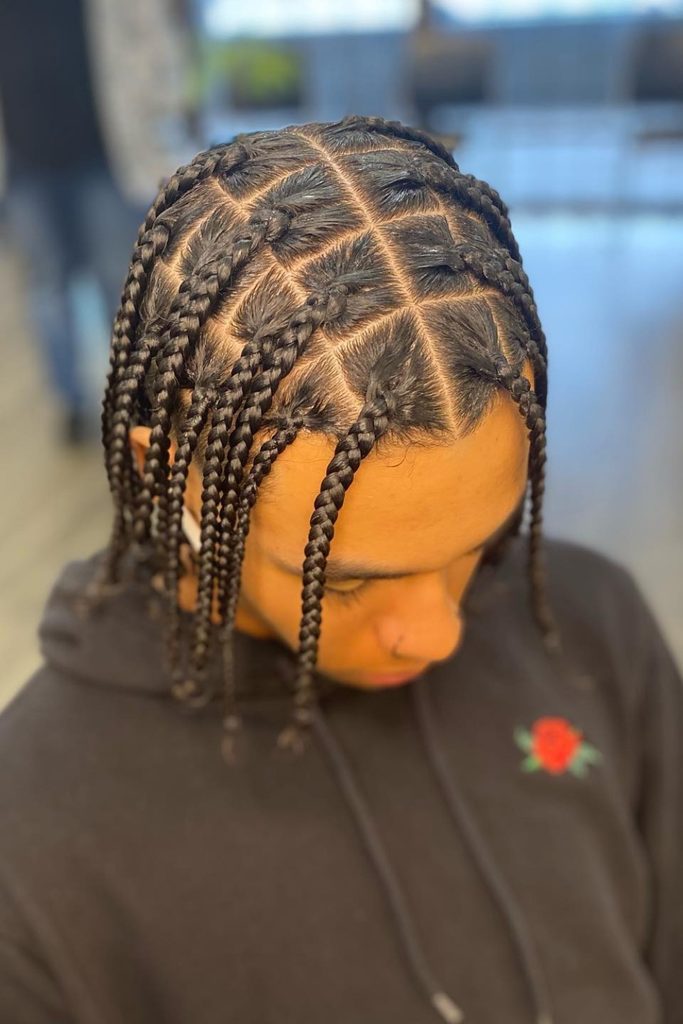
Large Square Plaits
Smaller or larger portions can be helpful when you want to see the scalp pattern without the commitment of dozens of individual braids.
Your natural density is a factor here, as all squares need to be thick enough to create a braid that looks balanced from the root down.
Choose medium length if you want those larger sections to stay obvious, instead than allowing extra-long plaits to take over the entire style.
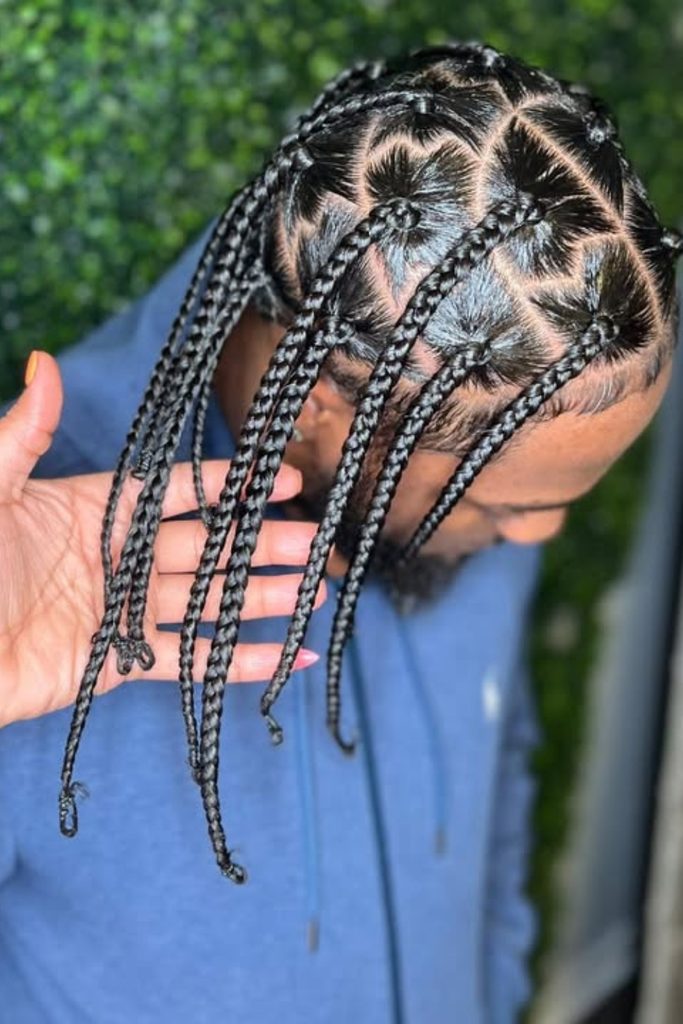
Long Box Plaits
The further you go, the better it is to have tidy roots – so begin with evenly sized parts before focusing on the spectacular drop.
The pieces of the medium box spread the plaits around the head, leaving room for each plait to move organically.
If they are extensions that cause the length, mention the weight first so your roots aren’t carrying more tension than feels comfortable.
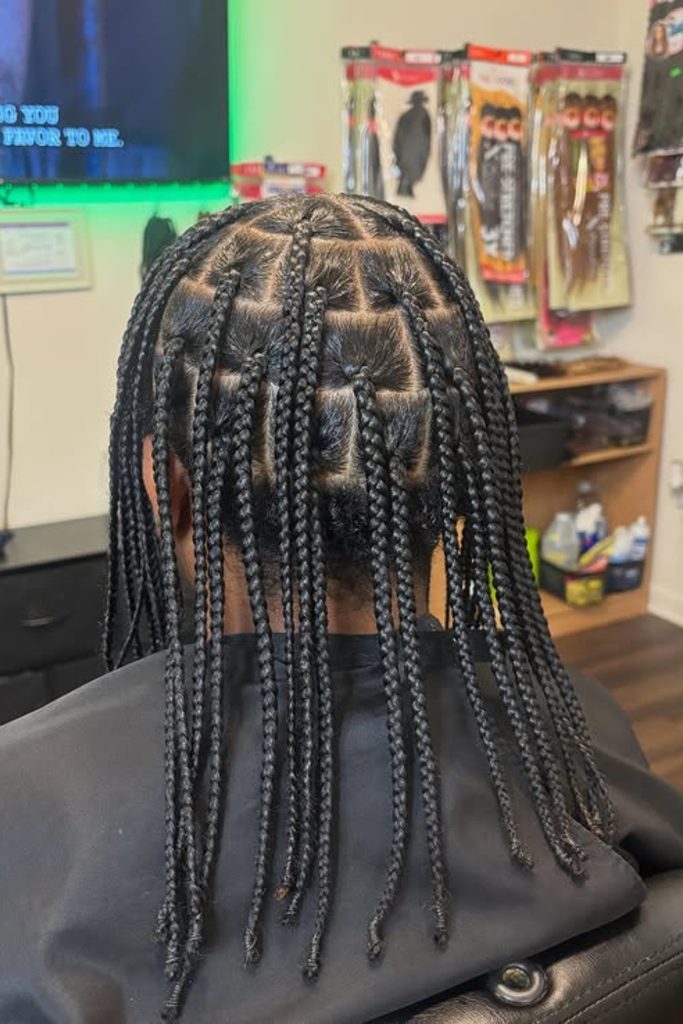
Medium Box Plaits
Medium box braids are a good compromise if you want a lot of mobility but you don’t want every segment to be super tiny.
Ask for even square pieces through the back and crown. Uneven size can make the finished lengths fall awkwardly.
This braid size is especially great for fuller density where each segment can hold definition without looking too cumbersome.
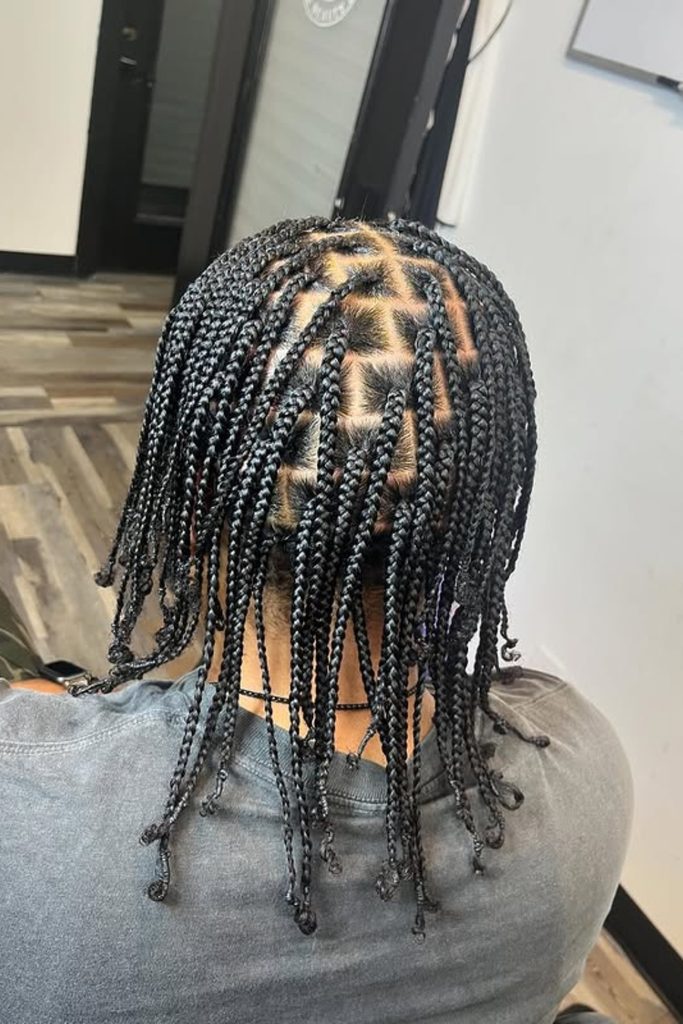
Slim Brown Plaits
The color of the braid can be changed to refresh a classic box pattern, and warm brown provides contrast without being too dramatic.
Slim plaits allow more individual movement, therefore are good if you want the hair to fall freely around your face.
Before adding additional hair for color or length, consider the amount utilized so that each root is comfortable with the new weight.
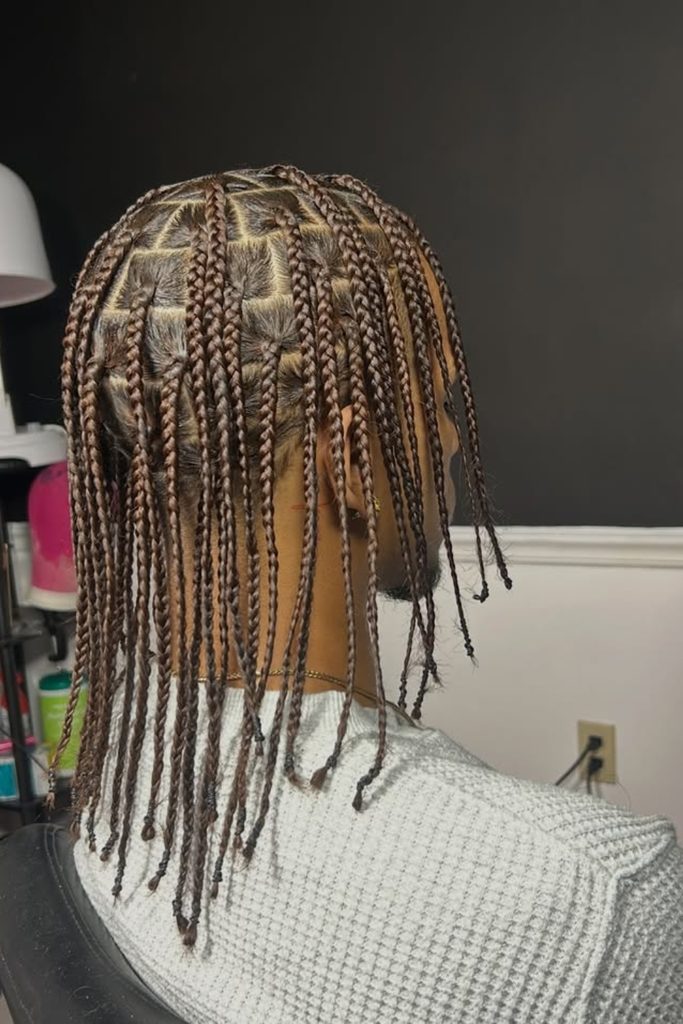
Four Jumbo Plaits
If you like fewer portions and want braid thickness to be the major styling element, four enormous plaits make sense.
Start with wide, even portions from front to back. Uneven sections will be much more obvious with gigantic braids.
Fuller hair density builds hefty plaits naturally, and extra hair can improve thickness when your available length requires assistance.
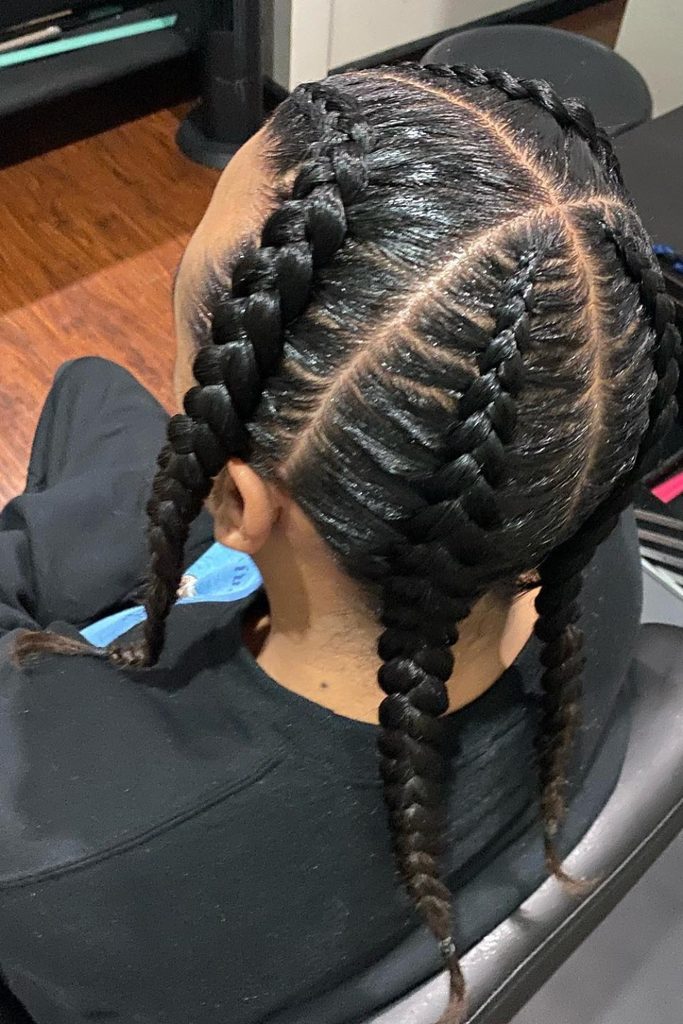
Short Box Plaits
You don’t need shoulder length hair to make individual plaits worthwhile, especially when shorter braids already frame your face beautifully.
Medium square portions work well to generate evident root structure but also provide each braid with enough hair to develop noticeable thickness.
The braids that stop at the ear level will also lower the hanging weight . It is a sensible approach for a more controllable length .
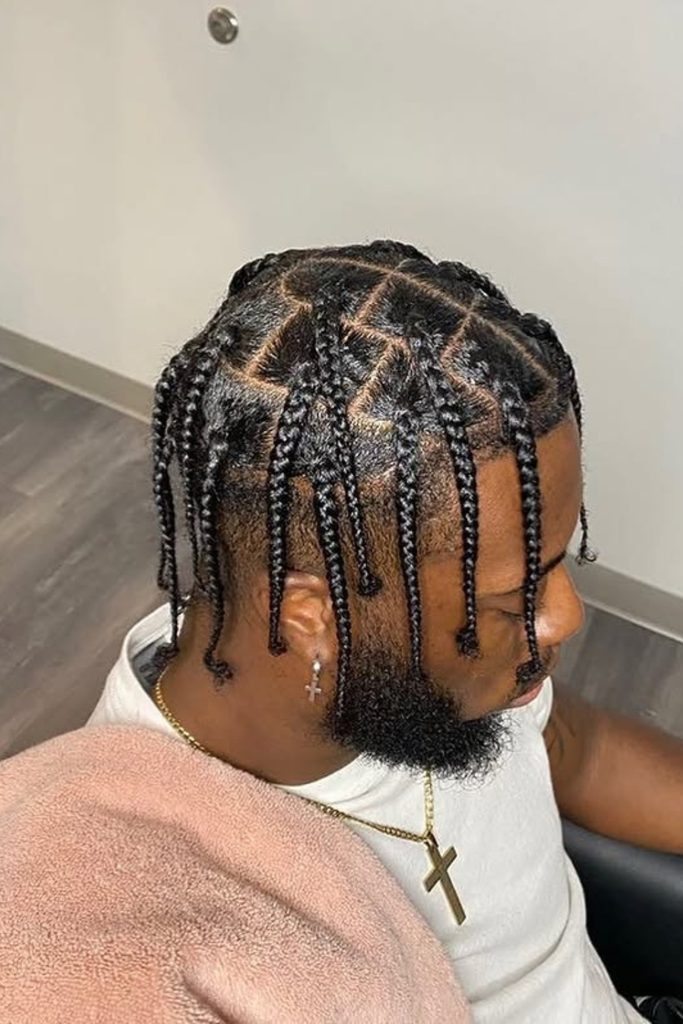
Slim Long Plaits
Slim plaits are perfect if you want length and movement but don’t want the look of hefty individual braids.
The larger areas of root can still hold finer finished braids, creating obvious scalp detail while allowing the lengths to hang softly.
Ask for equal spacing all around the crown, so the longer plaits are uniformly spaced, rather than leaving evident packed areas.
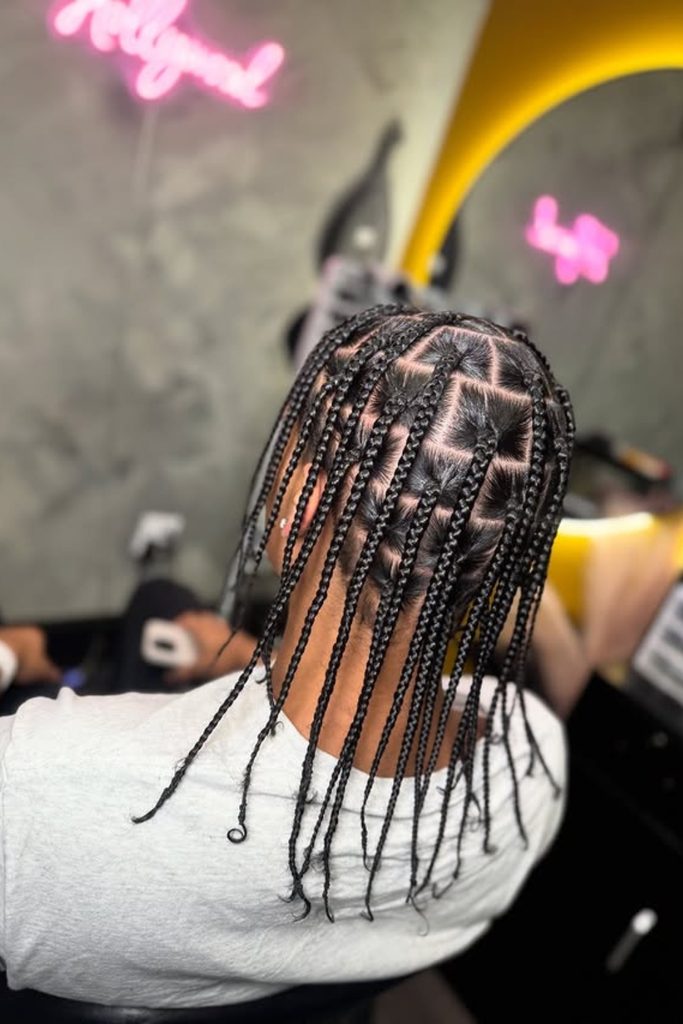
Layered Medium Plaits
You don’t necessarily need the length to be uniform and slightly stacked plaits can sit organically around your head without seeming too rigid.
The medium braid thickness gives enough definition to see each strand and yet gives you lots of individual braids across the head.
Your hair density may not be the same all over. Your braider may need to vary the size of the sections rather than giving you the same size roots all over.
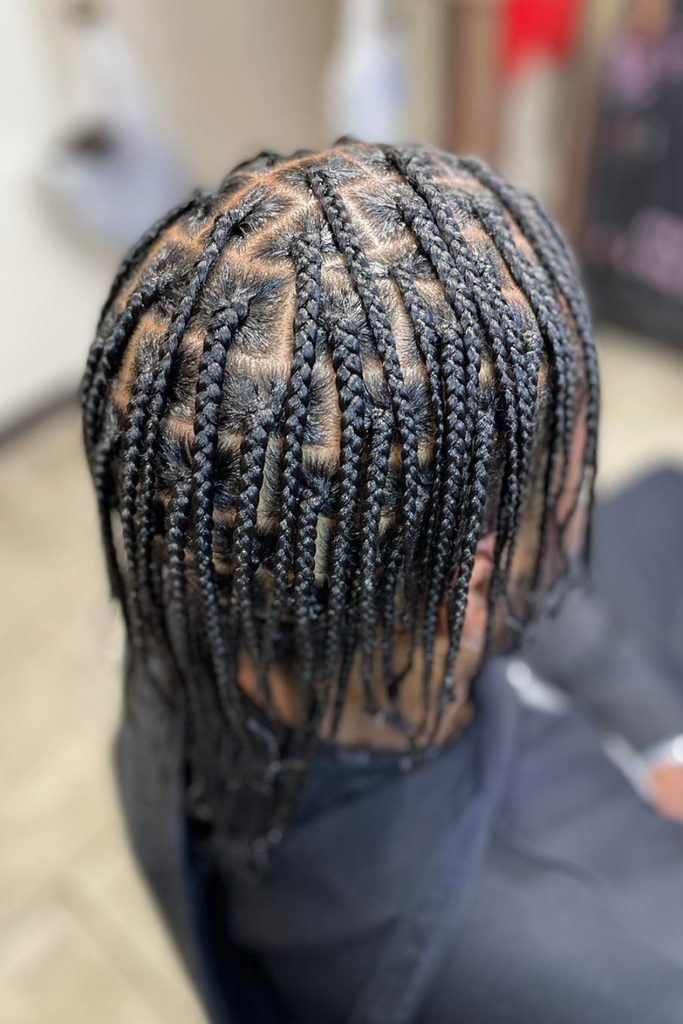
Extra Long Plaits
The extra-long plaits mean the hanging length is the major feature, thus simpler square portions stop the overall style looking too cluttered.
This method is easier when you’re accustomed to wearing lengthier braids around your clothing, sleeping, exercising, and daily life.
When adding hair to build length ask for balanced weight throughout the portions, so a few roots aren’t holding undue stress.
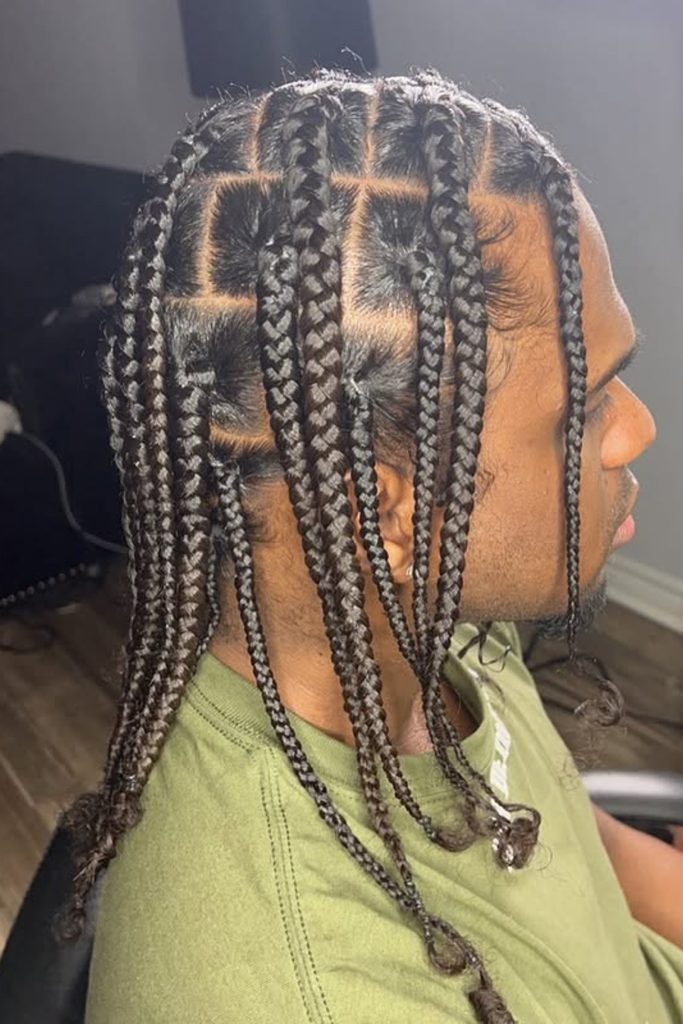
Star Pattern Plaits
An eye-catching center pattern inspired by stars makes shorter plaits stand out before you need extra length, beads, or dramatic color.
Create a balanced radial look by having your braider start with a center point and then make matching angled pieces outward.
Shorter braids also reveal more of the precise scalp work so the separation itself is the biggest feature here.
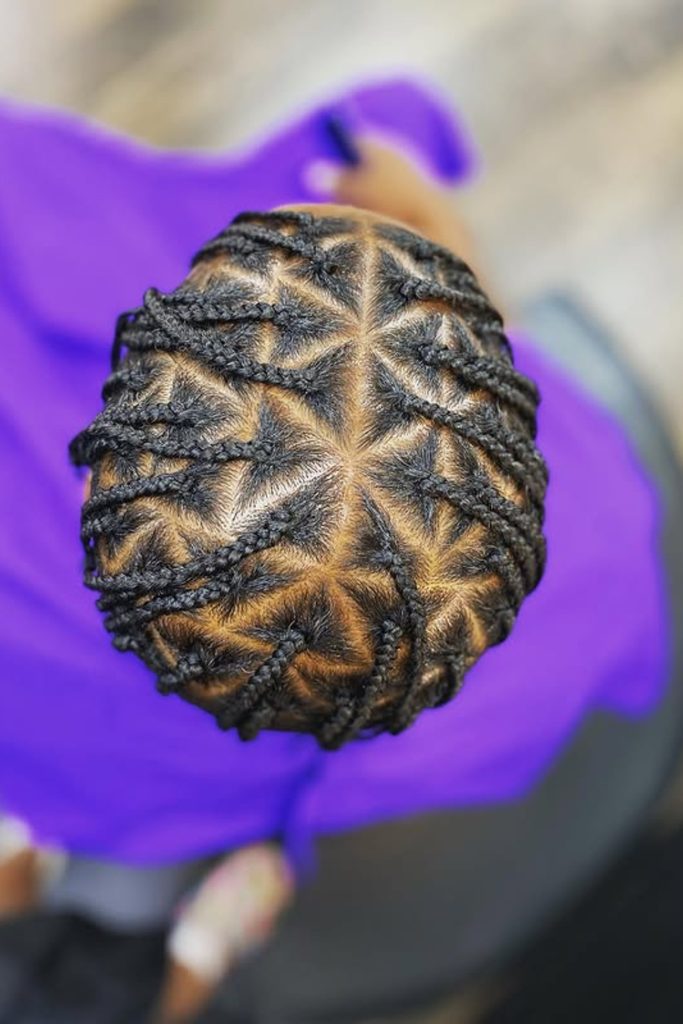
Mixed Size Plaits
Mixing braid sizes can help to make a whole head feel less monotonous, but still keep the overall parting structured.
For a stronger definition, use larger pieces of hair and smaller plaits in between for movement without overwhelming the scalp.
This also provides your braider some wiggle room to work with density changes as opposed to trying to make one braid size everyplace.
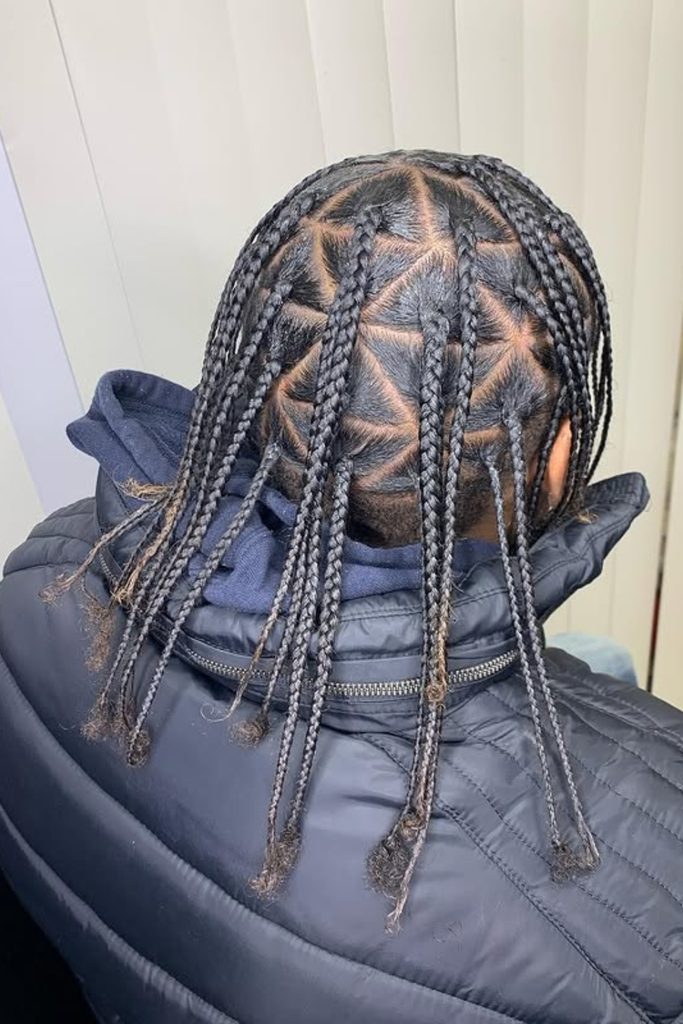
Diamond Part Plaits
Diamond-shaped pieces give the roots enough complexity that you can omit the beads, color, or other accessories entirely.
For the geometric pattern to still be apparent when the braids fall naturally, ask for medium plaits with generous spacing.
Longer front sections can frame your face and the side plaits sit behind your ears whenever you want them controlled.
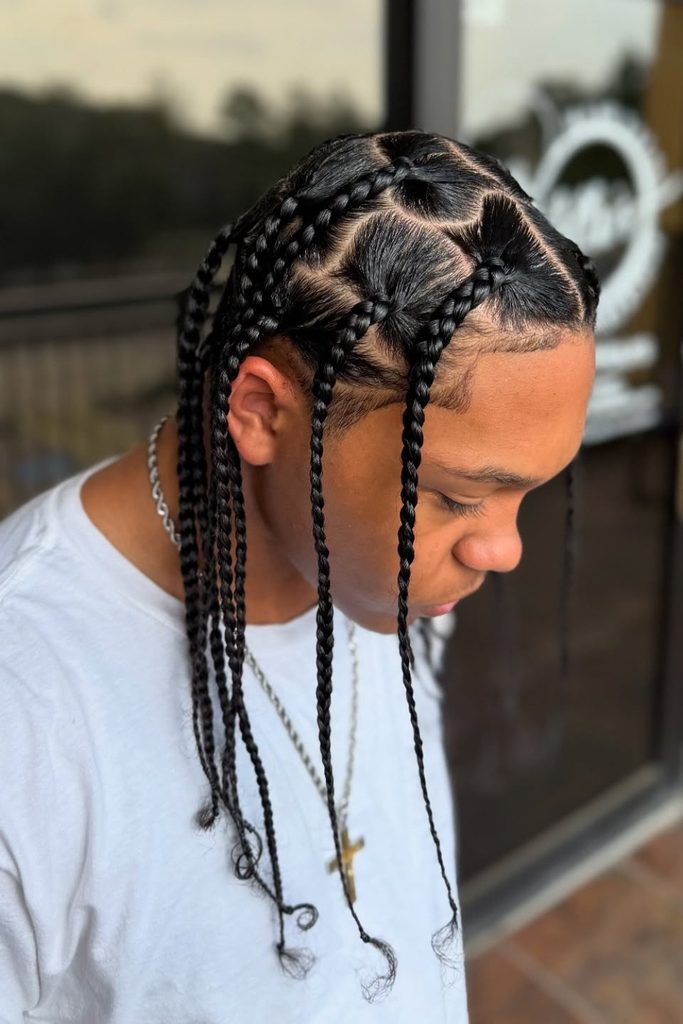
Uneven Box Plaits
And not all box sections have to be equal size, particularly if your natural density differs between crown, sides and neckline.
If you can get your braider to tweak specific portions it can help with more even thickness of the plaits, without dragging additional hair into smaller sections.
This is very helpful if you want a shorter finish and want defined roots and movement without the long dangling braids.
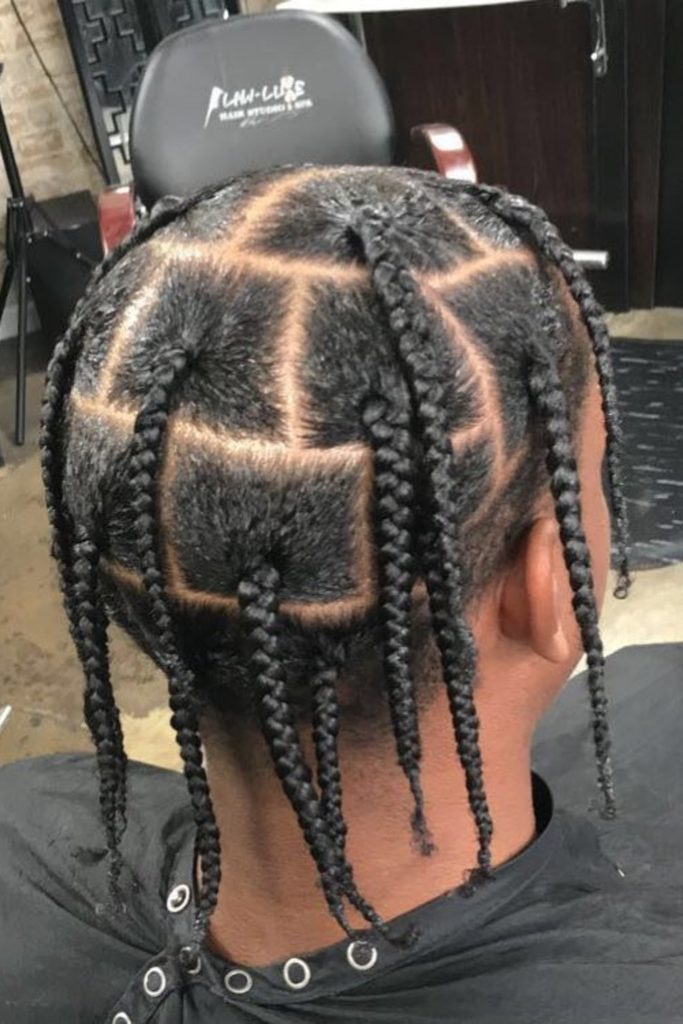
Narrow Box Plaits
Narrow portions produce many separate plaits; useful when you want more coverage with lighter looking hanging lengths.
Have your braider keep the dividing lines straight throughout the crown, because tightly spaced portions make it easier to see irregular placement.
The medium length makes these thinner plaits movable, yet easy enough to tie back throughout your everyday routine.
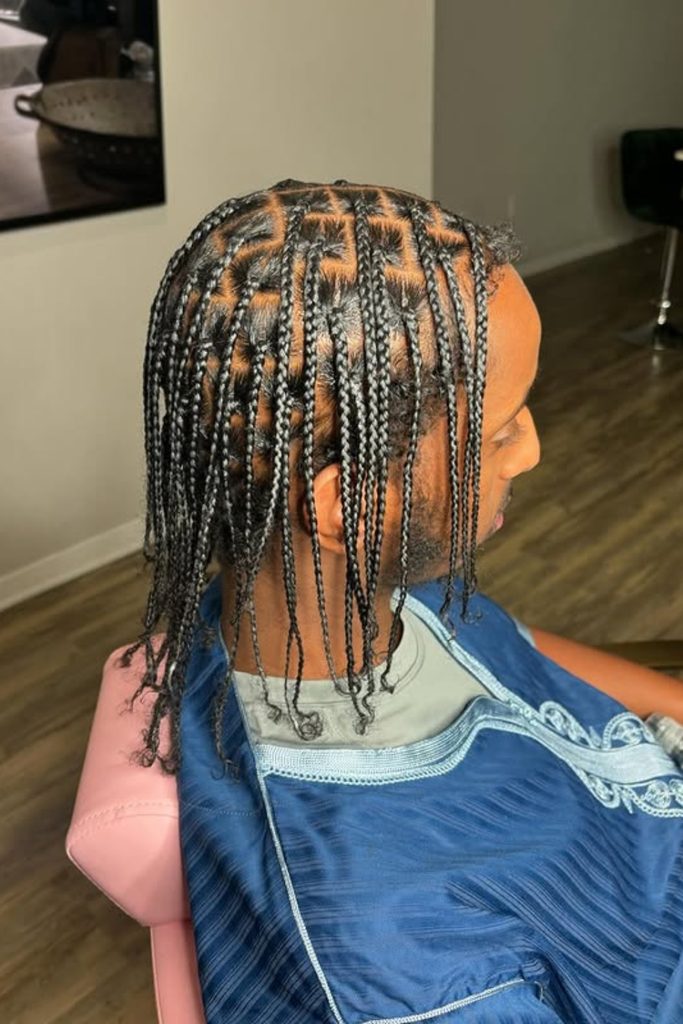
Short Mini Plaits
Short mini plaits are handy when you have enough grip in your hair to braid but not enough length for dramatic hanging styles.
To disperse shorter hair uniformly, smaller rectangular portions are used, but each plait is left free enough to move around the sides organically.
This length is perfect for those growing out their hair and wanting to begin experimenting with plaits without waiting for shoulder level growth.
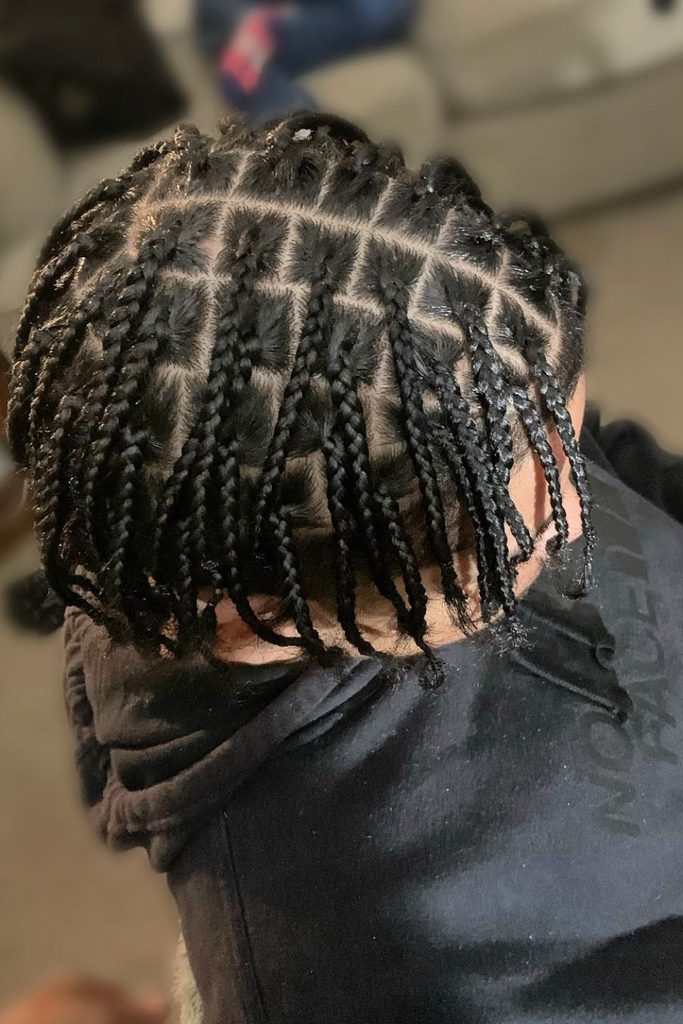
Chunky Twist Plaits
If you’re blessed with density, hefty two-strand plaits can translate it into fewer, more substantial parts all over the head.
Large geometric pieces keep the twists from becoming crowded, and beads can be used to lock down the ends and offer a regulated bit of extra detail.
Ask for a comfortable tension at each base. Use density available instead of vigorous pulling for definition in thicker areas.
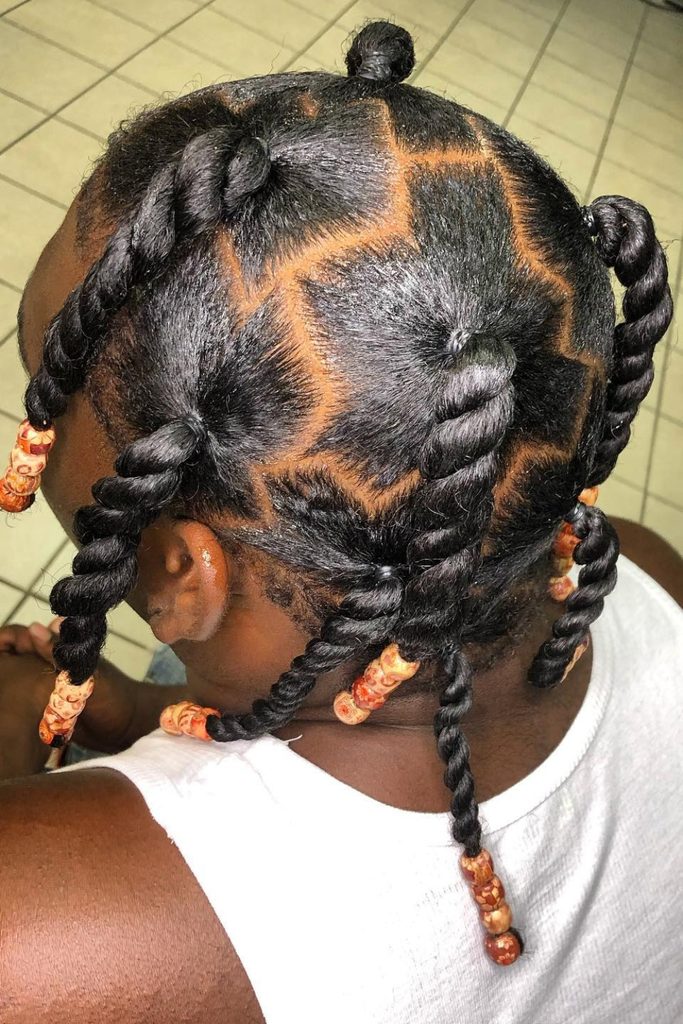
Starburst Long Plaits
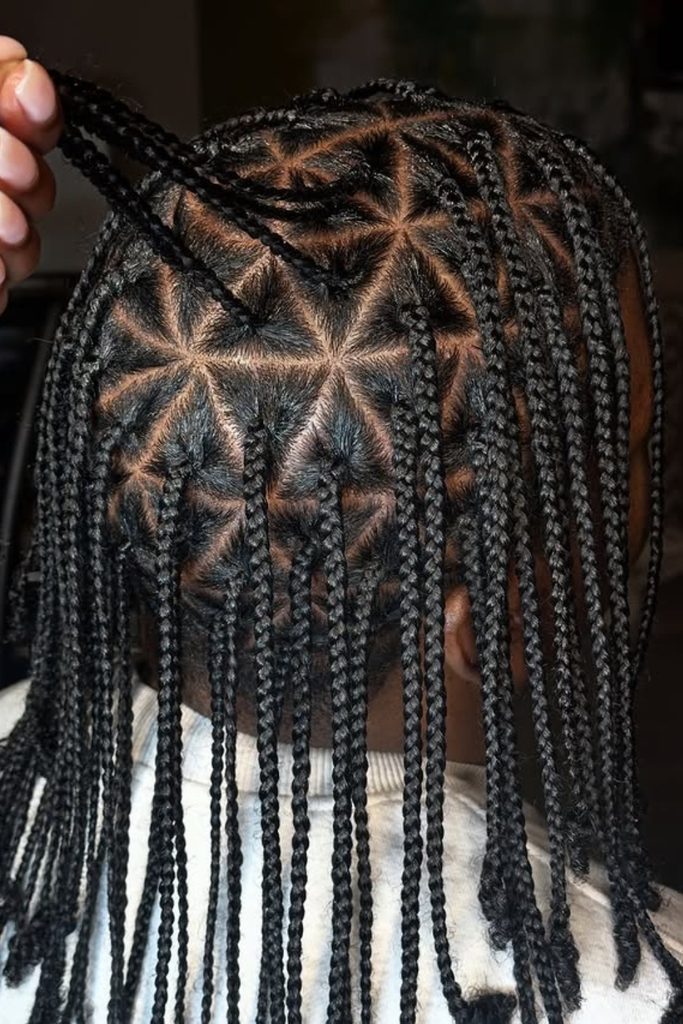
A starburst design can make the roots fascinating before the longer braids ever fall, rather of using plain box sections.
First map out the middle points so that adjacent parts can link smoothly, especially if you want the pattern balanced on each side.
The dangling plaits are slim and work well with this elaborate foundation and they move readily without hiding too much of the geometric scalp pattern.
FAQs
How Long Do Plait Braids Last for Men?
Bantu knots can be worn for weeks on end, but how long they last will depend on the size of your knots, your hair texture, your activity level and your bedtime routine.
Sleep with satin or silk over them and avoid putting the braids in the same tight fashions over and over again.
Can You Get Plaits If Your Hair Is Still Short?
Yes you can do braids with shorter hair providing your braider is able to get enough length to hold without pulling to hard.
Three inches is a good rule of thumb for many plait patterns, although texture and size of the braid might affect what is feasible.